Technology · PRACTICAL GUIDE
Audit whether Calibre custom columns can survive before Restore database
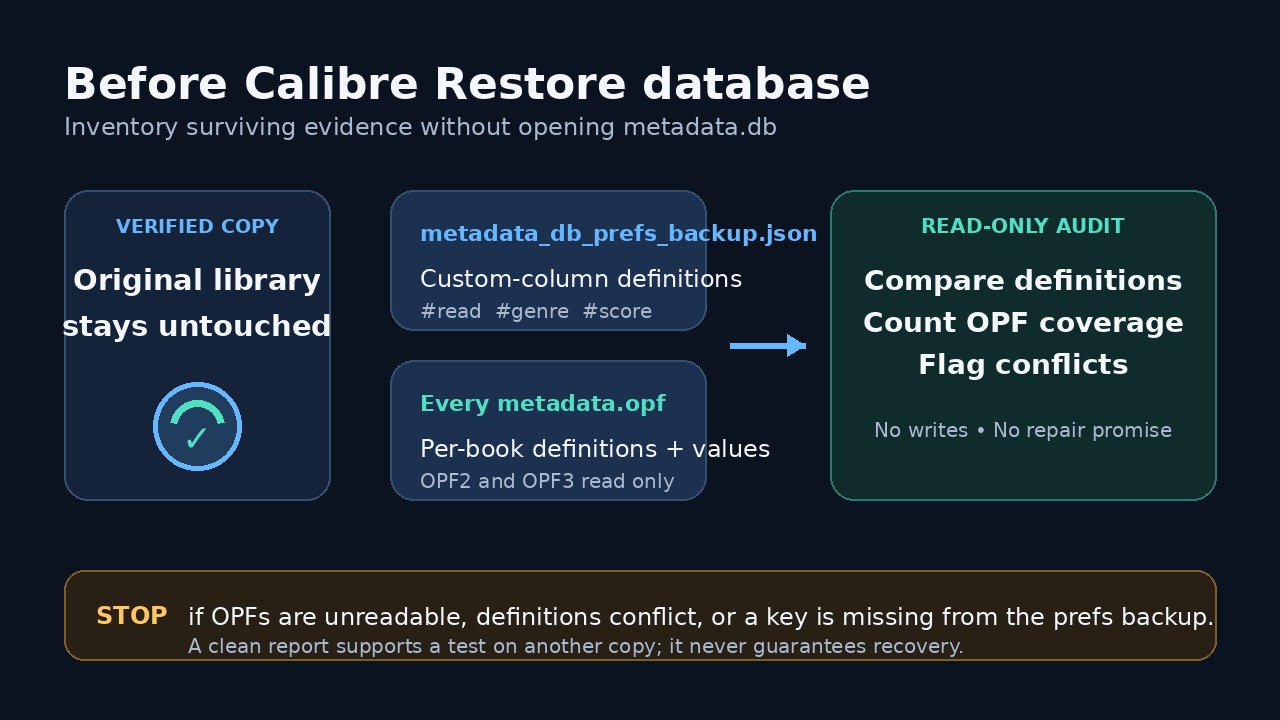
Inventory custom-column definitions, per-book OPF coverage and conflicts without opening metadata.db or modifying the only library copy.
WATCH AT EASE · PRACTICAL GUIDE
Answers to everyday questions, checked for current relevance.
289–312 / 365
Inventory custom-column definitions, per-book OPF coverage and conflicts without opening metadata.db or modifying the only library copy.
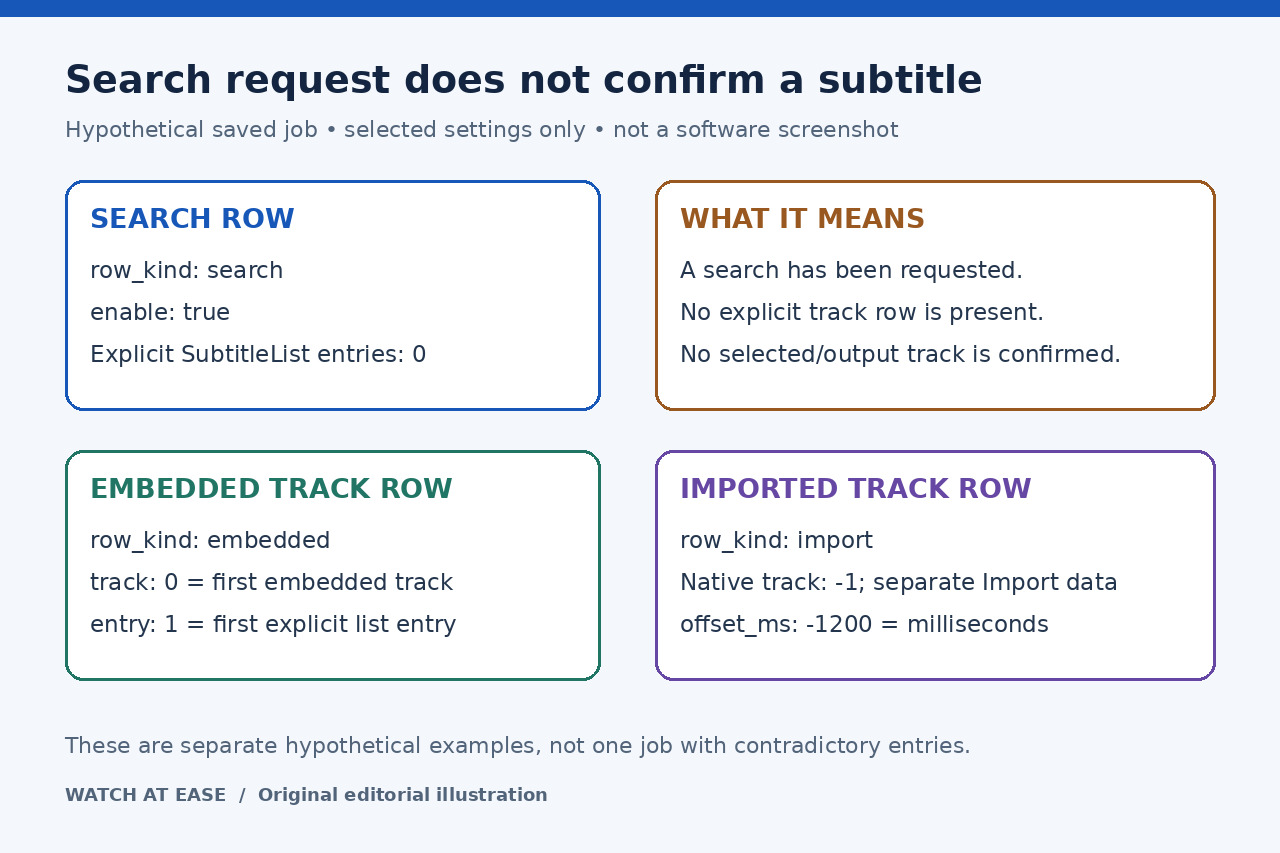
Separate a subtitle search request from explicit tracks in a saved queue report, keeping true, false and unrecorded values distinct.
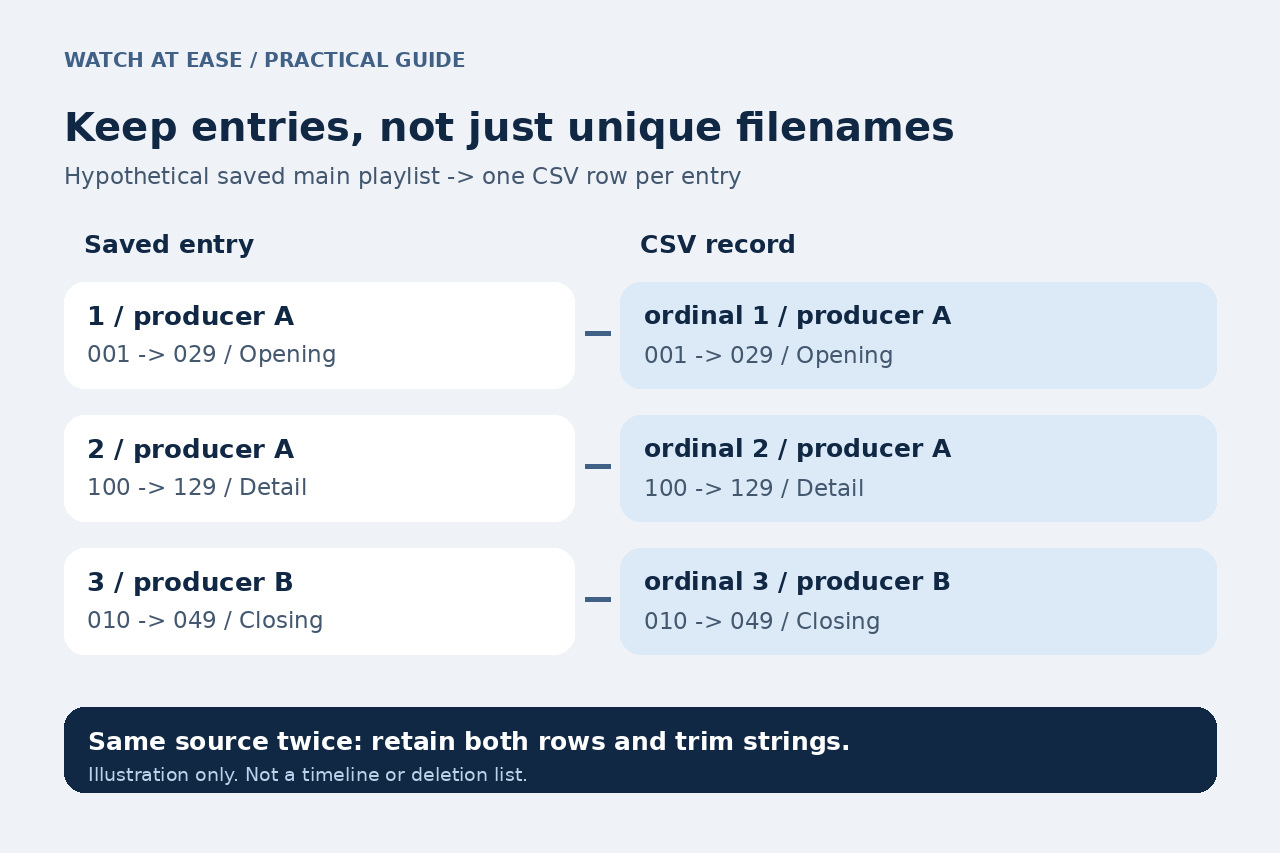
Keep repeated subclips, saved captions and raw trim points in one offline table; do not mistake a playlist report for a timeline inventory or deletion list.
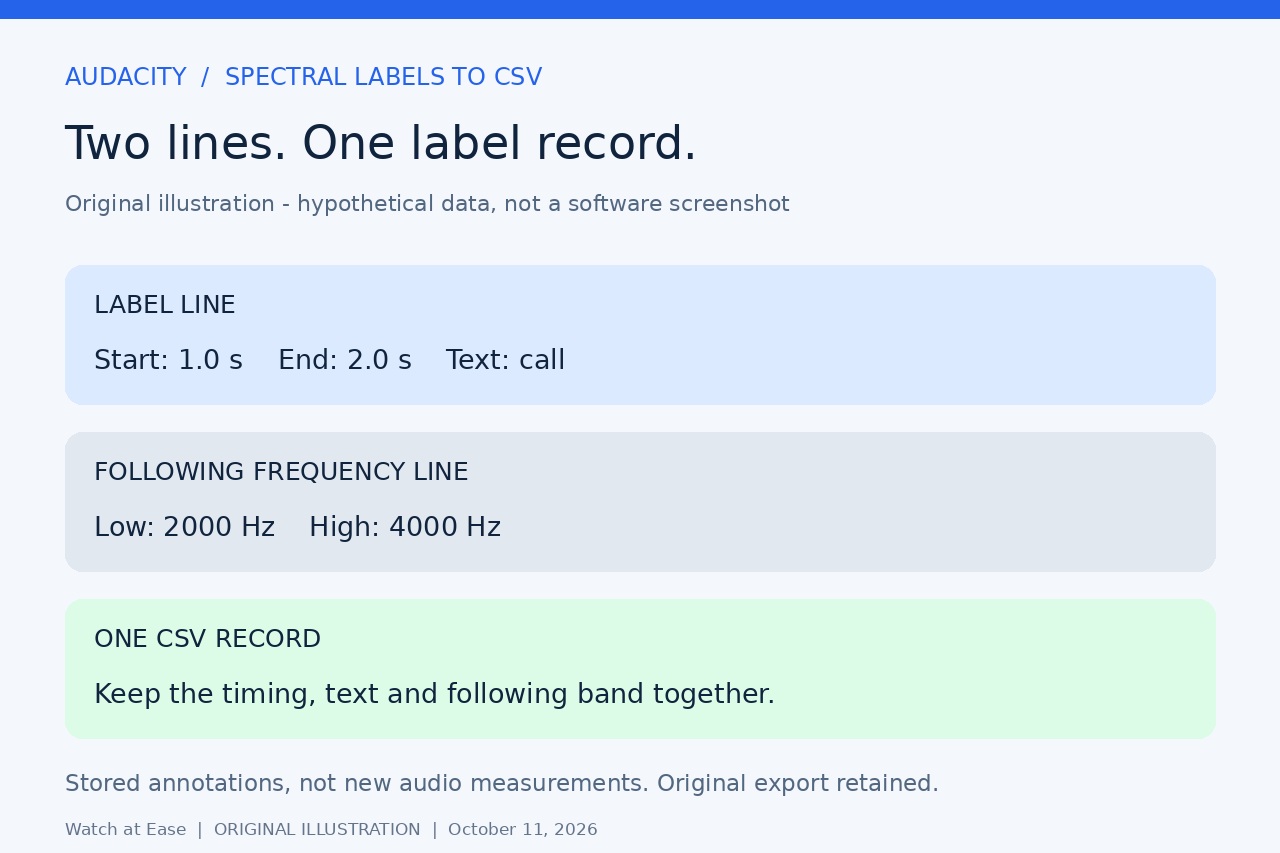
Pair each frequency line with its label, keep original seconds text, and distinguish an absent frequency record from undefined limits and real zero hertz.
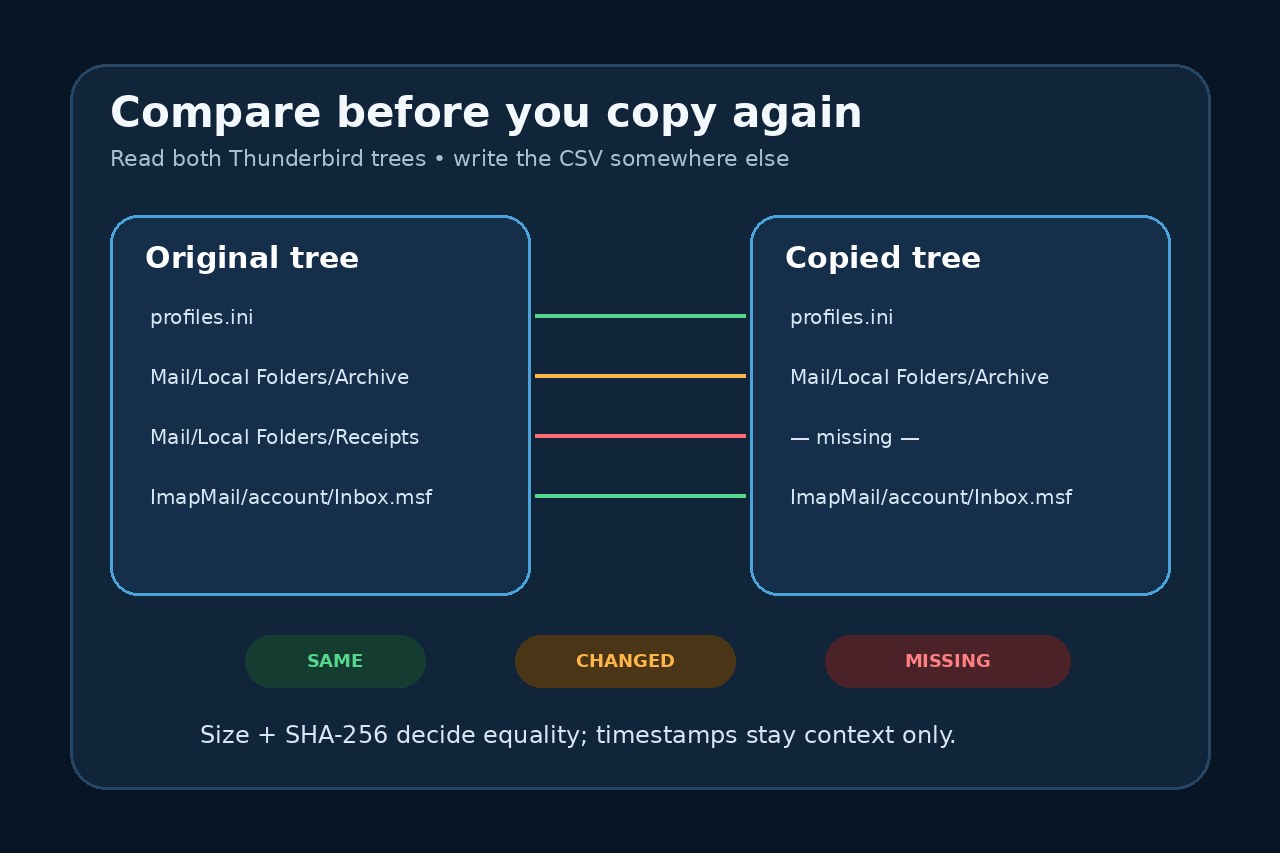
Before copying a Thunderbird profile again, produce a read-only, byte-level manifest of both trees so missing mail data, changed files and profile-path mismatches can be separated safely.
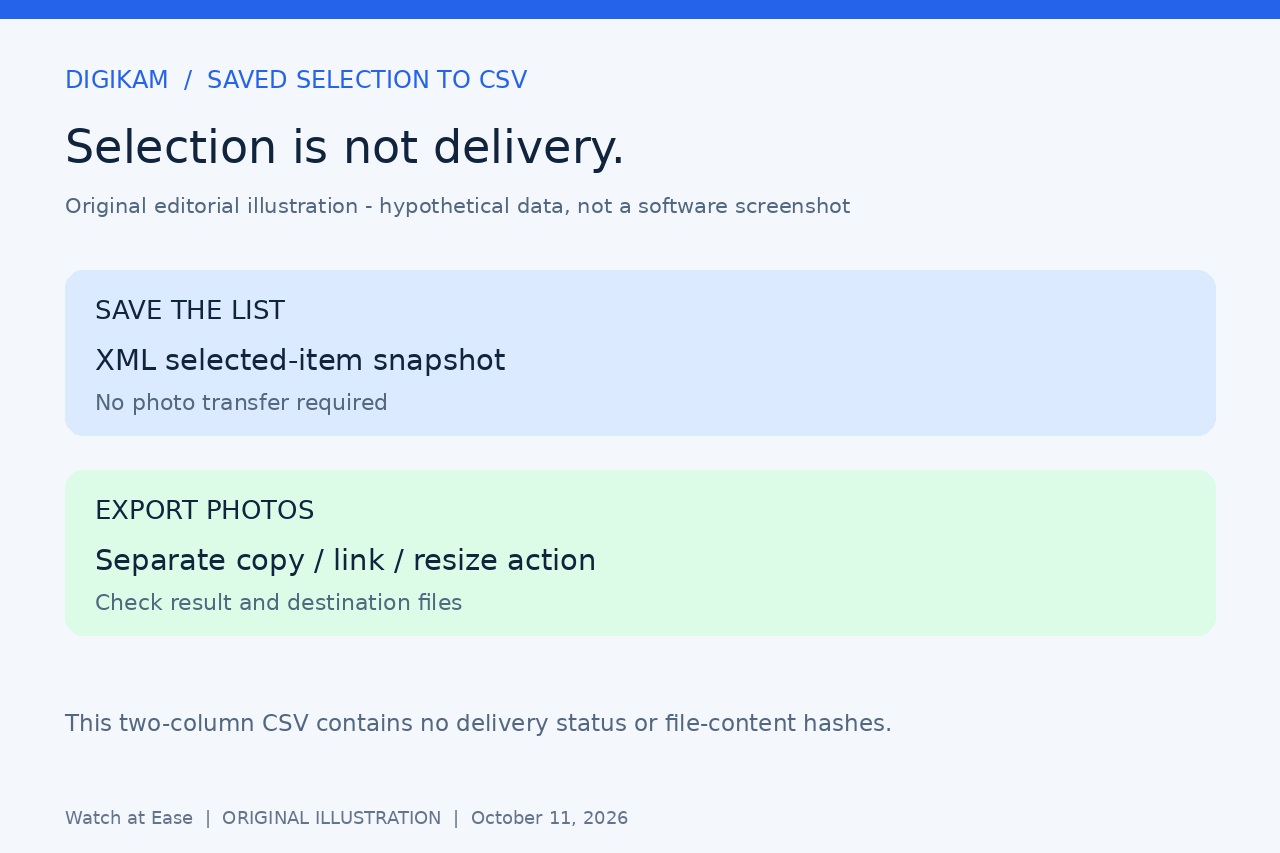
Preserve every saved display URL and repeated filename in a spreadsheet snapshot, without copying photos or claiming the export succeeded.
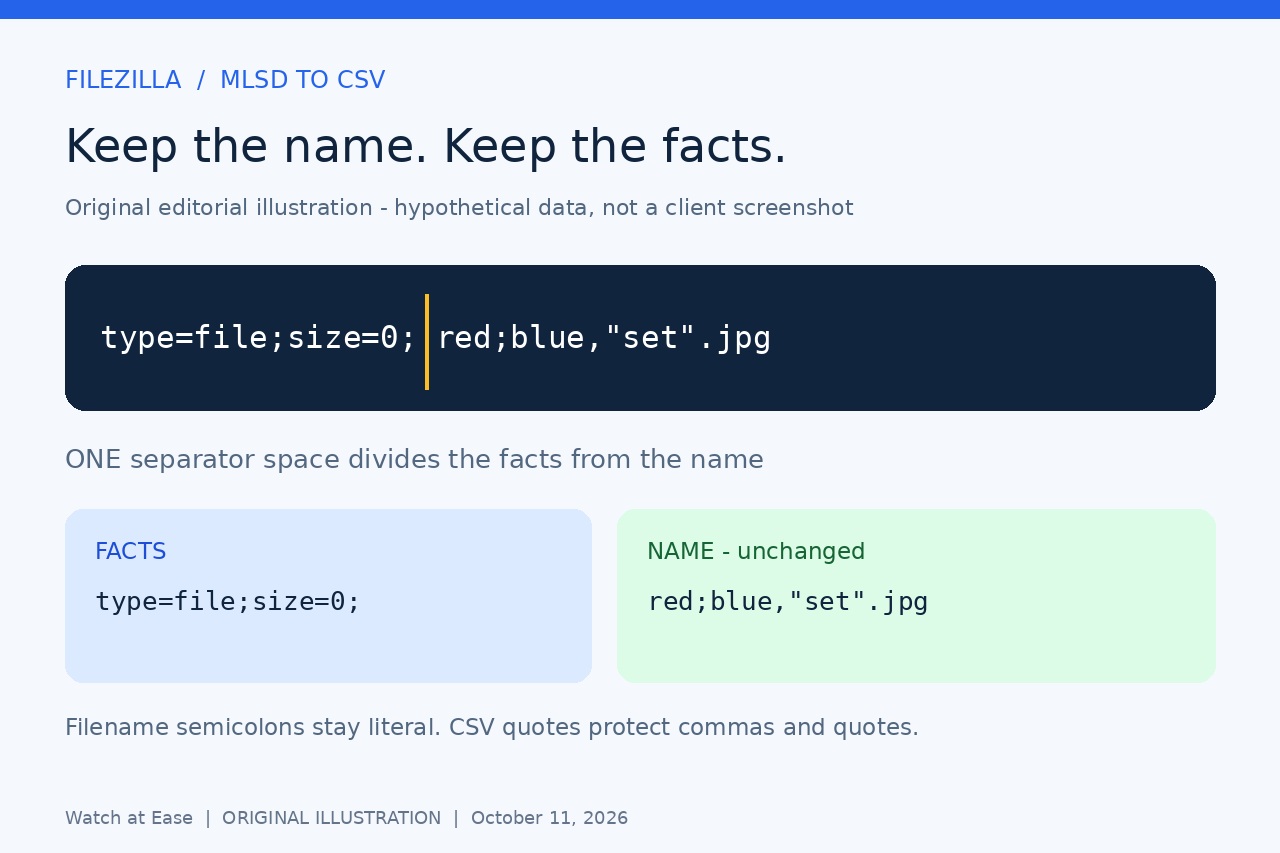
Keep commas, semicolons and significant spaces in names, distinguish missing sizes from zero, and retain directory entries in an offline copy.
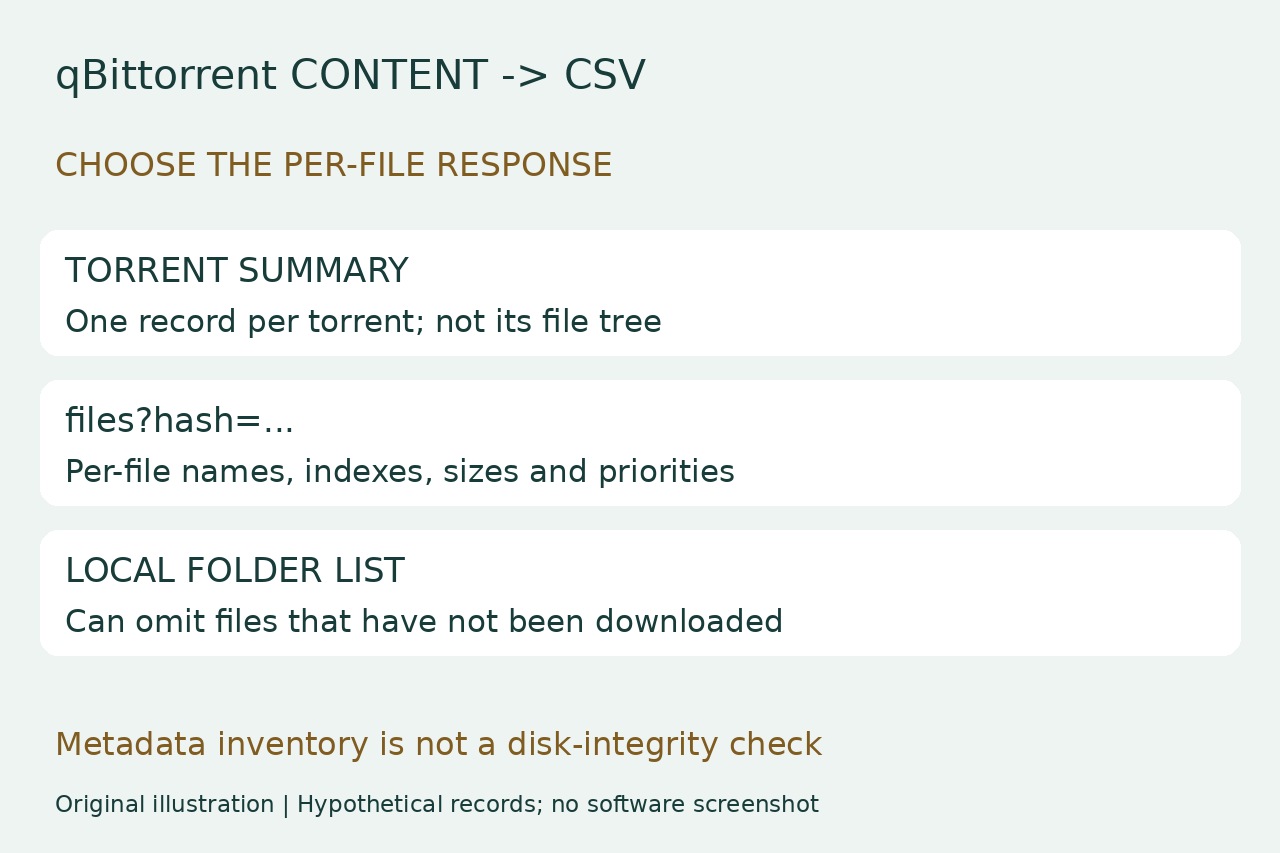
Save one torrent's file response, then preserve indexes, skipped entries and progress fractions in a checked spreadsheet list.
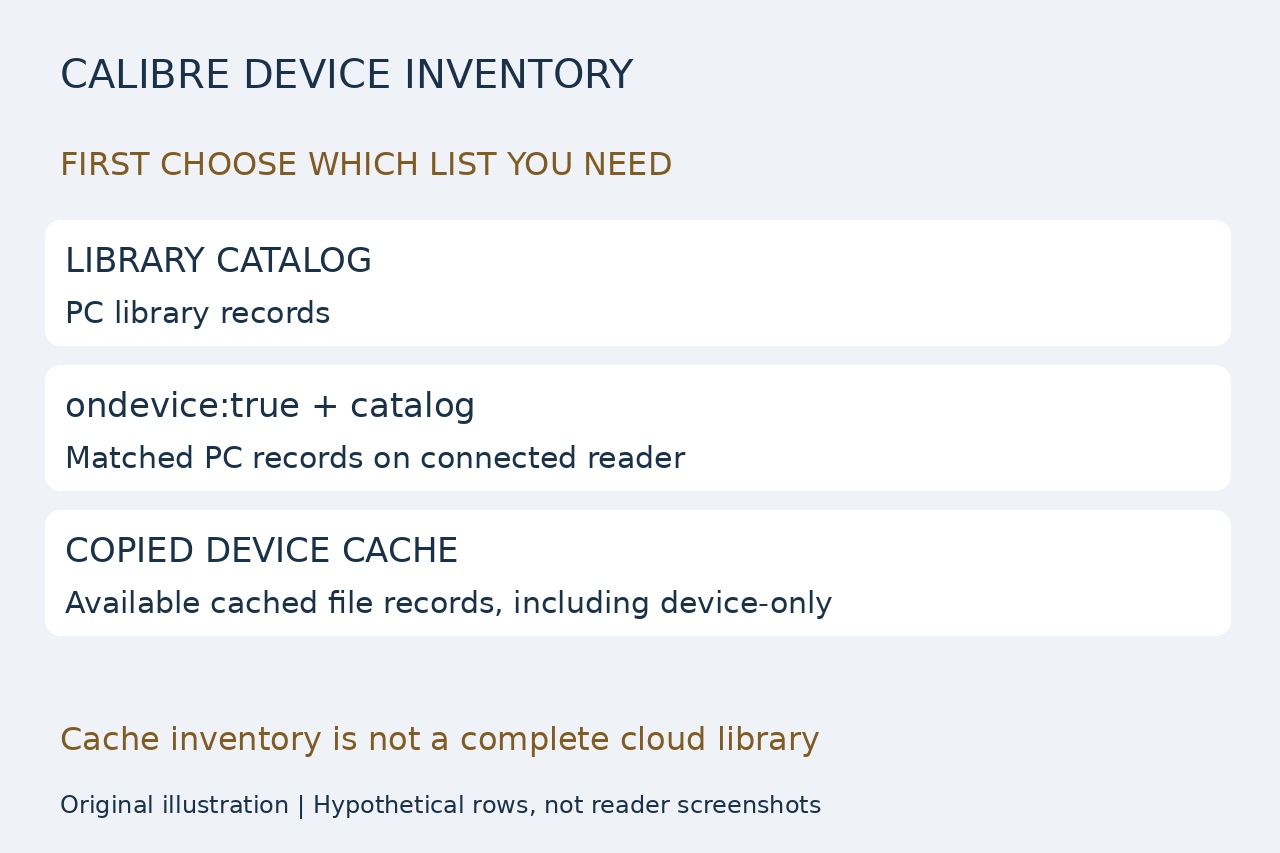
A library catalog can omit books stored only on your reader. Convert a copied device cache, then check rows, storage and spreadsheet import settings.
A read-only Python audit pairs each documented .sync-conflict copy with its likely base file, hashes both and labels it identical, different or base-missing. It does not delete, rename or merge anything.
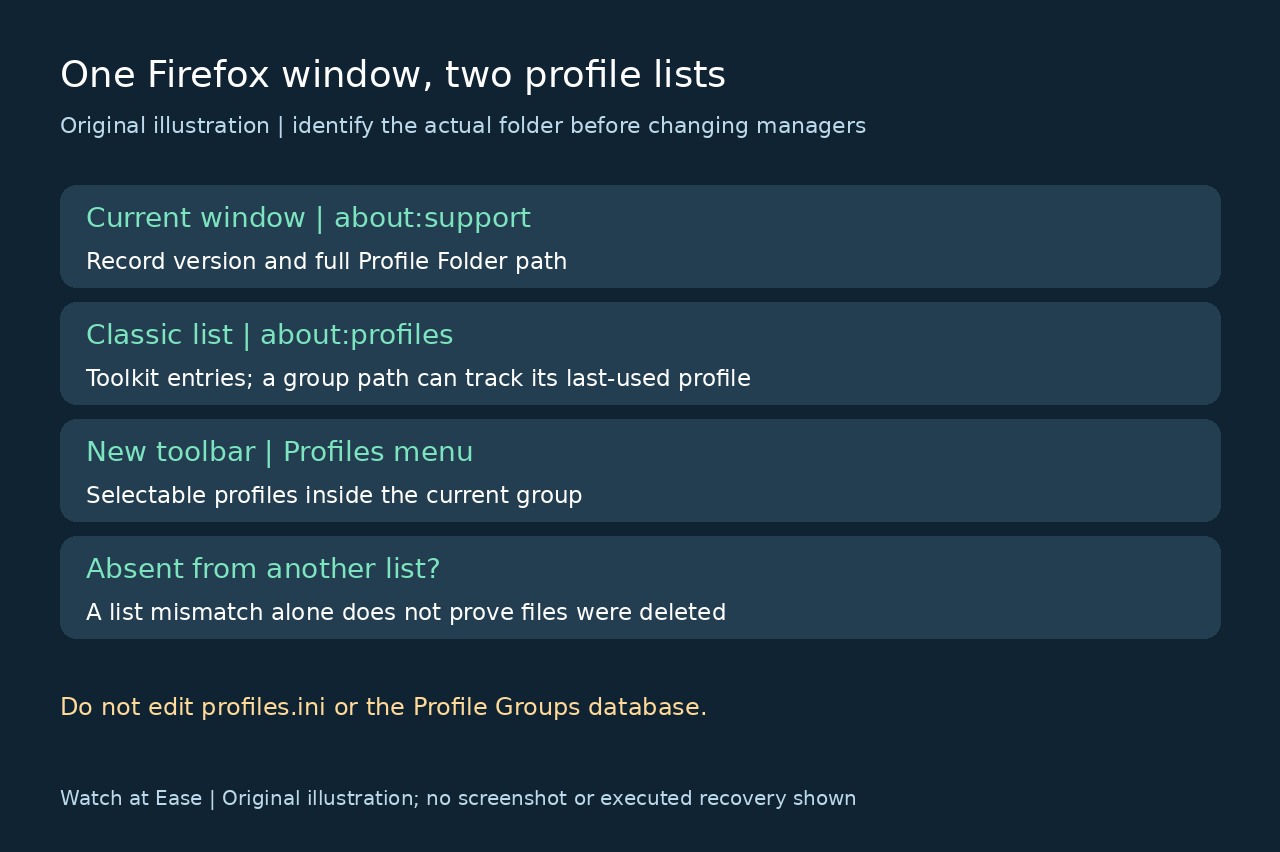
The toolbar menu and classic manager can list different profiles. Identify the open window, preserve its data and verify your copy before changing anything.
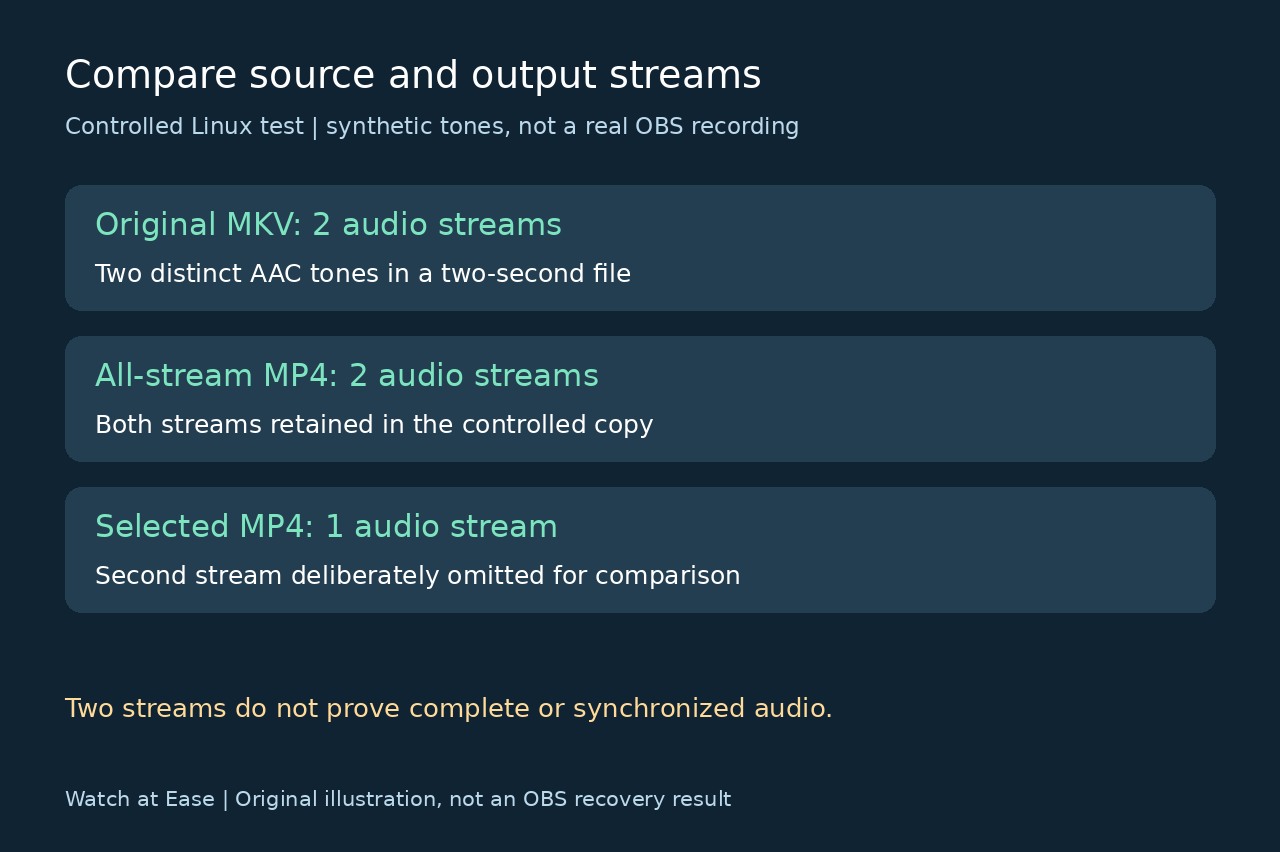
Keep both files, inventory every audio stream and listen before changing recording settings or blaming the remux.
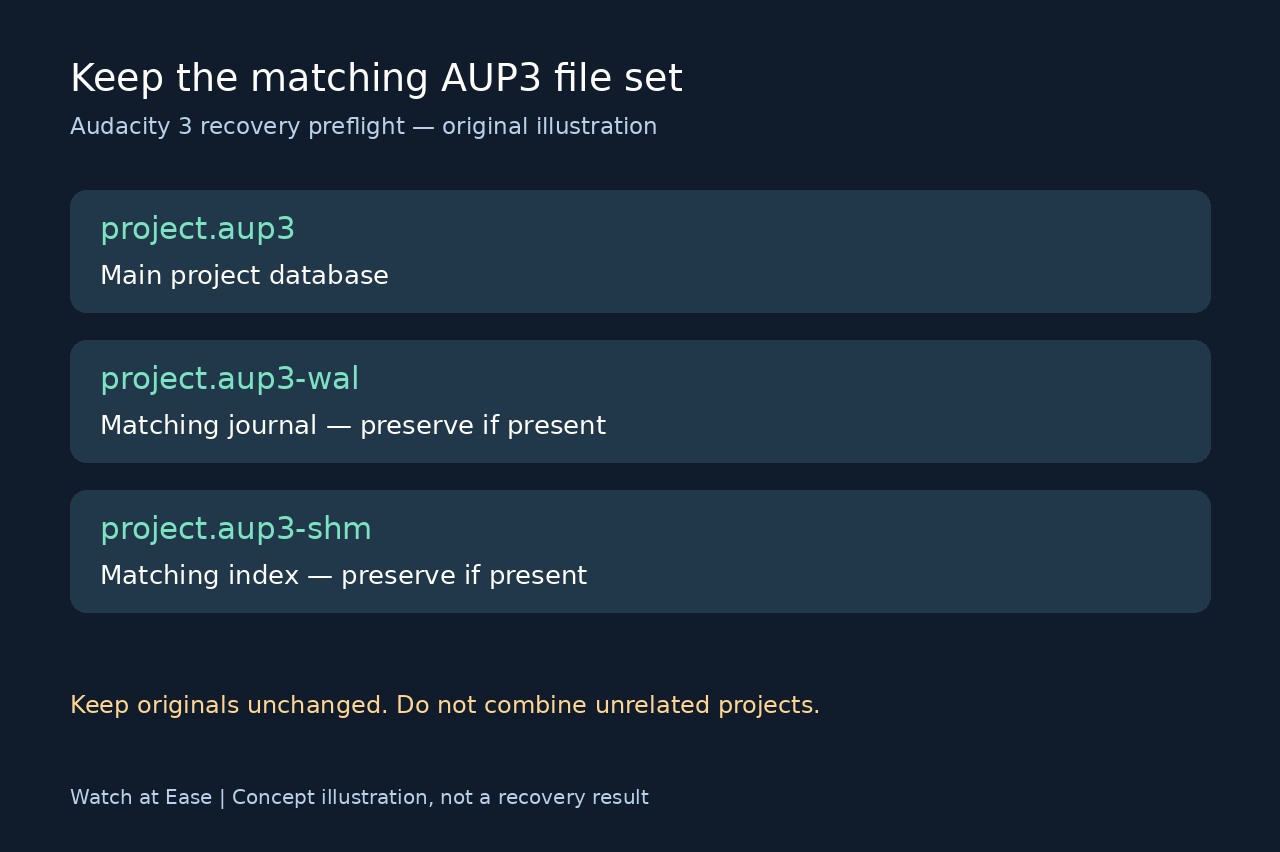
Identify the real project, protect surviving files and check the newest audio before calling a recovery successful.
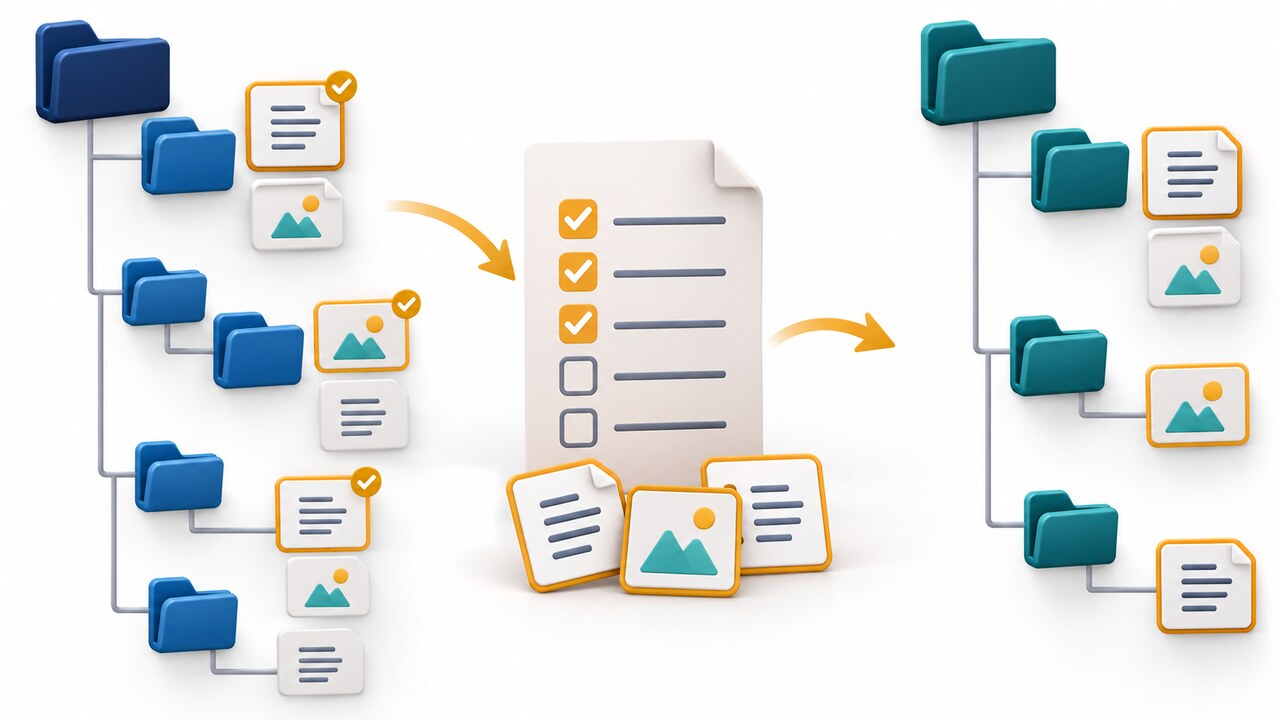
For a small, manually verified batch, use a literal vault-relative manifest, preview every destination, copy only into a new folder and verify each file’s SHA-256 before opening the result as another vault.
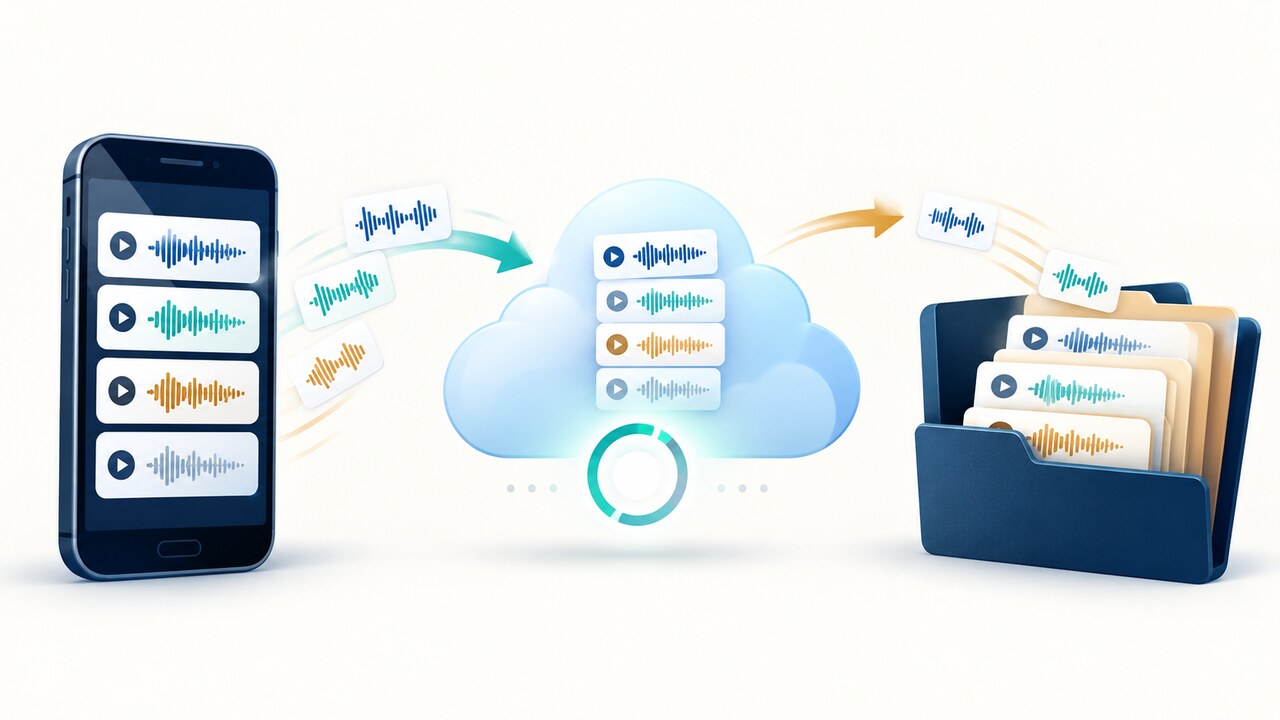
Separate iCloud sync from iCloud Backup, prove which recordings still play, and make an independent copy before erasing the source iPhone.
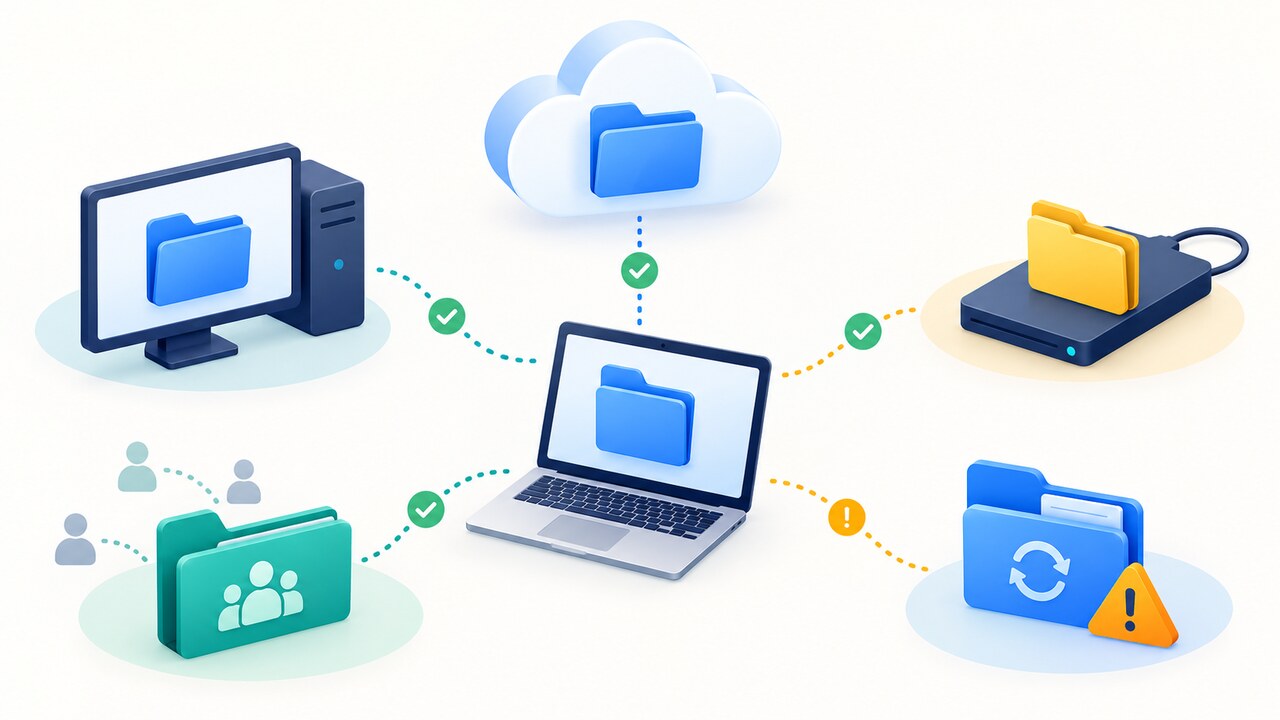
An empty desktop view is not proof of deletion. Inventory the web copy, My Drive, Computers, Shared drives, mirrored folders and unsynced local data before you reconnect or reinstall anything.
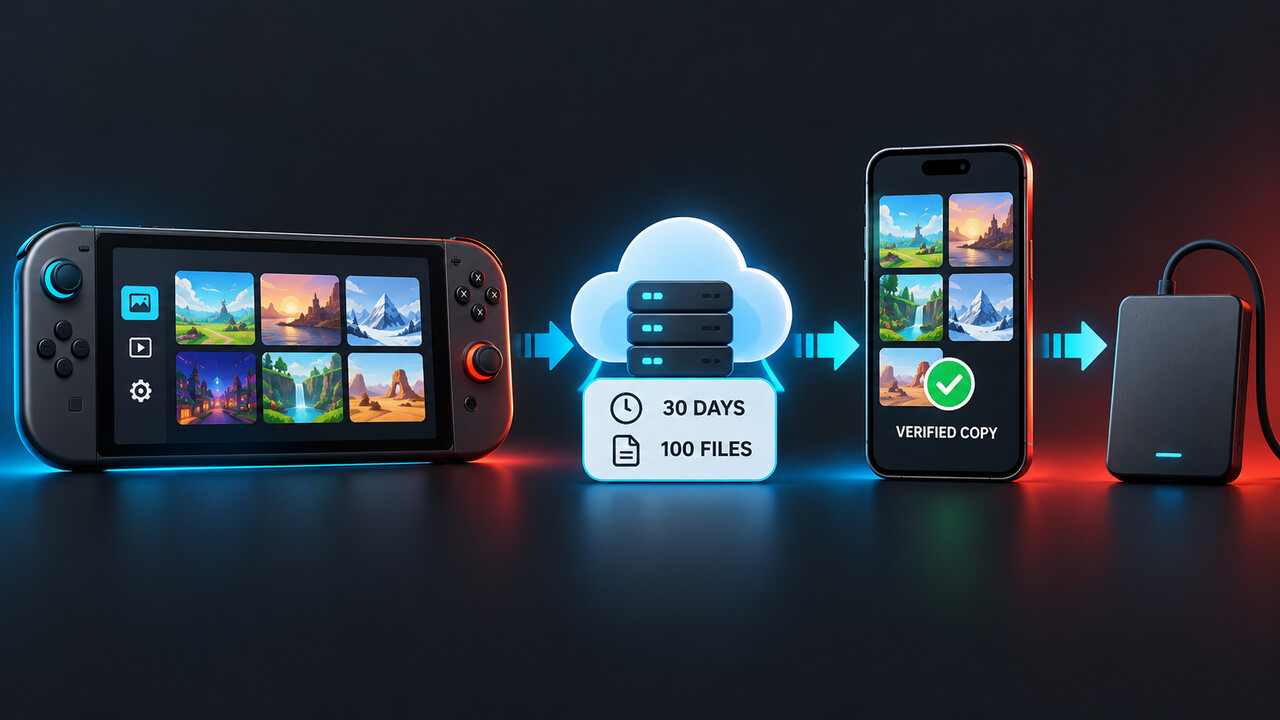
Switch 2 uploads are a transfer window, not a permanent photo backup. Separate the console Album, Nintendo’s temporary server copy and the file actually saved to your phone.

Your old captures may be local files, Steam profile uploads, or files the new client no longer indexes. Preserve the old data first, then prove which copy you actually have.
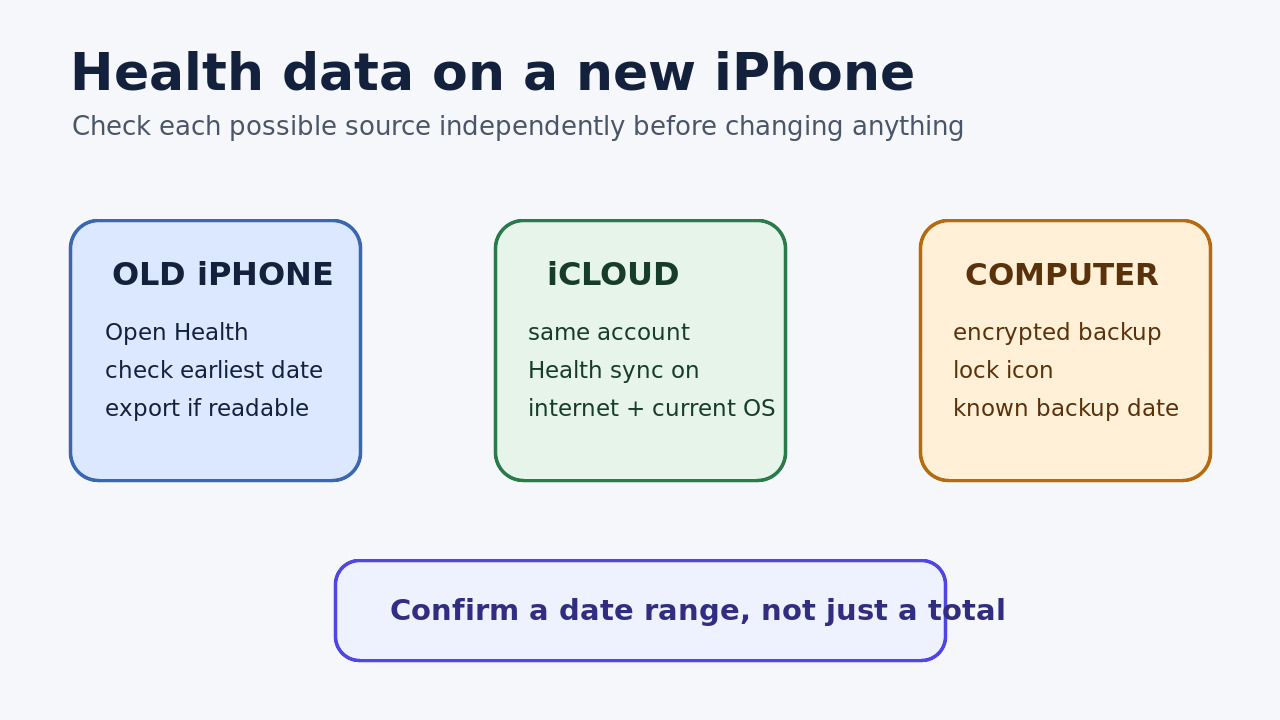
Check where the oldest readable record still exists, preserve that source, then choose iCloud sync or an encrypted backup without erasing your last copy.
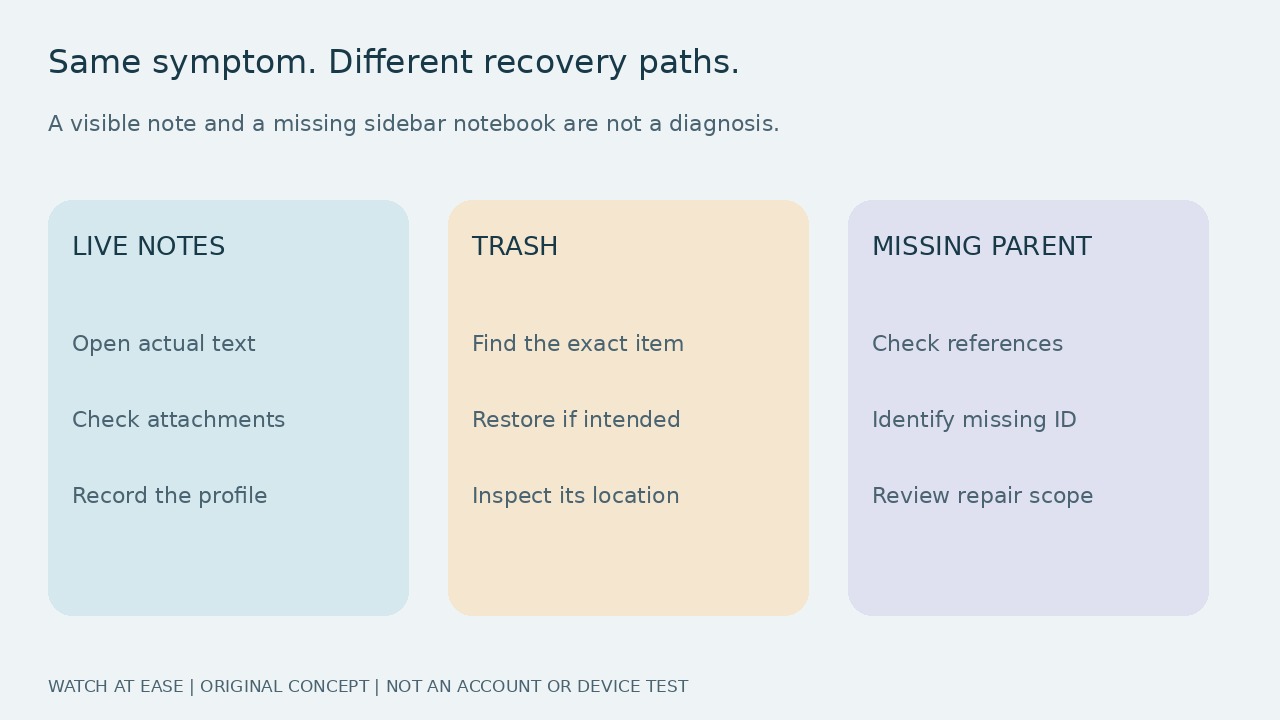
Separate a deleted notebook, a missing parent and a genuinely incomplete JEX backup before importing another copy.
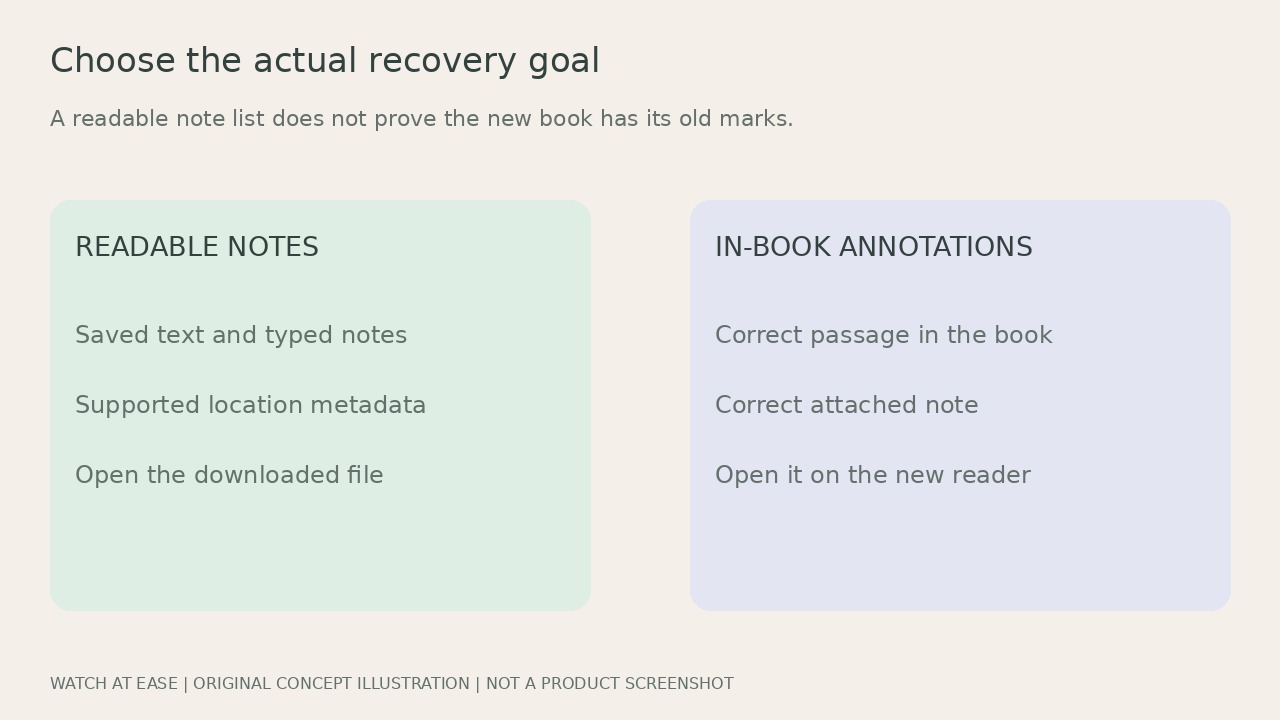
Check what survived when EPUB transfer advice meets a KEPUB library, and keep the old reader until book-level checks pass.
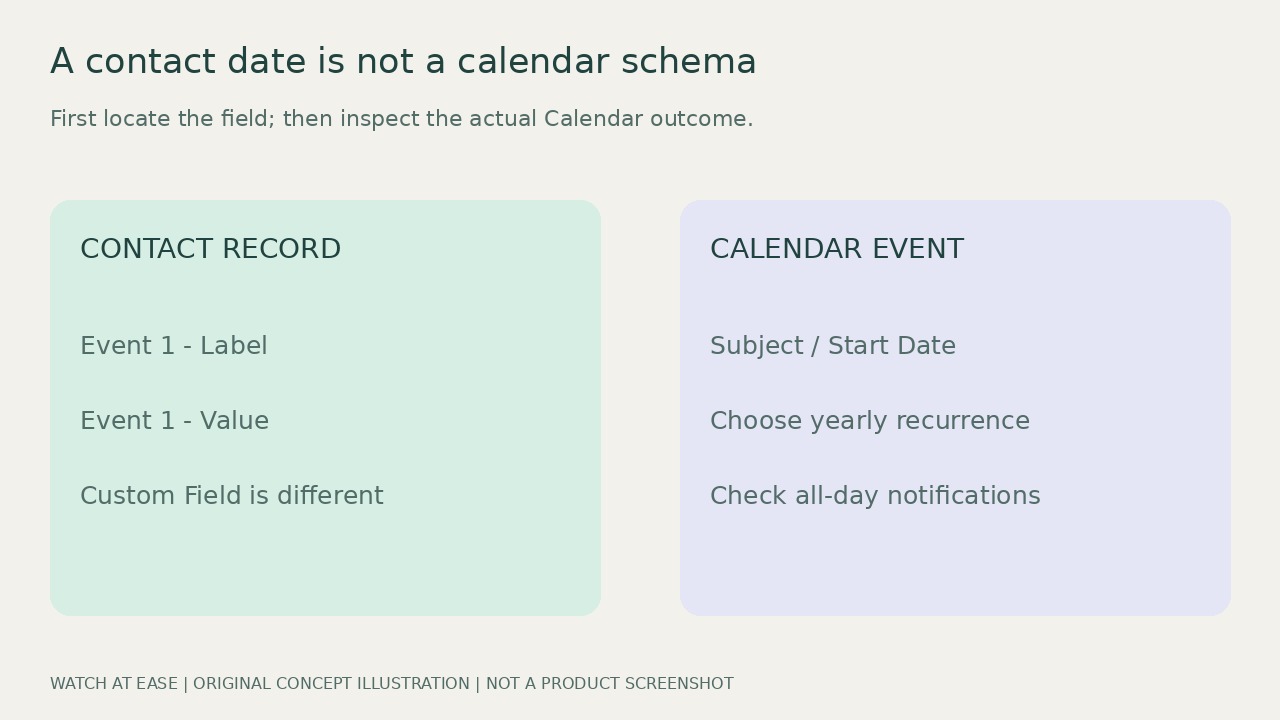
Separate a missing contact date from a missing calendar event or notification before importing your address book again.
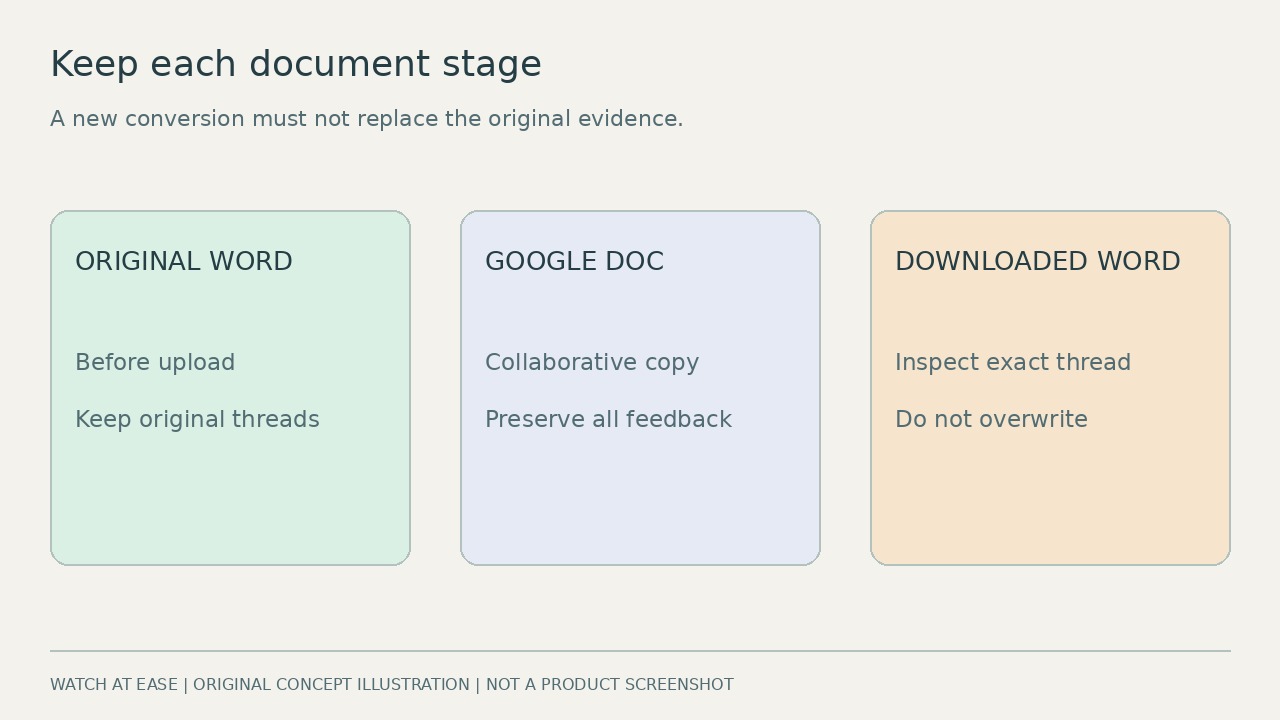
Keep the originals, inspect Word’s two comment views and Reviewing Pane, then verify the exact thread before treating a conversion as lost feedback.
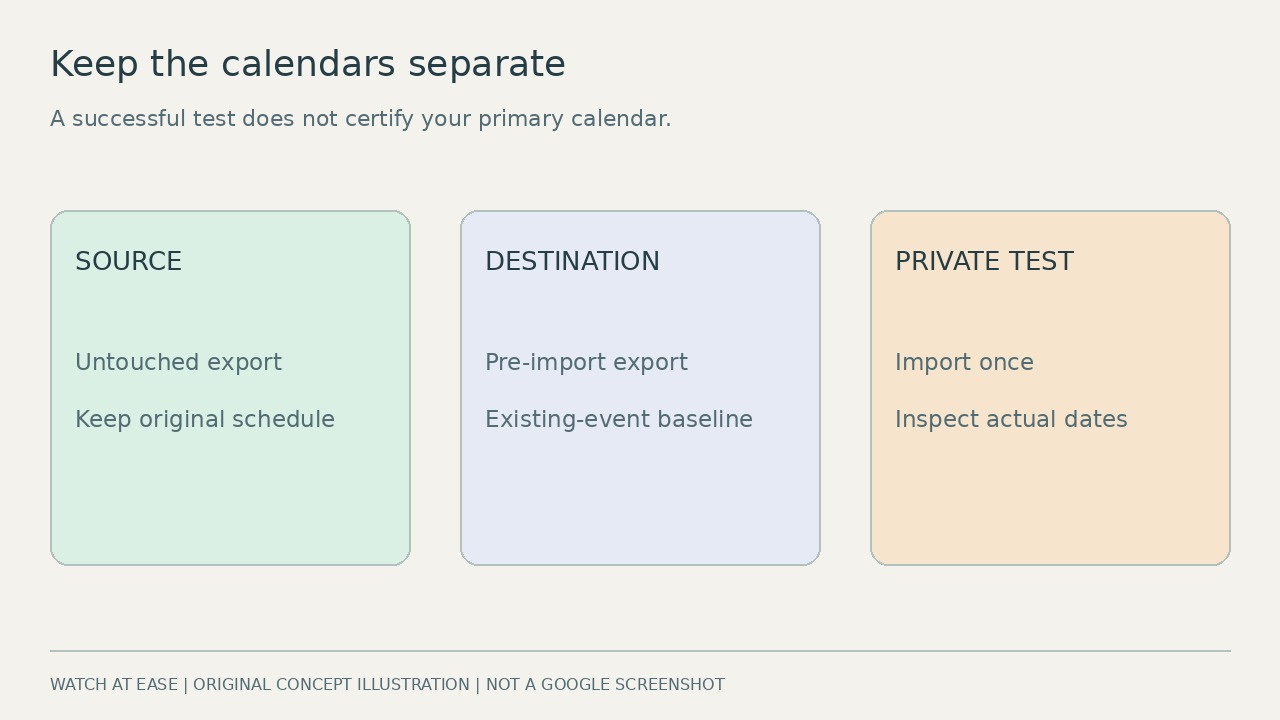
A count is not proof that a recurring calendar survived. Compare ordinary, moved and cancelled occurrences before another import.