Watch at EaseStories. Answers. Perspective.

WATCH AT EASE · News

Science

Fresh developments, checked sources and useful explanations. Live TV remains one click away.

1–23 / 23

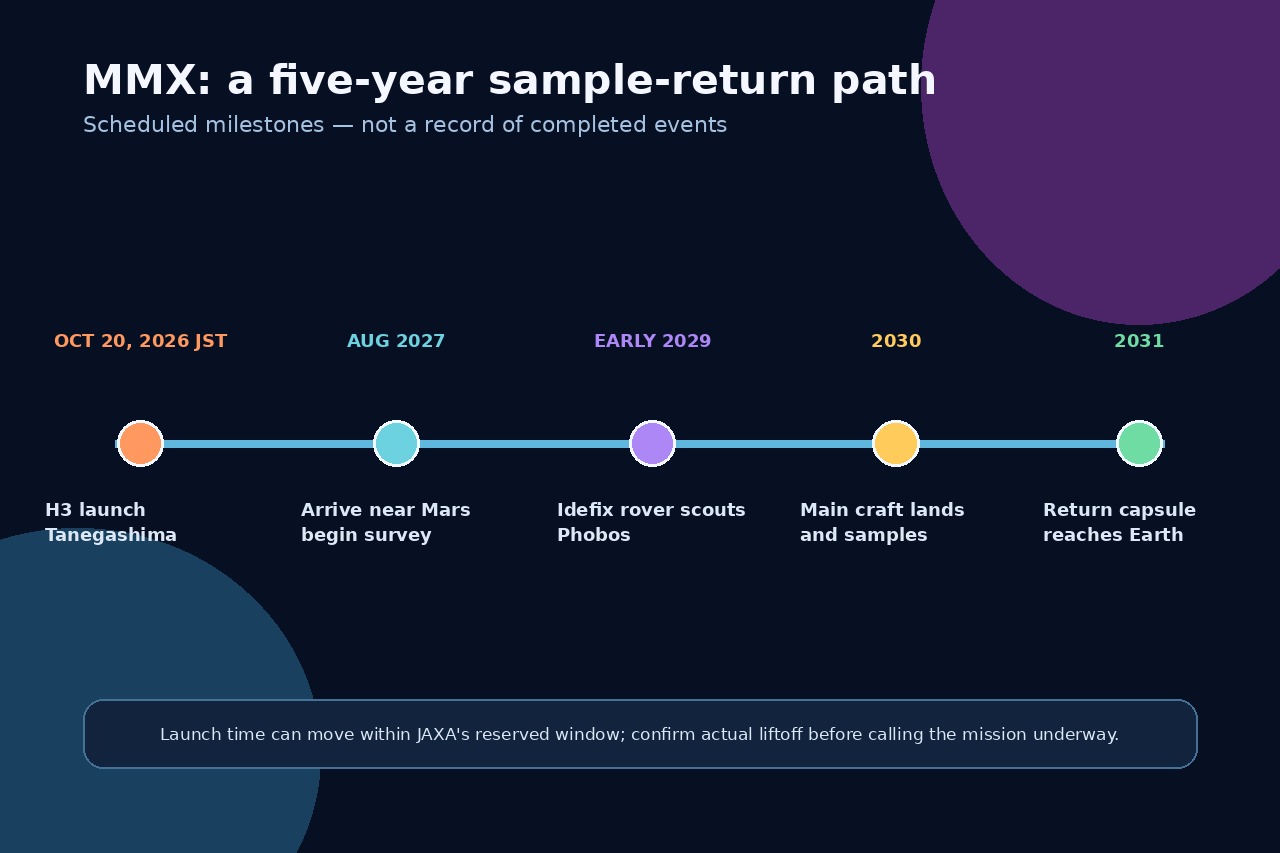
Original editorial illustration of the MMX mission timeline from the scheduled October 2026 launch through the planned 2031 sample return.
Original editorial illustration: MMX’s launch, Mars-system operations and 2031 return are planned milestones, not completed events. Watch at Ease
Science · NEWS EXPLAINER

Japan’s MMX mission is set to launch for Phobos: timeline, sampling plan and what to verify

JAXA schedules the Martian Moons eXploration mission for October 20 in Japan, with a backup window through November 7. MMX aims to study both Martian moons, land on Phobos, collect at least 10 grams and return the sample in 2031—but the launch and every later milestone still require official confirmation.
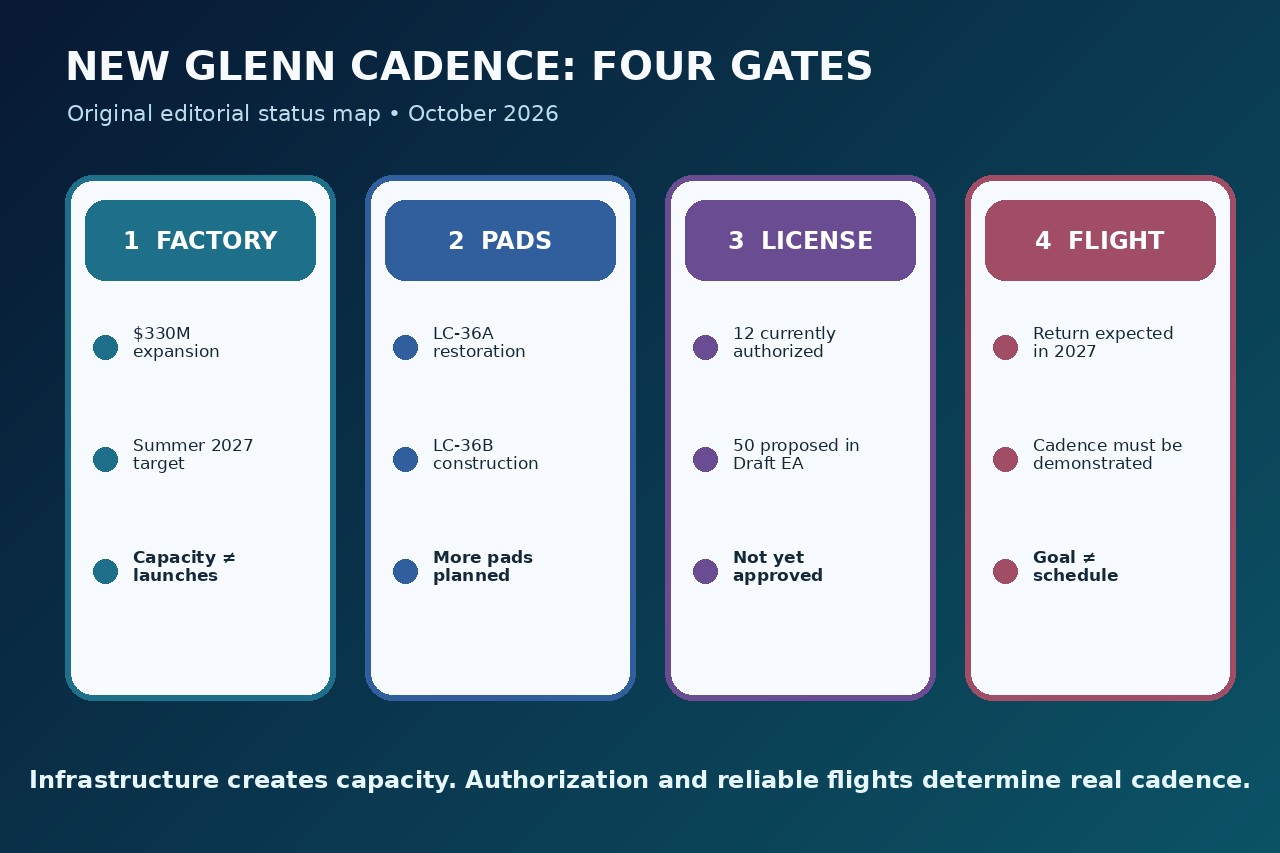
Original editorial diagram separating factory, launch-pad, licensing and demonstrated-flight gates for New Glenn cadence.
Original editorial illustration: factory capacity, launch infrastructure, regulatory authorization and reliable missions are four different cadence gates. Watch at Ease
Science · NEWS EXPLAINER

Blue Origin targets weekly New Glenn flights: four gates that still matter

A Florida factory expansion, more pads and two additional landing platforms aim to support multiple flights per week by decade’s end. But production capacity, launch sites, licensing and reliable missions remain separate milestones.

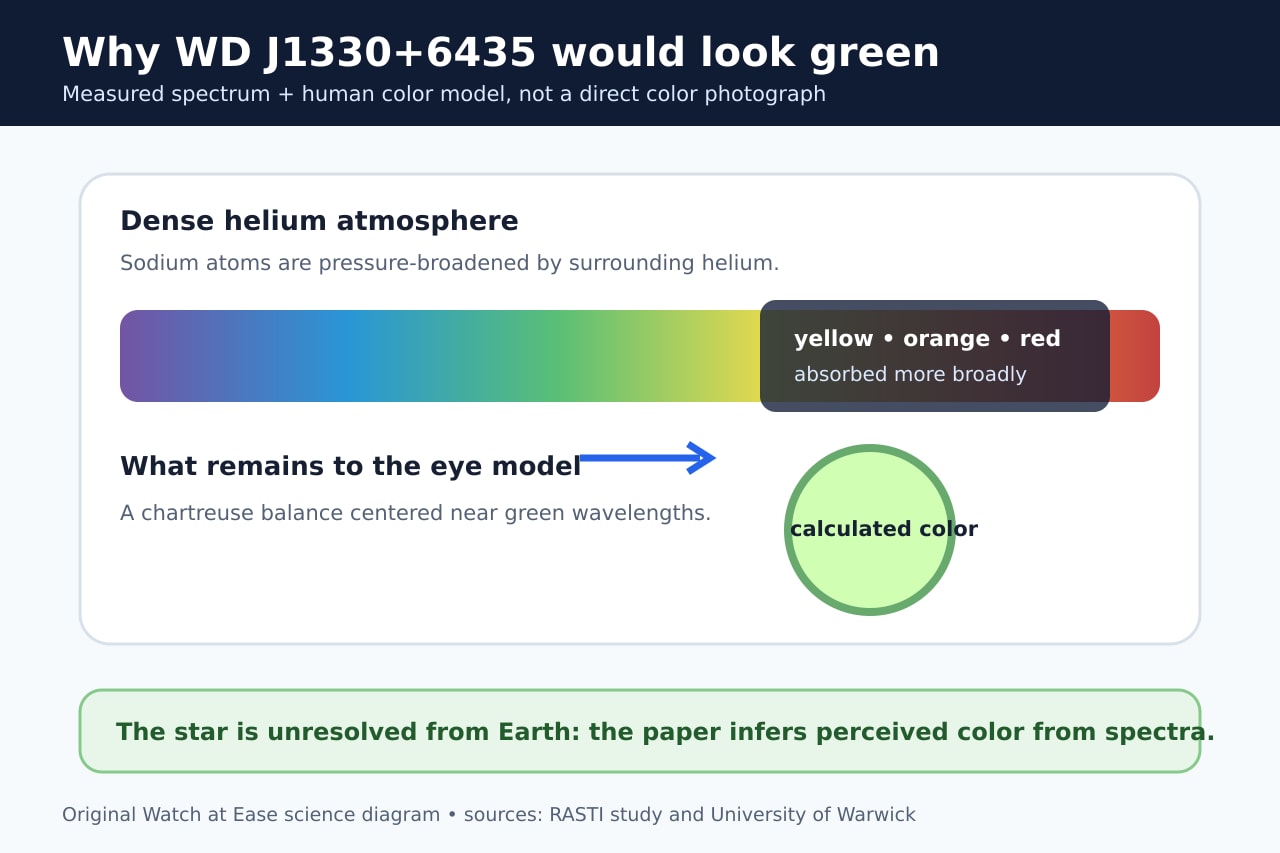
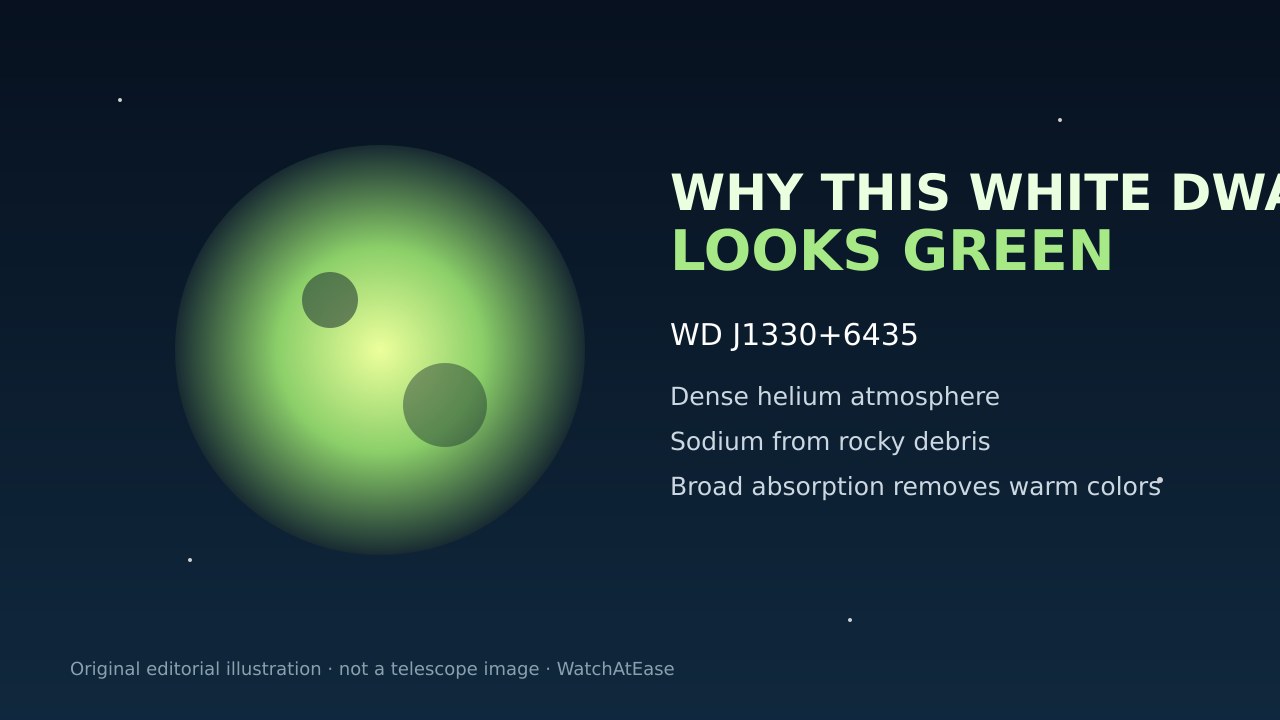
Original conceptual illustration of WD J1330+6435 glowing chartreuse beside labels for its dense helium atmosphere, sodium from rocky debris and broad absorption of warm colors.
Original editorial illustration: WD J1330+6435 appears chartreuse because sodium in its dense helium atmosphere broadly absorbs warmer colors; this is not a telescope image. Watch at Ease
Science · NEWS EXPLAINER

Astronomers identify first known green star—and explain why it looks chartreuse

WD J1330+6435 is a dense white dwarf whose sodium-rich, helium atmosphere removes yellow, orange and some red light. The result is a rare chartreuse appearance—not a normal temperature color.

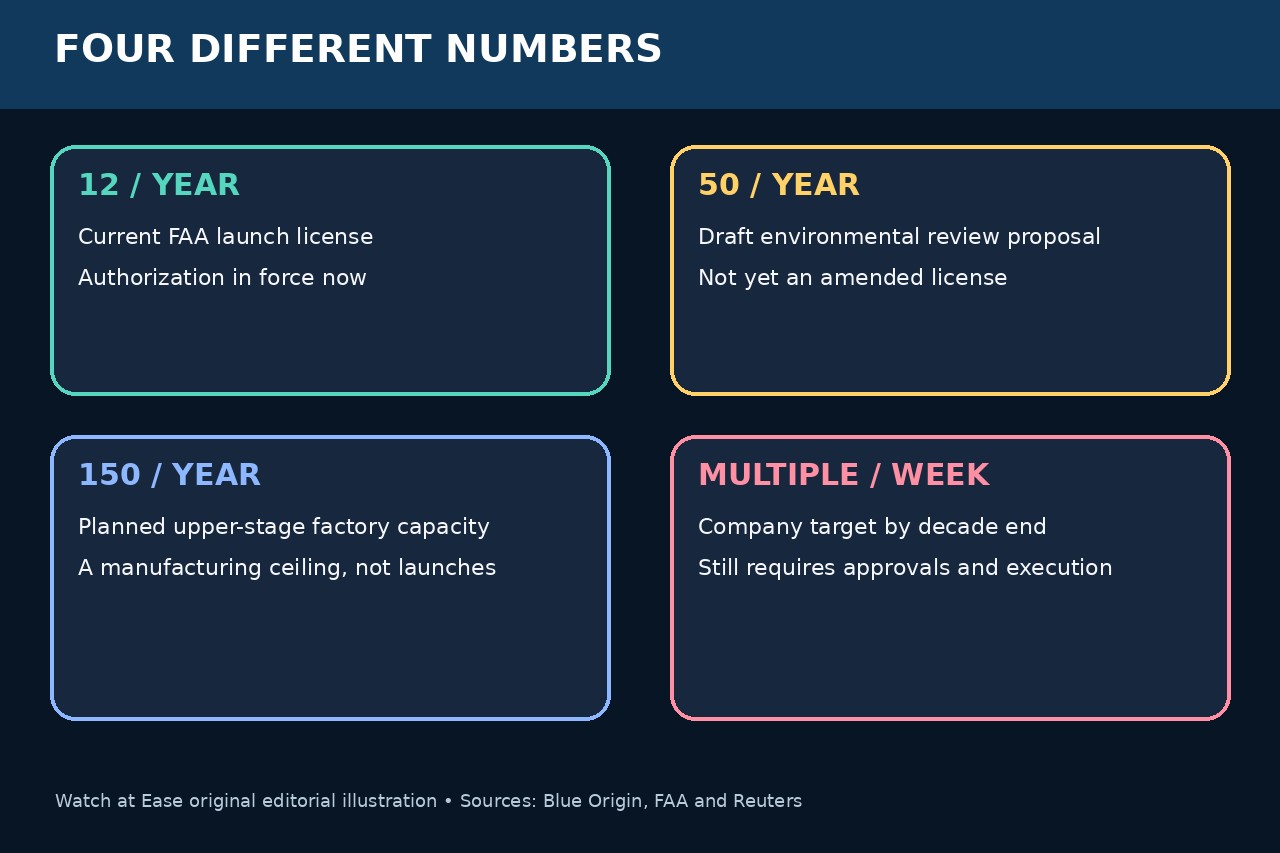
Original graphic comparing the current 12-launch license, proposed 50-launch review, planned 150-upper-stage factory capacity and a multiple-flights-per-week target.
Original illustration: license limits, factory capacity and a company cadence target measure different things. Watch at Ease
Science · NEWS EXPLAINER

Blue Origin targets weekly New Glenn launches—but its current license allows 12 a year

The company is expanding Florida factories, pads and payload facilities for multiple flights a week by the end of the decade. The FAA is reviewing a proposal for up to 50 annual launches; that is not approval yet.

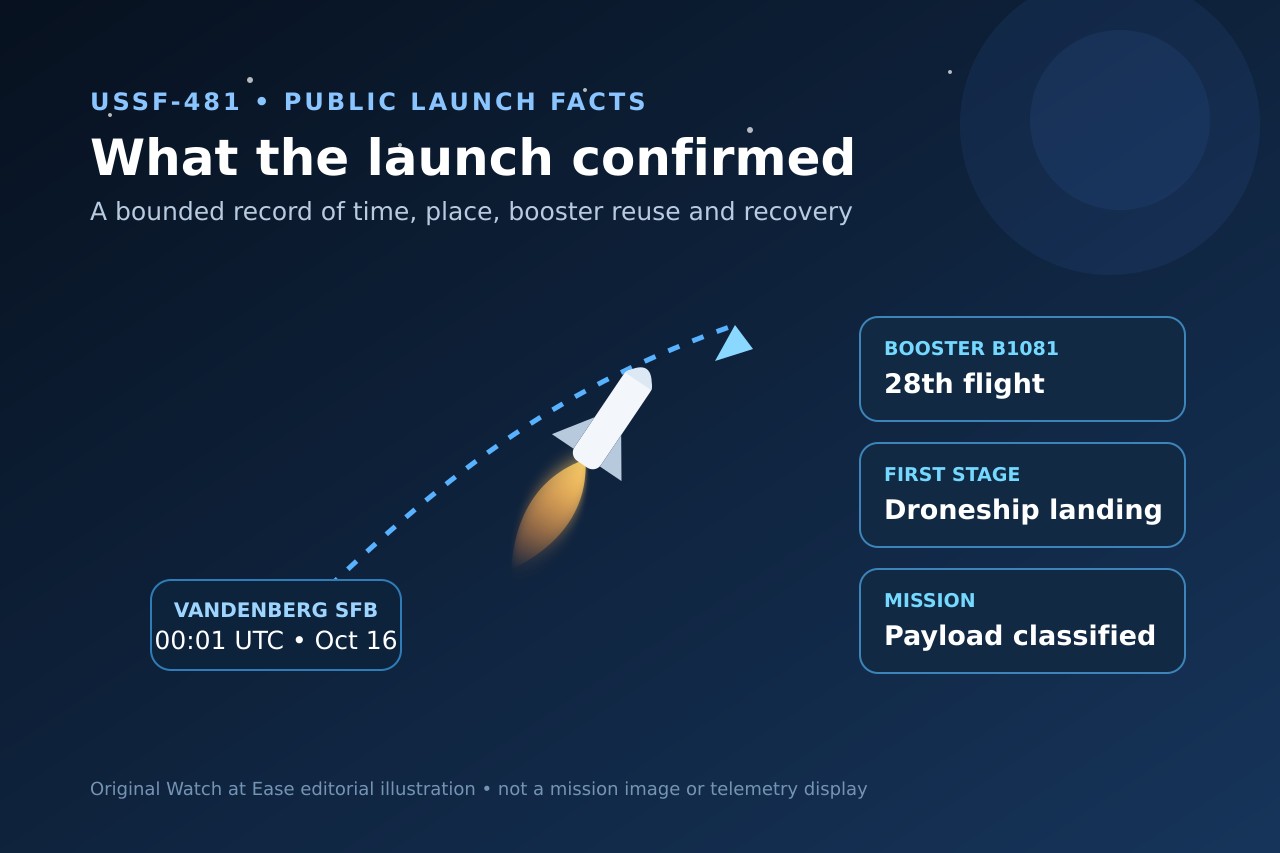
Original editorial illustration showing the USSF-481 launch time, Vandenberg site, booster flight number and droneship landing.
Original editorial illustration: the public facts of the USSF-481 launch and booster recovery. Watch at Ease
Science · NEWS EXPLAINER

USSF-481 launched successfully: what is public and what remains classified

Falcon 9 lifted off from Vandenberg at 00:01 UTC on October 16 and its first stage returned to a droneship. The launch and recovery are public; the payload’s identity and purpose are not.

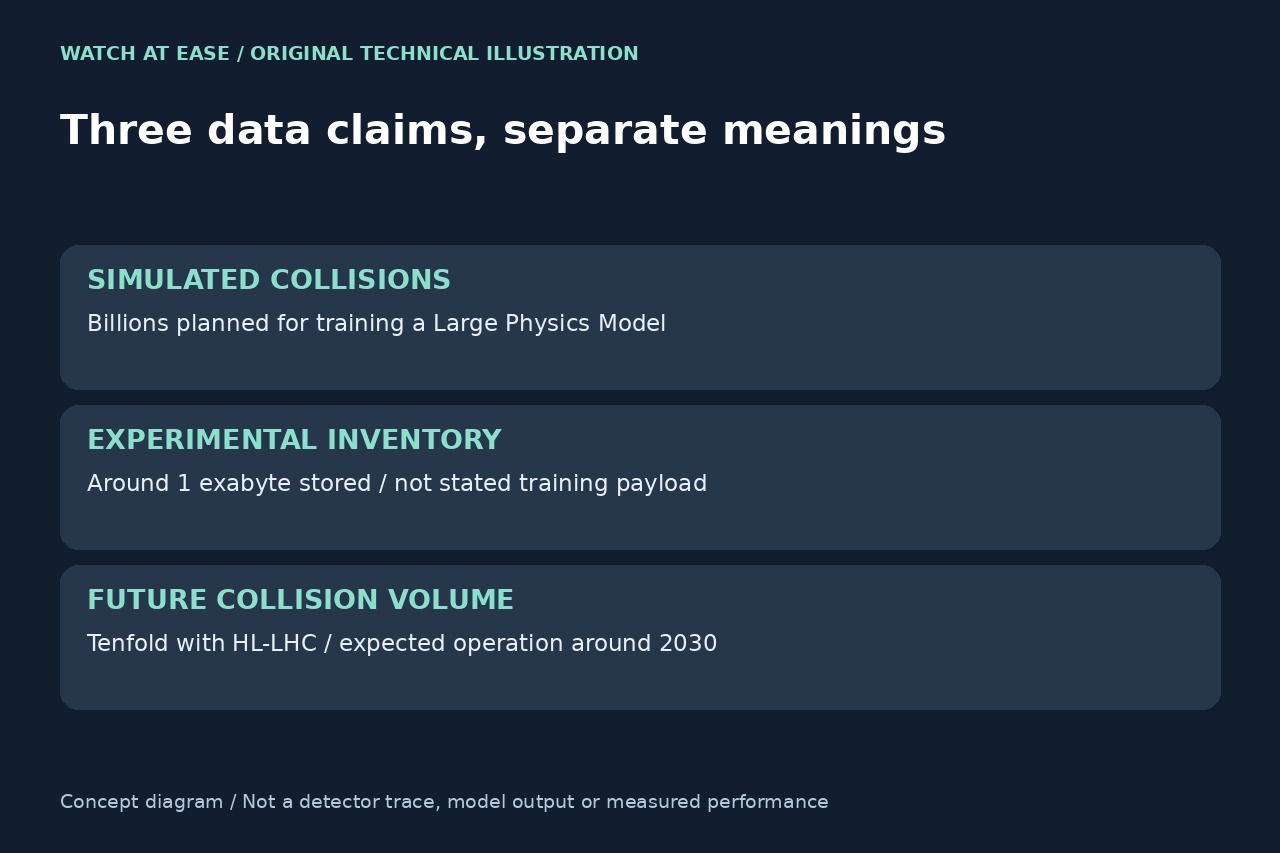
Original editorial illustration: simulated training collisions and stored experimental data are different quantities.
Original editorial illustration: simulated training collisions and stored experimental data are different quantities. Watch at Ease
Science · NEWS EXPLAINER

CERN and Mistral plan Flare: what the physics-model agreement actually commits to

The October 15 announcement is a statement of intent. Simulated training collisions, existing experimental data and future LHC growth describe different things.

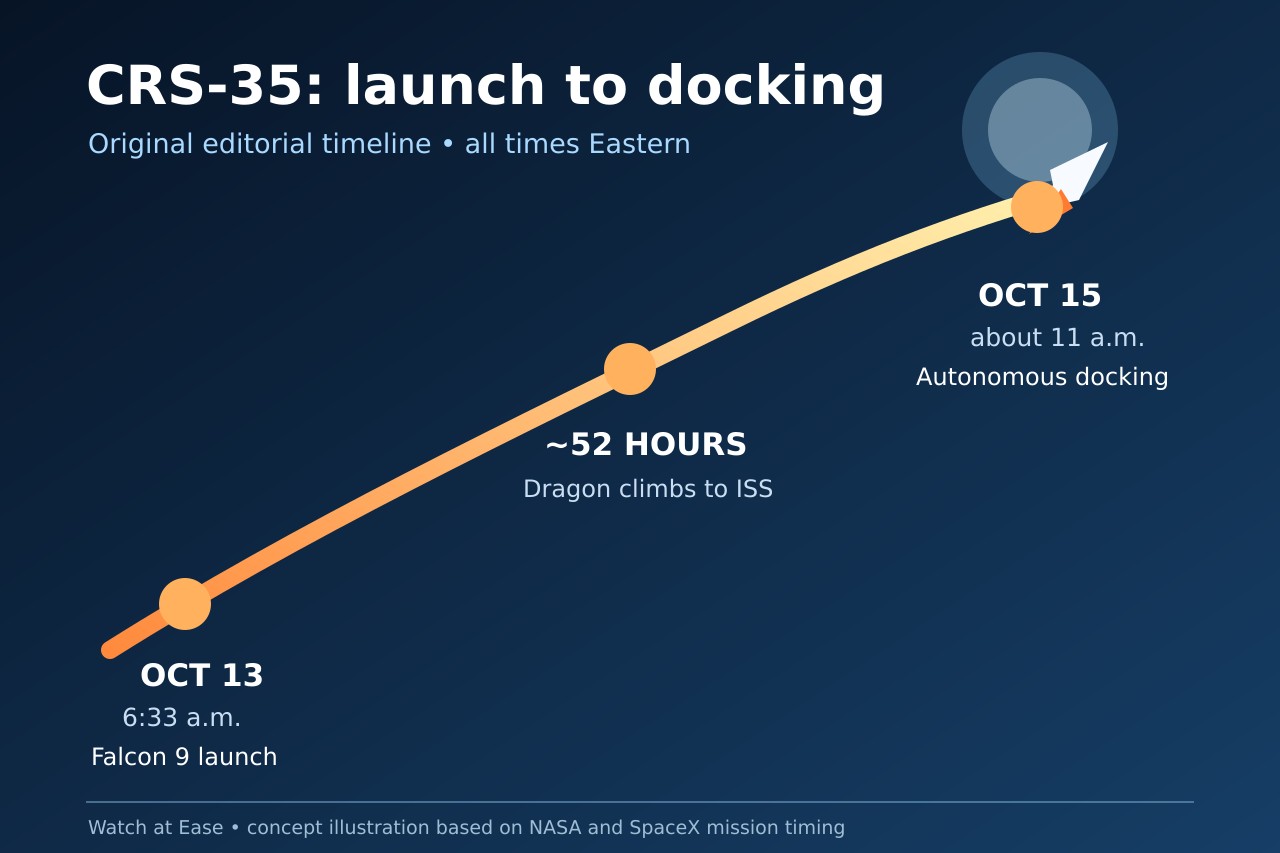
Original editorial illustration showing CRS-35 launching October 13, docking October 15 and returning in mid-November.
Original concept illustration: launch is complete; docking and the mid-November return are still upcoming milestones. Watch at Ease
Science · NEWS EXPLAINER

SpaceX CRS-35 launches final ISS solar arrays and new retina and heart research

Cargo Dragon is carrying more than 6,300 pounds to the International Space Station. Launch is complete, while docking, installation and the research results are still ahead.

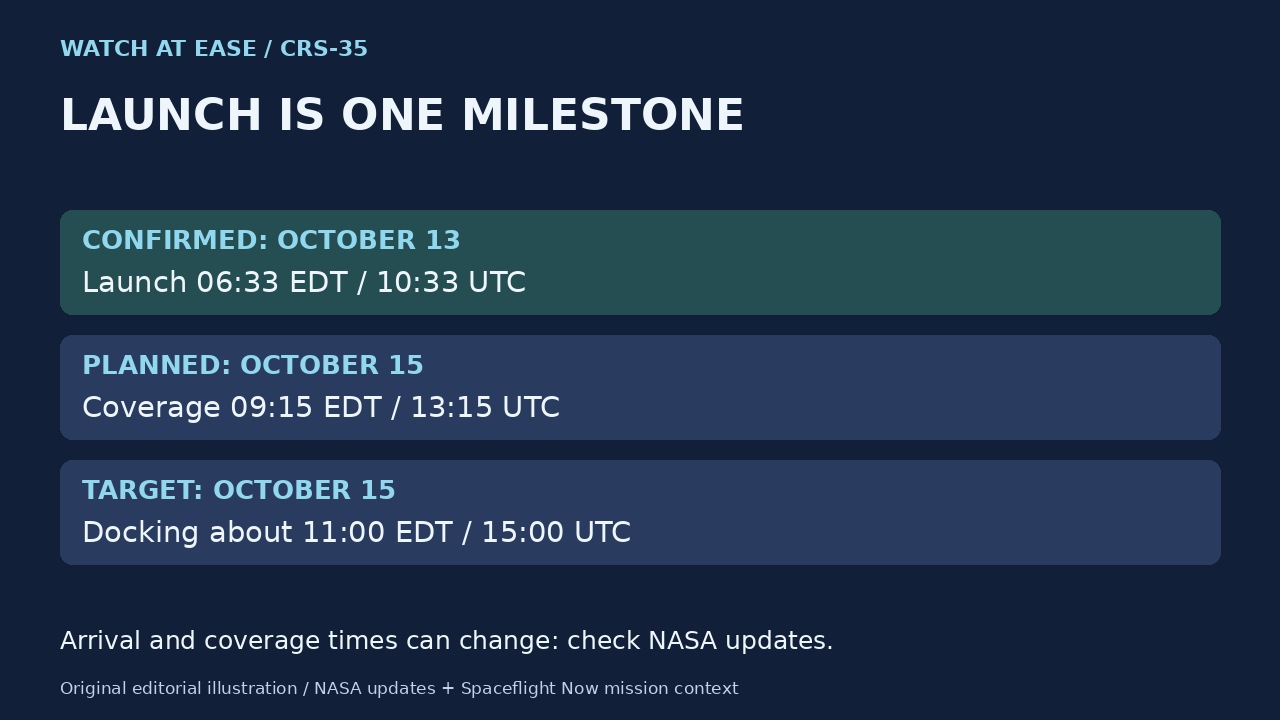
Original editorial illustration separating confirmed launch from planned Thursday coverage and docking.
Original editorial illustration: coverage and docking are planned times, not achieved events. Watch at Ease
Science · NEWS EXPLAINER

SpaceX CRS-35 launches: Thursday’s docking is the next milestone to watch

Dragon has lifted off with more than 6,300 pounds of cargo. NASA’s October 15 arrival and broadcast times remain scheduled milestones, not a completed delivery.

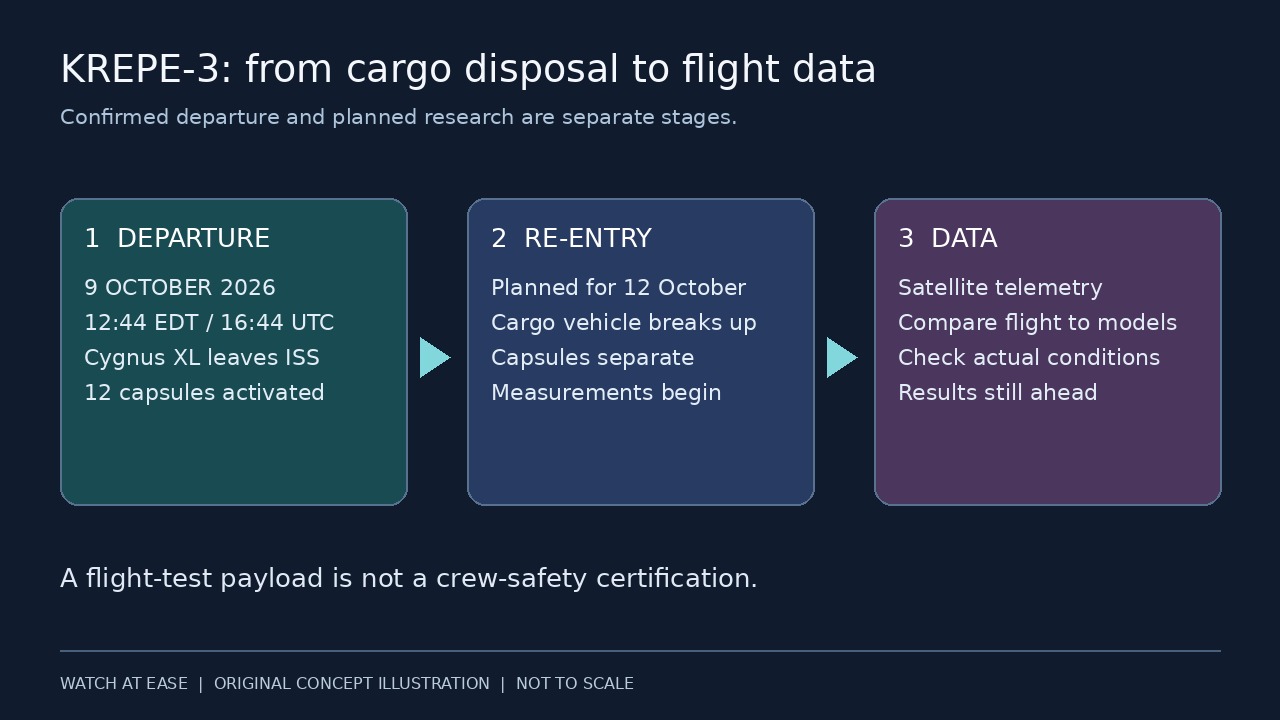
Original diagram separating confirmed station departure from planned capsule release and telemetry
Concept illustration: the research sequence is schematic; it is not an event photograph or a prediction of capsule trajectories. Watch at Ease
Science · NEWS EXPLAINER

Cygnus carries 12 heat-shield experiments: a flight test, not proof of Mars readiness

KREPE-3 will turn a cargo spacecraft’s planned disposal into a materials test. The October 9 departure is confirmed; performance results are still ahead.

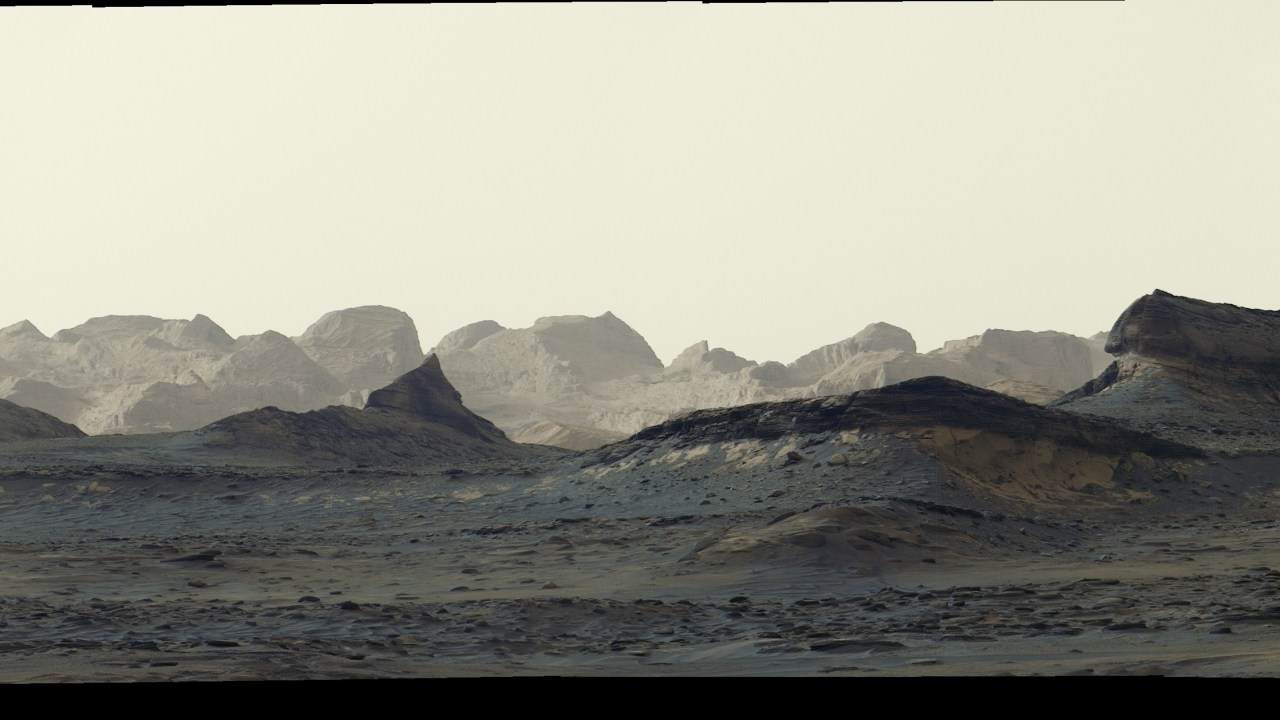
NASA/JPL-Caltech/MSSS panorama showing blue-gray Martian foreground ridges and distant wind-carved cliffs in bright dawn light
Curiosity captured the six frames on Aug. 11, 2026; the team stitched them on Earth and omitted its usual white-balancing step. NASA/JPL-Caltech/MSSS · NASA factual editorial use under NASA media guidelines and JPL image-use policy
Science · NEWS EXPLAINER

Curiosity’s new Mars dawn panorama was captured in August—here is what it shows

NASA’s October release combines six August 11 images. The unusual color processing, a separate climbing milestone and an unresolved question about the distant cliffs need to be read separately.

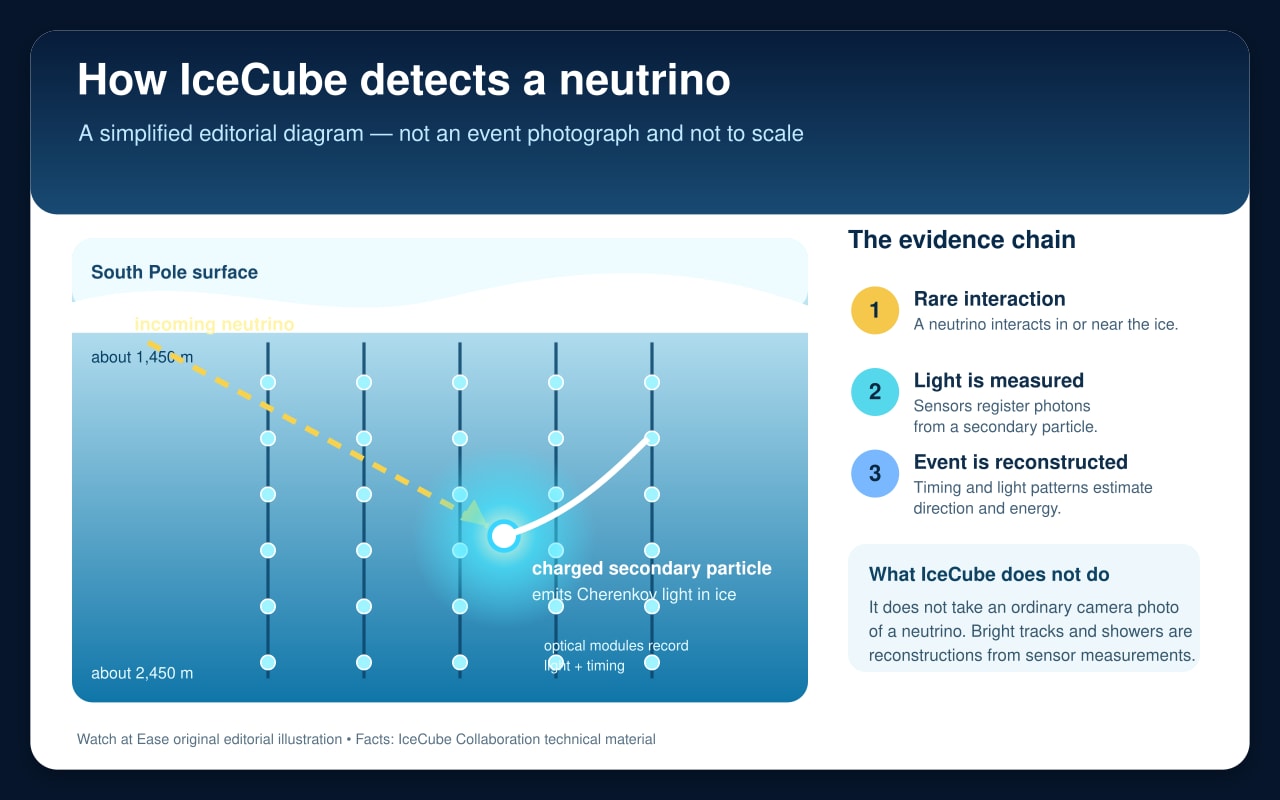
Original editorial illustration showing an incoming neutrino, a secondary charged particle and IceCube optical modules recording Cherenkov light.
Original editorial illustration: IceCube measures light and timing from secondary particles, then researchers reconstruct the event; this is not a neutrino photograph and is not to scale. Watch at Ease
Science · NEWS EXPLAINER

Francis Halzen wins the 2026 physics Nobel: what IceCube actually detects

The award recognizes the South Pole observatory and its observations of high-energy neutrinos from space. IceCube records light from secondary particles, not a direct photograph of a neutrino.

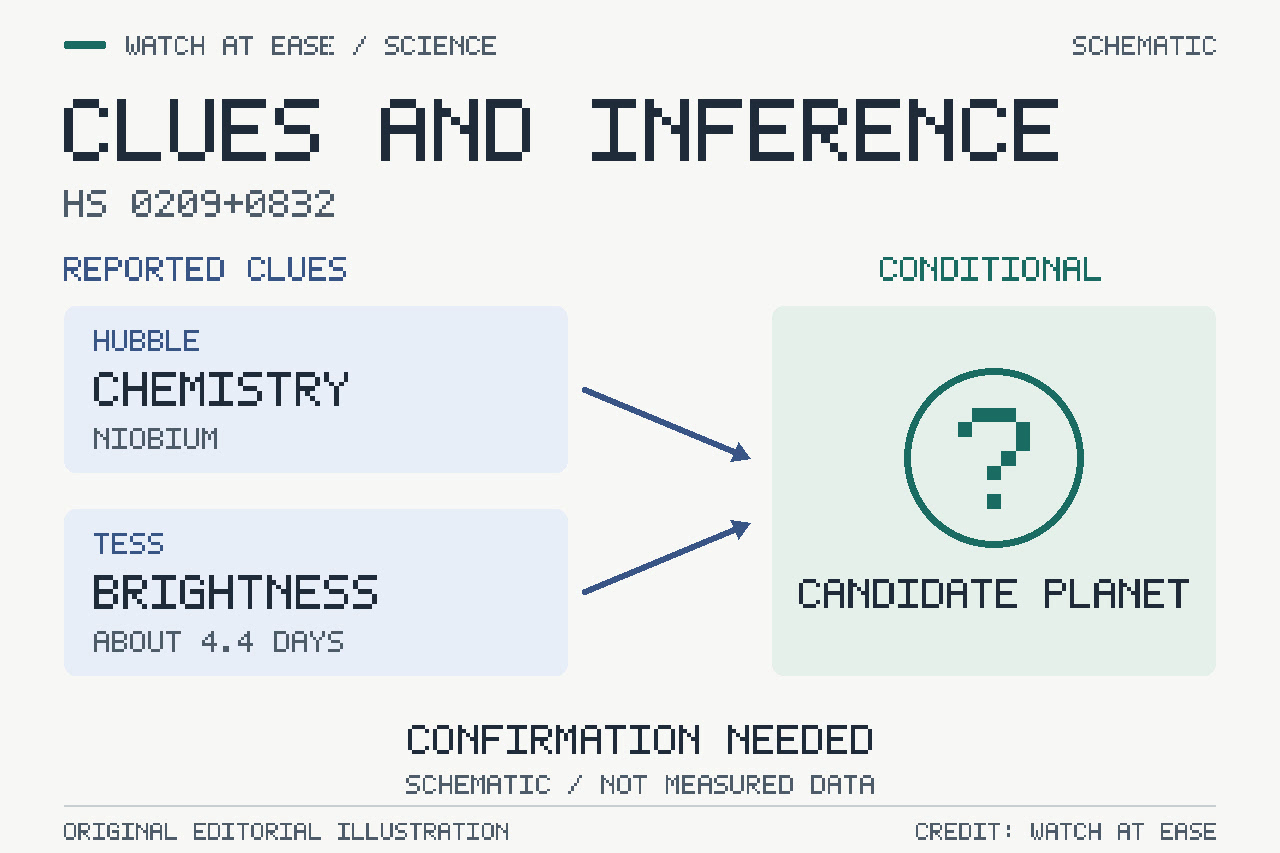
Original diagram separating the reported chemical signature and 4.4-day brightness variation from the proposed planet interpretation.
Original editorial illustration: the two reported clues support a candidate interpretation; they do not establish a confirmed planet. Watch at Ease
Science · NEWS EXPLAINER

A 'phoenix' planet candidate may have formed from a dead star's debris

Unusual chemistry and a repeating brightness signal point to a possible second-generation world around HS 0209+0832. The proposed planet and its origin still need confirmation.

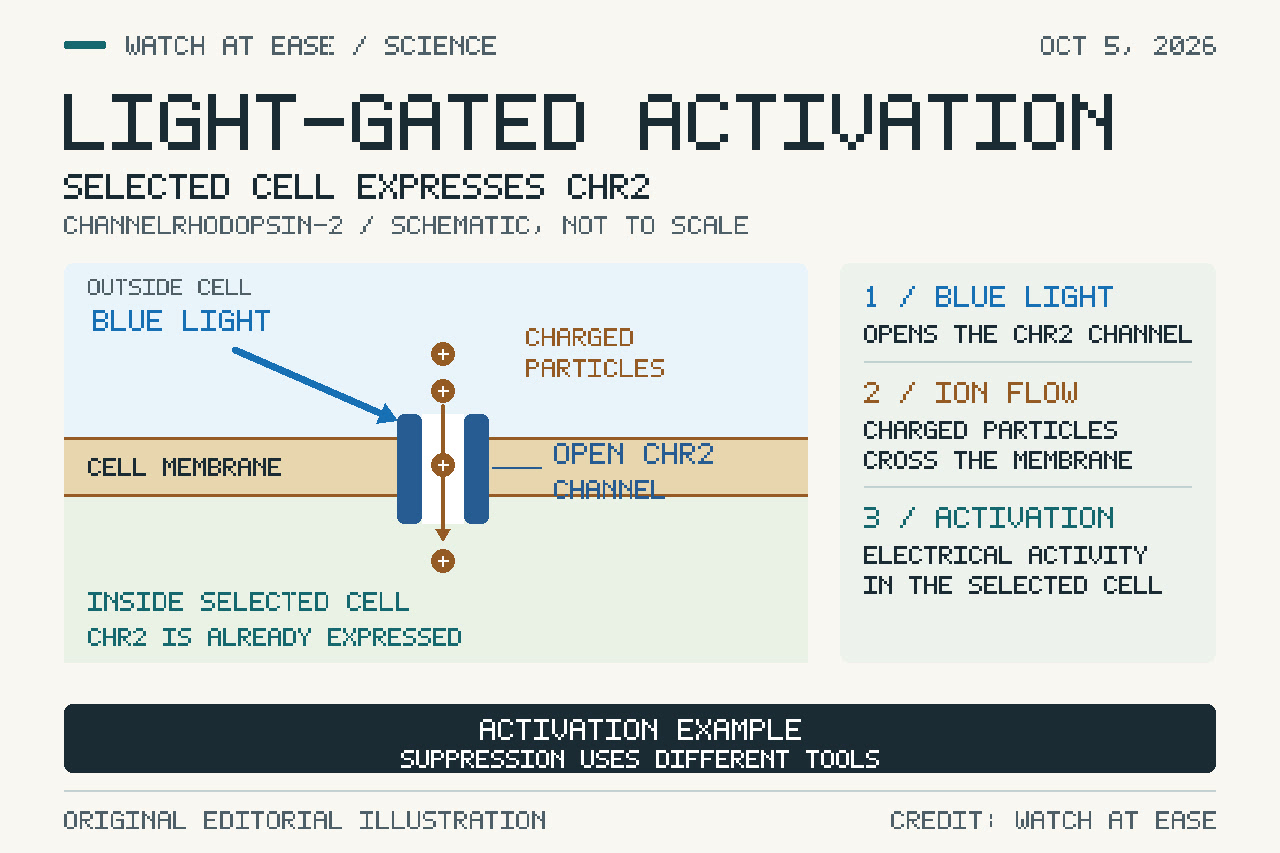
Original diagram of an activation example: a selected cell expresses channelrhodopsin-2; blue light opens the channel and charged particles cross the membrane, producing electrical activity. Suppression uses different tools.
Original editorial illustration: this ChR2 example shows activation in cells made to express the light-sensitive protein. Other tools are used to suppress activity; one blue-light ChR2 switch does not actively perform both functions. Watch at Ease
Science · NEWS EXPLAINER

Nobel medicine prize honors three optogenetics pioneers

Karl Deisseroth, Peter Hegemann and Georg Nagel share the 2026 award. Their work helped turn light-sensitive proteins into tools for studying nerve cells.

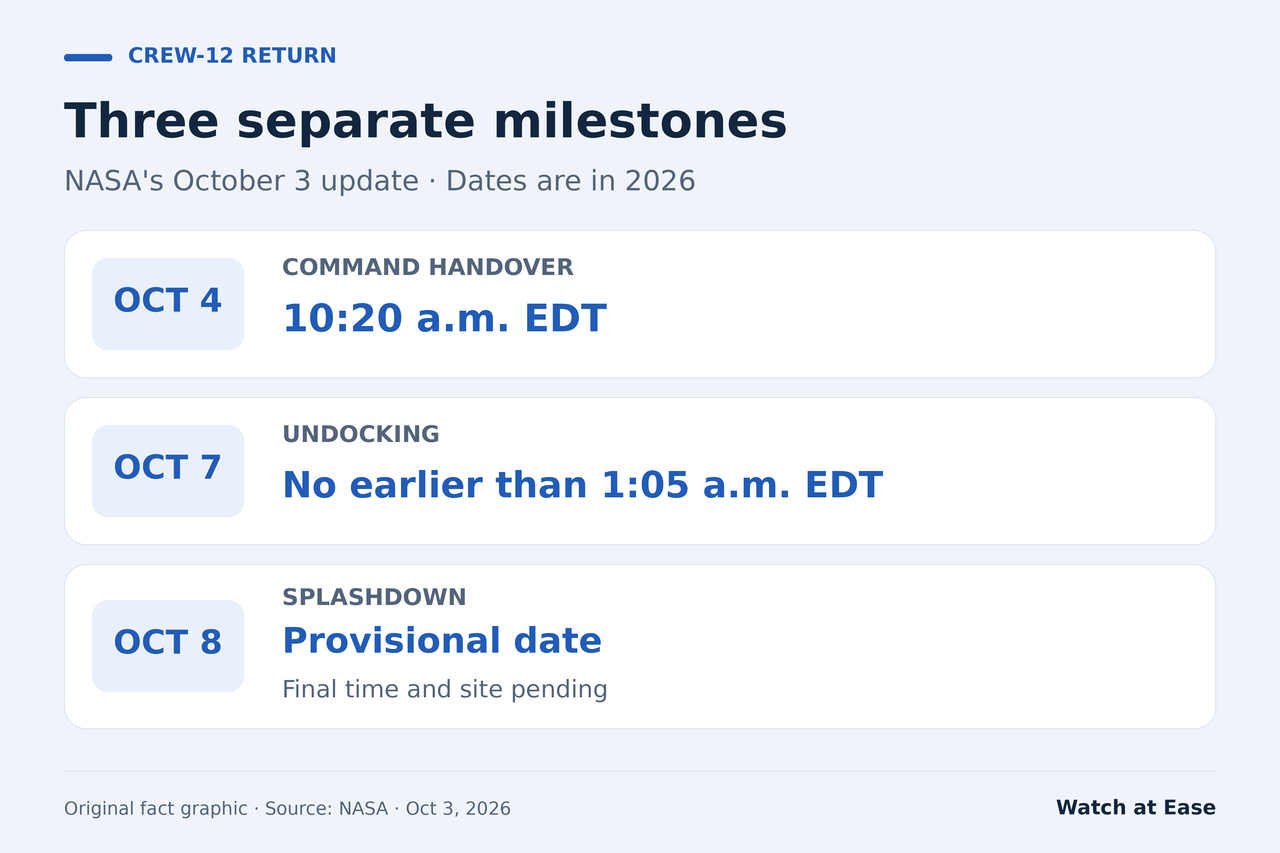
Original timeline illustration separating Crew-12’s October 4 command handover, earliest October 7 undocking and provisional October 8 splashdown.
Original Watch at Ease information illustration based on NASA’s October 3 update: the handover, undocking and splashdown are separate milestones; the return targets remain conditional. Watch at Ease
Science · NEWS EXPLAINER

NASA moves Crew-12 departure target to October 7 after weather review

The earliest undocking is now 1:05 a.m. EDT on October 7. The October 4 command handover remains a separate event, and a California splashdown on October 8 is still provisional.

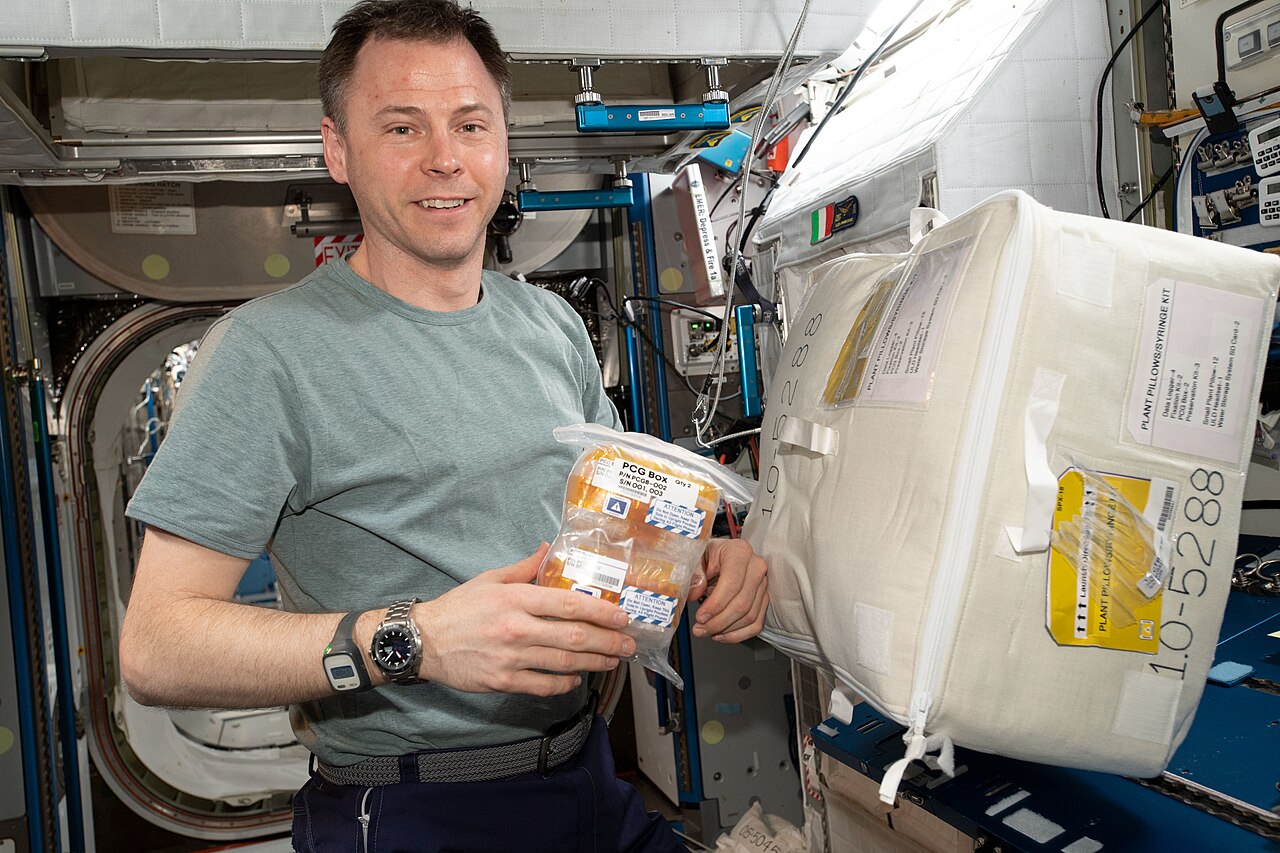
Archive NASA photograph of astronaut Nick Hague holding protein crystal growth research samples aboard the International Space Station.
Archive photo: NASA astronaut Nick Hague holds protein-crystal research samples aboard the ISS in 2019. This is historical microgravity-research context and does not show Varda hardware or a Varda mission. NASA / Wikimedia Commons · Public domain (NASA)
Science · NEWS EXPLAINER

Varda raises $250 million at $1.6 billion valuation to scale orbital drug manufacturing

Varda Space raised a $250 million Series D at a $1.6 billion valuation, Reuters reports, taking total capital raised to $598 million. The company plans to use the funding to expand reusable orbital manufacturing and reentry capacity, with pharmaceuticals becoming a larger part of its commercial strategy.

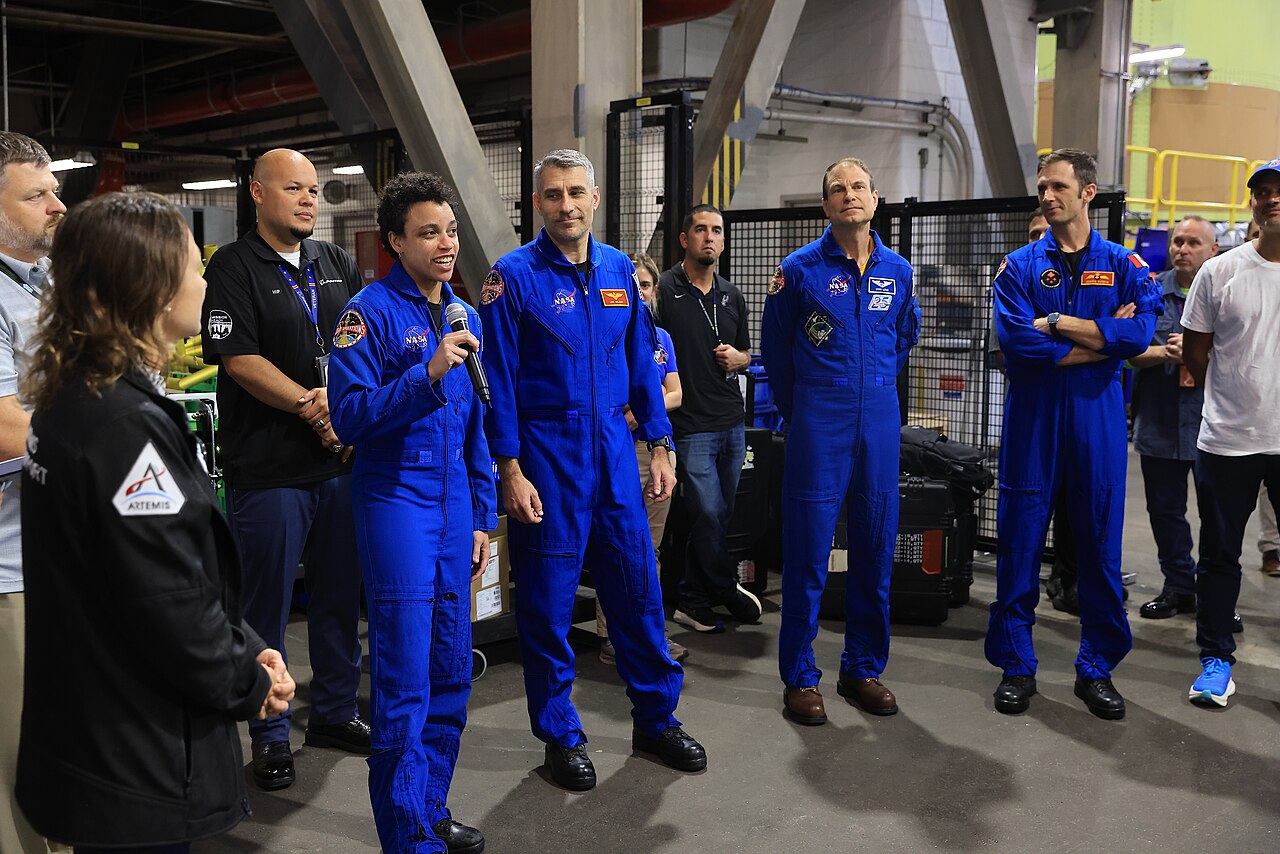
Archive photo inside Kennedy Space Center’s Vehicle Assembly Building showing Jessica Watkins speaking with astronauts and NASA staff in blue flight suits.
Archive photograph: Jessica Watkins and other astronauts visit Kennedy Space Center’s Vehicle Assembly Building on May 12, 2026. It predates Crew-13’s September 26 arrival and is not arrival-day photography. NASA/Kim Shiflett via Wikimedia Commons
Science/Climate · NEWS EXPLAINER

NASA–SpaceX Crew-13: Falcon 9 Static Fire Before Planned October 1 Launch

Falcon 9 and Dragon are vertical at SLC-40 after an integrated static fire and data review, while NASA still targets liftoff no earlier than 11:10 a.m. EDT on Oct. 1.

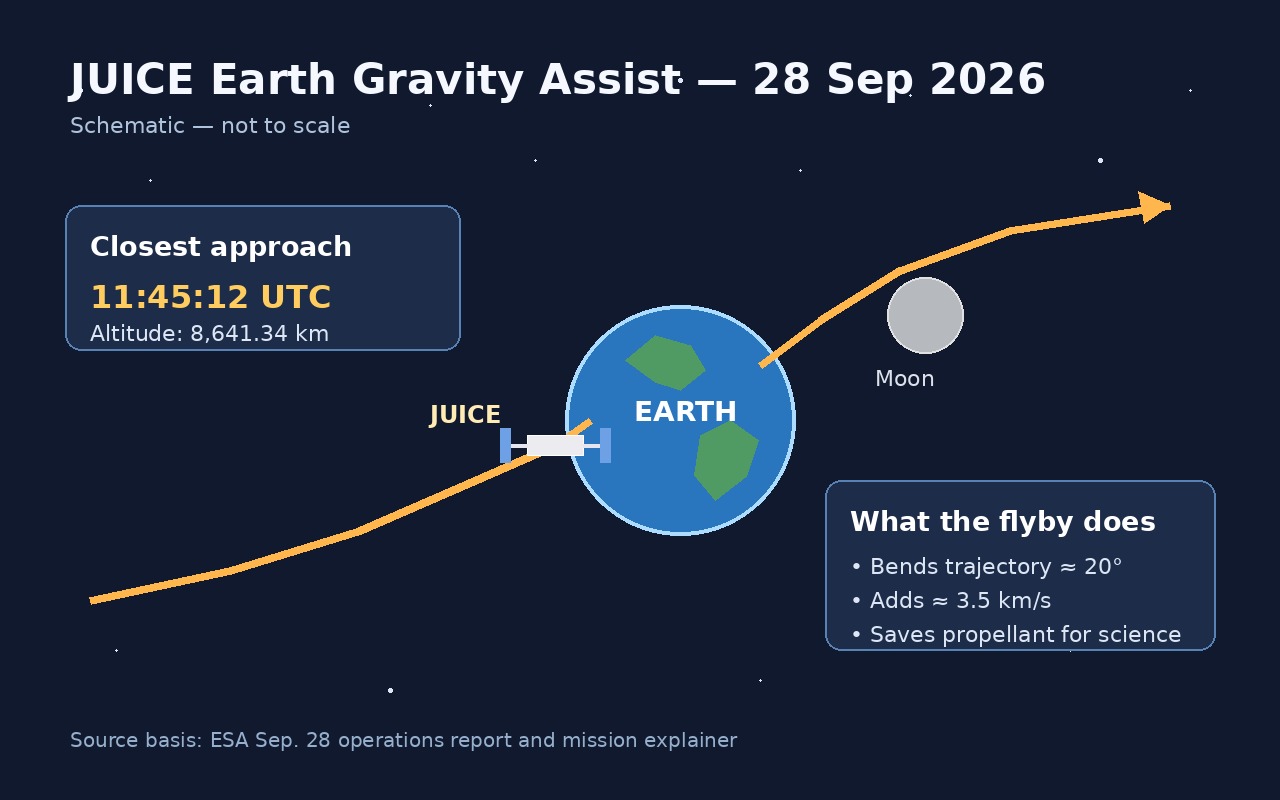
Original Watch at Ease diagram of JUICE curving past Earth during the September 28 gravity assist.
Watch at Ease illustration: a schematic of JUICE’s September 28 Earth gravity assist, including the scheduled 11:45:12 UTC closest approach and 8,641.34 km altitude. It is not to scale and is not event photography. Watch at Ease · All rights reserved — original Watch at Ease illustration
Science/Climate · NEWS EXPLAINER

JUICE returns to Earth for a gravity assist on its way to Jupiter

ESA’s latest cruise report lists a September 28 closest approach at 11:45:12 UTC, about 8,641 km above Earth, as the Jupiter-bound spacecraft uses the flyby to reshape its trajectory and test science systems.

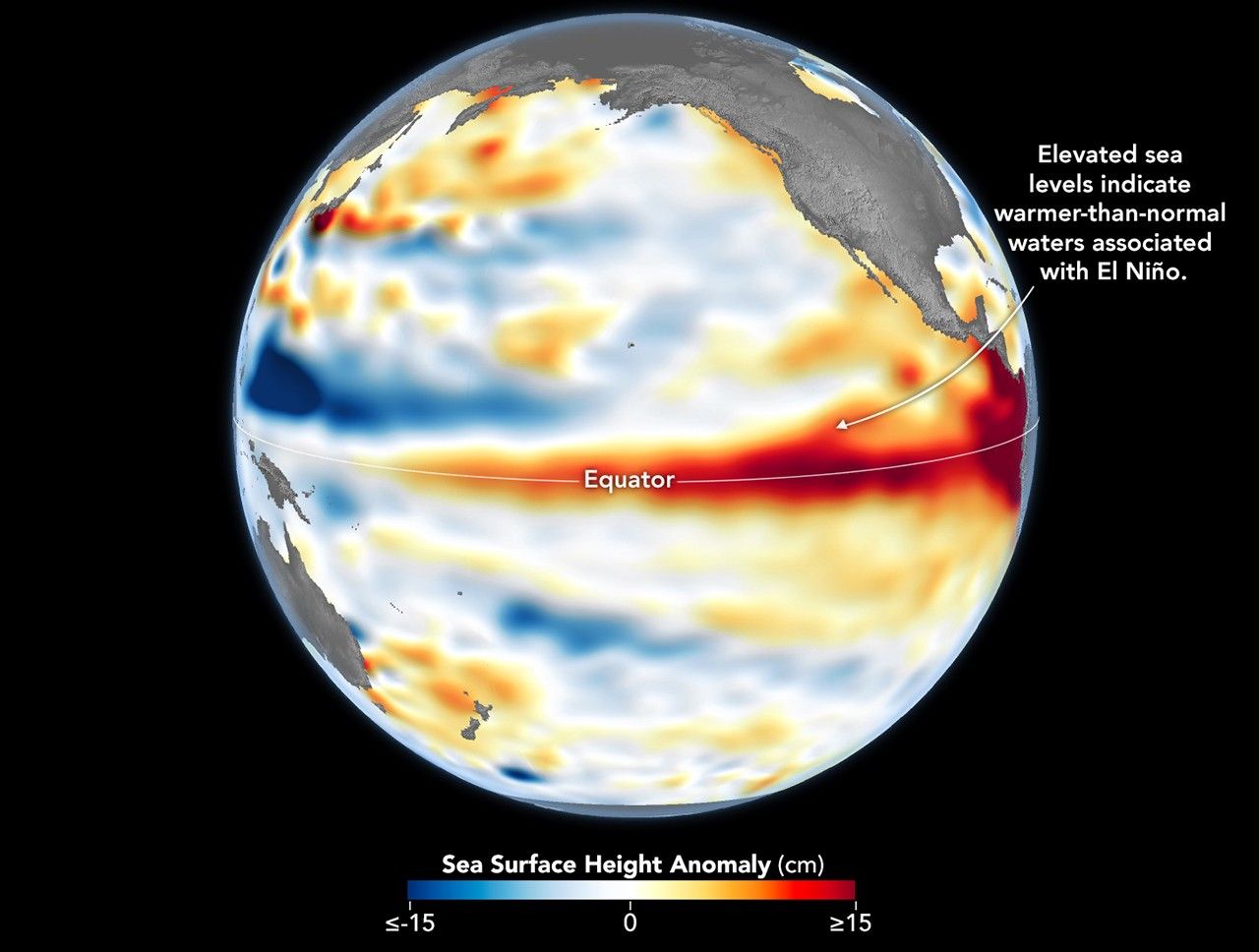
NASA illustration of the Pacific Ocean showing elevated sea levels and warmer-than-normal water associated with El Niño in June 2026.
NASA illustration using Sentinel-6 data from June 8, 2026: elevated sea levels mark warmer-than-normal Pacific water associated with El Niño. It is not a map of the latest U.S. snow forecast. NASA Earth Observatory / Lauren Dauphin
Science/Climate · NEWS EXPLAINER

2026 U.S. Fall Weather Outlook: El Niño, Warmth and Early Snow

New outlooks lean warmer across the northern U.S., wetter across much of the South and drier in the Pacific Northwest—patterns that could delay some early snow and raise snow levels in the Cascades.

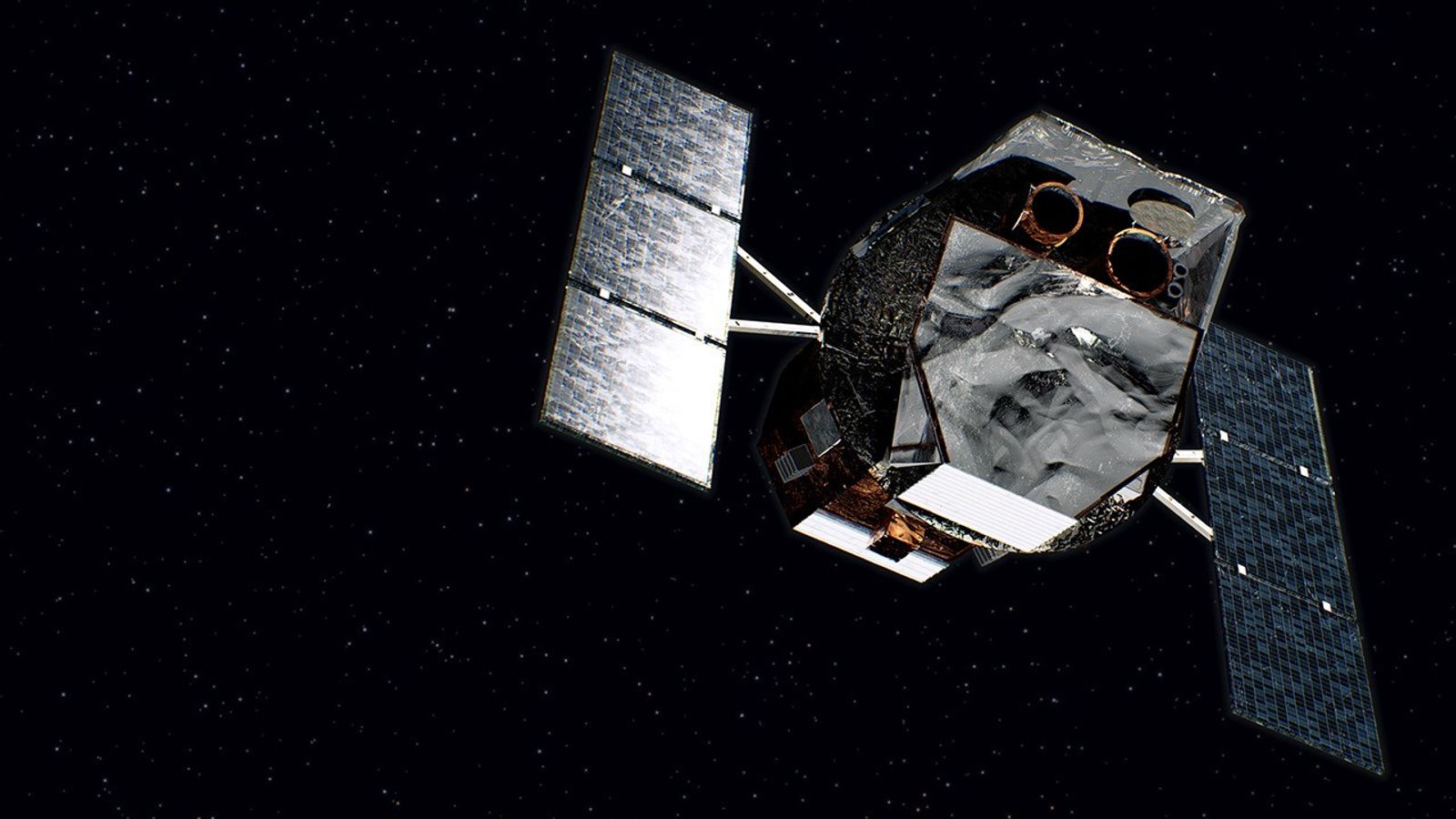
Artist's concept of the Neil Gehrels Swift Observatory, showing its solar arrays and telescope assembly against space.
Artist's concept of Swift, the observatory LINK was sent to help. This is an illustration, not an image of the September 25 reentry. NASA's Goddard Space Flight Center / Chris Smith (KBRwyle)
Science · NEWS EXPLAINER

LINK Reenters Earth's Atmosphere. What Happens to NASA's Swift?

The rescue spacecraft is gone, but Swift is still observing. New mission updates explain why the telescope's science deadline and its eventual reentry are not the same event.