Science · NEWS EXPLAINER
Blue Origin targets weekly New Glenn flights: four gates that still matter
A Florida factory expansion, more pads and two additional landing platforms aim to support multiple flights per week by decade’s end. But production capacity, launch sites, licensing and reliable missions remain separate milestones.
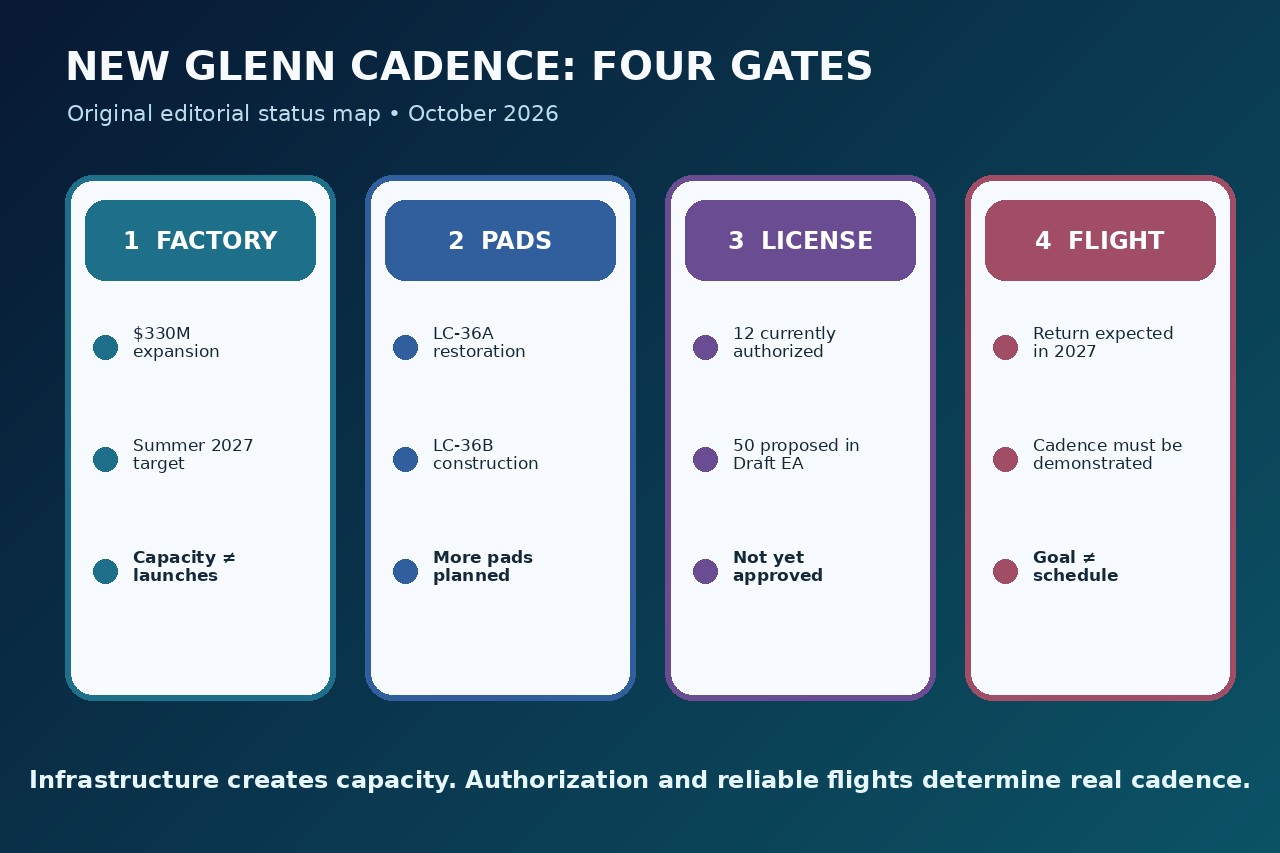
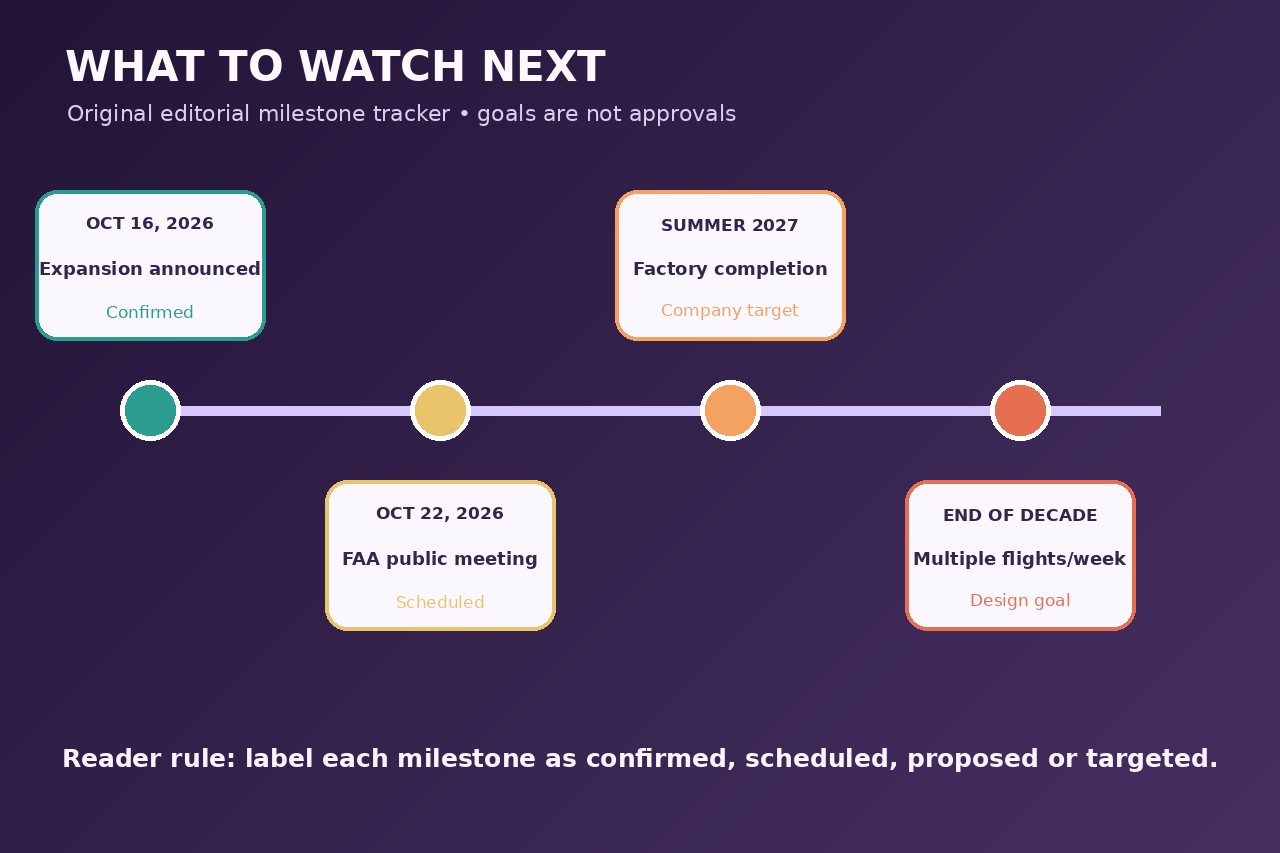
Blue Origin’s October 16 Florida expansion plan is designed to support multiple New Glenn flights per week by the end of the decade. The announcement is a capacity plan, not a present launch schedule. Readers should track four separate gates: manufacturing, pads and recovery, FAA authorization, and repeatable flight operations.
The expansion builds capacity, not an instant flight schedule
Blue Origin says it has invested more than $3 billion in Florida and is adding a $330 million expansion at its 1.37-million-square-foot Rocket Park campus. The company targets summer 2027 completion and says the facility could produce up to 150 upper stages a year for New Glenn 9x4. That is a factory-capacity figure; it is not a forecast that 150 rockets will launch in a year.
Launch pads and recovery systems are separate gates
LC-36A is being restored after the anomaly earlier this year, while LC-36B is under construction for New Glenn 9x4. Blue Origin also plans additional Space Coast pads and two more sea-based landing platforms. A four-bay customer integration facility and a vertical integration facility are intended to let missions move through preparation in parallel. Each project can add resilience, but none by itself establishes a weekly operating cadence.
The 12-to-50 license change is still proposed
The FAA says Blue Origin’s current vehicle operator license authorizes up to 12 New Glenn launches per year from SLC-36. A Draft Environmental Assessment considers raising the maximum at SLC-36A to 50 launches per year, including related static fires, ocean-platform landings and fairing recovery. The FAA has scheduled a virtual public meeting for October 22 and accepts comments through October 30. Until the process is complete and a license is modified, 50 is a proposal, not an authorization.
Return to flight comes before high cadence
Reuters reports that New Glenn has been grounded since the May launch-pad explosion and is expected to return to flight in early 2027. Ars Technica likewise describes a 2027 return as more likely than a late-2026 attempt. A restored pad and successful, repeatable missions are therefore nearer-term checkpoints than the end-of-decade goal of multiple flights per week.
A reader checklist for future announcements
When a new milestone appears, identify its status: completed, under construction, proposed, scheduled or targeted. Then ask which gate it changes—factory throughput, payload preparation, pad availability, recovery and refurbishment, regulatory authorization or demonstrated flight reliability. This keeps company capacity goals, government approvals and actual missions from being blended into one headline number.