Science · NEWS EXPLAINER
A 'phoenix' planet candidate may have formed from a dead star's debris
Unusual chemistry and a repeating brightness signal point to a possible second-generation world around HS 0209+0832. The proposed planet and its origin still need confirmation.
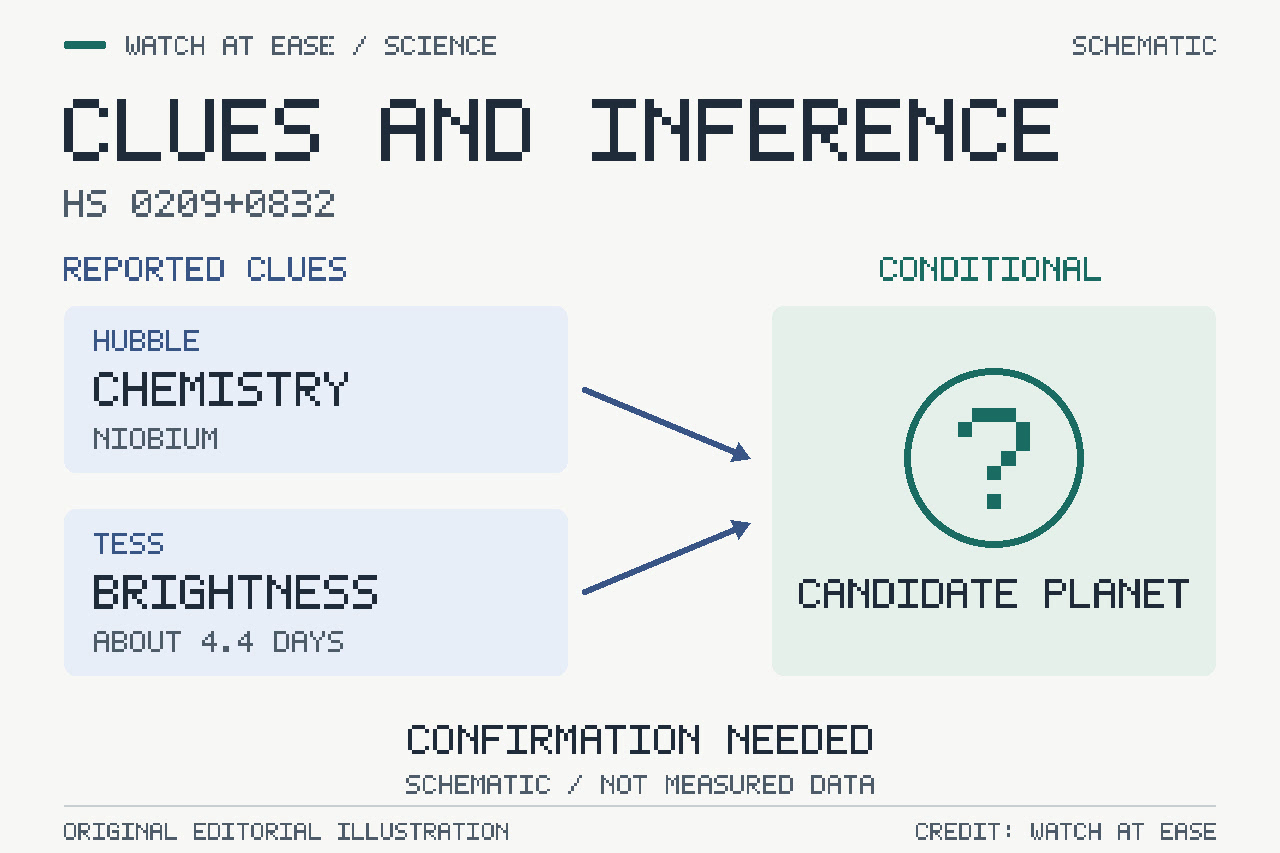
A University of Warwick-led team has identified evidence for a possible second-generation planet around the white dwarf HS 0209+0832. The research, reported October 5 in Nature Astronomy, connects an unusual chemical mix in the stellar remnant's atmosphere with a brightness variation repeating about every 4.4 days.
What the chemical clues suggest
The researchers report an unusual abundance of heavy elements, including niobium. They interpret this pattern as evidence of material enriched inside a dying star, rather than the rocky material commonly detected around white dwarfs.
White dwarfs are the dense stellar remnants left after stars shed their outer layers. Studying material in their atmospheres can help astronomers investigate what is reaching them from the surrounding system. The chemical pattern is a clue to the material's origin, rather than a sample collected directly from a planet.
Old observations, a new interpretation
Science News reports that the chemical finding came from a new analysis of Hubble observations taken in 1999. The current development is the interpretation of those measurements, rather than a claim that Hubble collected them this week.
TESS observations provide another clue: a repeating brightness variation consistent with a gas giant in a close orbit. The reported 4.4-day period should not be described as a confirmed planetary transit or a directly measured planet size.
How another generation could form
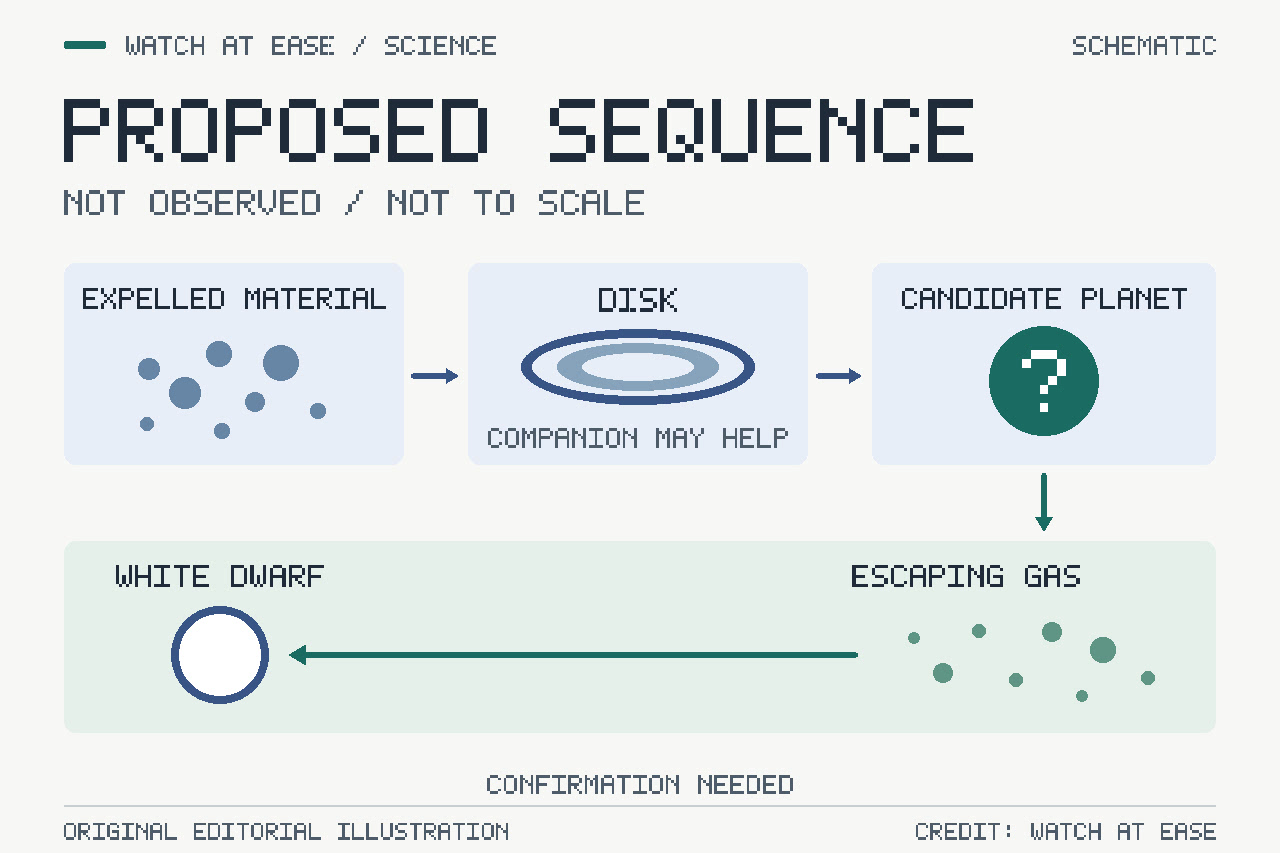
The team proposes that material expelled during the original star's death formed a disk, possibly with help from a companion star. A giant planet could then have assembled from that material.
In this explanation, radiation strips gas from the candidate planet, supplying the unusual elements detected at the white dwarf. This is a proposed formation history, not a sequence that astronomers watched unfold.
What confirmation would establish
If confirmed, the system would offer evidence that planet formation can restart around a white dwarf after its original star dies. That would be a different history from a planet surviving the star's evolution. The claim concerns a possible formation route, not the first planet ever found around a dead star.
The useful distinction when following this discovery is between clues and conclusions. The chemical signature and changing brightness are the reported observations; a planet formed from stellar debris is the explanation being tested.