Science · NEWS EXPLAINER
USSF-481 launched successfully: what is public and what remains classified
Falcon 9 lifted off from Vandenberg at 00:01 UTC on October 16 and its first stage returned to a droneship. The launch and recovery are public; the payload’s identity and purpose are not.
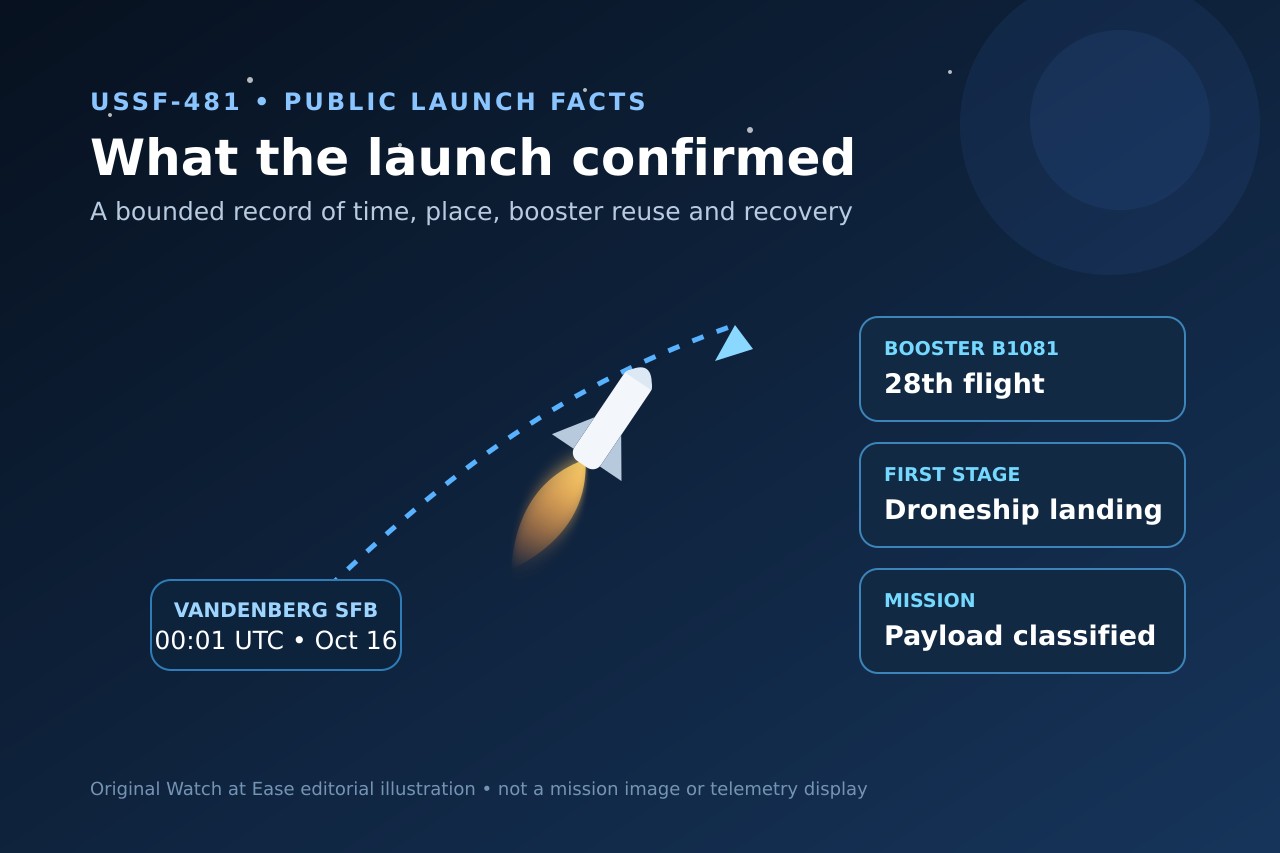
A SpaceX Falcon 9 launched the U.S. Space Force mission USSF-481 from Space Launch Complex 4 East at Vandenberg Space Force Base at 00:01 UTC on October 16. Independent reports agree that the mission carried a classified payload and that booster B1081 landed on the Of Course I Still Love You droneship a little over eight minutes later.
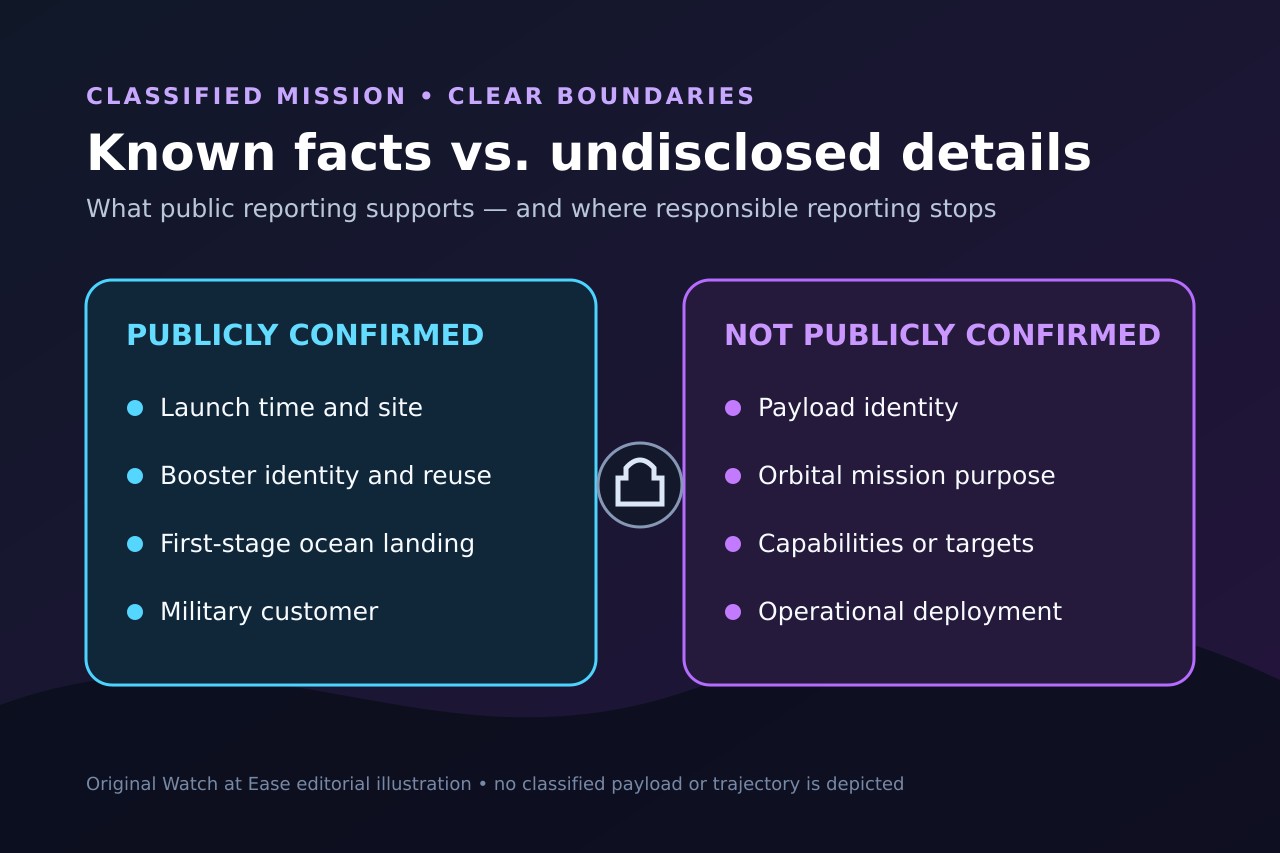
That combination creates a clear reporting boundary. A successful liftoff and first-stage recovery do not reveal the payload’s identity, mission function, capabilities or final operational destination. Those details should remain labeled undisclosed unless the Space Force or independently verifiable evidence establishes them.
What happened at Vandenberg
The rocket departed on time from California’s Vandenberg Space Force Base. Space.com and Spaceflight Now independently reported the 00:01 UTC launch from SLC-4E, giving readers two separate accounts of the same observable event.
The recovery was also visible and independently reported. Booster B1081 completed its 28th flight and landed at sea on Of Course I Still Love You about eight and a half minutes after liftoff. The landing confirms recovery of the first stage, not the status of every payload objective.
What the public record confirms
The customer is the U.S. Space Force and the mission designation is USSF-481. Both reports describe the payload as classified or undisclosed. That is enough to report who sponsored the launch and that the launch occurred, but not what the spacecraft is designed to do.
Space.com counted the flight as SpaceX’s 114th Falcon 9 mission of 2026 at publication time. That figure is useful launch-cadence context, not evidence about USSF-481’s payload or military role.
What remains classified
The sources do not identify the payload, its sensors, communications role, target area, owner program or operational destination. None of those details should be inferred from the customer name, the launch window or the fact that a first stage landed successfully.
Public safety notices can reveal where air and sea traffic must stay clear, and reporters may use them to discuss a likely flight path. They do not by themselves disclose a spacecraft’s purpose. This article therefore does not convert trajectory clues into a claim about mission function.
How to read later updates
Separate launch success from payload success. Liftoff, stage separation and booster recovery are observable milestones; deployment and on-orbit commissioning are different claims and require their own evidence.
Later statements may add a deployment confirmation or a mission name. Compare any update with the original source and timestamp, and treat unattributed social posts or recycled speculation as unverified until an official statement or independent evidence supports them.