Science · NEWS EXPLAINER
MMX targets a Mars-moon sample return: what NASA’s preview confirms and what remains a plan
NASA’s October 15 update details instruments and sample curation for the JAXA-led mission. The launch date changes with time zone, and published sampling milestones are not a completed mission.
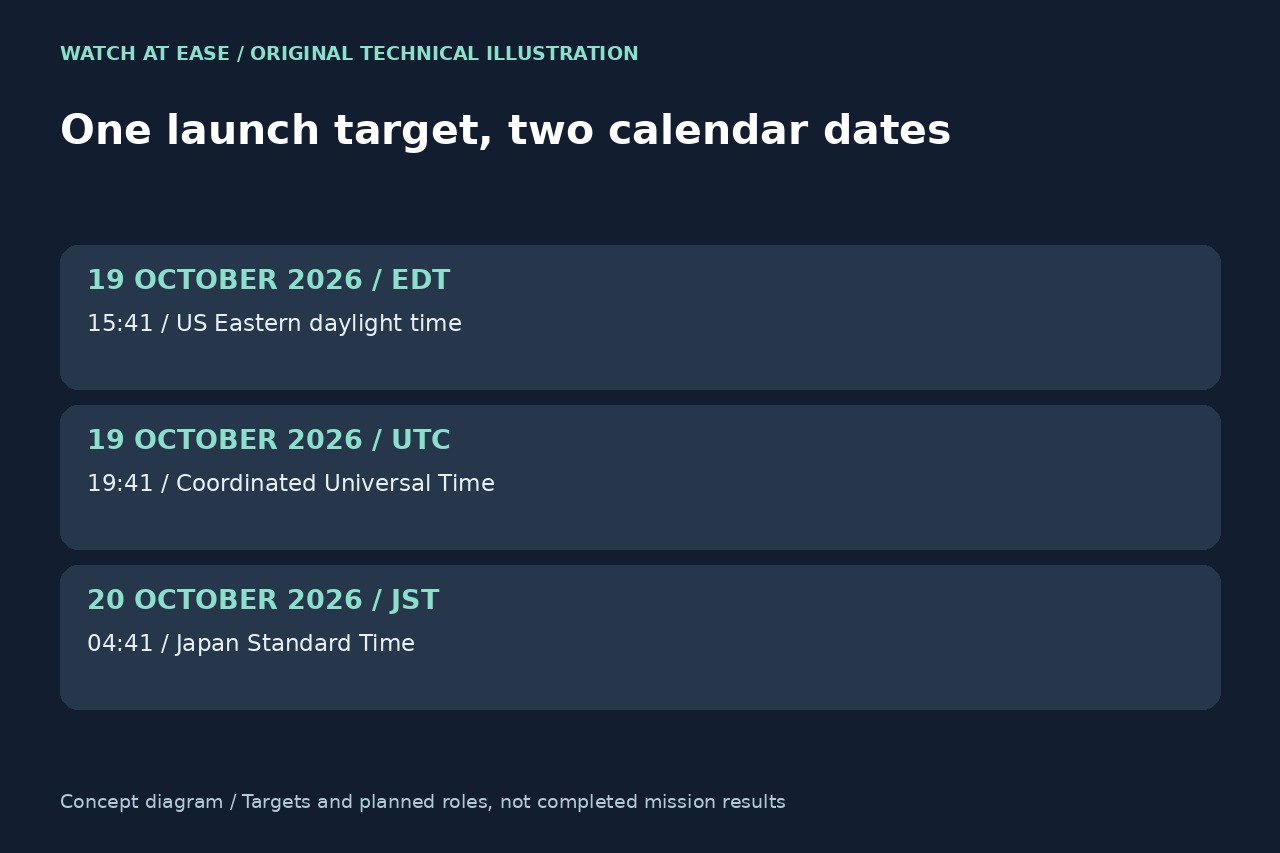
NASA’s October 15 MMX preview sets out its role in a JAXA-led attempt to return material from Phobos, a moon of Mars. Launch is targeted for October 19 in the US and October 20 in Japan. Those are the same planned departure, not two launches, and no sample has been returned by this mission.
One launch target, two calendar dates
NASA gives 3:41 p.m. EDT on October 19 and 4:41 a.m. JST on October 20. ESA’s October 13 preview gives the same Japanese time, equivalent to 19:41 UTC on October 19. The departure is planned from Tanegashima on an H3 rocket.
Always carry a time zone with the date when arranging coverage. A target time does not confirm liftoff, spacecraft health or arrival. Check the mission operator’s latest notice before treating a countdown as an operational result.
Separate measuring, sampling and curating
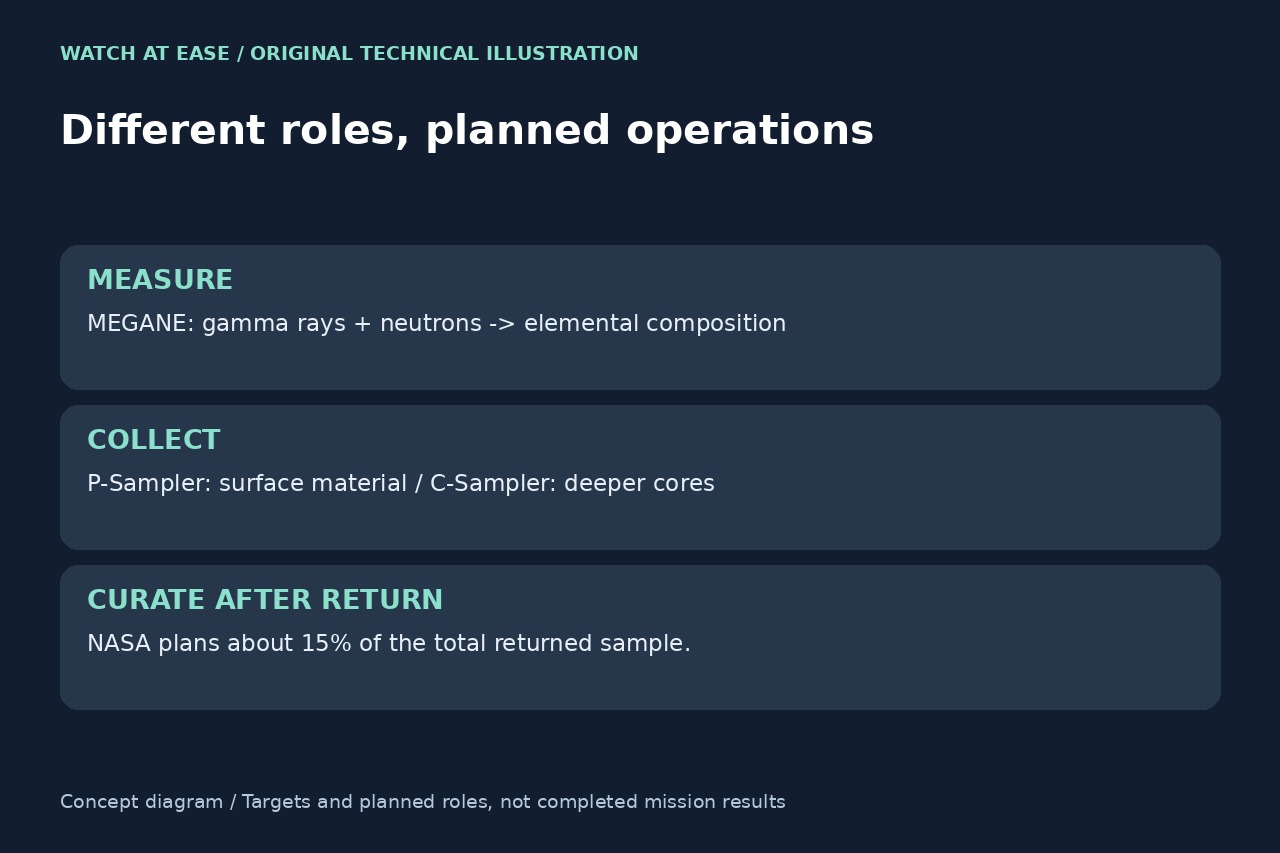
NASA says MEGANE will measure gamma rays and neutrons to infer surface elemental composition. Its pneumatic P-Sampler uses nitrogen bursts, complementing JAXA’s deeper coring C-Sampler. NASA plans to receive and curate about 15% of the total returned sample at Johnson Space Center.
These are different links in an evidence chain. An elemental measurement is not a physical sample already in a laboratory; an allocated share is not proof that the planned quantity will be collected. Avoid turning the percentage into a guaranteed mass.
Read the timeline with its qualifiers
Both agency accounts place Mars arrival in August 2027 and Earth return in 2031. NASA describes surface sampling no earlier than December 2028; ESA’s preview places Idefix deployment in early 2029 and main-spacecraft collection in 2030. The earlier bound and the more specific sequence are not identical promises.
We retain those attributions rather than selecting one unqualified sampling date. Future operations depend on the mission’s progress. A launch preview should distinguish an earliest-possible milestone from the nominal sequence and later completed events.
Why the rover and samples matter
ESA describes the 25-kilogram Idefix rover as a way to characterize Phobos’s surface and prepare the main spacecraft’s landing. Its preview targets return of at least 10 grams, with the capsule landing in Australia before samples are transferred to Japan.
The central question is whether the moons formed from impact debris or captured material, not whether a familiar-looking image proves an origin. Measurements and returned material are intended to test explanations. The October updates describe that scientific strategy; they do not announce a solved origin or a successful sample return.