Watch at EaseStories. Answers. Perspective.

WATCH AT EASE · PRACTICAL GUIDE

Guides

Answers to everyday questions, checked for current relevance.

145–168 / 359

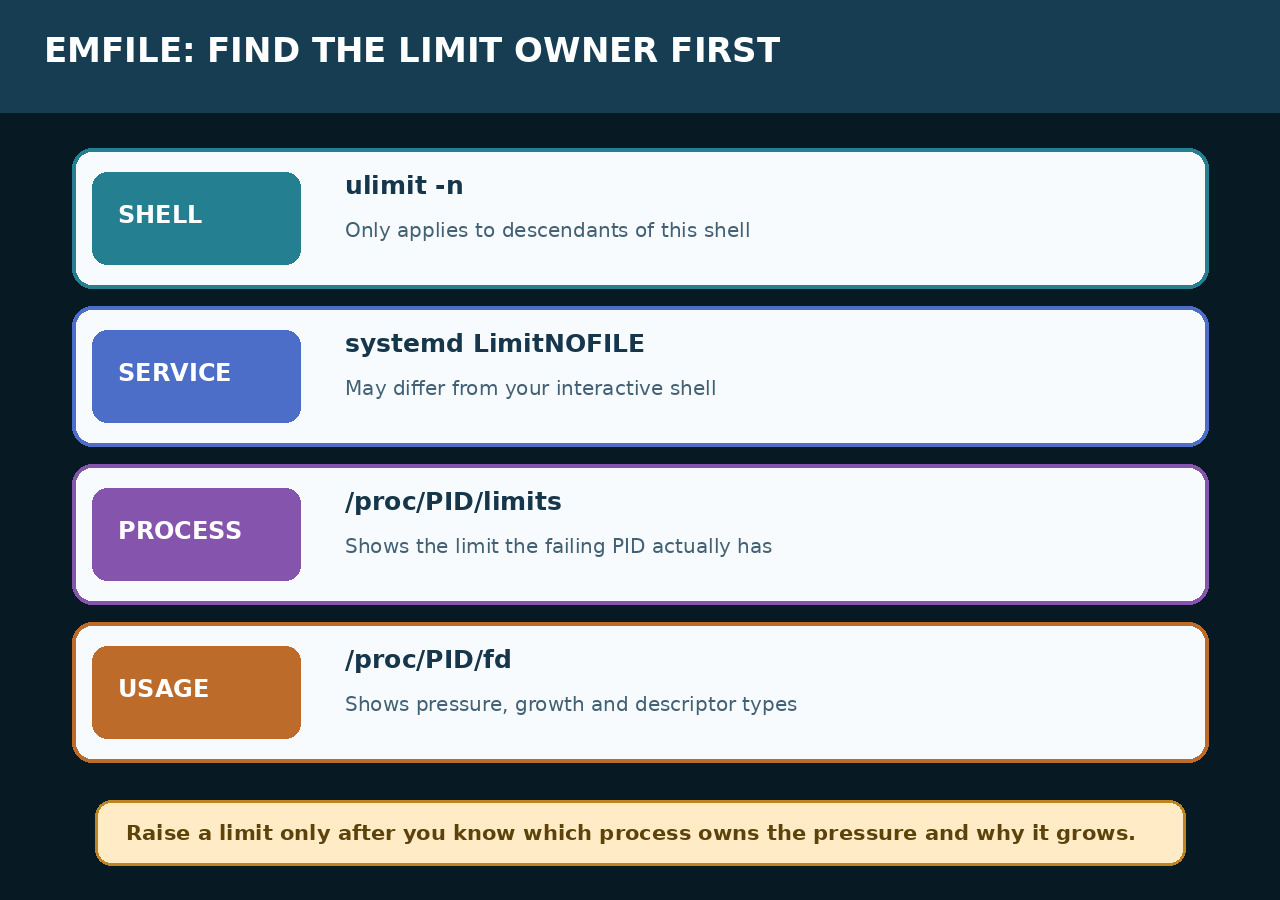
Original editorial illustration comparing shell, service, process and live-use evidence.
Original editorial illustration: find the owner of the descriptor boundary before changing a limit. Watch at Ease
Technology · PRACTICAL GUIDE

Node.js EMFILE: find the descriptor-limit owner before raising ulimit

Capture the failing process, its inherited limit and live descriptor growth. Then separate a low ceiling from a leak, concurrency burst or watcher pressure.

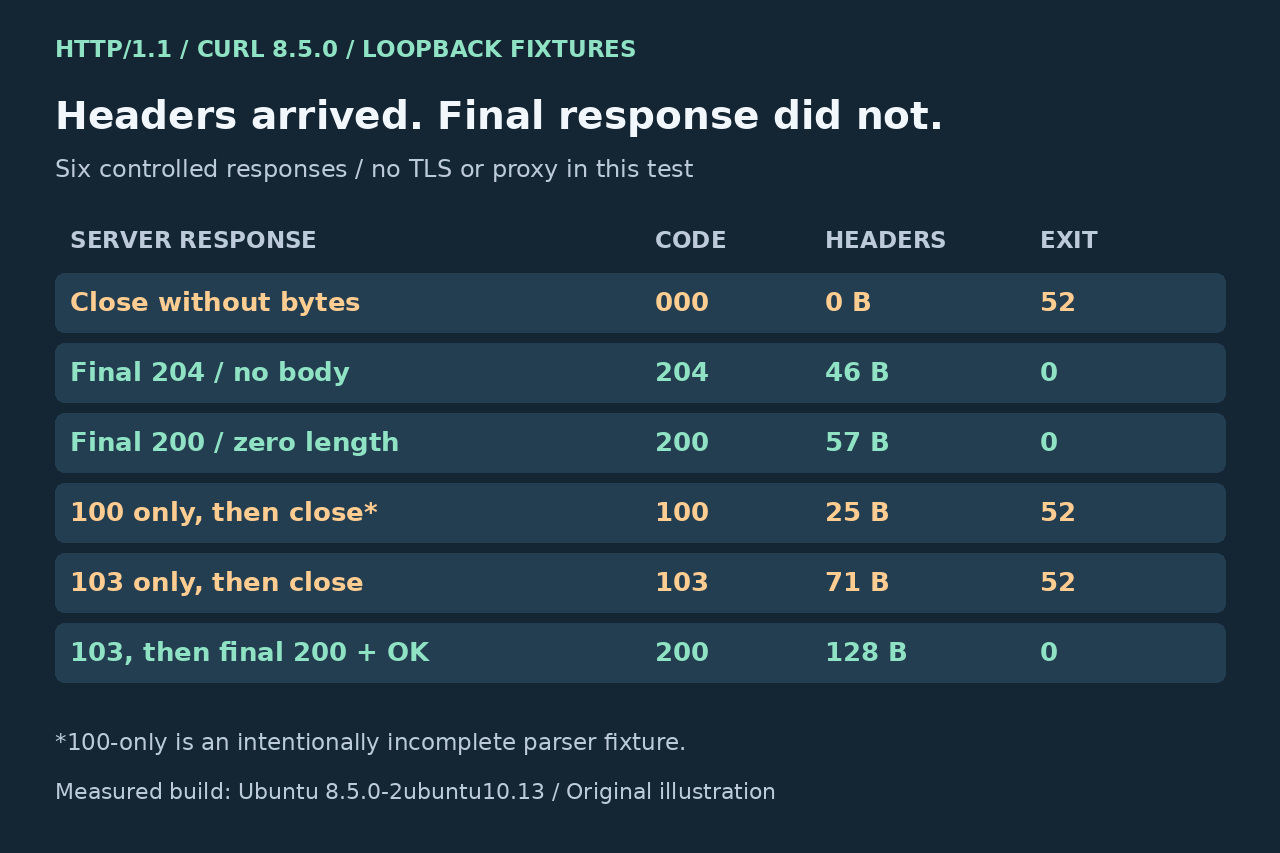
Original illustration: Six synthetic HTTP/1.1 responses on the tested curl 8.5.0 build show that 100/103 headers can precede exit 52; byte counts are fixture-specific.
Original illustration: Six synthetic HTTP/1.1 responses on the tested curl 8.5.0 build show that 100/103 headers can precede exit 52; byte counts are fixture-specific. Watch at Ease
Technology · PRACTICAL GUIDE

curl says Empty reply after 100 or 103? Check the final response

Received headers do not always mean a complete response. Six controlled curl 8.5.0 cases separate informational replies, valid empty bodies and error 52.

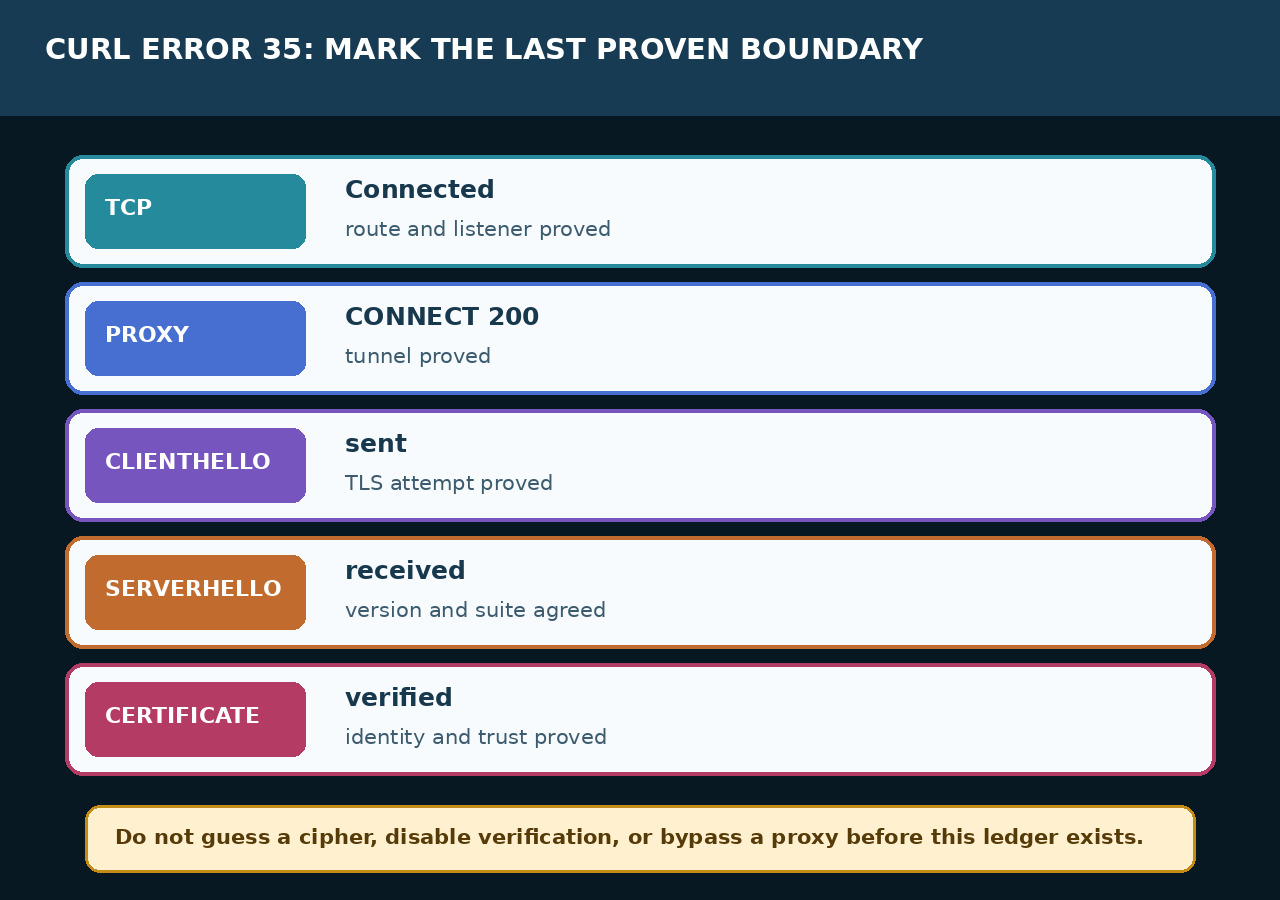
Original editorial illustration mapping TCP, proxy CONNECT, ClientHello, ServerHello and certificate verification.
Original editorial illustration: mark the last boundary that completed before changing security settings. Watch at Ease
Technology · PRACTICAL GUIDE

curl error 35: mark the last successful TLS boundary before changing ciphers

Error 35 says the SSL/TLS handshake failed, not why. Capture the curl build, proxy path and verbose sequence; then change one boundary and repeat.

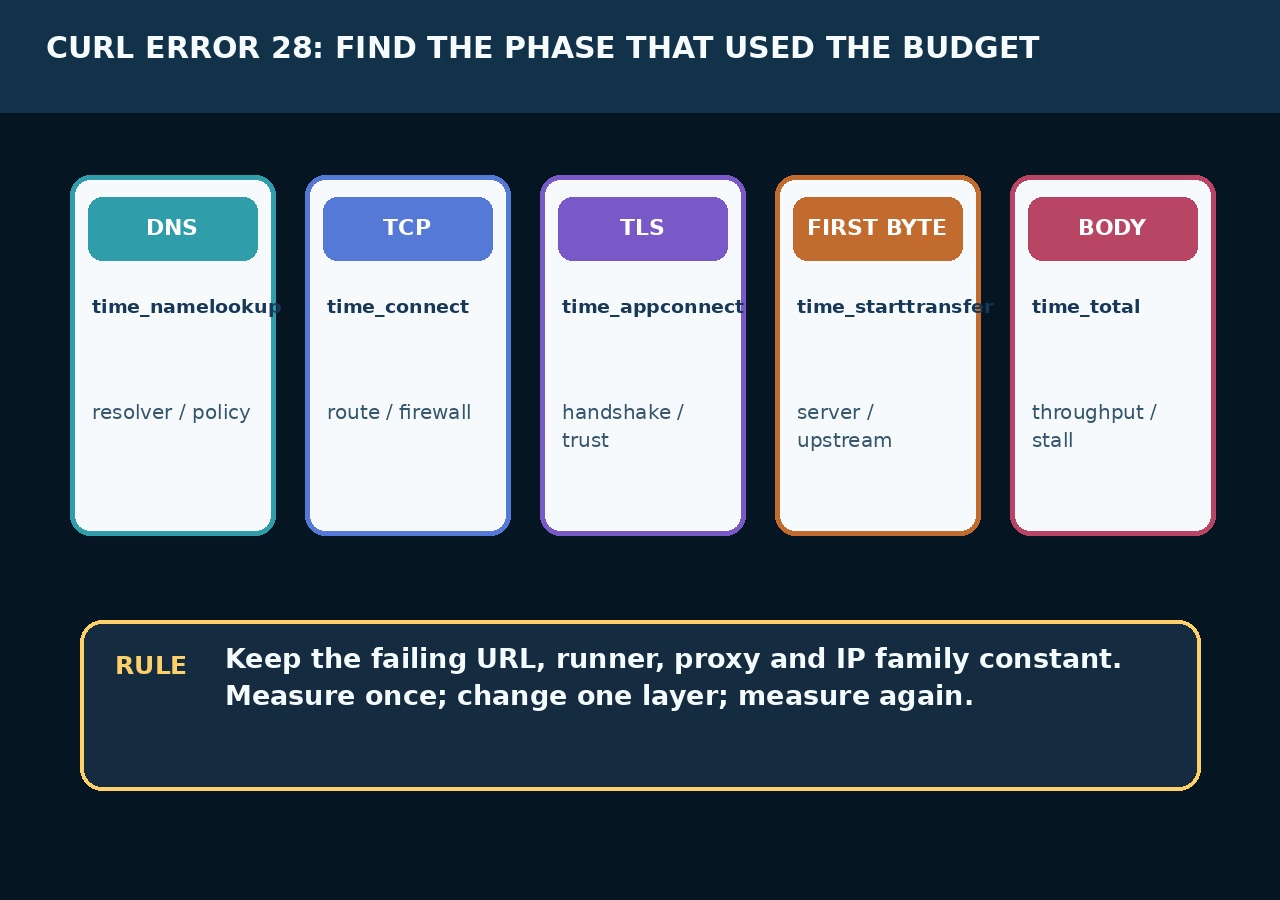
Original editorial illustration mapping curl timeout evidence across DNS, TCP, TLS, first byte and response body phases.
Original editorial illustration: error 28 is a budget alarm; measure the phase before changing the budget. Watch at Ease
Technology · PRACTICAL GUIDE

curl error 28: measure DNS, connect, TLS and first-byte time before raising limits

Error 28 says a timeout condition was reached, not which layer waited. Capture curl’s phase timings, compare one controlled variant, and change the timeout only after the slow phase is proven.

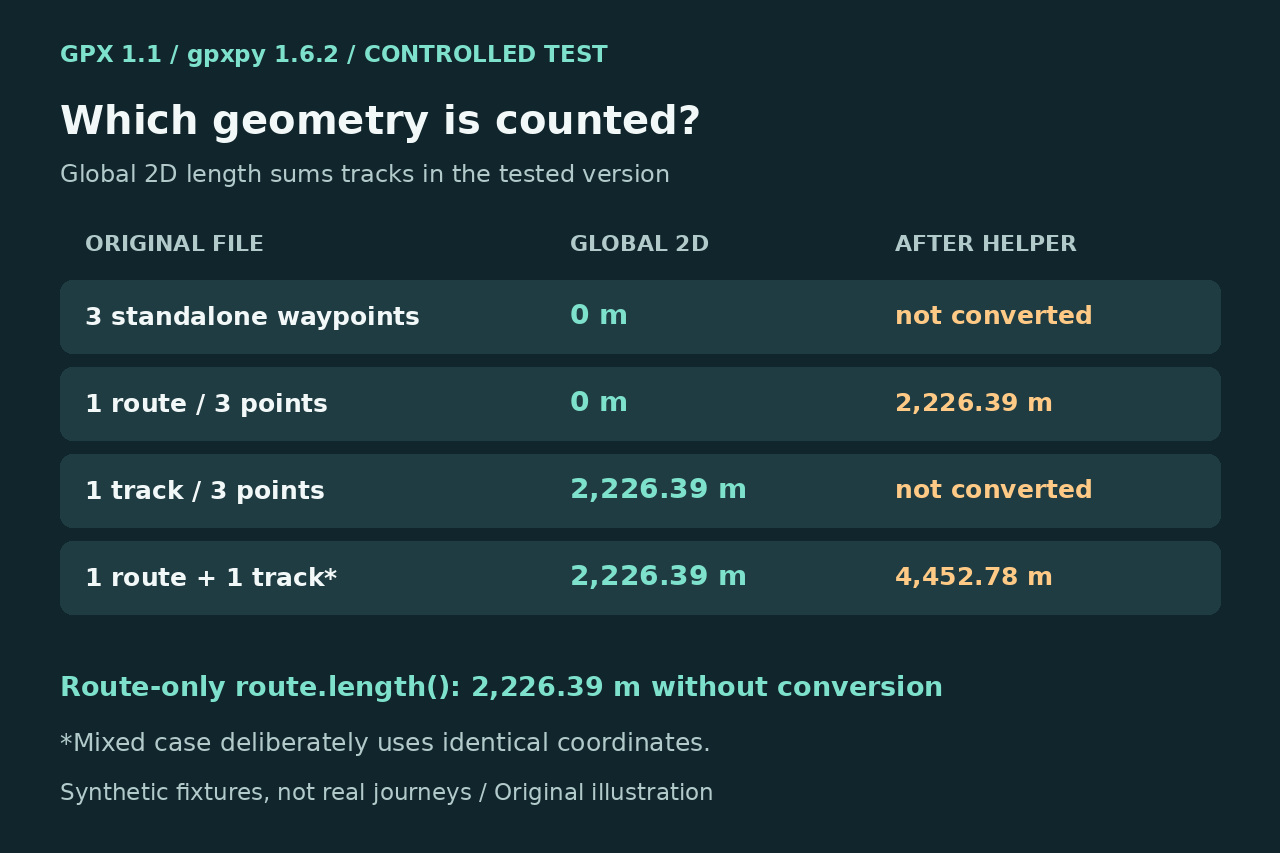
Original illustration: four controlled GPX container cases and the measured 2D totals, including a deliberately overlapping mixed example.
Original illustration: four controlled GPX container cases and the measured 2D totals, including a deliberately overlapping mixed example. Watch at Ease
Technology · PRACTICAL GUIDE

GPX route converted, but did the point data survive?

A nonzero distance is only one check. Our gpxpy 1.6.2 tests show why names, times and overlapping geometry need a separate audit.

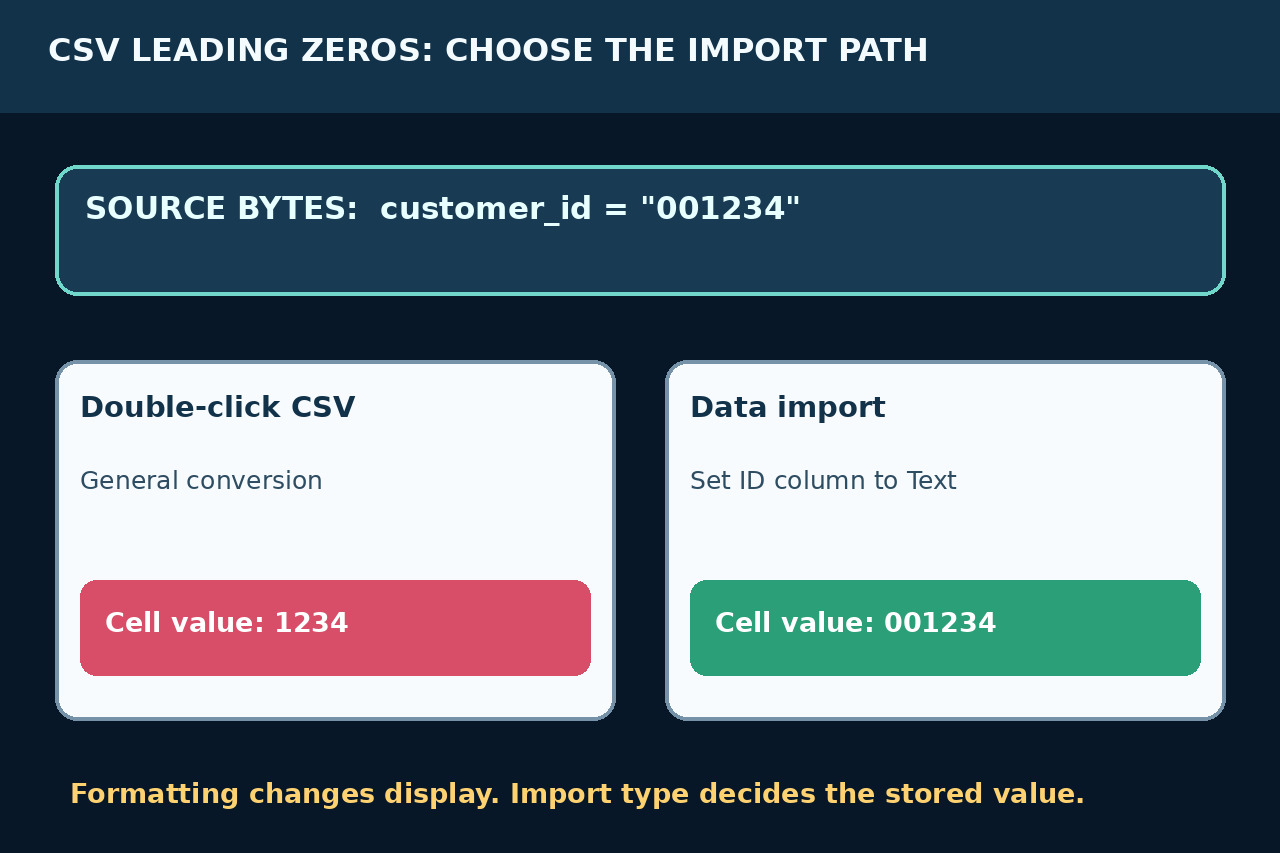
Original editorial illustration comparing direct CSV opening that stores 1234 with a text-typed import that preserves 001234.
Original editorial illustration: choose the import path before conversion; display formatting is not the stored identifier. Watch at Ease
Technology · PRACTICAL GUIDE

Excel dropped leading zeros from a CSV? Reimport the column as text before saving

A number format can make zeros visible without restoring the underlying identifier. Preserve the raw CSV, type the column as Text before conversion, then verify the cell and a round-trip export.

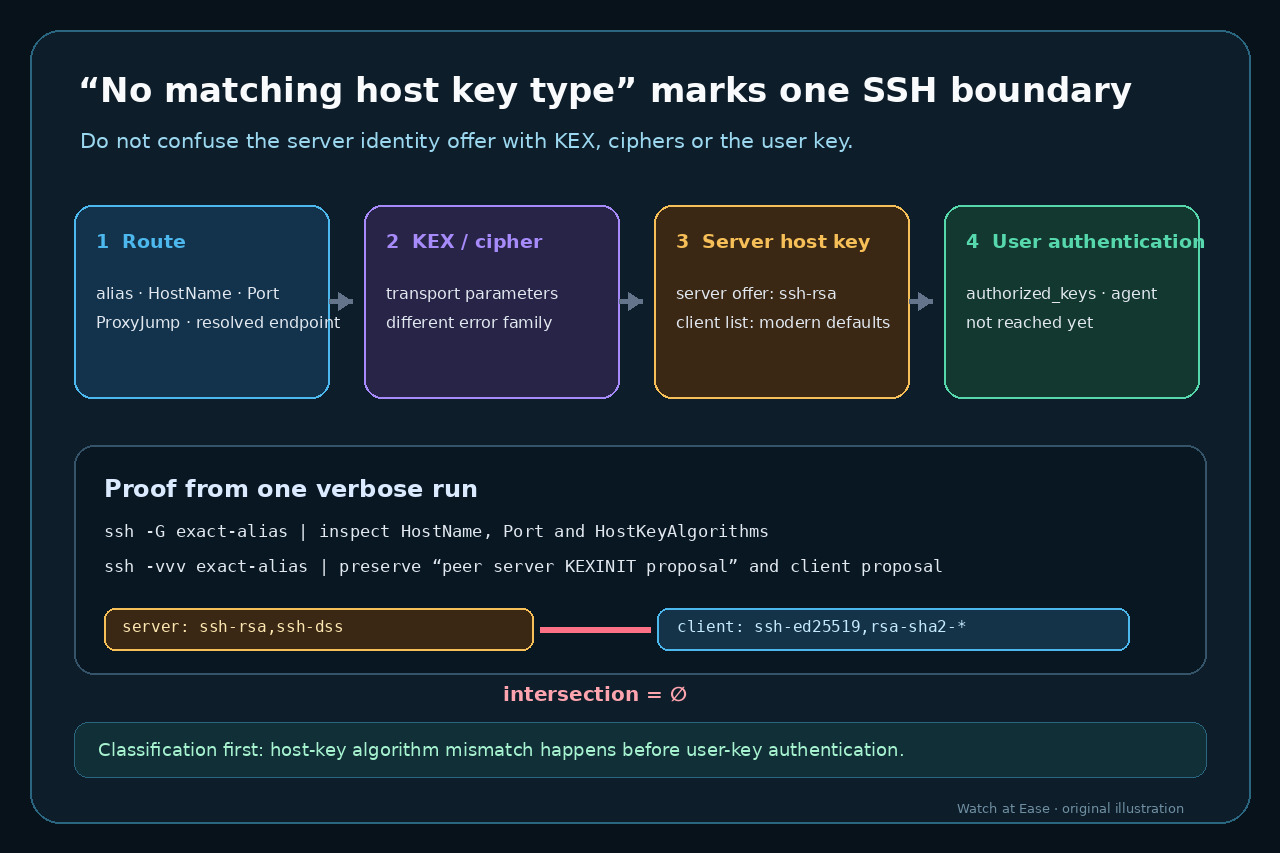
Original diagram showing route, KEX, server host-key negotiation and later user authentication, with no overlap between server and client host-key algorithm lists.
Original illustration: the error belongs to the server host-key intersection, before user authentication. Watch at Ease
Technology · PRACTICAL GUIDE

SSH says “no matching host key type found”? Prove the negotiation boundary before enabling a legacy algorithm

The error names the server-host-key negotiation stage, not your login key. Verify the exact endpoint and fingerprint, compare both proposal lists, and permit a legacy algorithm only as an exact-host, owned, expiring exception.

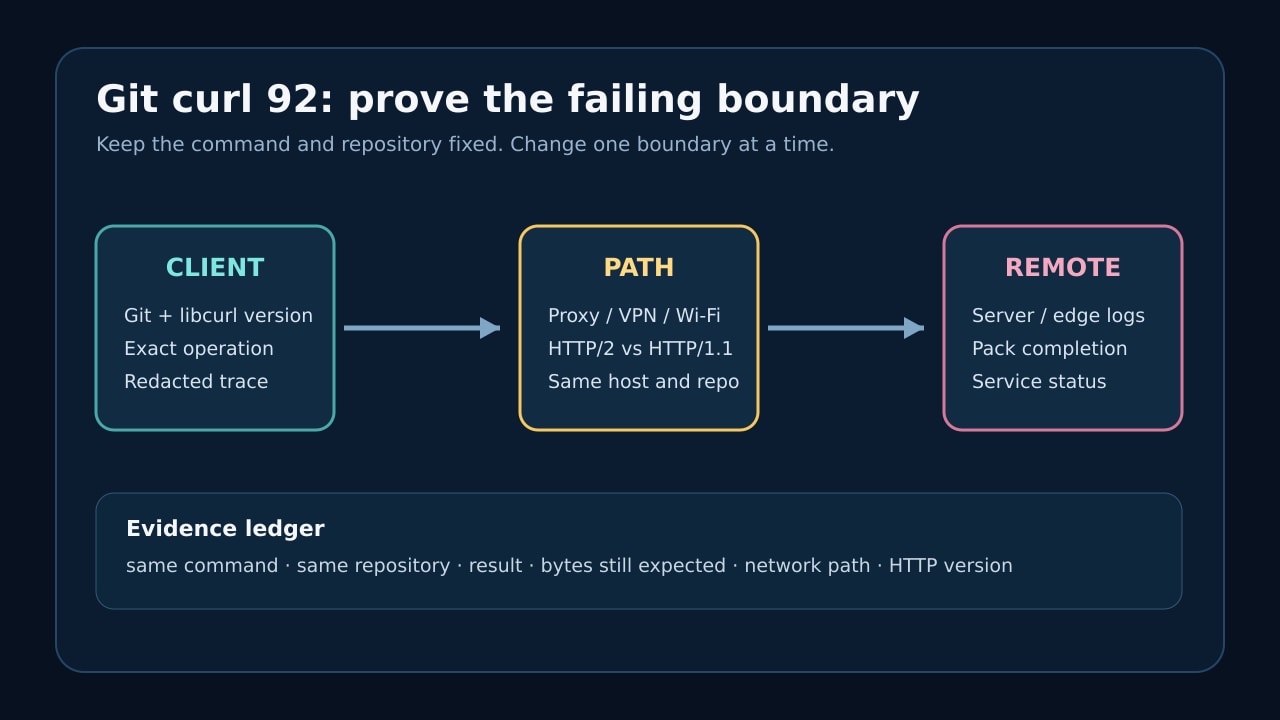
Original technical diagram mapping Git client evidence, the network path and the remote service.
Original illustration: keep the command fixed and change one boundary at a time. Watch at Ease
Technology · PRACTICAL GUIDE

Git says “RPC failed; curl 92”? Prove the HTTP/2 boundary before changing buffers

A curl 92 line proves an HTTP/2 stream failed, not that Git needs a larger buffer. Preserve the incomplete-transfer clues, compare one protocol or path variable at a time, and verify the object database before keeping any workaround.

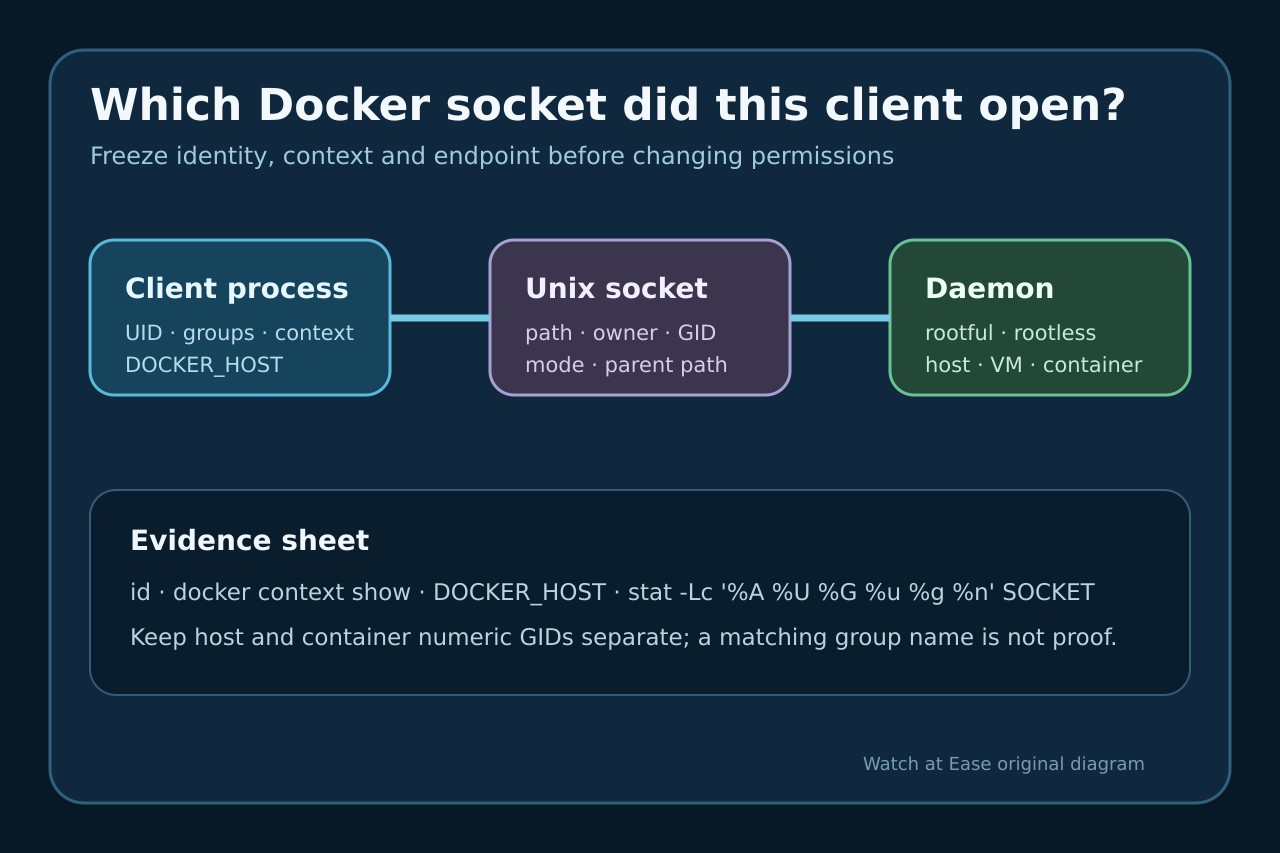
Original diagram linking client identity, Unix socket metadata and the actual Docker daemon.
Original Watch at Ease illustration: Prove the exact client and socket before repair. Watch at Ease
Technology · PRACTICAL GUIDE

Docker daemon socket permission denied? Prove the client, socket and daemon context first

Do not normalize chmod 666 or 777 on docker.sock. Freeze the client identity, selected Docker context and exact socket; distinguish rootful, rootless and mounted-socket cases, then authorize the smallest intended principal.

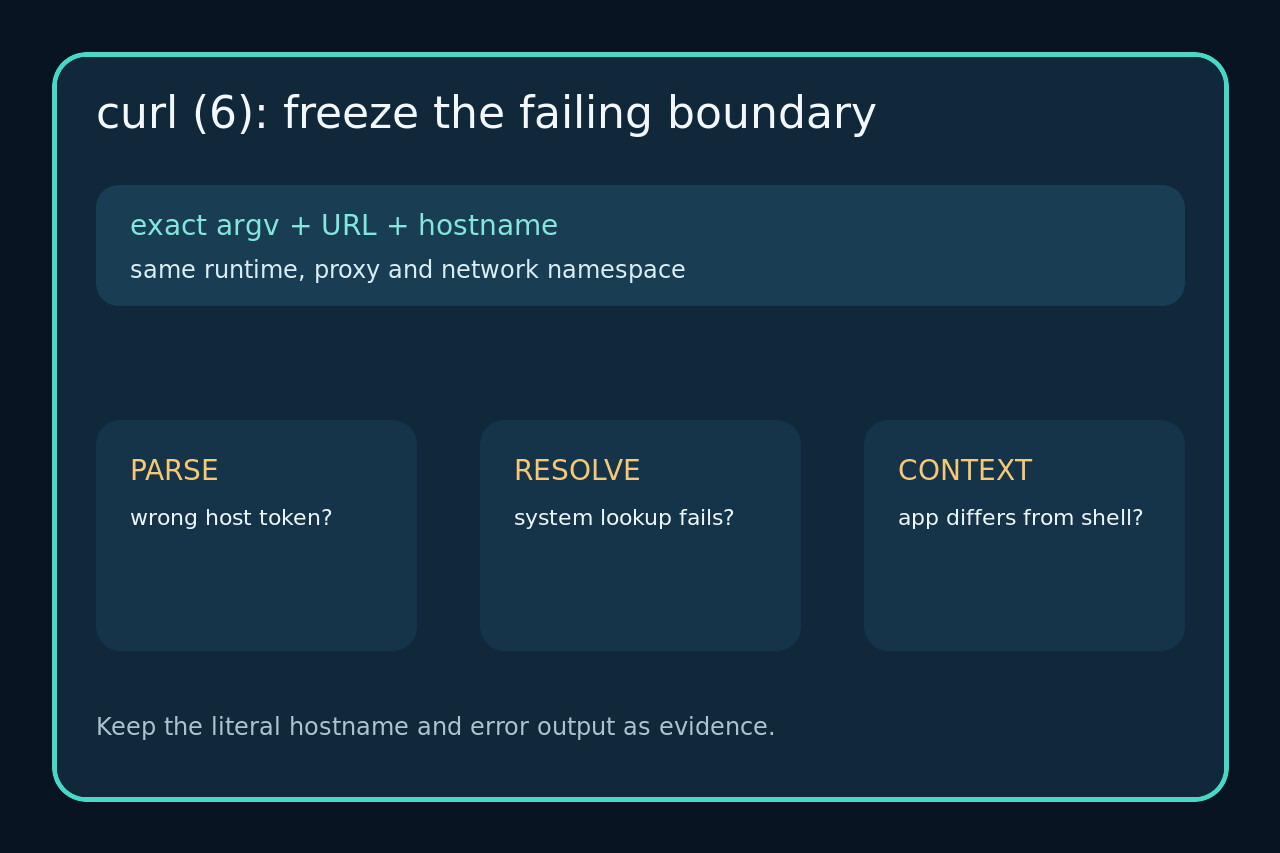
Original diagram separating parsed hostname, resolver and runtime context.
Original Watch at Ease illustration: Freeze the exact hostname and failing runtime before repair. Watch at Ease
Technology · PRACTICAL GUIDE

curl error 6: Could not resolve host? Prove the hostname and runtime before changing DNS

Exit code 6 does not identify the owner of failure. Preserve the exact URL, extract the hostname curl actually parsed, then test the same resolver, proxy and network namespace used by the failing process.

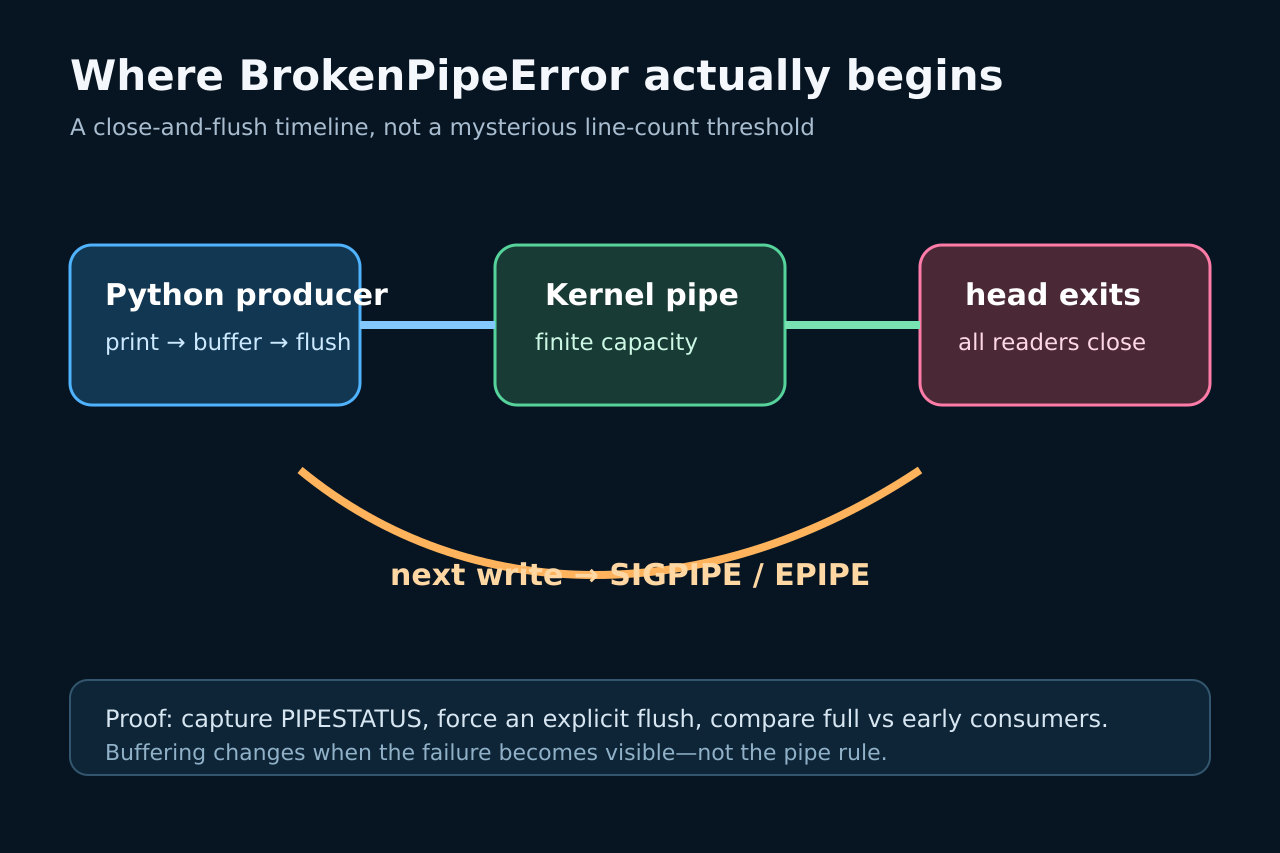
Original diagram showing a Python producer, finite pipe, early-closing head consumer and the next write failing with SIGPIPE or EPIPE.
Original Watch at Ease illustration: the traceback becomes visible when a buffered or explicit write reaches a pipe whose readers have closed. Watch at Ease
Technology · PRACTICAL GUIDE

Python BrokenPipeError? Prove the reader close, flush point and exit contract

Diagnose an early-closing pipeline consumer, buffering and interpreter shutdown before suppressing the traceback or changing SIGPIPE behavior.

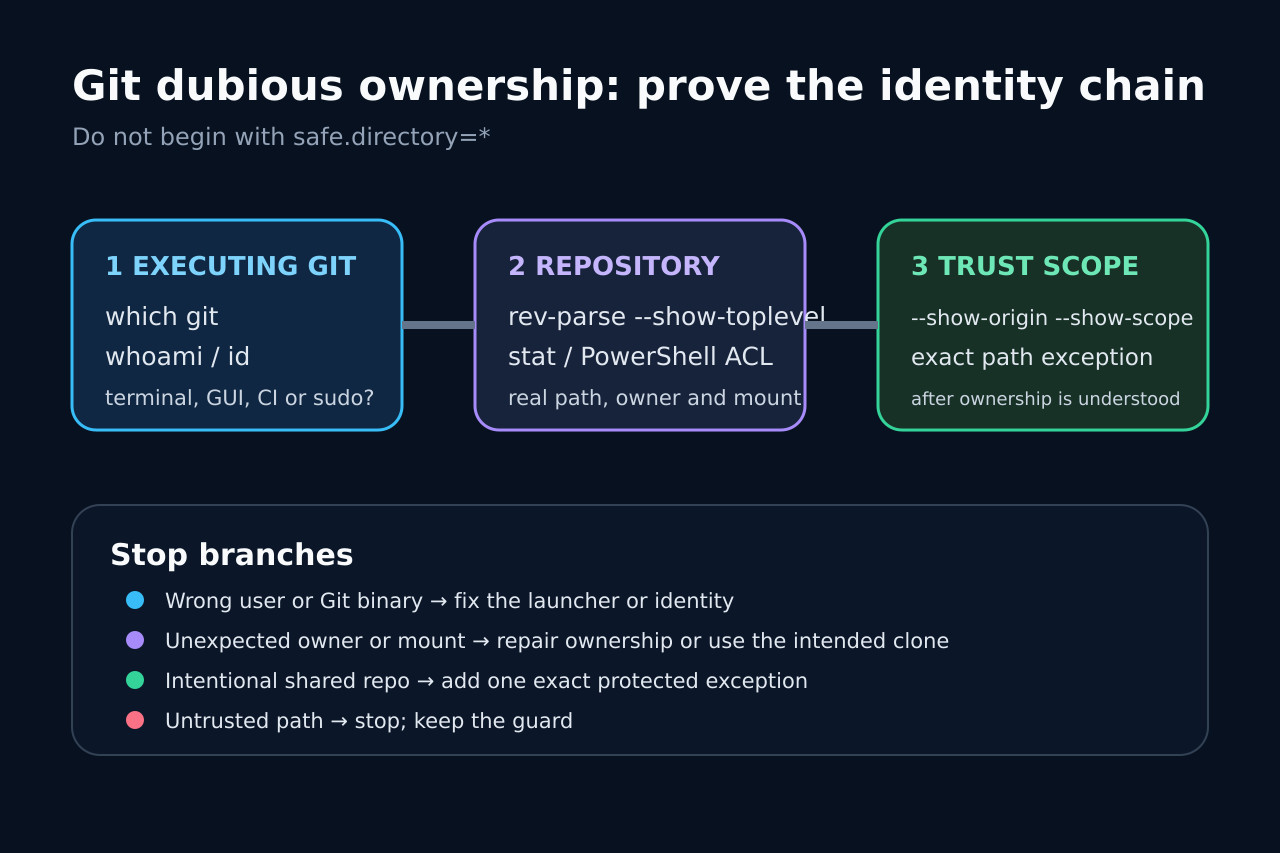
Original diagram showing executing Git, repository owner and trust-scope checks before repair.
Original Watch at Ease illustration: prove the executing identity, canonical repository owner and configuration scope before adding trust. Watch at Ease
Technology · PRACTICAL GUIDE

Git detected dubious ownership? Prove the user, path owner and trust scope

Audit the executing Git binary, operating-system identity, canonical repository owner and protected configuration before changing ownership or adding a narrow safe.directory exception.

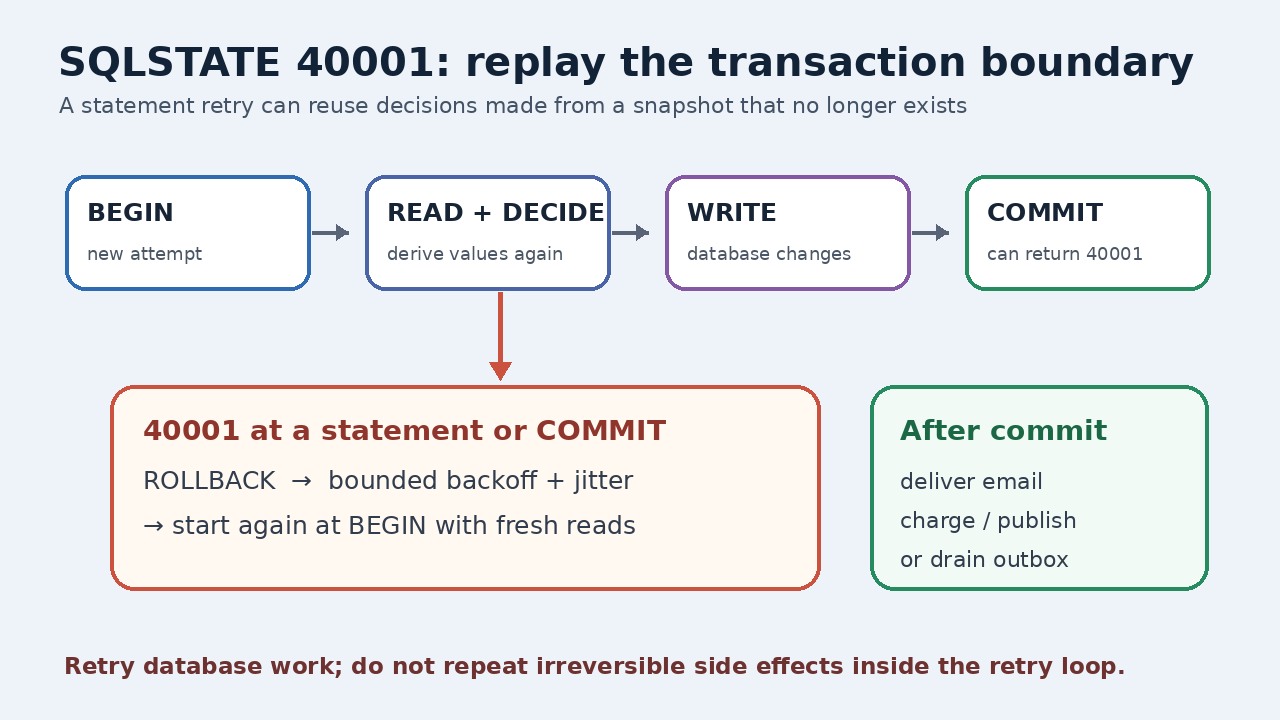
Original technical illustration: BEGIN, reads and decisions, writes, COMMIT, rollback, backoff, and full transaction replay after SQLSTATE 40001.
Original technical illustration: a serialization failure invalidates the transaction attempt, so the safe unit of retry starts again at BEGIN. Watch at Ease
Technology · PRACTICAL GUIDE

PostgreSQL SQLSTATE 40001? Retry the whole transaction, not the failed statement

Capture the SQLSTATE, isolation level and failure boundary, roll back, rebuild every read and decision inside a bounded retry loop, and keep irreversible side effects beyond the commit boundary.

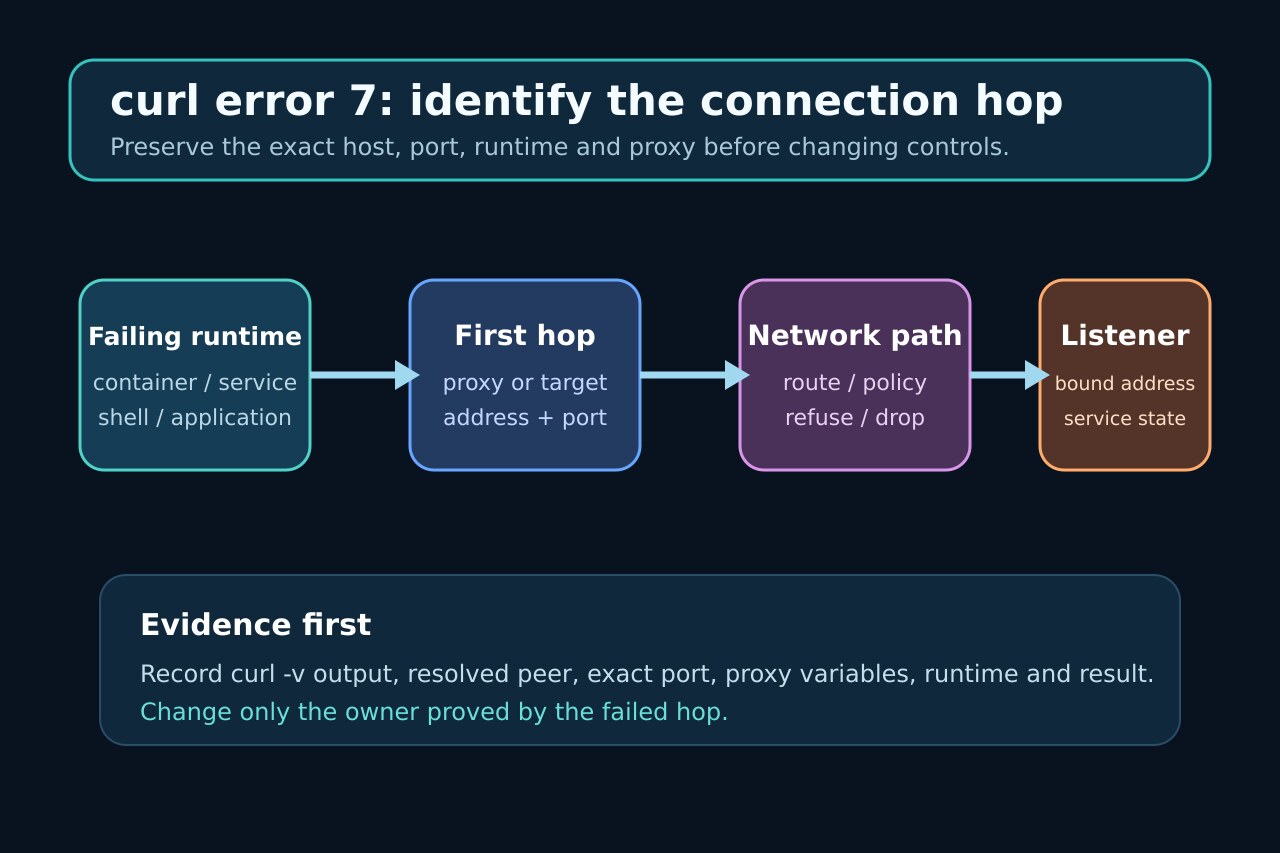
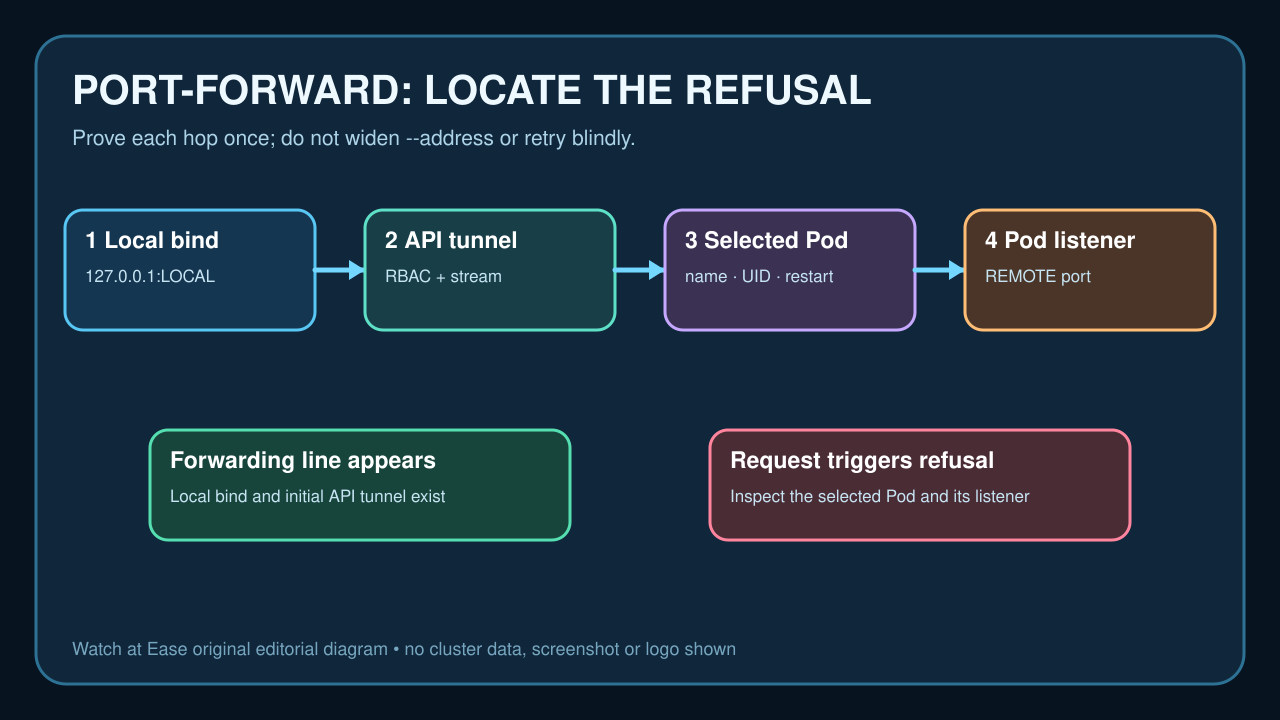
Original diagram showing the local bind, Kubernetes API tunnel, selected Pod and remote listener hops in kubectl port-forward.
Original illustration: locate the refusal among four separate hops before changing configuration. Watch at Ease
Technology · PRACTICAL GUIDE

kubectl port-forward says “connection refused”? Audit four hops before retrying

Separate the local listener, API tunnel, selected Pod and in-Pod process. The first failed hop tells you whether to change a local port, RBAC, target identity or application listener.

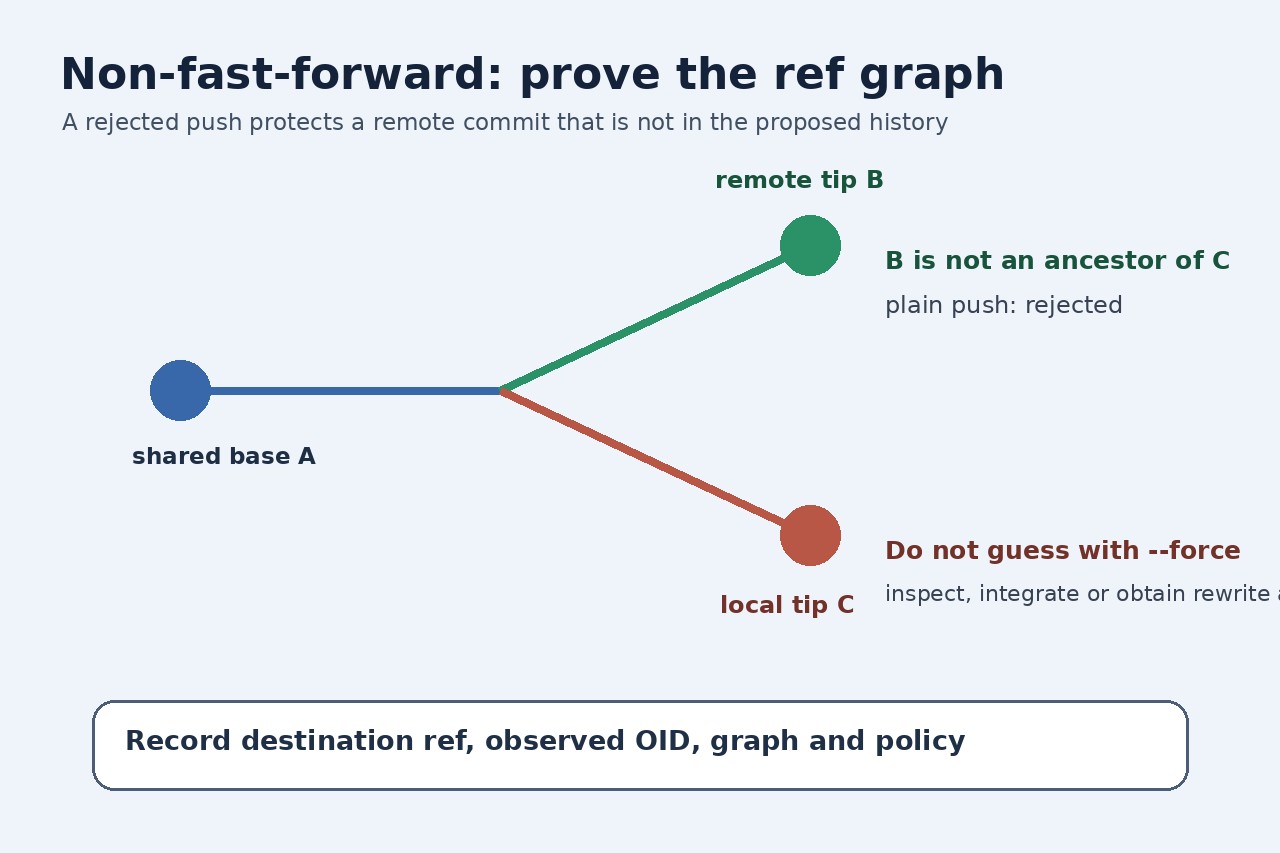
Original diagram of a non-fast-forward Git graph with a shared base, remote tip and local tip.
Original illustration: a non-fast-forward rejection protects a remote commit that is absent from the proposed local history. Watch at Ease
Technology · PRACTICAL GUIDE

Git push rejected non-fast-forward? Prove the remote ref before choosing a fix

A rejected push is a graph-safety signal, not a command to force. Resolve the exact destination ref, capture its current OID, fetch it to an audit ref, and then choose merge, rebase or an explicitly authorized rewrite.

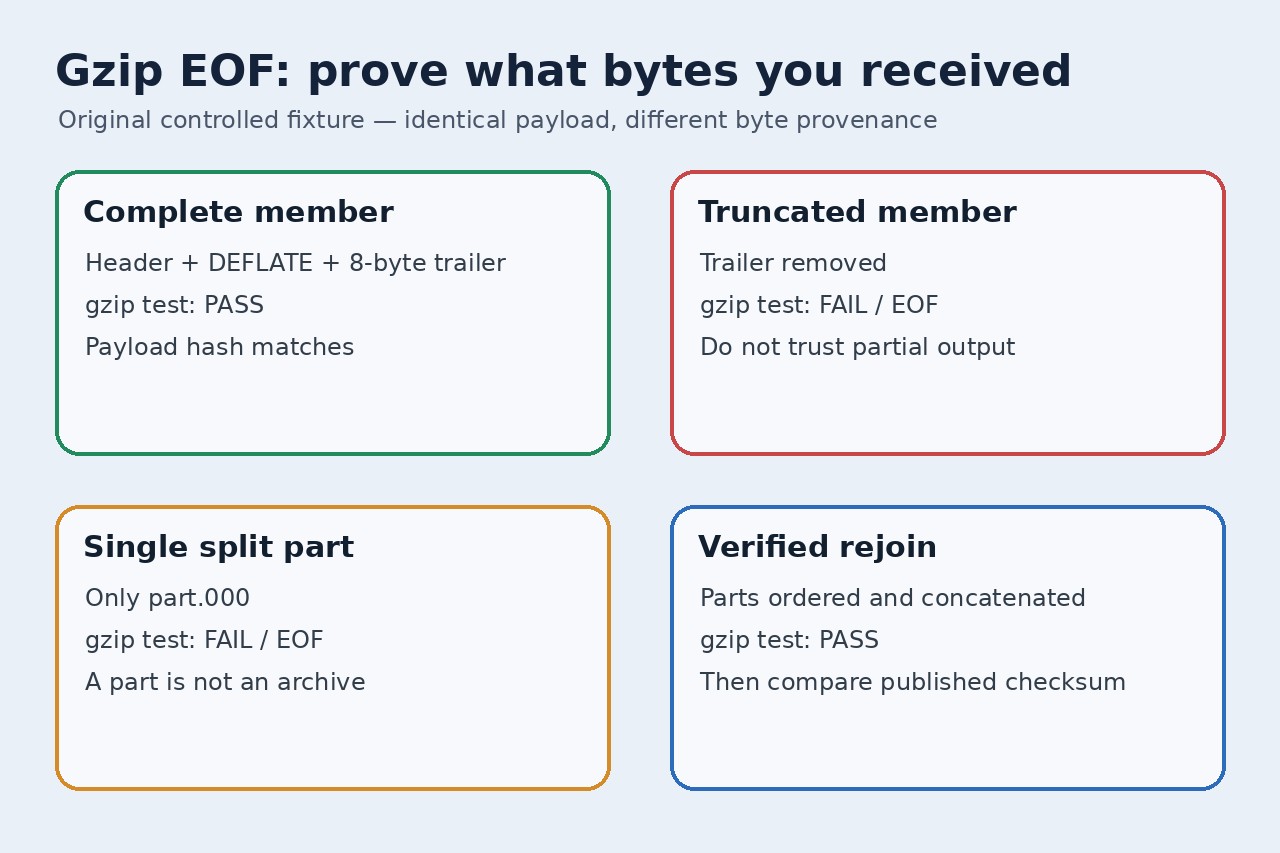
Original illustration comparing a complete gzip member, a truncated member, one split part and an exact ordered rejoin.
Original illustration: byte provenance separates a valid gzip member from truncation and an incomplete split part. Watch at Ease
Technology · PRACTICAL GUIDE

Gzip says “unexpected end of file”? Prove the bytes before extracting again

An EOF can mean a truncated download, an interrupted stream, or one fragment of a split archive. Preserve the exact artifact, test it independently, then repair the transfer or rejoin path that actually failed.