Watch at EaseStories. Answers. Perspective.

WATCH AT EASE · PRACTICAL GUIDE

Earlier coverage

Previously published coverage, with original dates preserved.

73–96 / 359

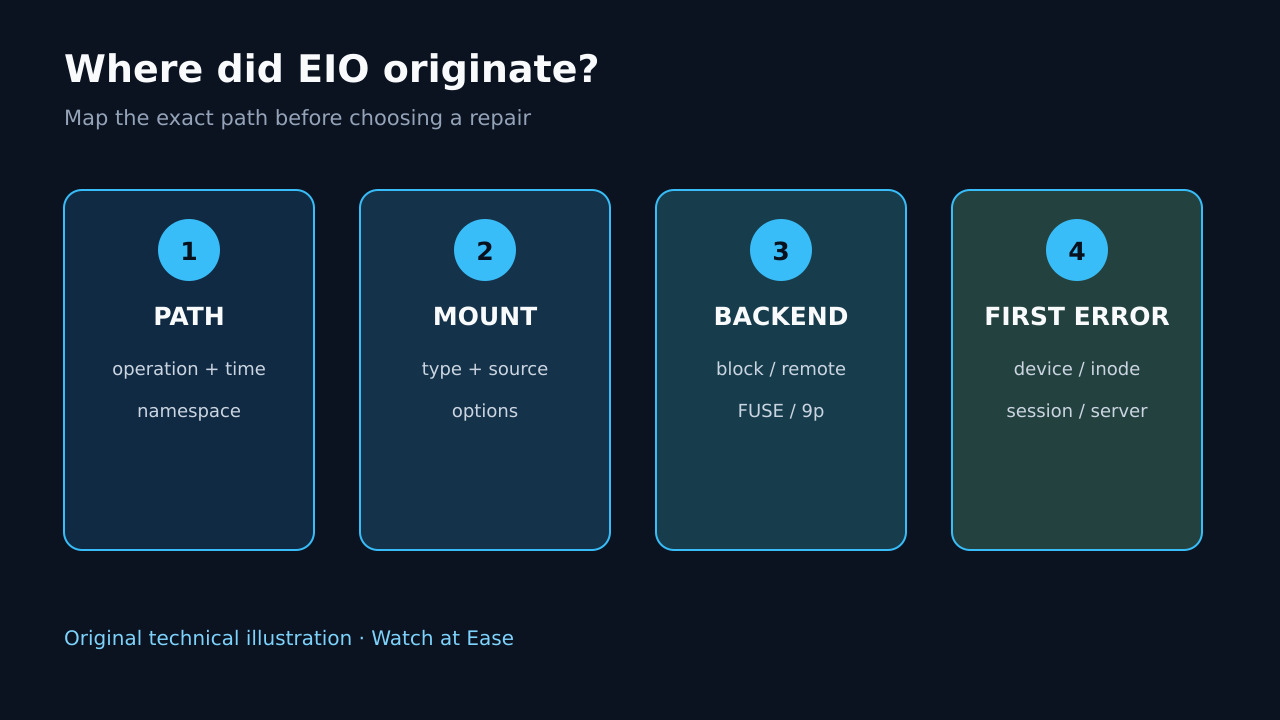
Original technical illustration mapping a failing Linux path through mount, filesystem, transport and storage layers.
Original technical illustration: EIO names the failed operation, so map the path before choosing a repair. Watch at Ease
Technology · PRACTICAL GUIDE

Linux says “Input/output error”? Prove the failing layer before running fsck

Freeze writes, map the exact path to its mount and backend, preserve the first kernel or service error, then repair only the proven layer and verify the same bytes.

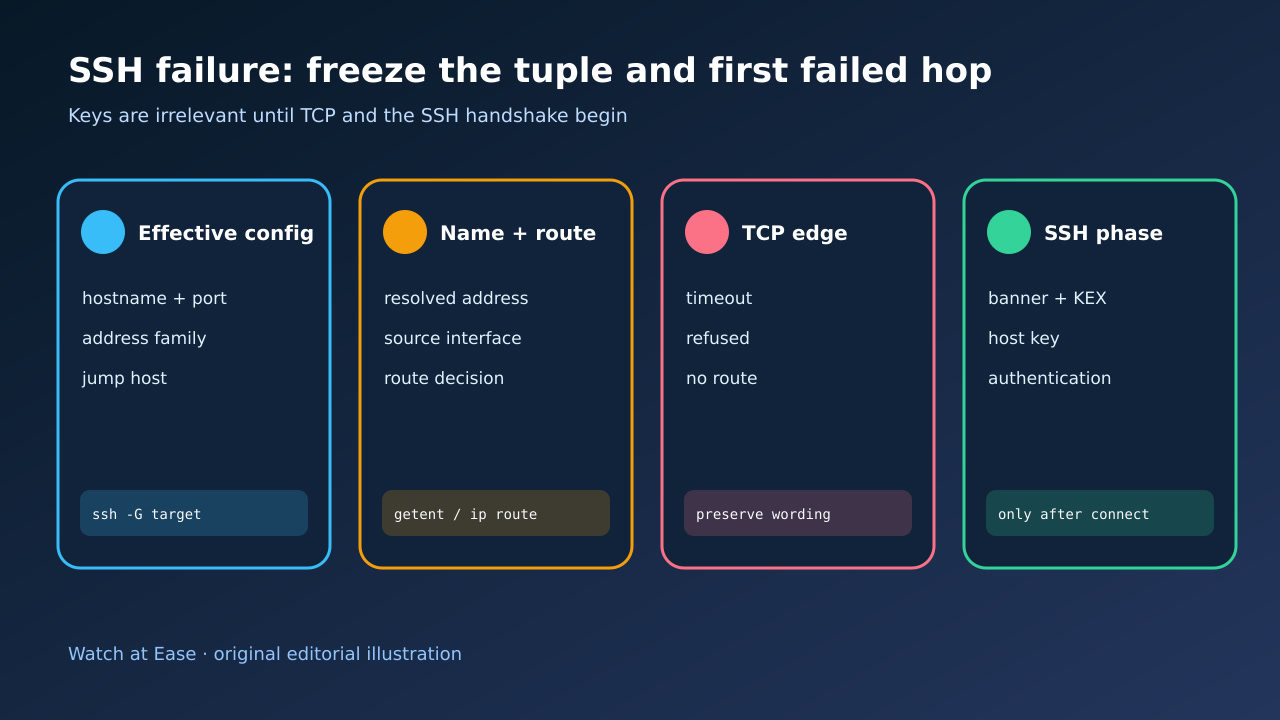
Diagram of SSH effective configuration, name and route, TCP edge and handshake
Original illustration: freeze the tuple and first failed hop before changing keys. Watch at Ease
Technology · PRACTICAL GUIDE

SSH timed out, refused, or says “No route to host”? Prove the destination tuple first

Do not rotate keys when TCP has not reached authentication. Freeze the hostname, resolved address, family, port and jump path; preserve the first error and verbose phase; then prove the first failed hop and change one boundary.

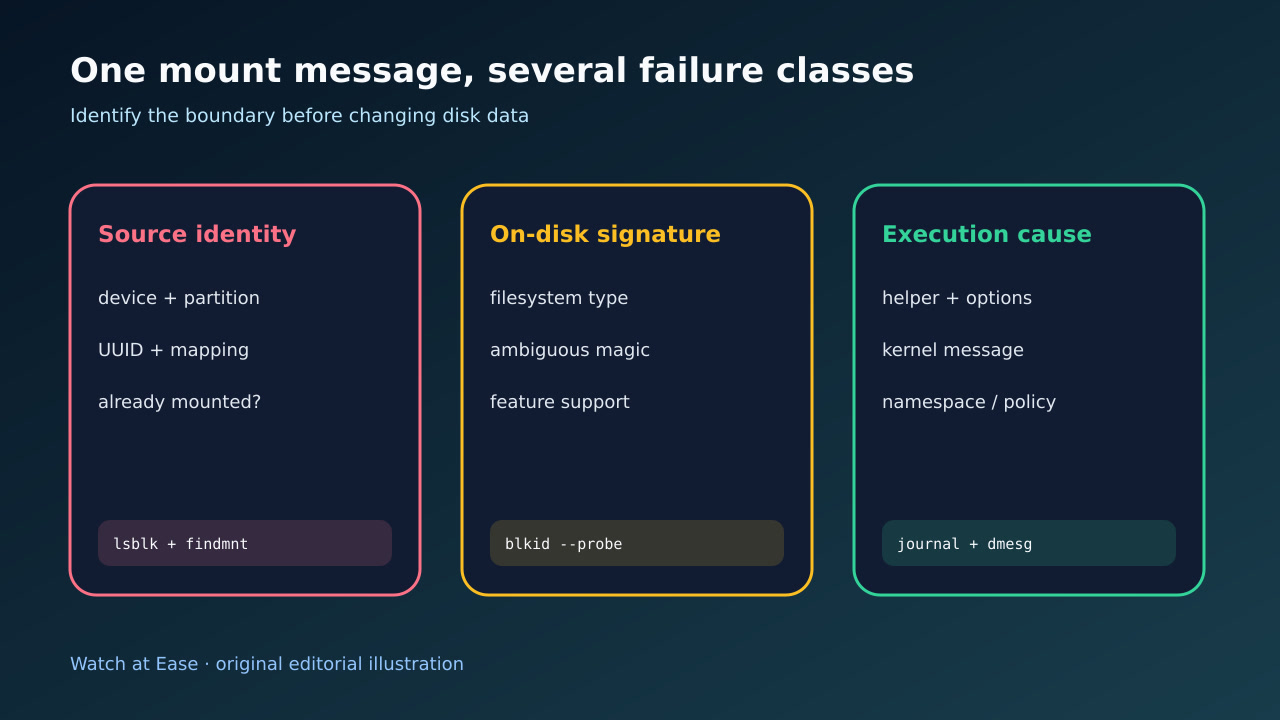
Diagram separating source identity, on-disk signature and execution causes
Original illustration: classify the failing mount boundary before writing. Watch at Ease
Technology · PRACTICAL GUIDE

Linux says “wrong fs type, bad option, bad superblock”? Prove the failing boundary first

That mount message is a summary, not a diagnosis. Freeze the exact attempt, prove the source and filesystem signature, read the first kernel error, then choose a helper, option or filesystem-specific branch without formatting the wrong data.

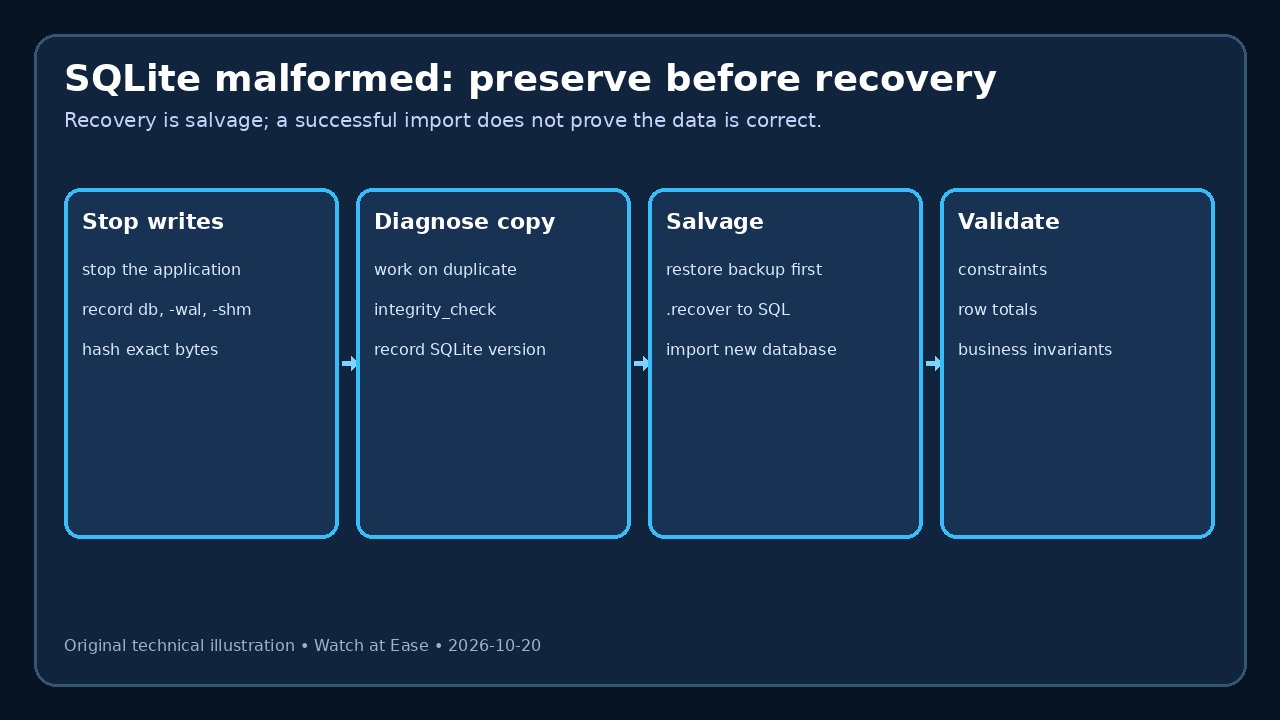
Stop-writes, preserve-companions and working-copy boundary.
Original technical illustration: preserve evidence, salvage separately and validate the replacement. Watch at Ease
Technology · PRACTICAL GUIDE

SQLite says “database disk image is malformed”? Preserve the original before recovery

Treat SQLITE_CORRUPT as a preservation incident. Stop writers, keep the database with its journal/WAL companions, hash a read-only copy, then recover into a new file and verify constraints, totals and application behavior before replacement.

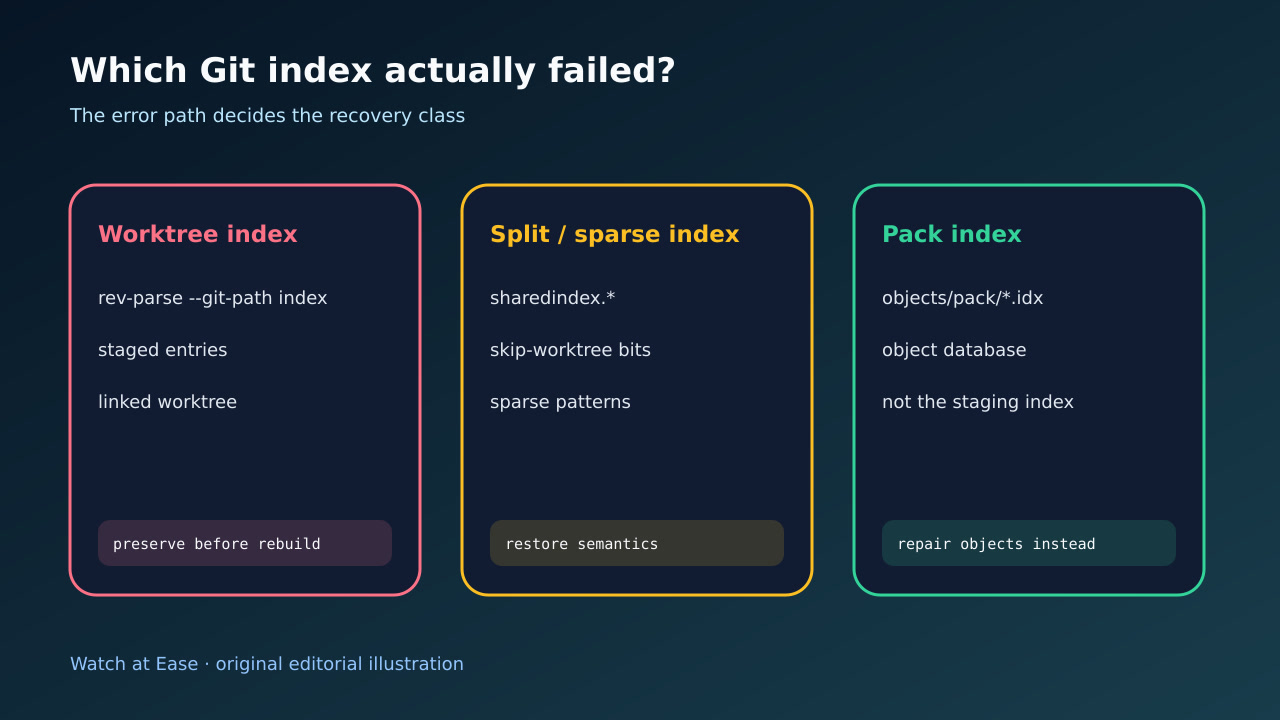
Diagram distinguishing worktree, split/sparse and pack indexes
Original illustration: classify the exact failing index before repair. Watch at Ease
Technology · PRACTICAL GUIDE

Git says “index file corrupt”? Prove which index failed before deleting it

A corrupt staging index, a linked-worktree index, a split or sparse index, and a pack .idx file are different failures. Preserve any readable staged ledger, resolve the exact path, rebuild only that class, then verify objects and repeat the original workflow.

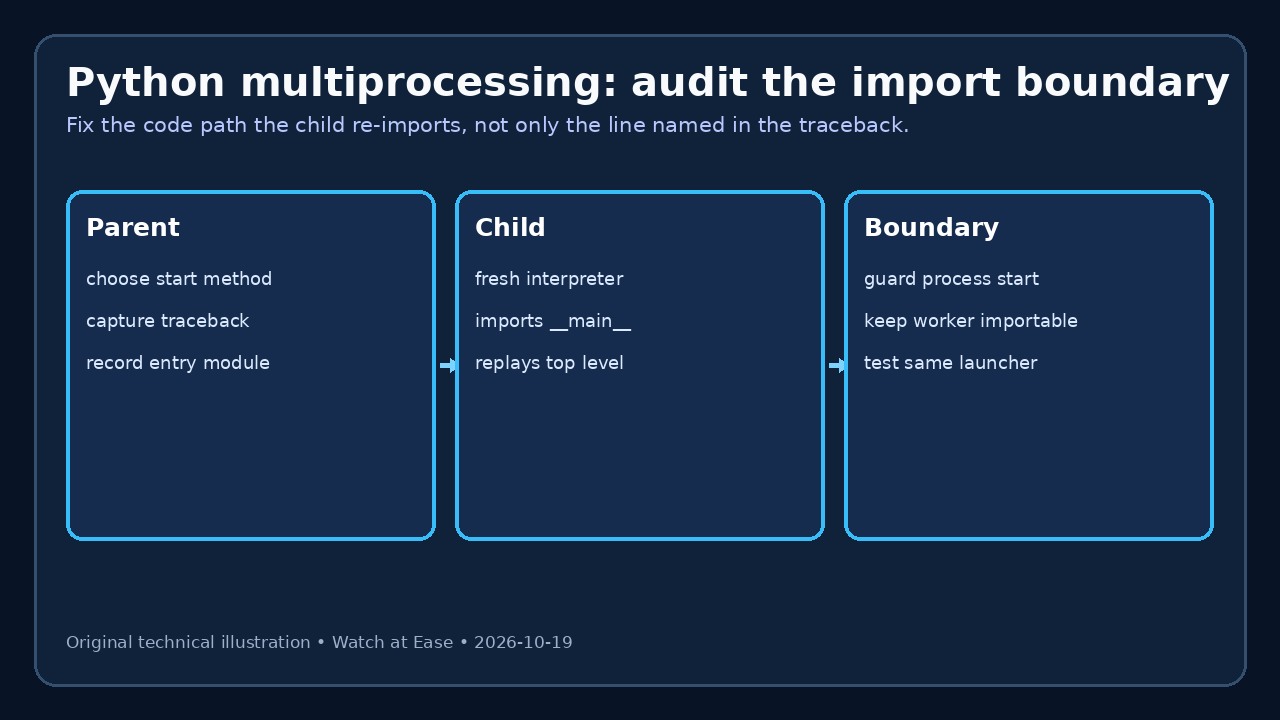
Parent and spawned-child import boundary.
Original technical illustration: map the import boundary, guarded entry and fresh-run acceptance. Watch at Ease
Technology · PRACTICAL GUIDE

Python says “bootstrapping phase”? Prove what spawn imports before moving the guard

This RuntimeError means a fresh child interpreter re-imported the entry module while that import was still starting another process. Record the start method and launcher, move every process-creating path behind the real entry boundary, and retest in a fresh process.

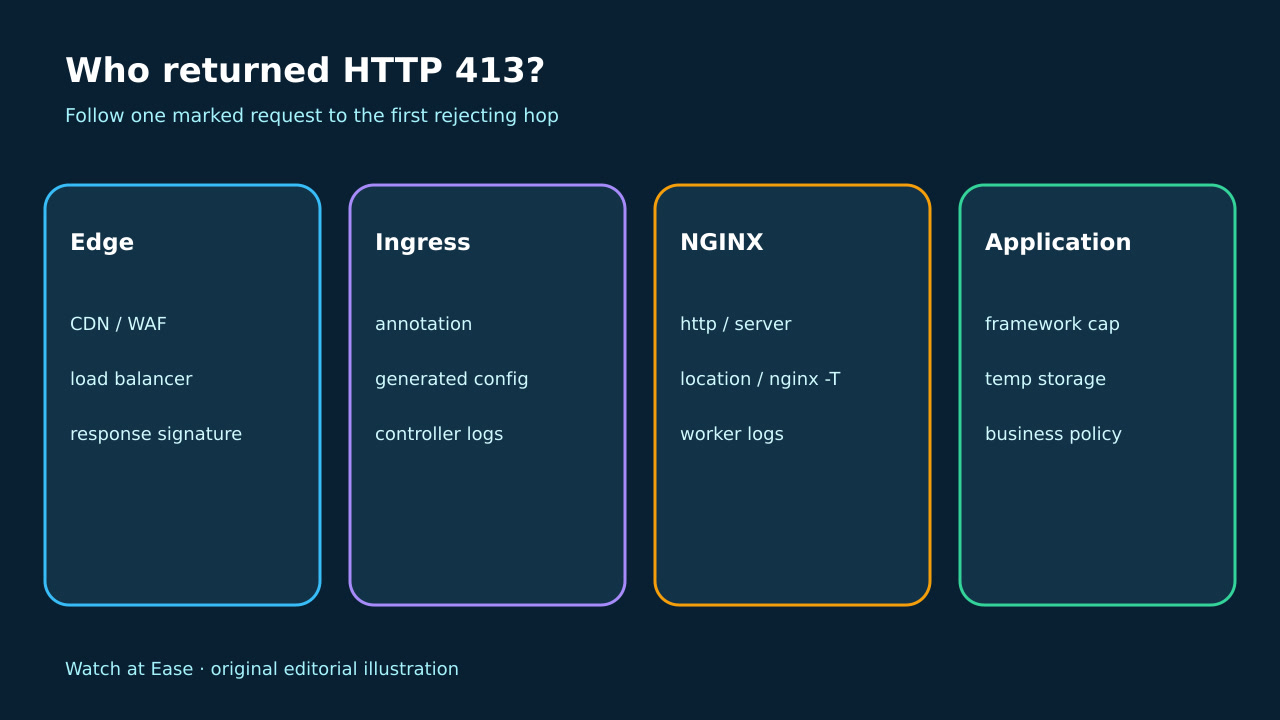
HTTP 413 hop ownership map
Original illustration: identify the first rejecting layer. Watch at Ease
Technology · PRACTICAL GUIDE

NGINX still returns 413? Prove which hop enforces the body limit

Do not raise every proxy or set an unlimited size. Mark one request, identify the first rejecting hop, dump that layer’s effective configuration, change one finite scope, then prove just-below and just-above behavior.

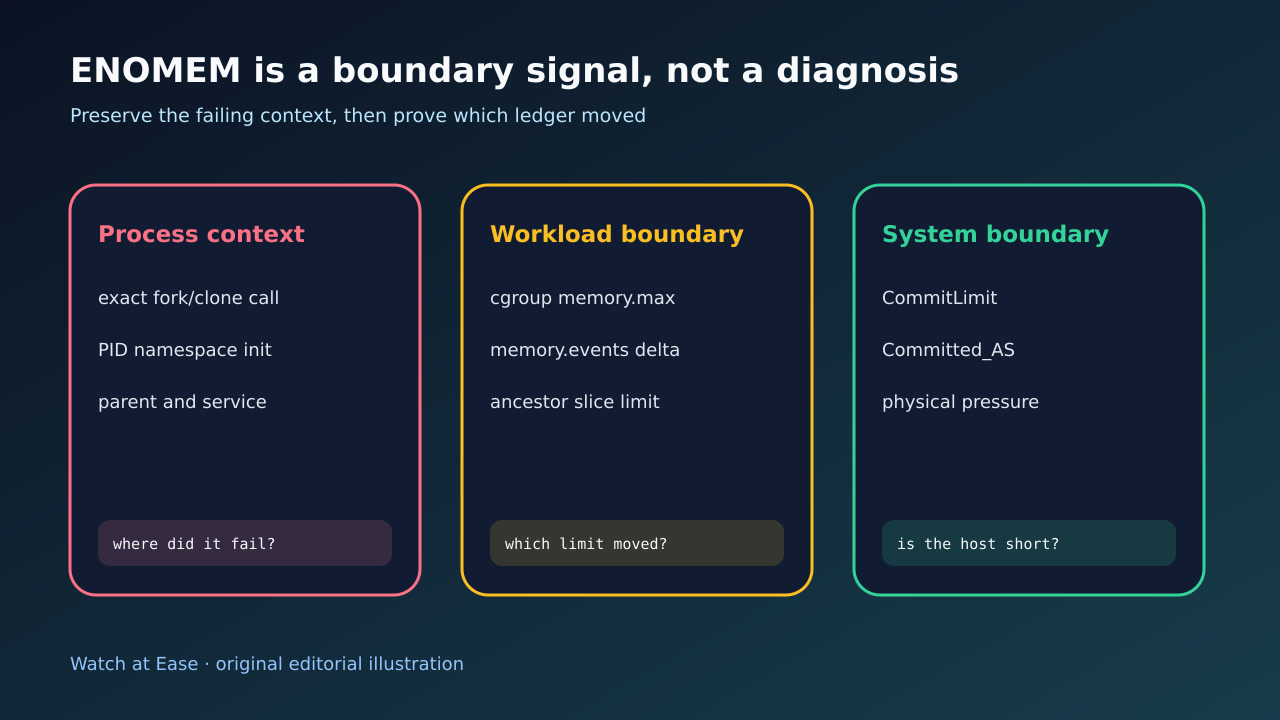
Diagram separating process, workload and host memory boundaries
Original illustration: treat ENOMEM as a boundary signal and preserve all three ledgers. Watch at Ease
Technology · PRACTICAL GUIDE

Linux says “fork: Cannot allocate memory”? Prove the failing boundary before rebooting

Free RAM is not a diagnosis. Preserve the failed fork context, prove that the PID namespace is alive, compare cgroup memory events and effective limits, then read the host commit ledger before adding swap or restarting.

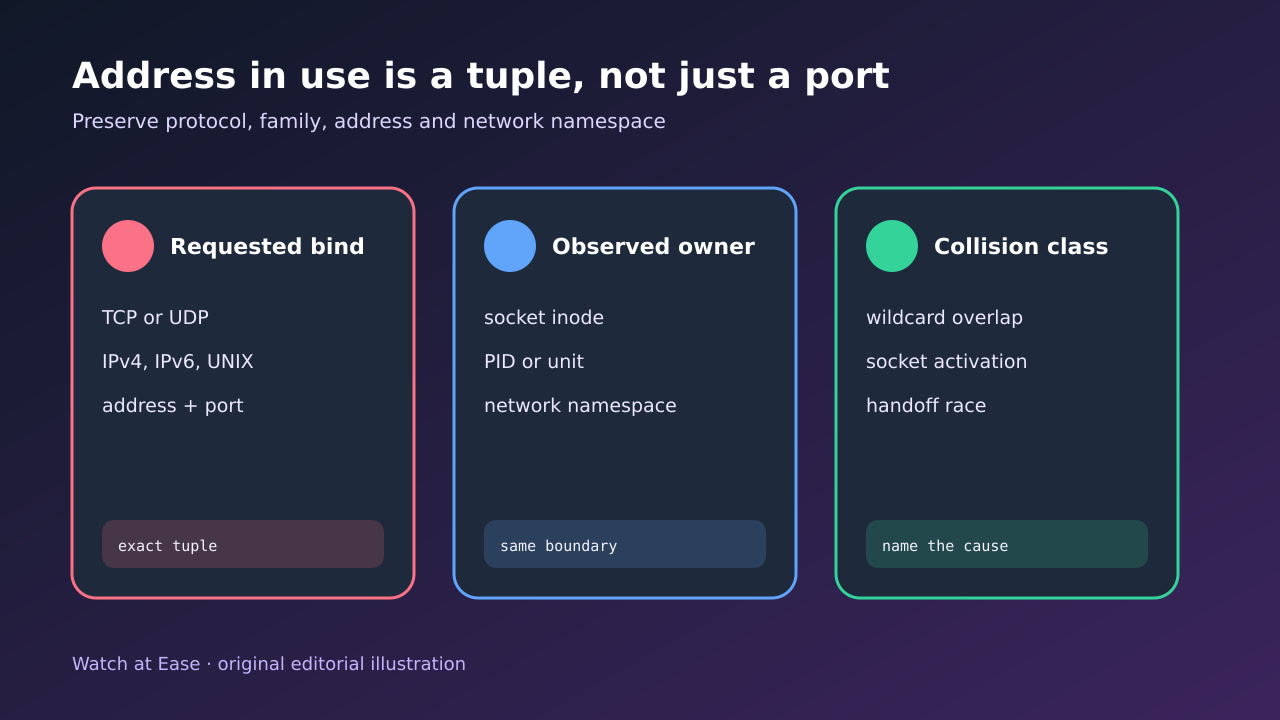
Diagram of requested socket tuple, observed owner and collision class
Original illustration: match the failing bind to one exact ownership boundary. Watch at Ease
Technology · PRACTICAL GUIDE

Linux says “Address already in use”? Prove the socket owner before killing or retrying

A port number alone is not the incident. Capture the protocol, family, address, port or path and network namespace; prove which process or socket unit owns that exact tuple; then repair one ownership boundary and repeat the start.

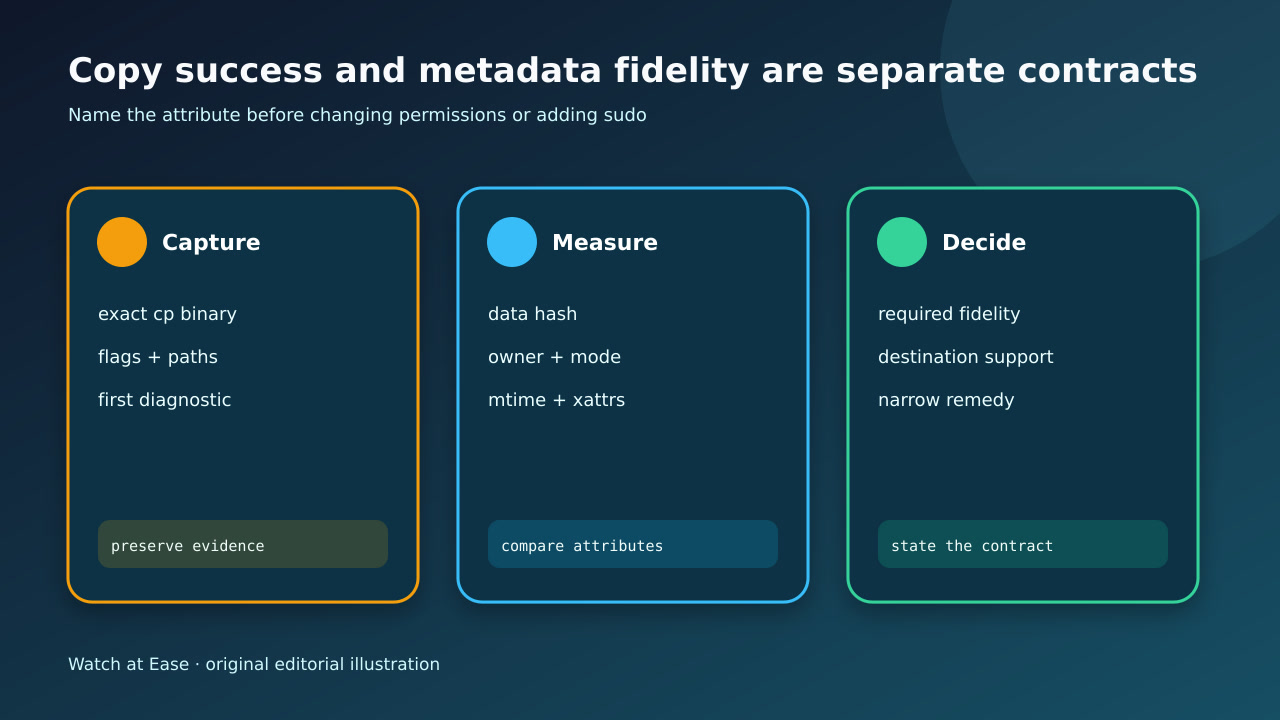
Diagram separating byte-copy success from metadata fidelity.
Original Watch at Ease illustration: name and test each required copy attribute. Watch at Ease
Technology · PRACTICAL GUIDE

cp says “preserving times … Operation not permitted”? Prove the metadata contract first

The file data may have copied even though one metadata update failed. Capture the exact binary, target object and first rejected attribute; then decide whether timestamps, ownership, mode, ACLs or xattrs are actually required before adding sudo or dropping preservation.