SQLite RETURNING still blocks commit after fetchone? Finish every write cursor
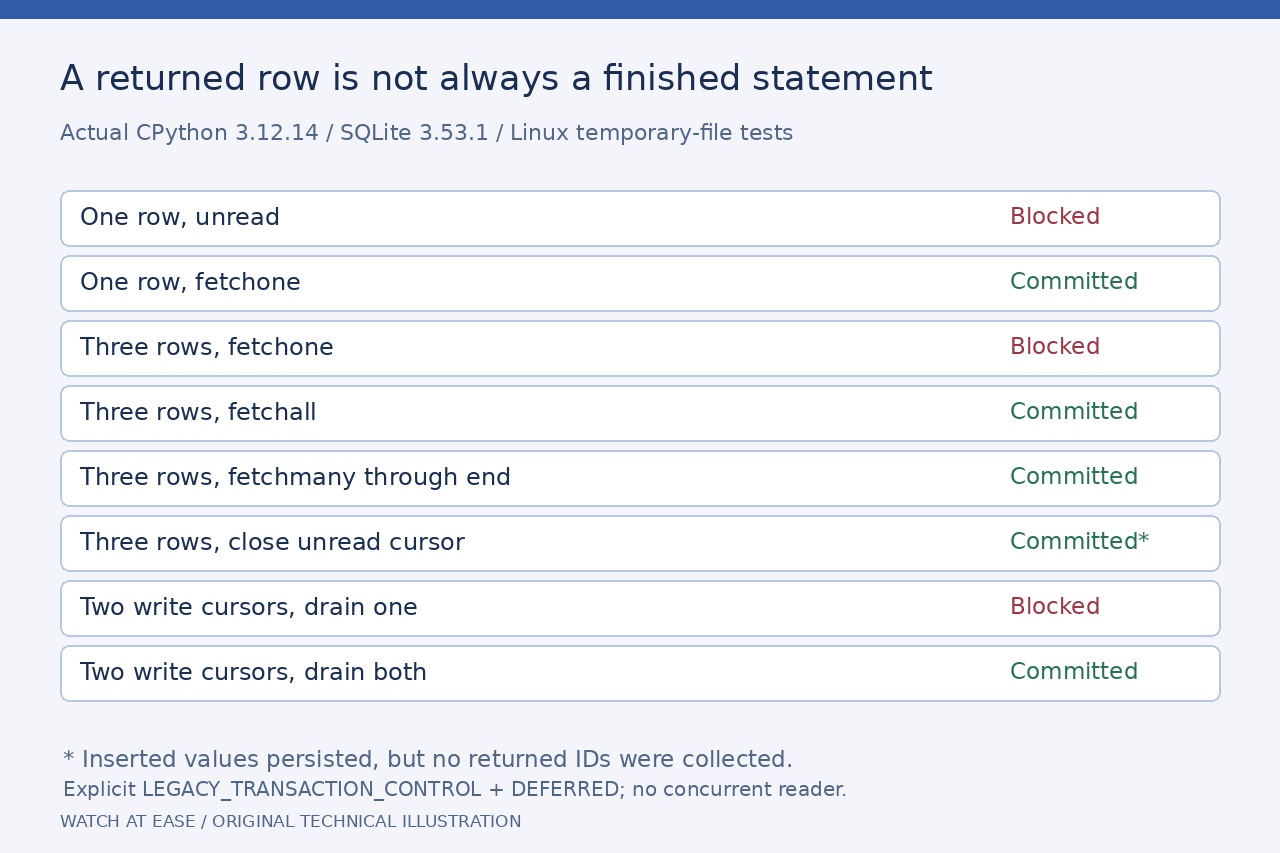
A returned ID is not always a finished statement. Compare single-row, multirow and two-cursor cases before replaying a write or discarding its results.
WATCH AT EASE · PRACTICAL GUIDE
Answers to everyday questions, checked for current relevance.
25–48 / 343

A returned ID is not always a finished statement. Compare single-row, multirow and two-cursor cases before replaying a write or discarding its results.

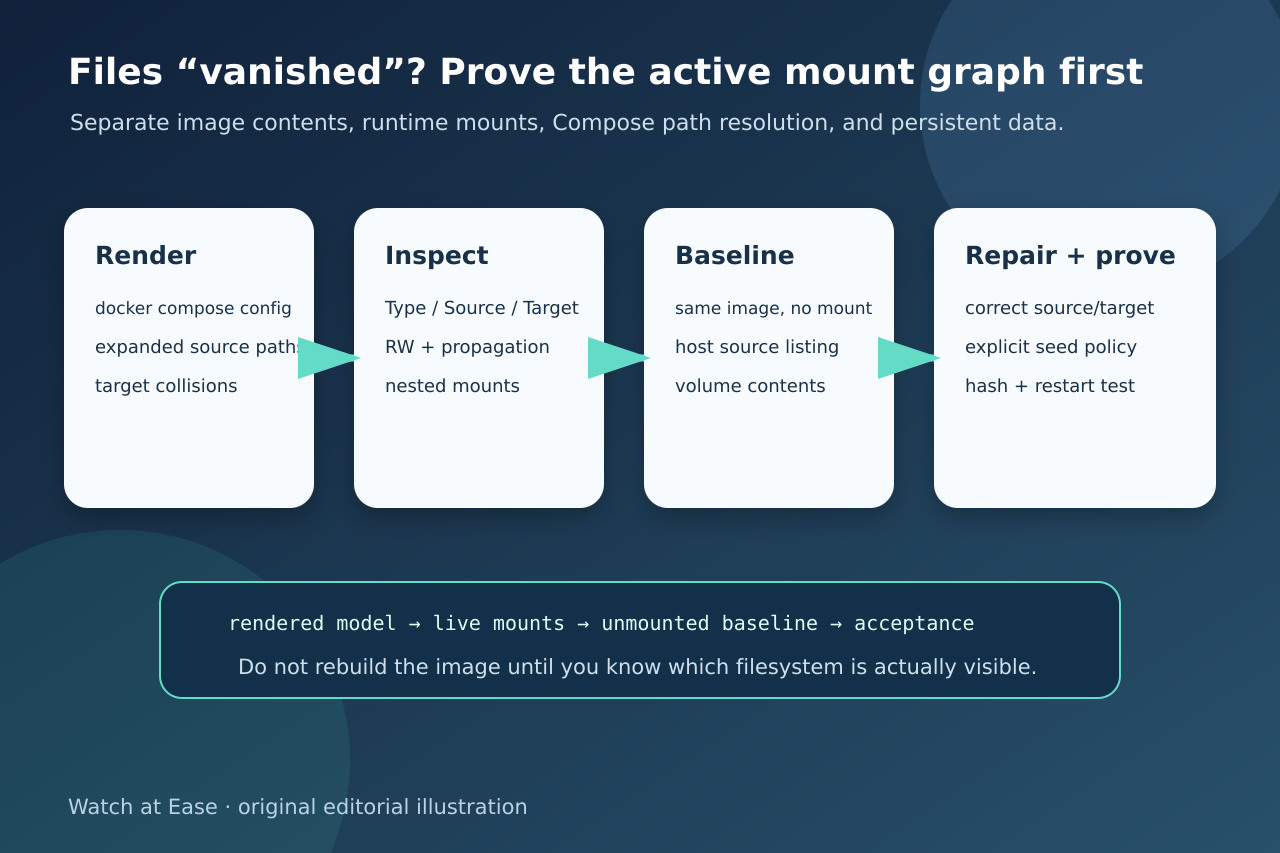
Separate same-loop mutation, concurrent writers, re-entrant callbacks and runtime-owned registries, then choose a repair whose semantics you can test.

Render the Compose model, inspect the live mount graph, and compare an unmounted image baseline before rebuilding, copying, or deleting data.

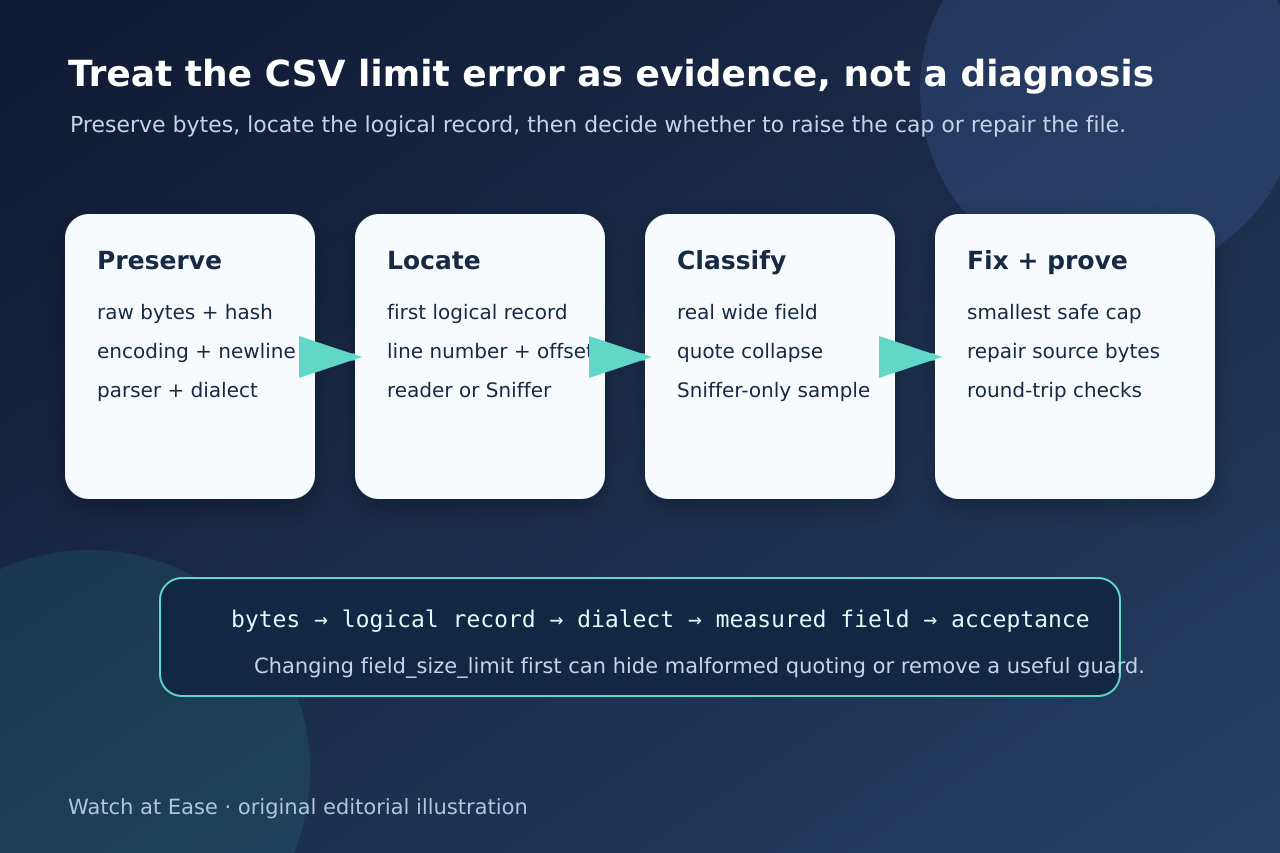
Preserve the bytes, separate Sniffer from reader, and prove whether the record is genuinely wide, malformed, or detection-only before changing csv.field_size_limit.

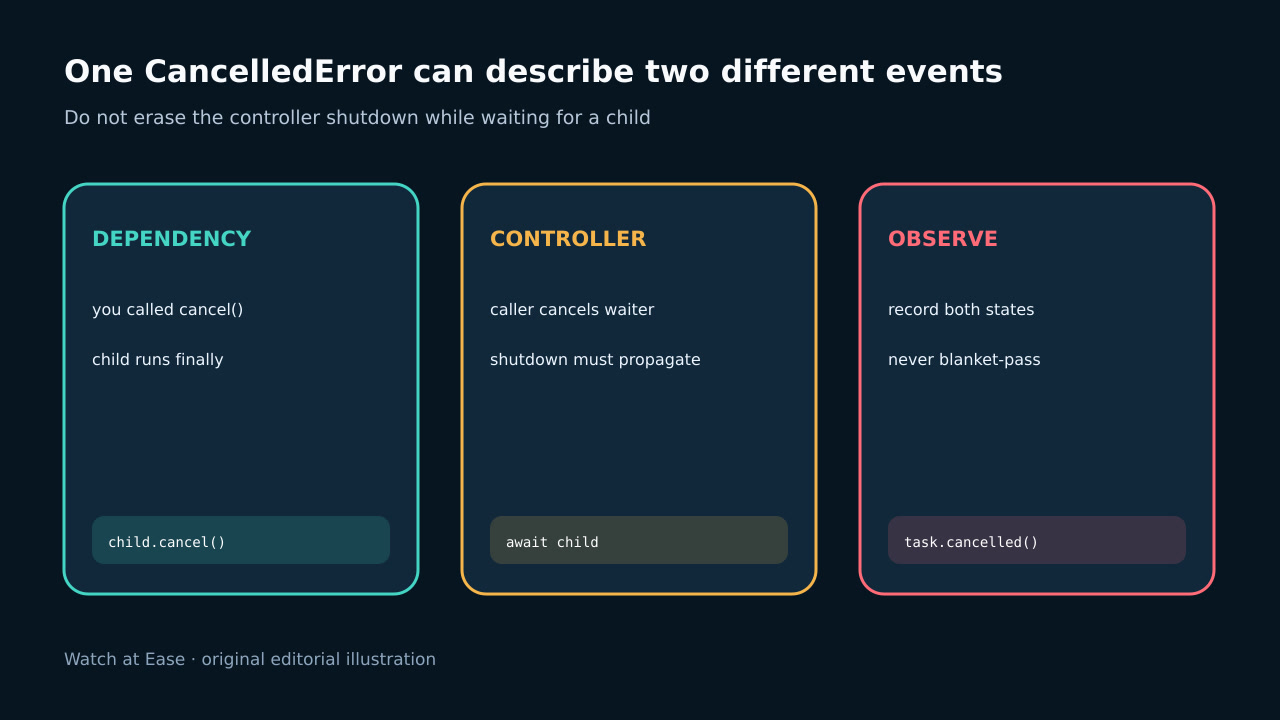
A child can finish by cancellation at the same moment its controller is cancelled from outside. Record task ownership, let each child clean up in finally, collect child outcomes without a blanket except-pass, and prove that outer cancellation still propagates.

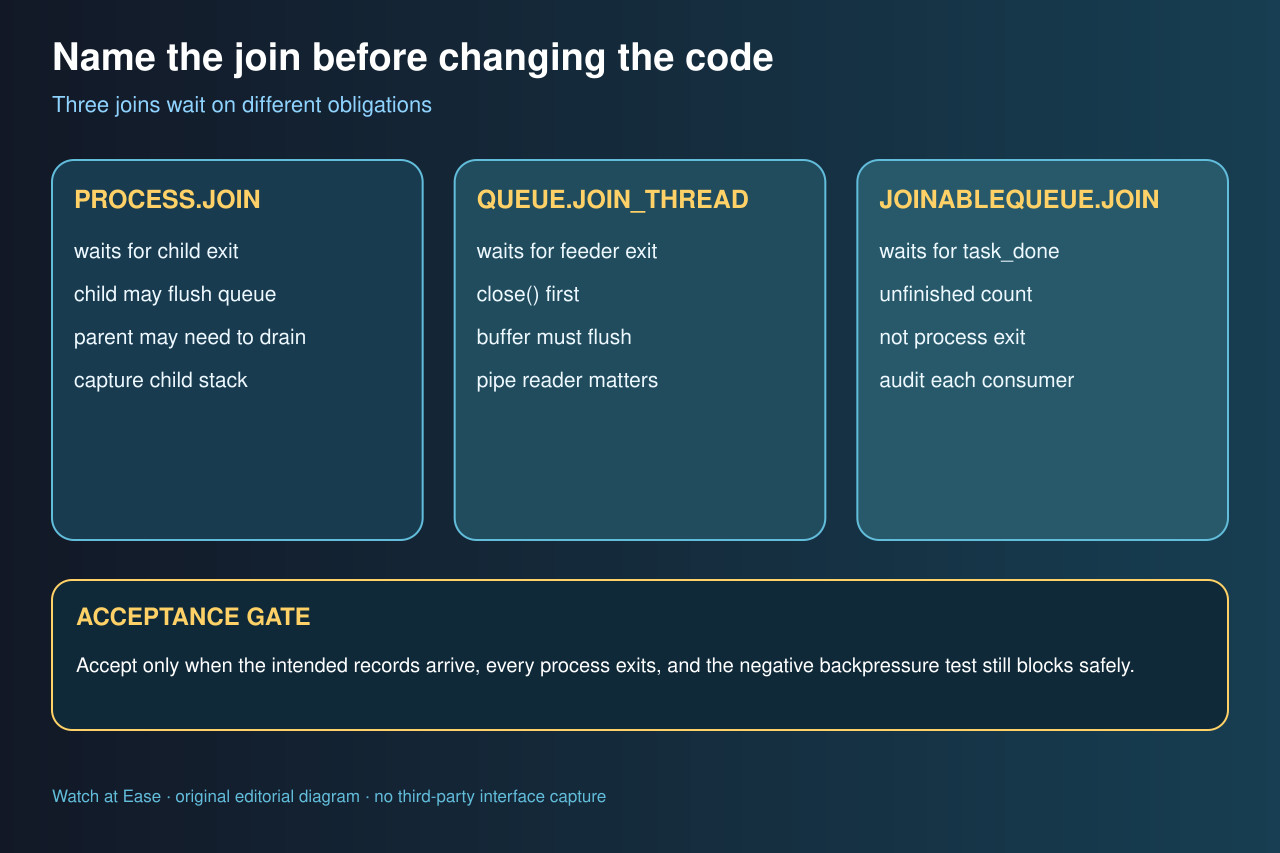
Distinguish process, feeder-thread and unfinished-task waits before reordering shutdown—or accepting deliberate queue loss.

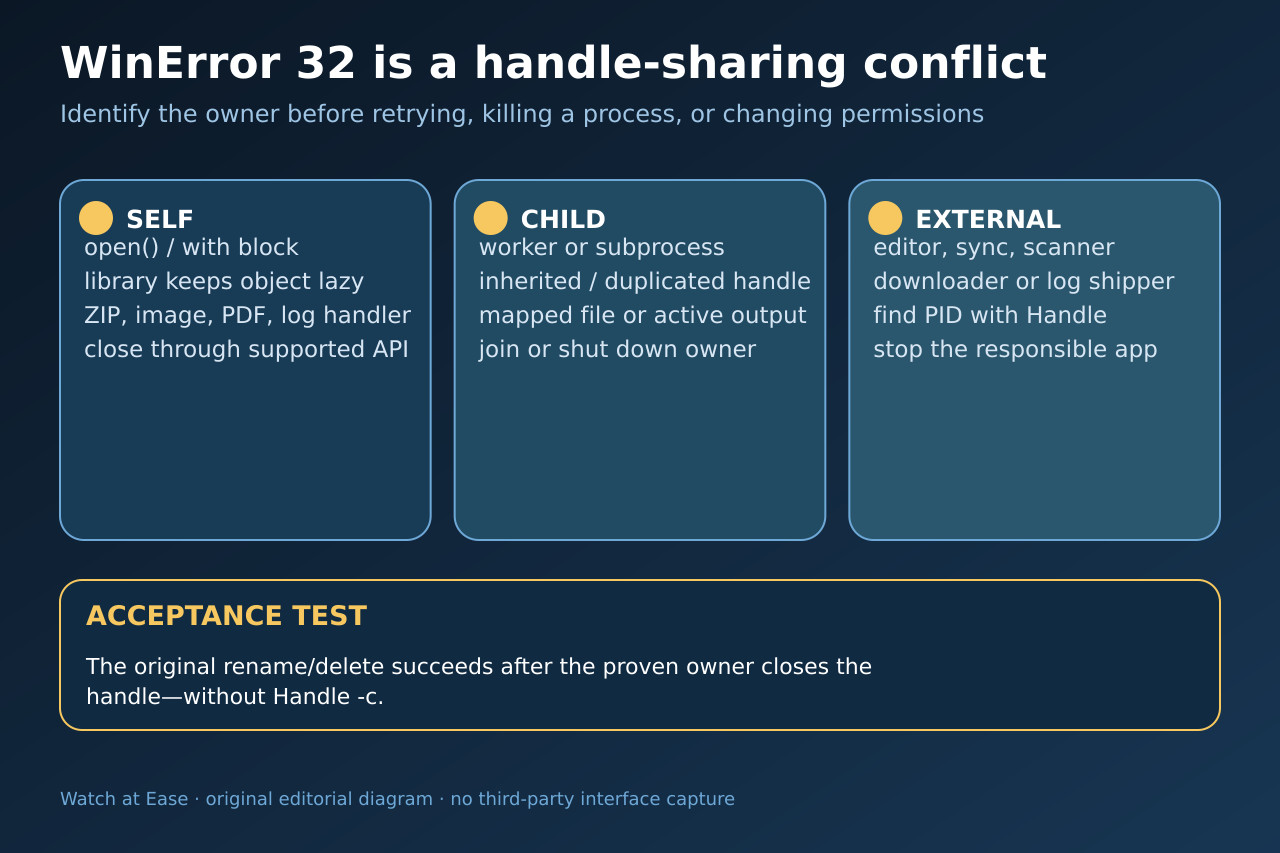
The path is evidence, not the owner. Trace the live Python object, child process, directory context and external handle before changing permissions, sleeping or killing anything.

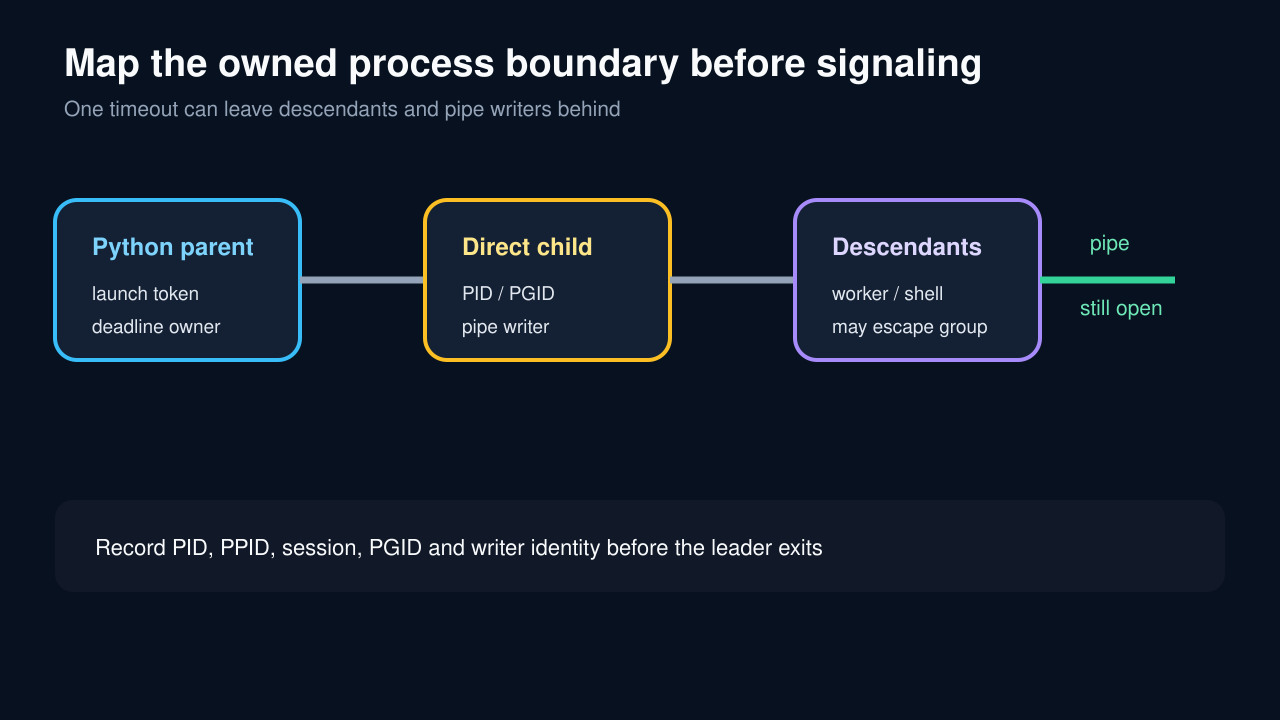
Trace the direct child, descendants, session, process group and inherited pipe writers before choosing terminate, group signaling or recursive cleanup.

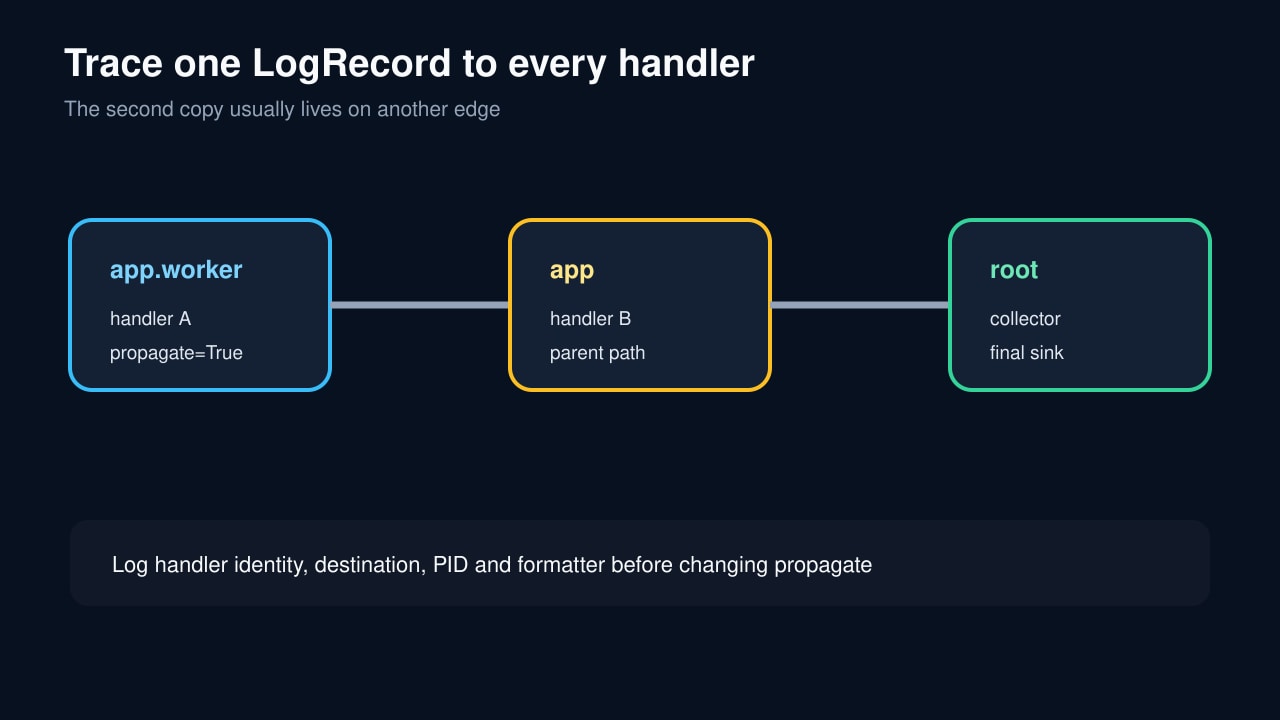
Tag one record, trace every handler to root, then separate repeated setup, framework defaults and multi-process capture before removing one duplicate edge.

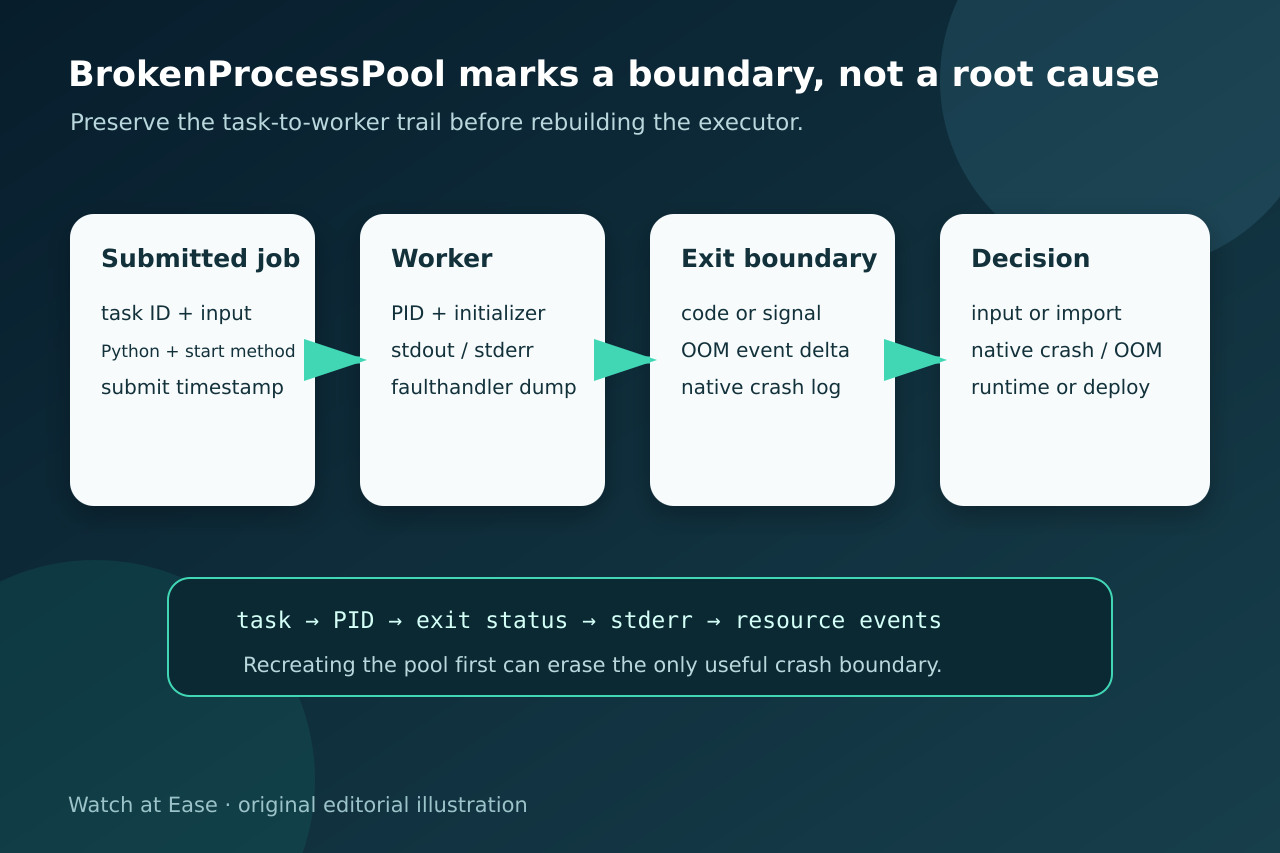
The exception only proves that a worker ended non-cleanly. Preserve task, PID, start method, stderr, exit status and OOM evidence before choosing an import, crash, capacity or deployment fix.

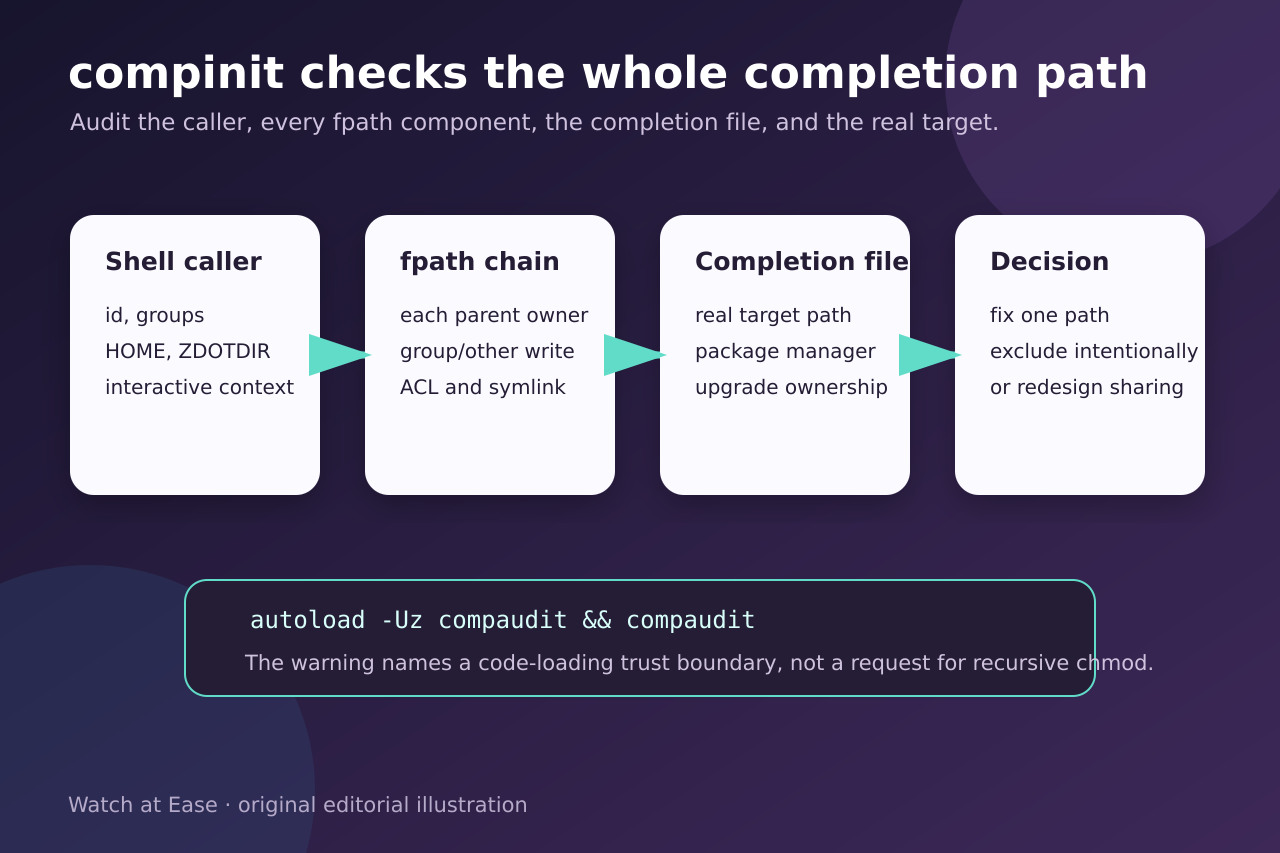
The warning protects a shell-code loading path. Bind the real user, every fpath parent, symlink target and installer owner before changing one permission or bypassing the check.

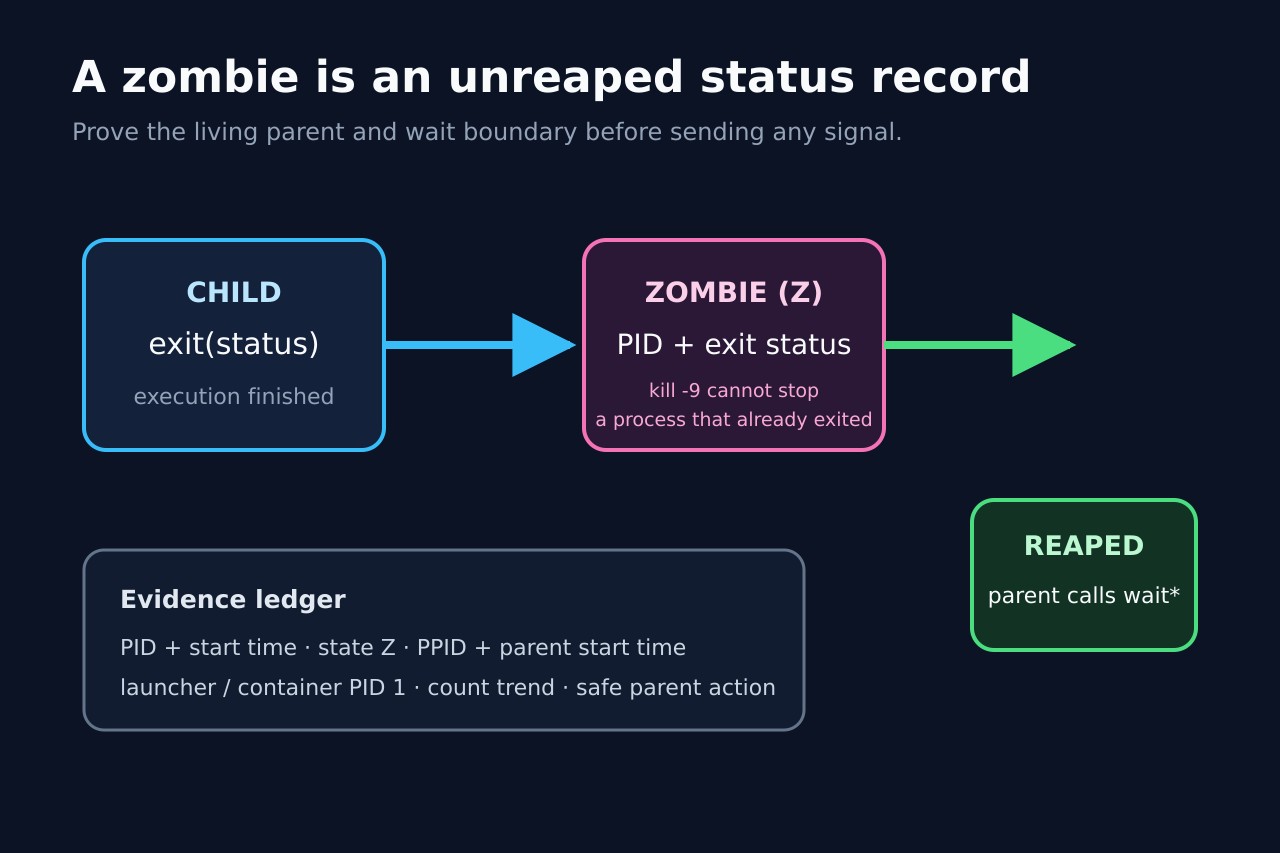
A zombie is already dead; the living parent, subreaper or container PID 1 owns cleanup. Bind child and parent identity, then repair one safe reaping boundary.

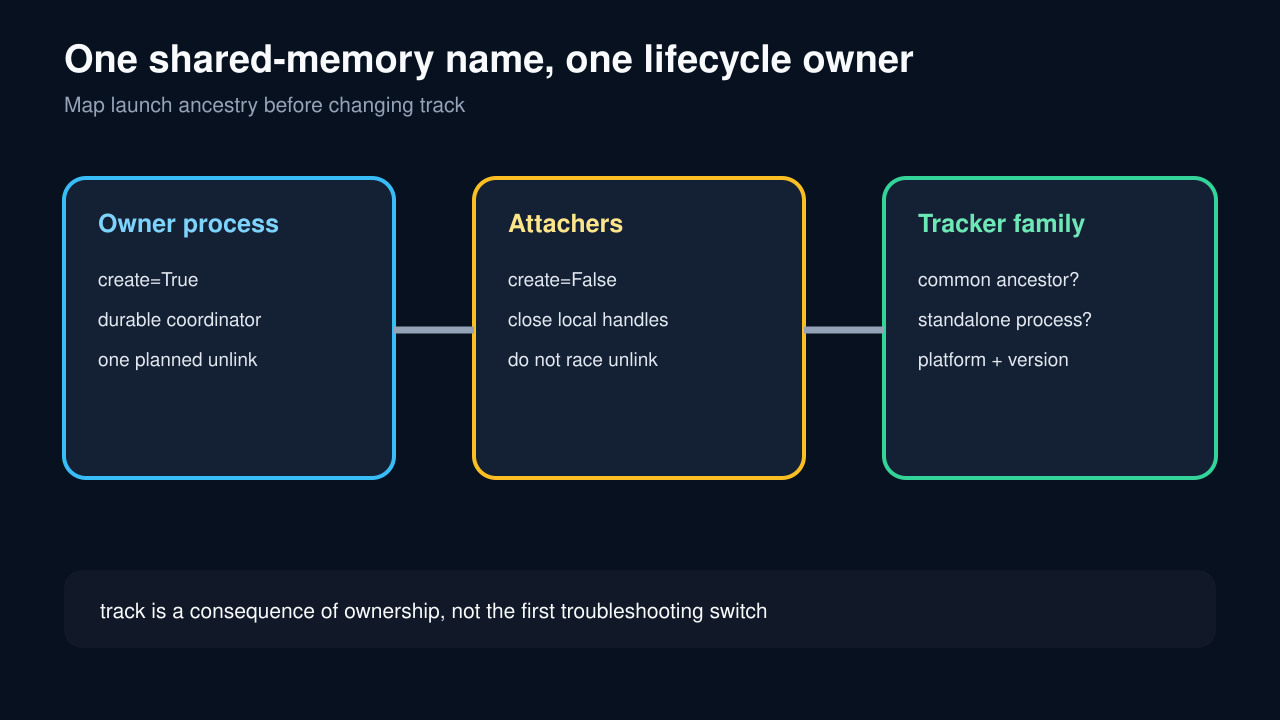
Map every creator, attacher and tracker family before changing track. Make one process own unlink, then test both survival and cleanup.

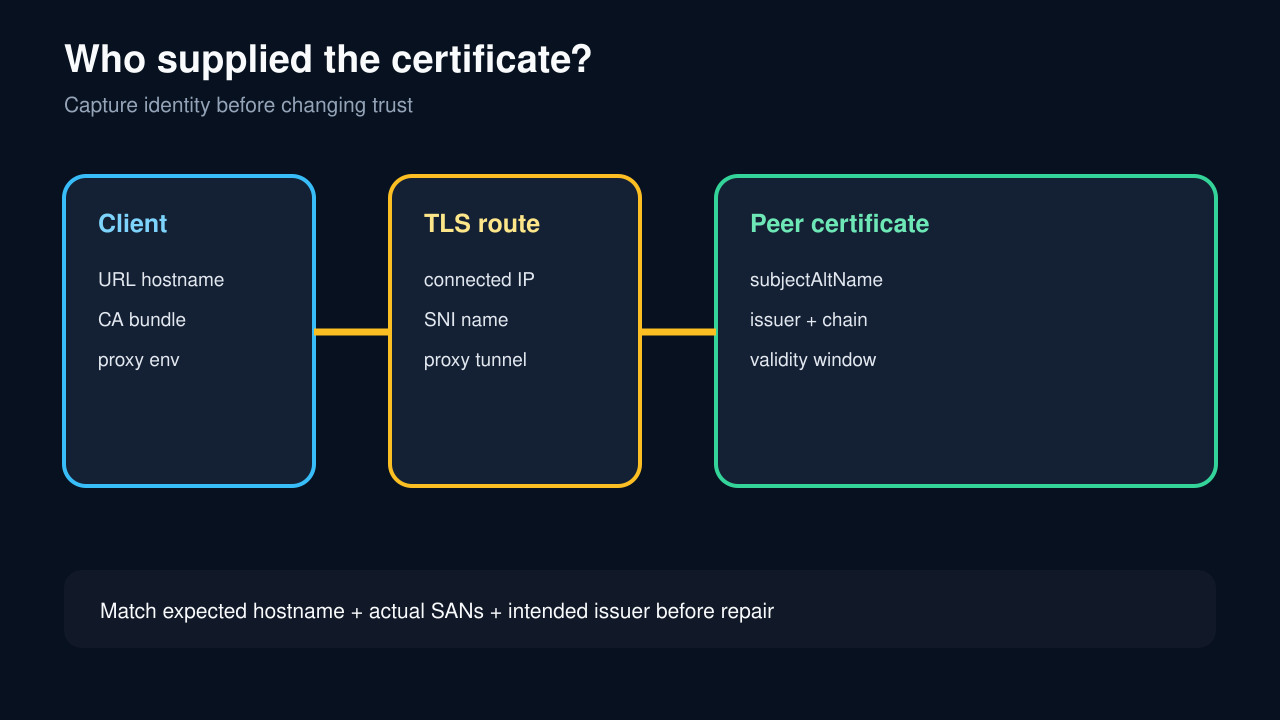
Keep verification on. Capture the requested name, SNI, peer SANs, issuer, proxy path and active CA bundle, then fix the component that actually owns the mismatch.

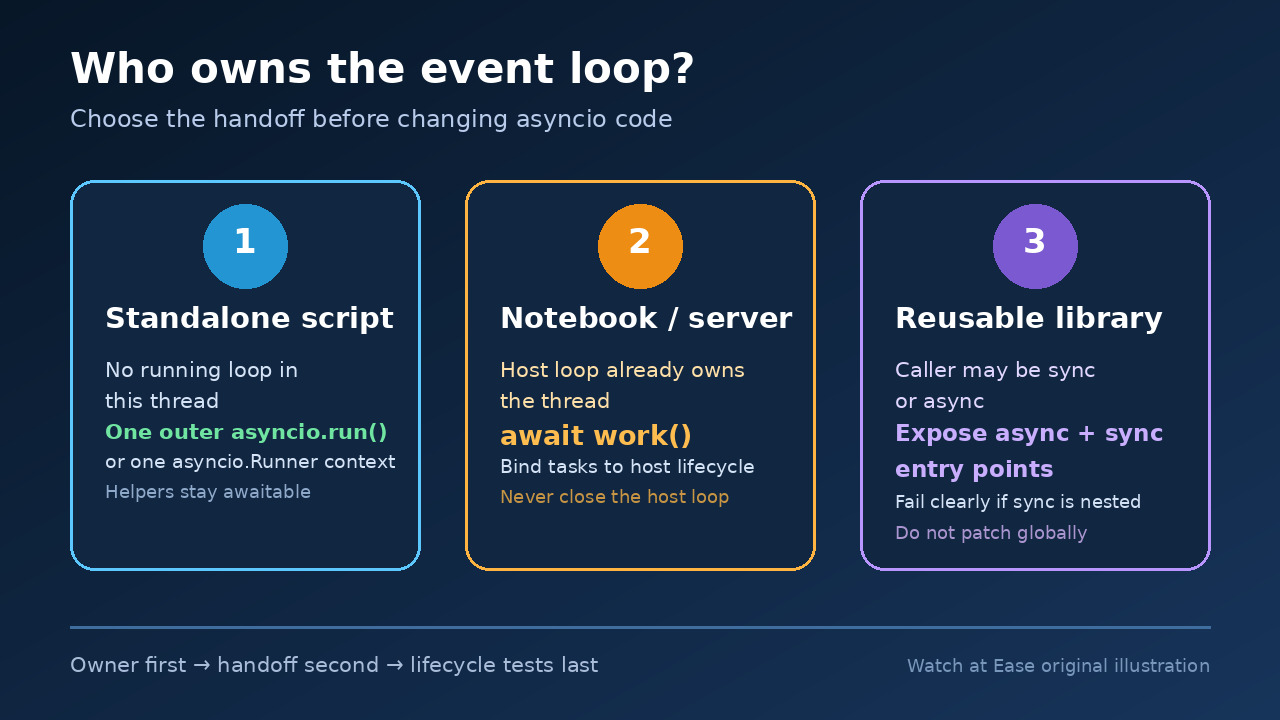
The exception is an ownership alarm: something on this thread already runs the event loop. Await inside that owner, or create one loop only at the true synchronous entry point.

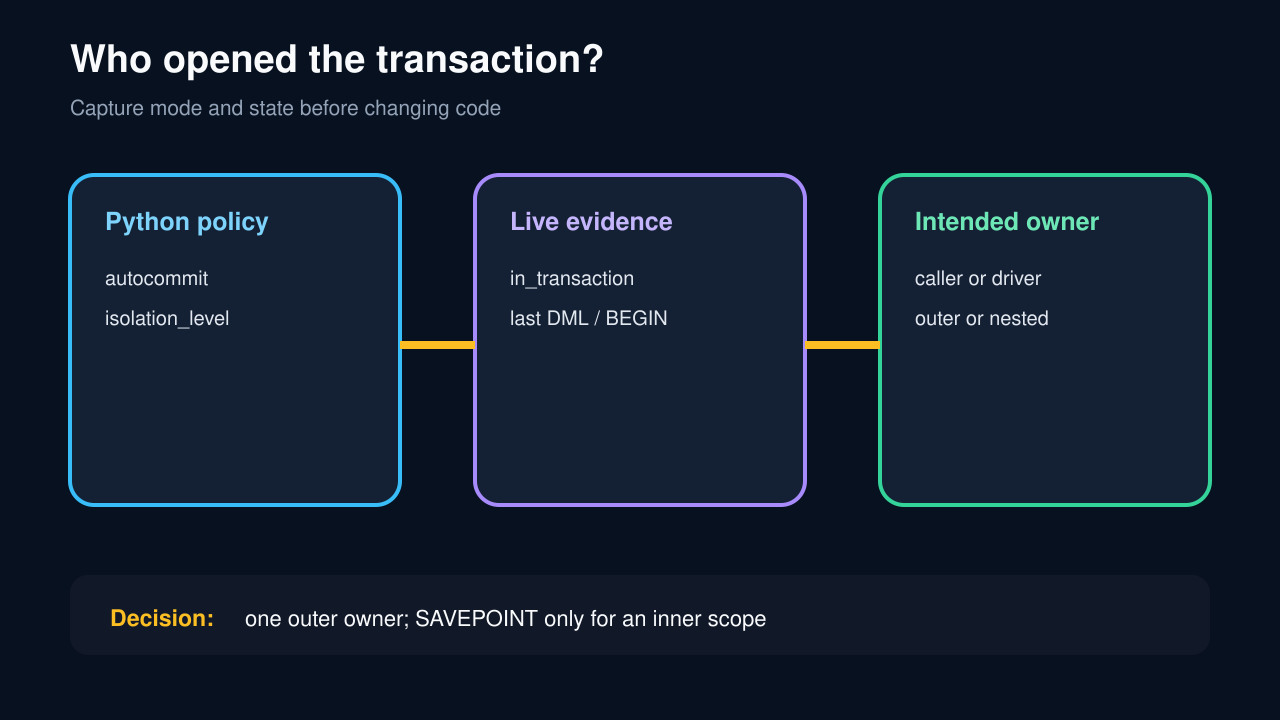
The error is not a lock timeout. It means the same connection already has an active transaction. Record the Python mode, preserve the intended atomic boundary, and use one outer transaction or a SAVEPOINT.

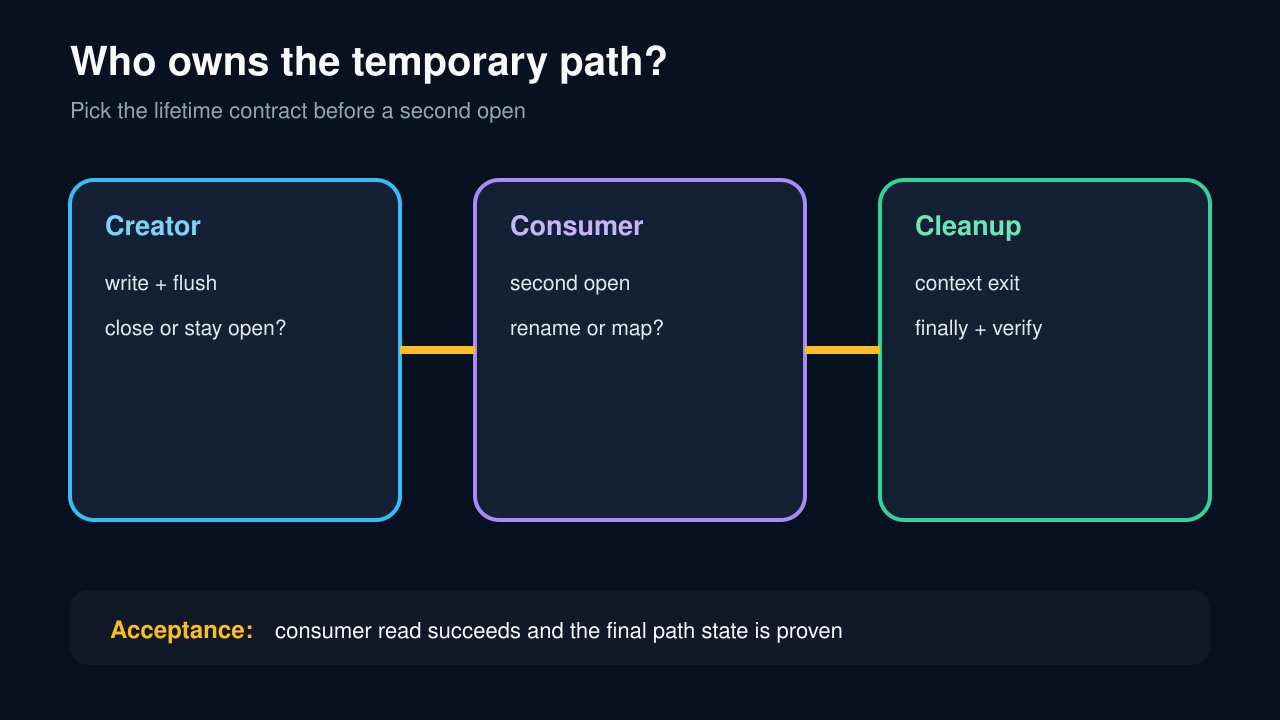
A temporary path has three owners: the creator, the second opener, and cleanup. Windows share modes force you to decide which handle stays open before you pass the name.

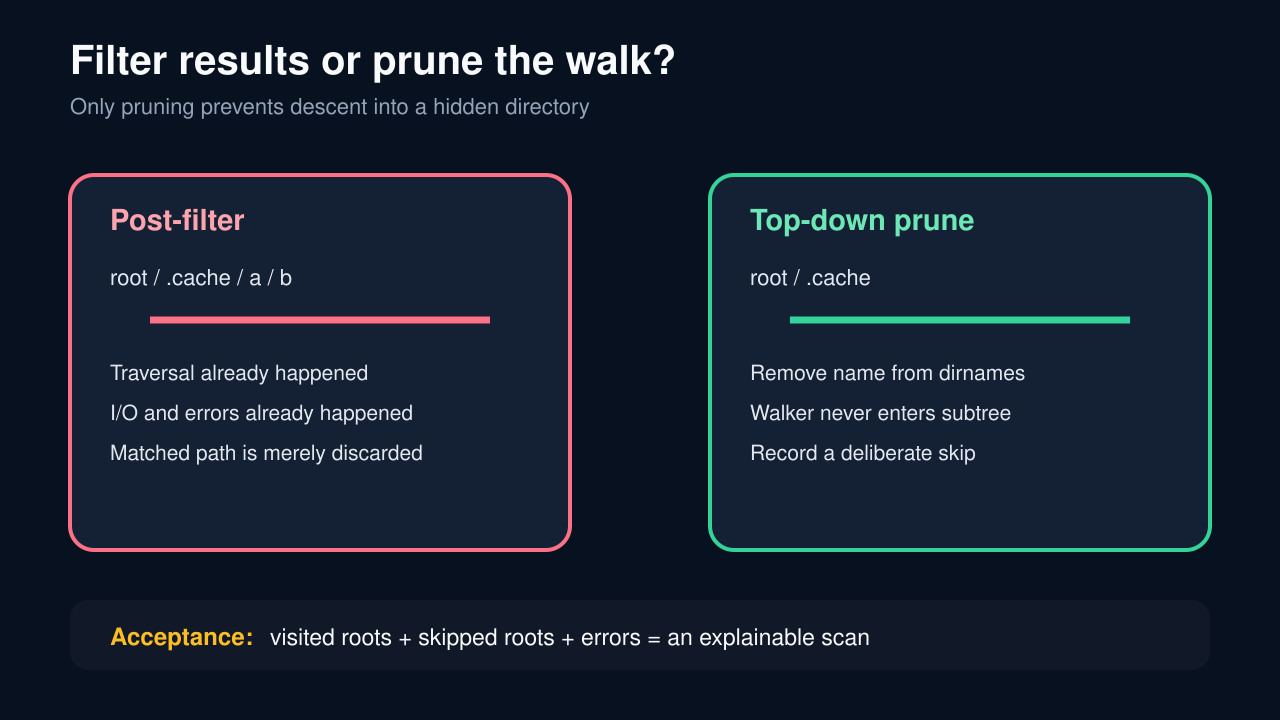
A result filter hides names after Python has already crossed the directory. Define the hidden-file policy, prune top-down, and verify the tree that was never visited.

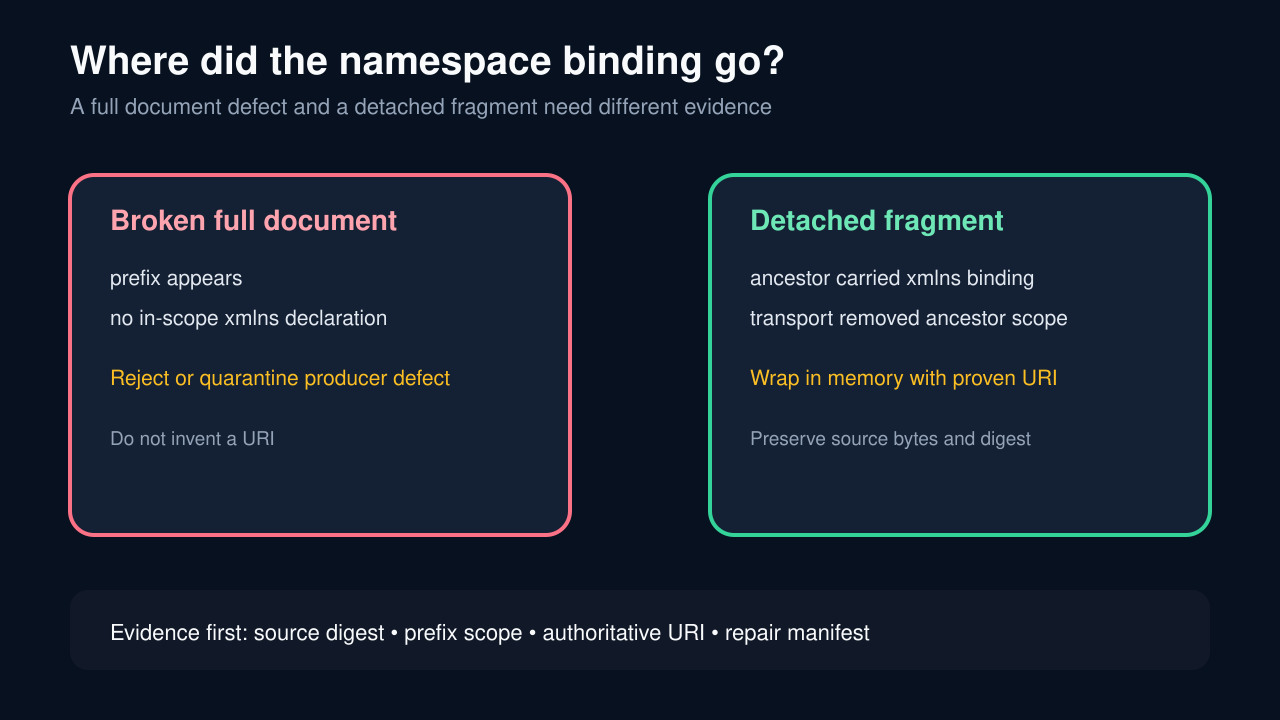
Preserve the original bytes, distinguish a broken document from a detached fragment, and inject a namespace only when an authoritative URI proves the binding.

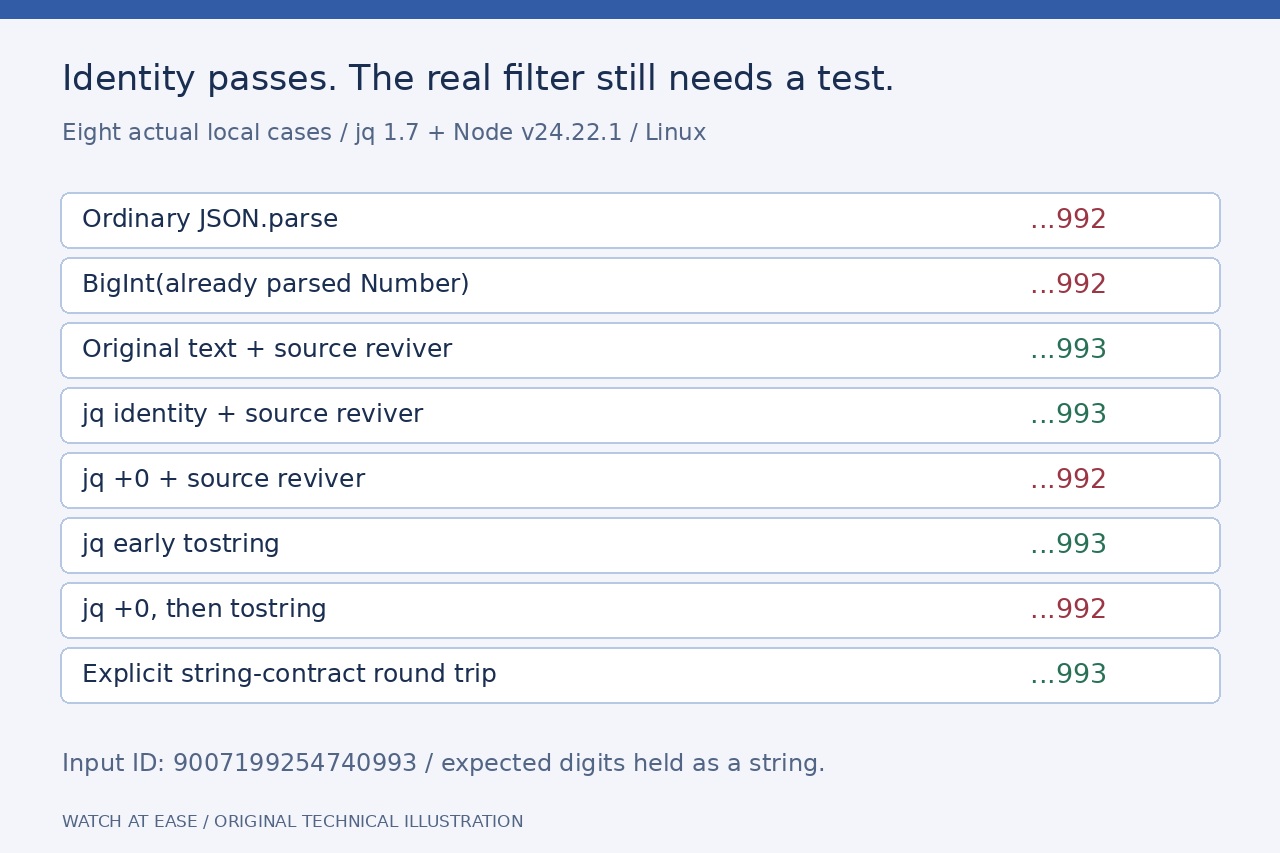
An identity filter can pass while arithmetic changes the last digit. Use paired raw-output controls to locate the loss before a downstream reviver makes it look exact.

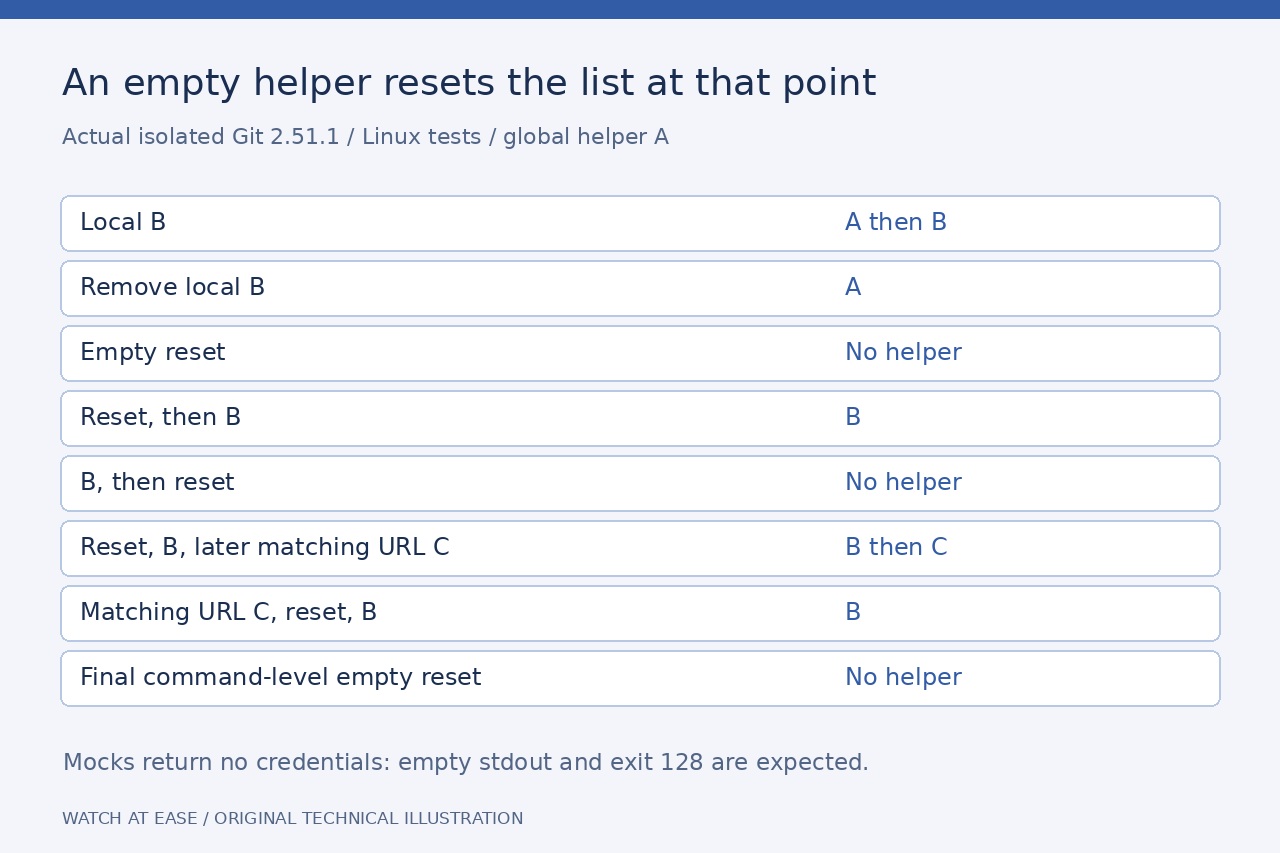
Removing one setting, resetting a helper list and erasing a stored login are different operations. Prove the matching helper order before changing your credential store.

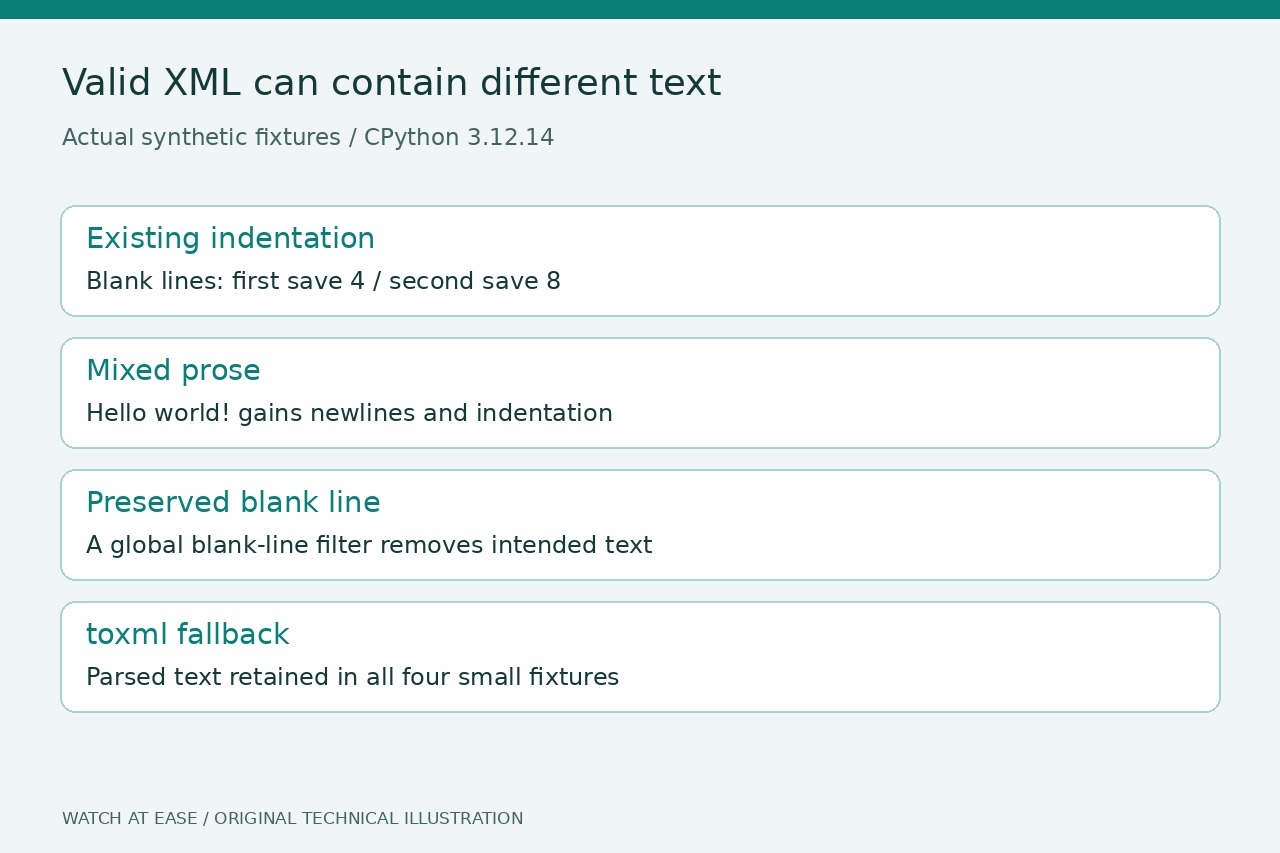
A cleaner XML file can contain different text. Reproduce the save cycle, check the installed Python version and compare semantic content before replacing the original.

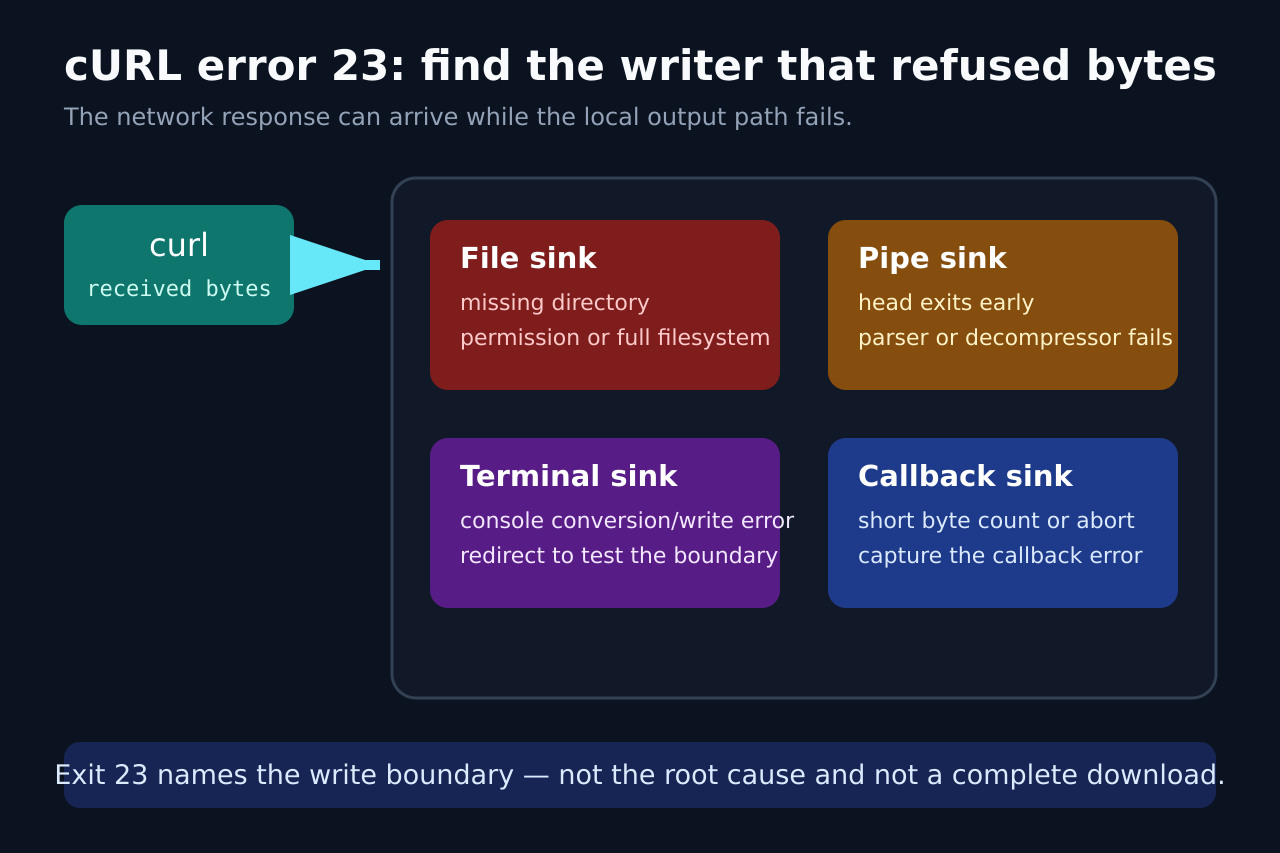
Error 23 means curl could not write received data to its local destination. Preserve stderr and every pipeline status, identify whether the consumer is a file, pipe, terminal or callback, repair that writer, and verify the final bytes before calling the transfer complete.

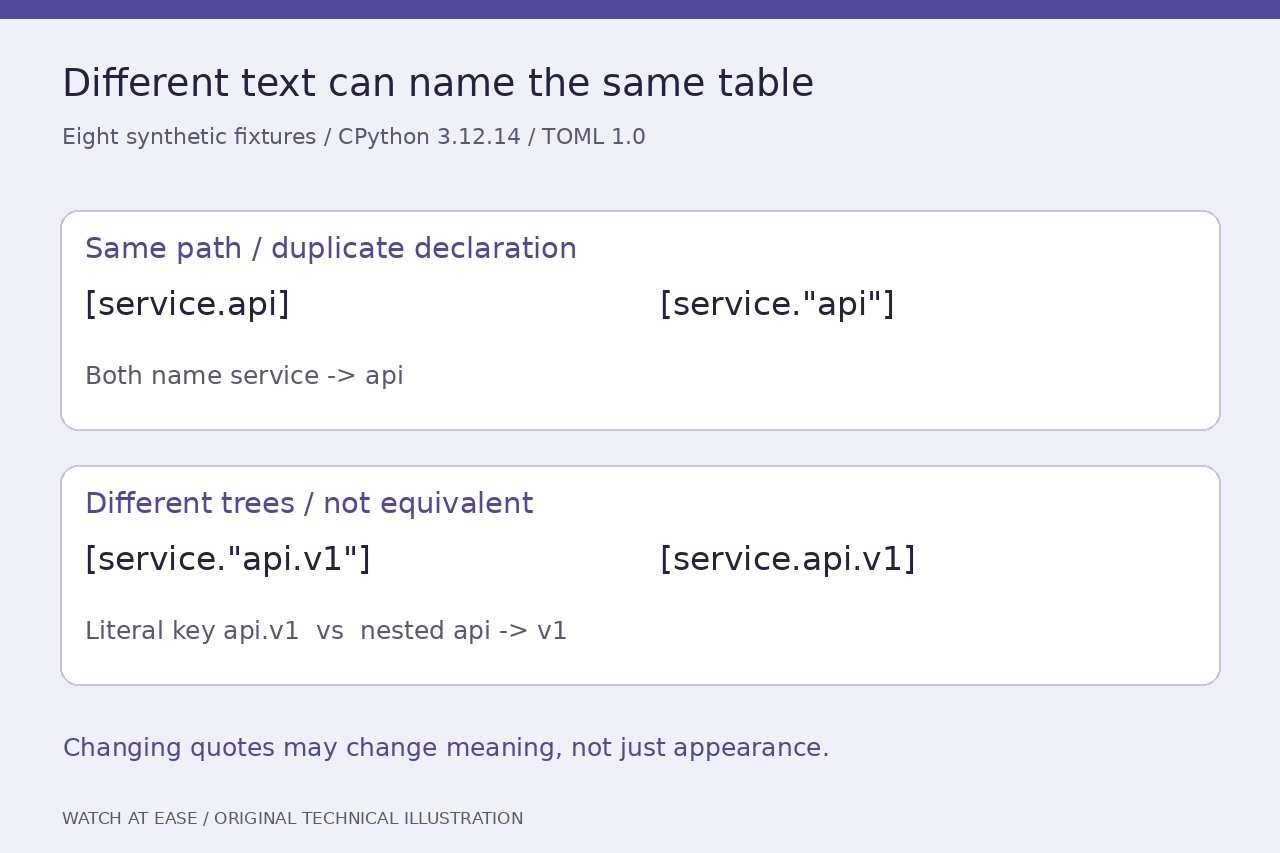
Quoted names, dotted keys and generated sections can collide even when the text looks different. Preserve the original, verify the parsed tree and test the next generated file.