Technology · PRACTICAL GUIDE
Kdenlive proxy-only archive opens? Verify original media before trusting the final render
An editable proxy preview is not proof that an archive contains the original footage. Preserve both media routes, check archive scope and verify the renderer’s real inputs before accepting full-quality recovery.
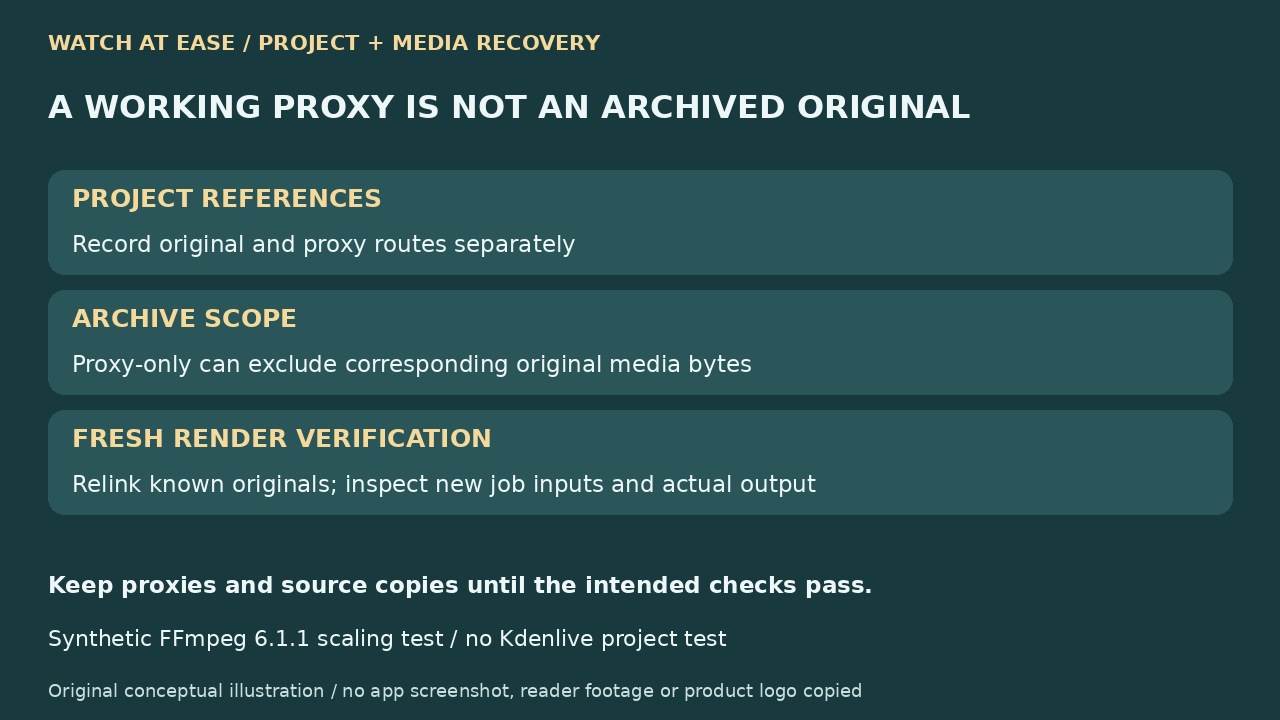
A Kdenlive project can remain editable with proxies while the original footage needed for a full-quality render is missing. Opening an archive, seeing a working preview or exporting a file at the project’s resolution does not establish that the original media was included.
Preserve the archive, project file, proxies and any surviving originals before changing settings or cleaning cache. Then distinguish the archive’s selected scope from the ordinary proxy workflow. The goal is to recover the intended source route, not simply make a missing-media message disappear.
Preserve the archive and record what it was meant to contain
Keep the original archive and .kdenlive file unchanged, along with proxy directories and any full-quality source copies. Extract or open a copy into a new location. Record the Kdenlive version, archive options, expected bin assets, required timeline sequences and the location of the extracted project. Do not delete proxy cache while it may be your only surviving media.
The current archive manual explains that paths are updated to archived versions and that timeline-only archives can omit other clips. Define the inventory you need before calling the package complete. A timeline-only deliverable may be intentional; a reusable project with unused takes has a wider requirement.
Separate archived bytes from rewritten references
In the pinned upstream ArchiveWidget implementation, the proxy-only control disables original entries that have available proxies, and the copy loop skips disabled entries. The project-processing functions rewrite resource references separately. A rewritten path therefore does not establish that the referenced original bytes were copied. This is an inspected implementation, not a reproduction on your installed version.
Inspect a project copy as text without bulk replacement. Record resource, kdenlive:originalurl and kdenlive:proxy for each relevant producer or chain, plus warp_resource for time-warped clips. The original project root and extraction context matter for relative paths. Compare each route with an actual file; a proxy field, a filename or the project profile is not interchangeable with the original source.
Recover the original route without discarding the proxy
If the correct original exists elsewhere, use the missing-media dialog’s manual or recursive search on a project copy. Match the clip by recognizable content, duration and source characteristics rather than basename alone. Preserve old and replacement paths so you can undo a wrong match. Removing a missing entry or using a placeholder is a different outcome from restoring the original.
If the archive retained only a proxy, look for a preserved original recording or source backup before disabling or rebuilding proxies. The ordinary proxy-settings documentation describes swapping back to originals for final rendering; it cannot supply bytes that were excluded from the archive. If those originals cannot be found, keep the project and proxies and classify the remaining output as proxy-based.
Create a fresh render test and inspect its source route
After relinking, create a newly named short-zone render containing the problematic clip and a meaningful cut. Check Use Proxy Clips, Render at Preview Resolution and Rescale separately against your intended test. The current rendering manual says edits after a job is submitted do not change that job’s settings, so rerunning an old queued job is not the same verification.
Enable Keep log files where available and inspect the newly generated .mlt playlist and render log on copies. Establish which original or proxy file the relevant clip actually references. The project’s width and height specify output geometry, not a guarantee about input detail. Extend the check to every required clip and sequence before accepting the complete deliverable.
Verify media and state what remains recoverable
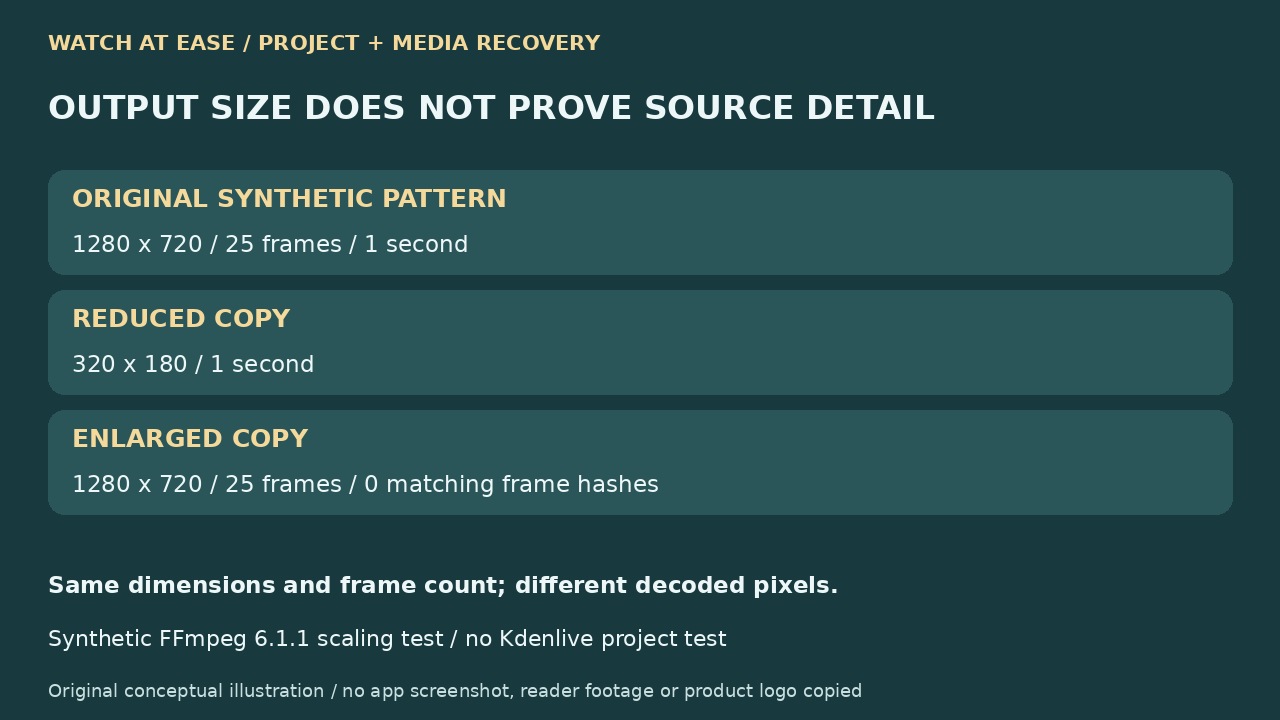
Use ffprobe -v error -show_streams -show_format -of json candidate.mp4 on known source, proxy and output files, substituting actual paths. We made an isolated FFmpeg 6.1.1 test: a 1280×720 pattern was reduced to 320×180, then enlarged back to 1280×720. Both original and enlarged files had 25 decoded frames and one-second duration, but none of their corresponding decoded-frame hashes matched.
That synthetic scaling test is not a Kdenlive archive or reader-project test. It demonstrates why matching dimensions and frame counts are insufficient. Play the actual result, inspect source detail, audio, titles, effects and transitions, and record missing assets separately. A working preview or finished render cannot recreate excluded originals; retain all surviving evidence until the intended source and output checks are complete.