Tech · NEWS EXPLAINER
Ghost introduces Core, a $3,499 personal AI computer
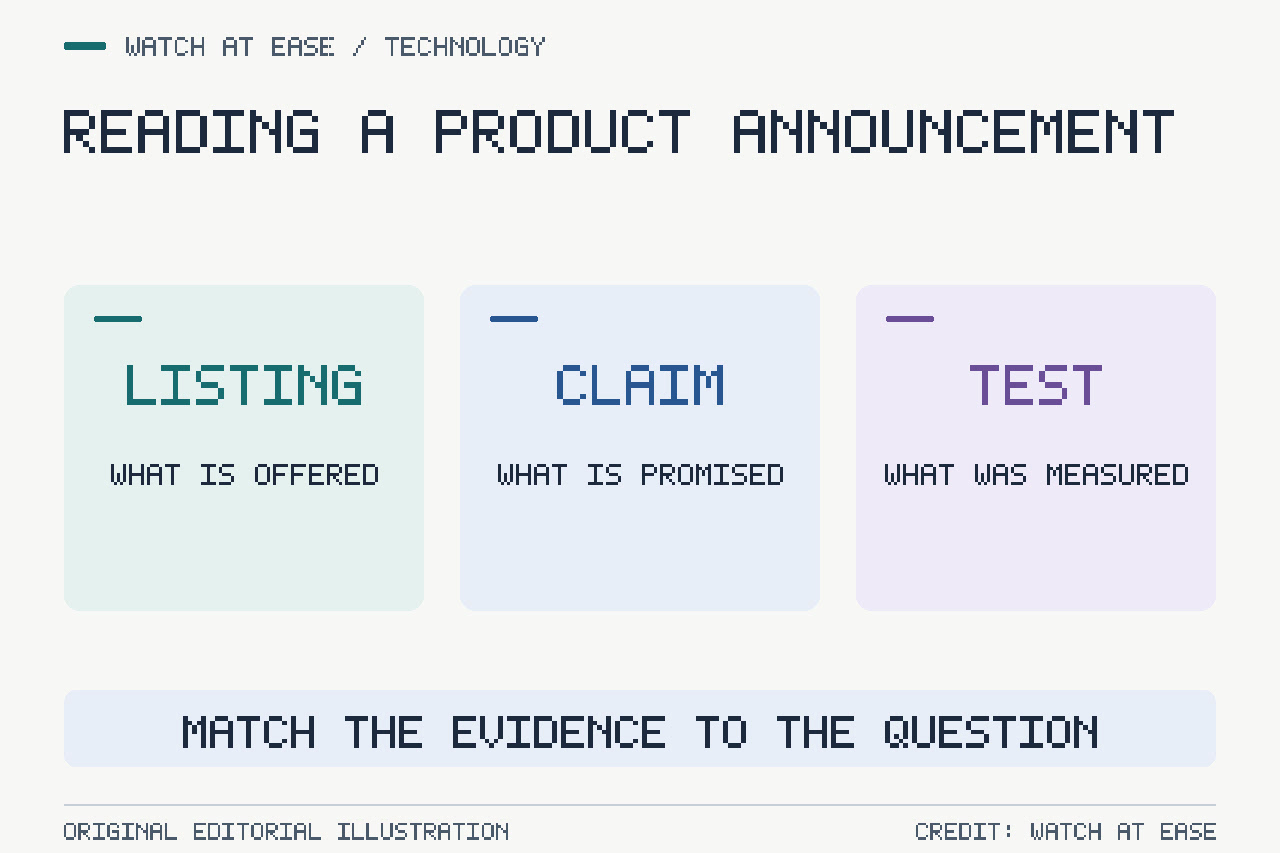
Specifications, model names and company claims answer different questions from independent tests.
Ghost is marketing Core as a $3,499 computer for local AI. TechCrunch reports that first-batch preorders opened Monday, October 5; shipments are planned for the last week of October.
Read the components separately
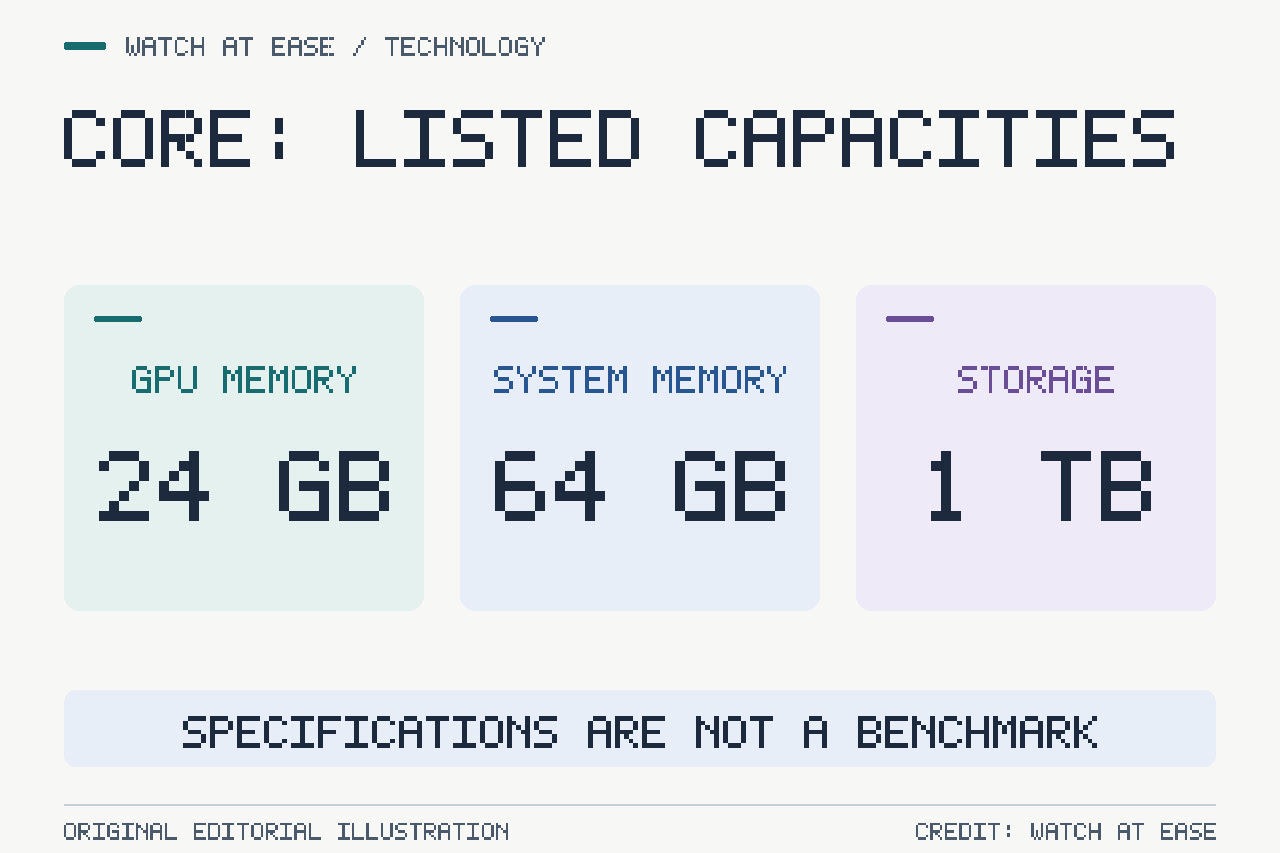
Ghost lists 64 GB of DDR5 RAM, 24 GB of graphics memory and a 1 TB NVMe SSD.
System memory, graphics memory and storage describe different resources. Adding their capacities does not establish a single memory pool available to an AI model.
What the model list means
Ghost lists Qwen 3.8-Next, Qwen 3.8-27B, Gemma 4-31B and Muse-Glimmer-30B.
A product list does not, by itself, establish which models arrive installed. It also cannot show response speed, the tasks that work reliably or how much context remains usable.
Separate the promise from proof
Ghost says Core runs continuously, with models and stored context kept locally. TokenPost reports that privacy and performance claims have not been independently assessed.
Local processing describes where computation happens. A privacy assessment also needs evidence about data access, connections and behavior during actual use; the word local cannot answer those questions alone.
Comparisons need context
A useful comparison needs a shared workload, settings and test conditions. A longer model list or a larger capacity does not demonstrate better results.
Our DGX Spark report explains memory constraints; our OmniBook coverage separates advertised configurations from testing conditions. They provide context for evaluating an announcement, without treating it as a review.