Technology · NEWS EXPLAINER
HP's $699 OmniBook 5 has OLED, but its best screen and 42-hour claim need context
HP's new 14-inch OmniBook 5 starts at $699.99 with OLED and a light aluminum body. Buyers should separate what ships in October from later configurations: the launch panel is rated at 300 nits, the 620-nit 2.5K screen is planned for March 2027, and the 42-hour battery number comes from controlled local-video playback.
HP has announced a new 14-inch OmniBook 5 that puts an OLED screen into a Windows laptop starting at $699.99. The company says it expects the machine to reach HP.com and Best Buy in October, positioning it as a portable option for students, home users and everyday work rather than a premium-priced flagship.
The headline combination is appealing: every configuration reported so far uses OLED, the aluminum chassis starts at 2.56 pounds and measures 11.77mm at its thinnest point, and HP includes a compact 65W USB-C GaN charger. But several of the most eye-catching specifications describe future configurations or controlled tests, not necessarily the $699 model a shopper can buy first. That distinction matters because HP has not published one complete price list for every memory, storage, processor and display combination. This is a launch announcement, not an independent review, so performance, screen quality and everyday battery life remain to be tested.
What the $699 starting price appears to include
Independent launch coverage says the entry configuration pairs an Intel Core 5 processor with 8GB of soldered LPDDR5 memory and a 256GB PCIe SSD. The 14-inch OLED display is a meaningful differentiator at this price, and the base panel is reported at 1920 by 1200 with a maximum brightness rating of 300 nits.
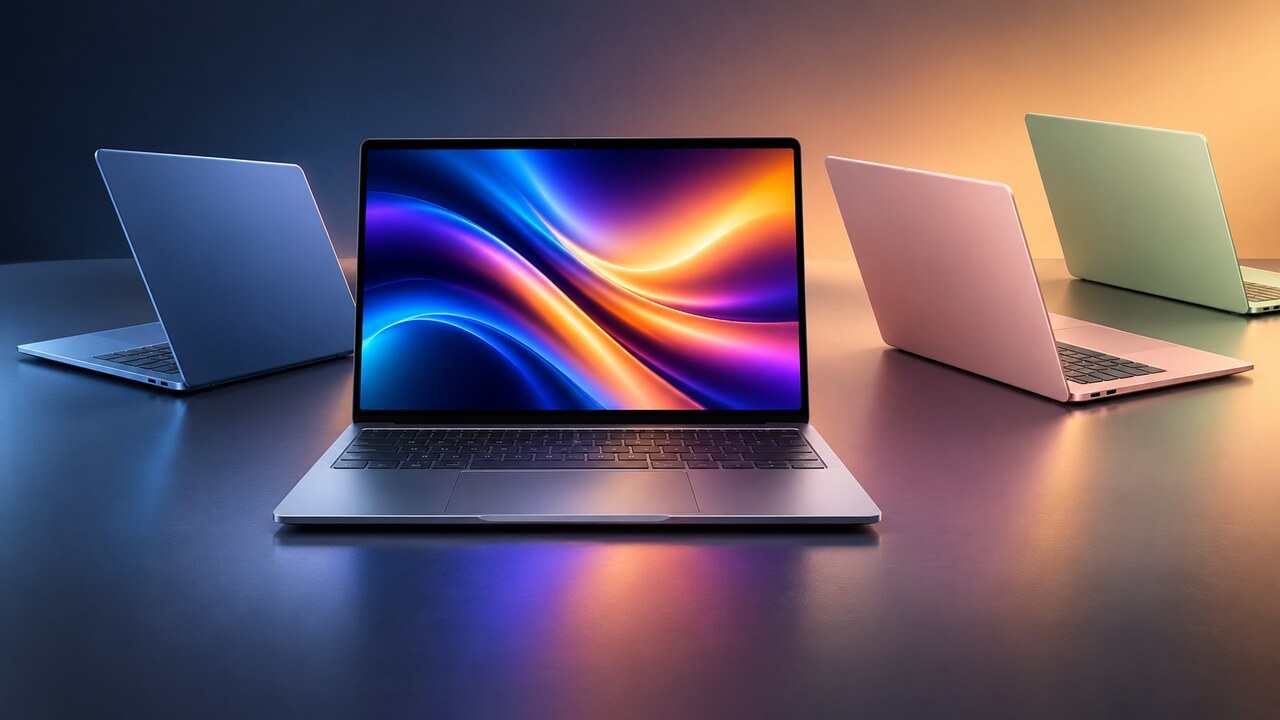
The laptop also has two full-function USB-C ports, HDMI, a headphone jack, a 1080p infrared camera for Windows Hello, dual microphones and speakers tuned by Poly Studio. Its hinge opens to 180 degrees. Four finishes are planned: Smoke Silver, Starlit Blue, Peony Pink and Soft Honeydew. The 8GB memory is not upgradeable, according to Tom's Hardware, so buyers who keep many browser tabs or heavier applications open should not assume they can add RAM later. HP says configurations with up to a Core 7 processor will exist, but the company has not supplied a complete U.S. price-and-date matrix for the higher-memory versions.
The brighter 2.5K OLED is a later model
HP's release advertises up to a 2.5K OLED touchscreen, 100 percent DCI-P3 color coverage and up to 620 nits. The footnote changes the buying picture: the OLED available at launch is a 2K panel rated at up to 300 nits, while the 2.5K, 620-nit version is planned for March 2027.
That does not make the launch display uninteresting. OLED can still provide deep blacks and strong contrast, and having the panel technology across the range is unusual near $700. However, 300 nits is modest for a modern portable computer and may be limiting near bright windows or outdoors. Shoppers should therefore verify the exact display resolution, touch support and brightness on the product page or box instead of assuming every OmniBook 5 includes the 620-nit panel shown in the broad family specification.
Why 42 hours is not an everyday-use promise
HP says the OmniBook 5 can deliver up to 42 hours of video playback, but its methodology is unusually important. The company ran a continuous local 1080p video at 200 nits, with wireless turned on but not connected. That removes web traffic, video calls, cloud syncing and most sustained processor work from the test.
Actual endurance will vary with the processor, panel, brightness, network activity, applications and battery age. Streaming over Wi-Fi, editing photos, compiling code or joining meetings will consume more power than replaying a file from local storage. No independent outlet cited here had completed a full real-world battery test at publication time. The useful conclusion is that the 60Wh battery and efficient platform may support long runtimes, not that a buyer should budget for 42 hours between charges. Independent testing will be needed before comparing it directly with Apple's MacBook Neo or other low-cost Windows laptops.
A practical checklist before ordering
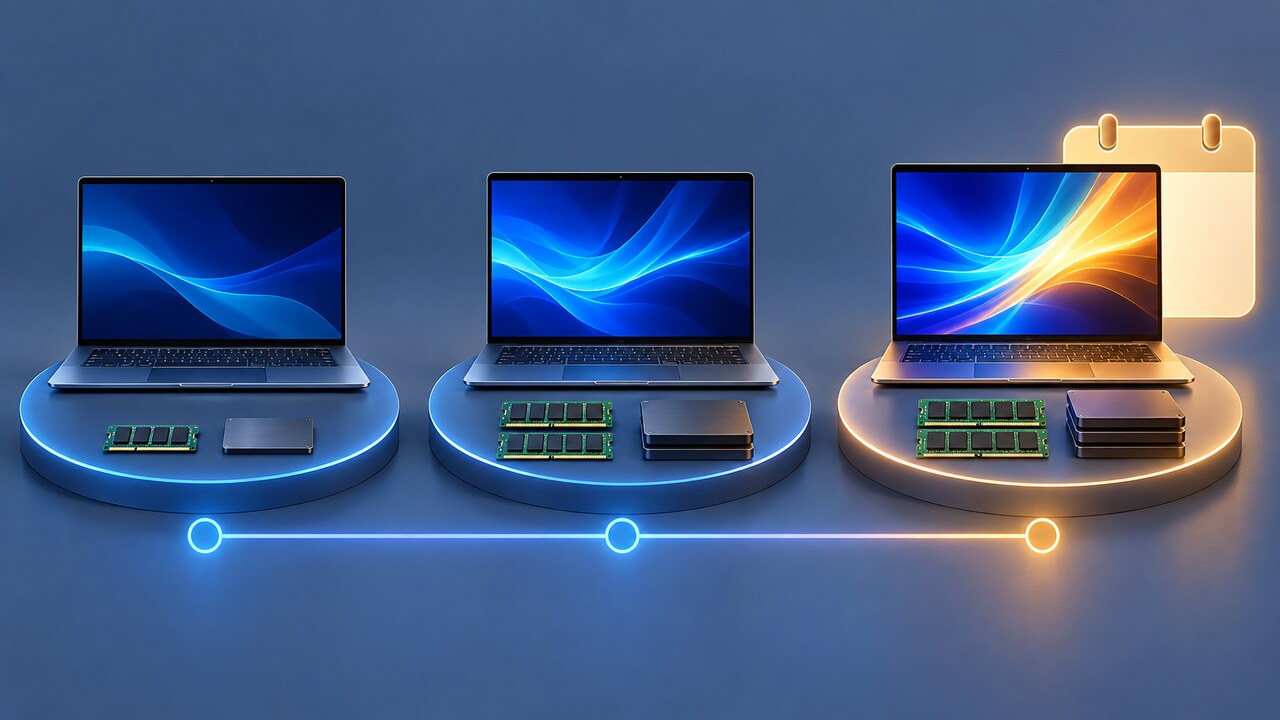
First, confirm the installed memory. The $699 configuration is reported with 8GB, while a 12GB option is planned for November and 16GB versions have been discussed without a complete price schedule. Because the memory is soldered, choosing enough at purchase is more important than on a laptop with replaceable modules.
Second, confirm storage and display. A 256GB SSD is small once Windows, updates and local media are included; 512GB and 1TB options are expected, but the 1TB version is also reported for November. The 2.5K 620-nit panel is a 2027 configuration, not a launch-day upgrade. Finally, treat October as a window rather than a single guaranteed date. HP says pricing and availability can change and has not named one day for every model. The OmniBook 5 may be a strong value if OLED, low weight and Windows compatibility lead your list, but the exact RAM, screen and delivery date matter more than the family-level maximums.