Technology · NEWS EXPLAINER
Firefox Enterprise 158 adds a self-hosted console, with early access still required
Mozilla’s first dedicated Enterprise release gives IT teams browser and data controls. It needs company-run infrastructure, while logging and AI restrictions remain administrator choices.
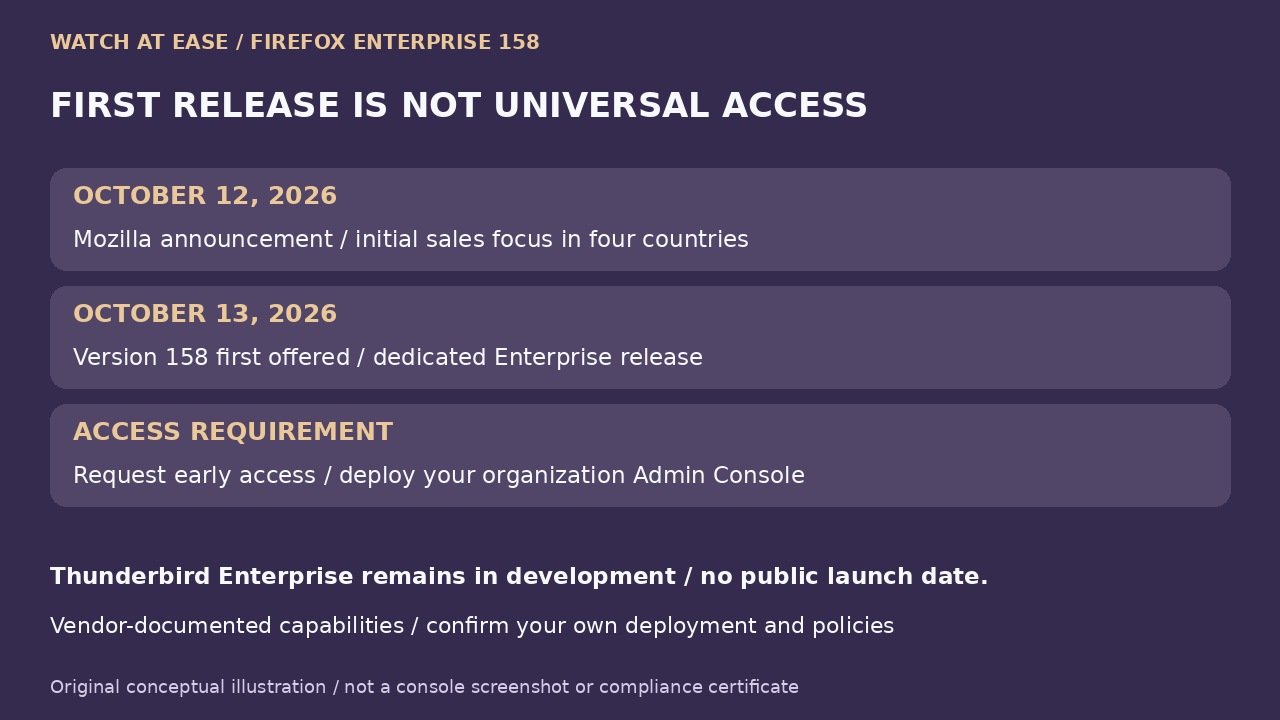
Mozilla’s first Firefox Enterprise release, version 158, was first offered on October 13, following an announcement dated October 12. The product pairs a Gecko-based browser with an administration console organizations host themselves. Its release notes still direct customers to request early access and require that console, so this is not a general consumer-browser rollout.
Self-hosting includes more than a policy dashboard
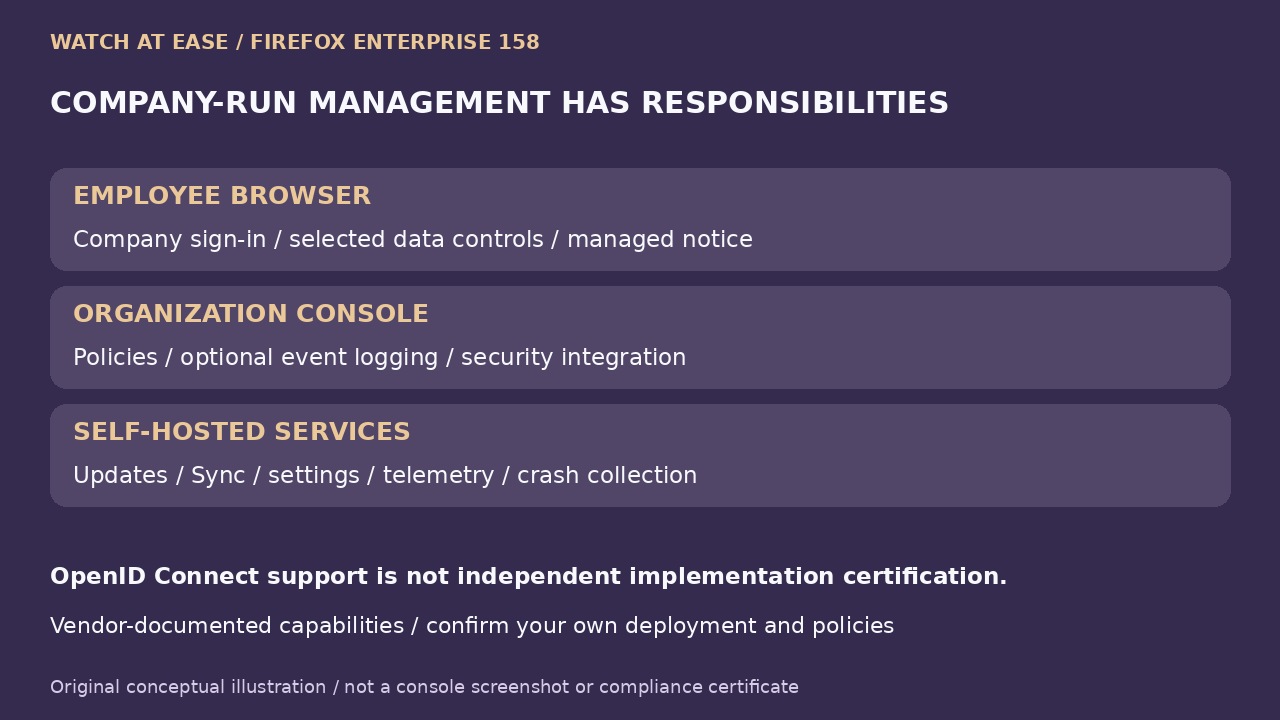
Mozilla says organizations operate the console and supporting services, including updates, Sync, remote settings, telemetry and crash collection, on their own infrastructure. That gives the customer operational responsibilities as well as control over management data. The announcement says existing identity providers, security monitoring and device-management tools can stay in place.
The release notes specify company sign-in through an OpenID Connect provider. The OpenID Foundation defines that protocol as an interoperable way to verify identity using an authorization server. Protocol support is an integration starting point; it does not independently certify Firefox’s implementation or guarantee compatibility with every existing configuration.
Data restrictions and event logging are separate controls
Administrators can warn or block pasting, uploads, downloads and printing on selected sites, including unapproved AI services. Mozilla says built-in inspection happens on the device; when a compatible third-party Content Analysis agent is used, the browser defers to that agent instead. These are documented product behaviors, not results from our own deployment test.
Security-event logging is off until administrators enable it, with choices about event types and detail. Records go to the organization’s console, and employees receive a managed-browser notice. A company-run console does not mean an employee’s activity is unobservable; the actual policy and logging settings matter.
What buyers can request today
Mozilla’s launch post calls France, Germany, Austria and Switzerland its initial sales focus. TechRadar’s original October 13 reporting also describes those first markets. Neither should be read as a promise that every organization worldwide already has access, or that a sales request completes a deployment.
The product page offers a demo and says standard professional support is included. Thunderbird Enterprise is marked coming soon and described as in development in the announcement. The reviewed pages do not give it a public release date or disclose a standard Firefox Enterprise list price.
The practical next step is a scoped pilot
For IT teams, the useful evaluation is which services they must host, whether their identity and monitoring integrations work, which data actions to restrict and which employee events to retain. Those checks follow from the documented architecture; they are an editorial deployment implication, not a measured cost saving or security guarantee.
Mozilla presents engine diversity and customer-operated management as steps toward autonomy. Keep that claim separate from proof of regulatory compliance or a guarantee that data never reaches an outside website. Policies, integrations and actual data flows still need to be verified in the organization’s own environment.