Sports · NEWS EXPLAINER
Kittle seals 49ers’ 24–14 win after three straight TD drives
A Siran Neal takeaway set up San Francisco’s first touchdown after a 3–3 halftime tie. George Kittle’s 56-yard score finished the job after Denver pulled within three points.
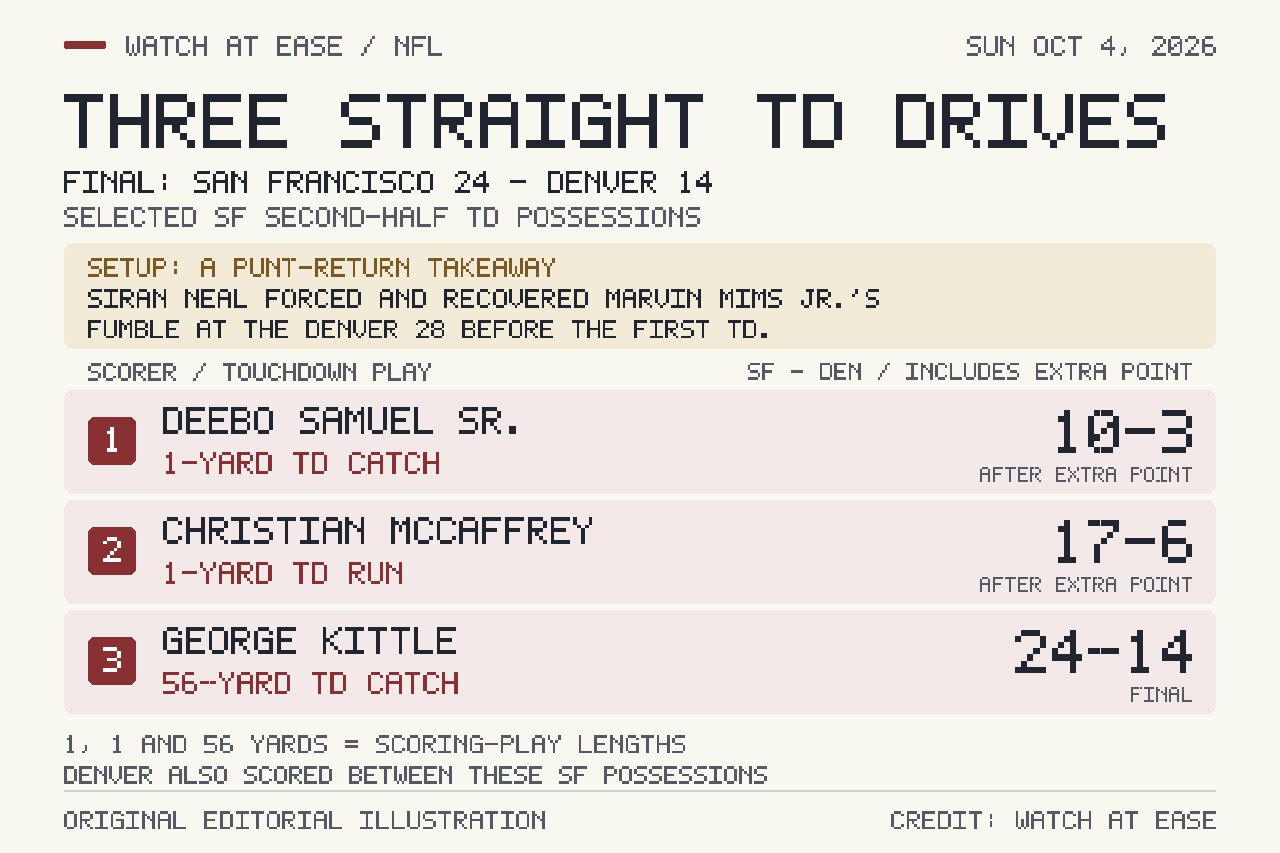
George Kittle’s 56-yard touchdown catch capped three consecutive scoring possessions for San Francisco as the 49ers beat the Denver Broncos 24–14 at Levi’s Stadium on Sunday, October 4. A game tied 3–3 at halftime ended with San Francisco still unbeaten at 4–0 and Denver at 2–2.
Neal gives the offense a short field
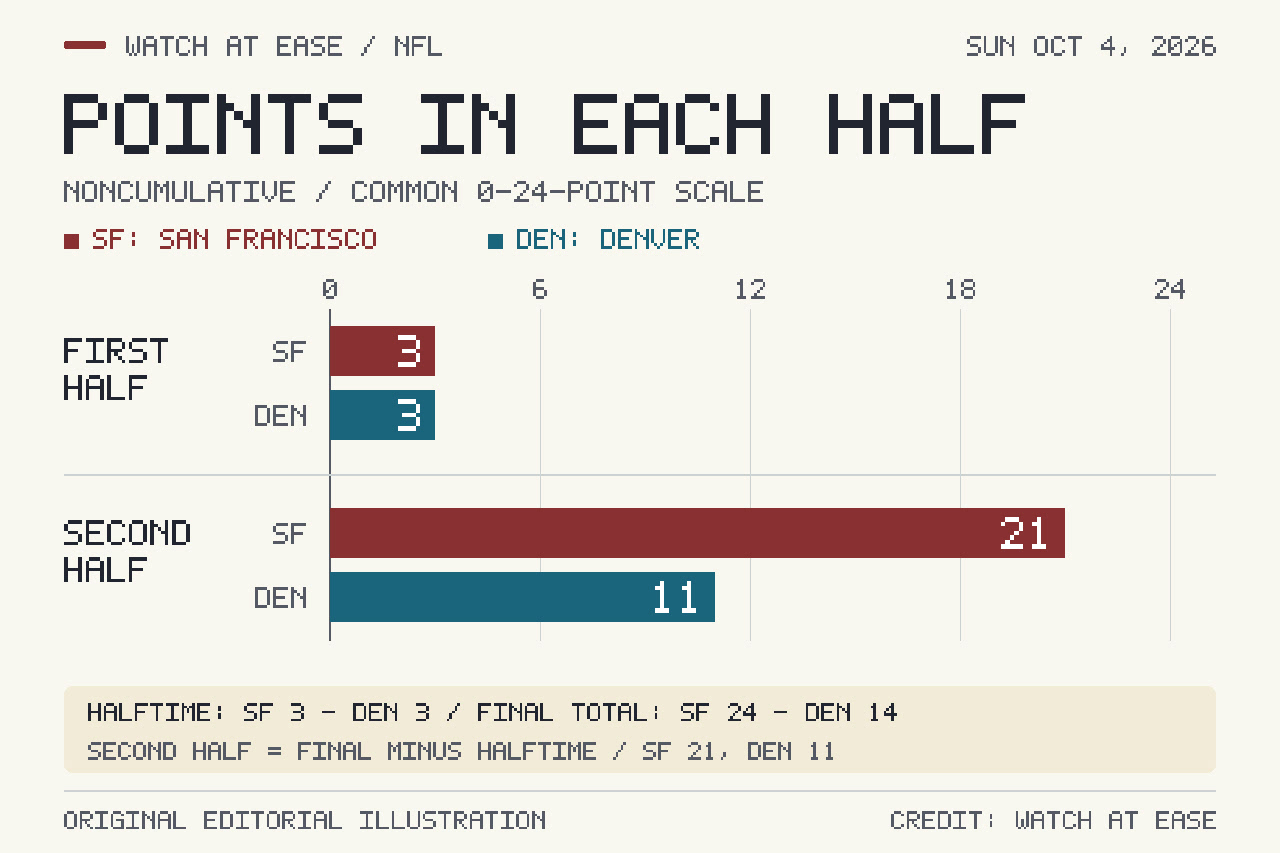
San Francisco had produced only three points from its first seven possessions. Its chance to move ahead before halftime disappeared when a field-goal attempt was blocked on the last play of the half, leaving both offenses with just a field goal.
The breakthrough began with special teams. Neal forced Mims to fumble on a punt return in the third quarter and recovered the ball himself at Denver’s 28. That put San Francisco’s offense inside Broncos territory before it had to run a play on the possession.
Two short touchdowns build an 11-point lead
Brock Purdy finished the ensuing possession with a one-yard touchdown pass to Samuel. The extra point made it 10–3, giving the 49ers a lead they kept for the rest of the game. Denver answered with a field goal to reduce the gap to 10–6.
McCaffrey then scored on a one-yard run, and the extra point extended the lead to 17–6. The two one-yard figures describe the scoring plays, not the total lengths of the drives. San Francisco had converted its next possession into another seven points.
Denver gets within three before Kittle answers
Nix connected with Waddle for a 13-yard touchdown, and Denver added a two-point conversion to make it 17–14. The eight-point possession brought the Broncos back within a field goal, even after San Francisco’s two touchdowns.
Purdy’s response was a short pass that Kittle turned into a 56-yard touchdown. The extra point completed the scoring at 24–14. It was San Francisco’s third straight touchdown possession; Denver’s intervening scores are why those three drives should be read separately from the full game’s scoring sequence.
The second half supplies the winning margin
Subtracting the 3–3 halftime score from the final totals leaves San Francisco with 21 second-half points and Denver with 11. The half-by-half comparison shows where the ten-point margin developed, with each half counted separately rather than displaying a running total.
Elsewhere on October 4, Jacksonville preserved its 22–17 win over Cincinnati with a fourth-down stop after making two interceptions. New England’s 29–26 win at Buffalo offers another close finish: a late touchdown and two-point conversion put the Patriots ahead before an interception secured the result.