Technology · NEWS EXPLAINER
XREAL 1 Pro+ reaches 1,200 nits at $599—but full 6DoF still needs a $99 Eye camera
The refresh doubles peak brightness from 700 to 1,200 nits, raises 2D-to-3D conversion to 60 fps and adds a broader nose pad. It keeps the 57-degree view and native 3DoF; room-scale 6DoF remains an extra-camera feature.
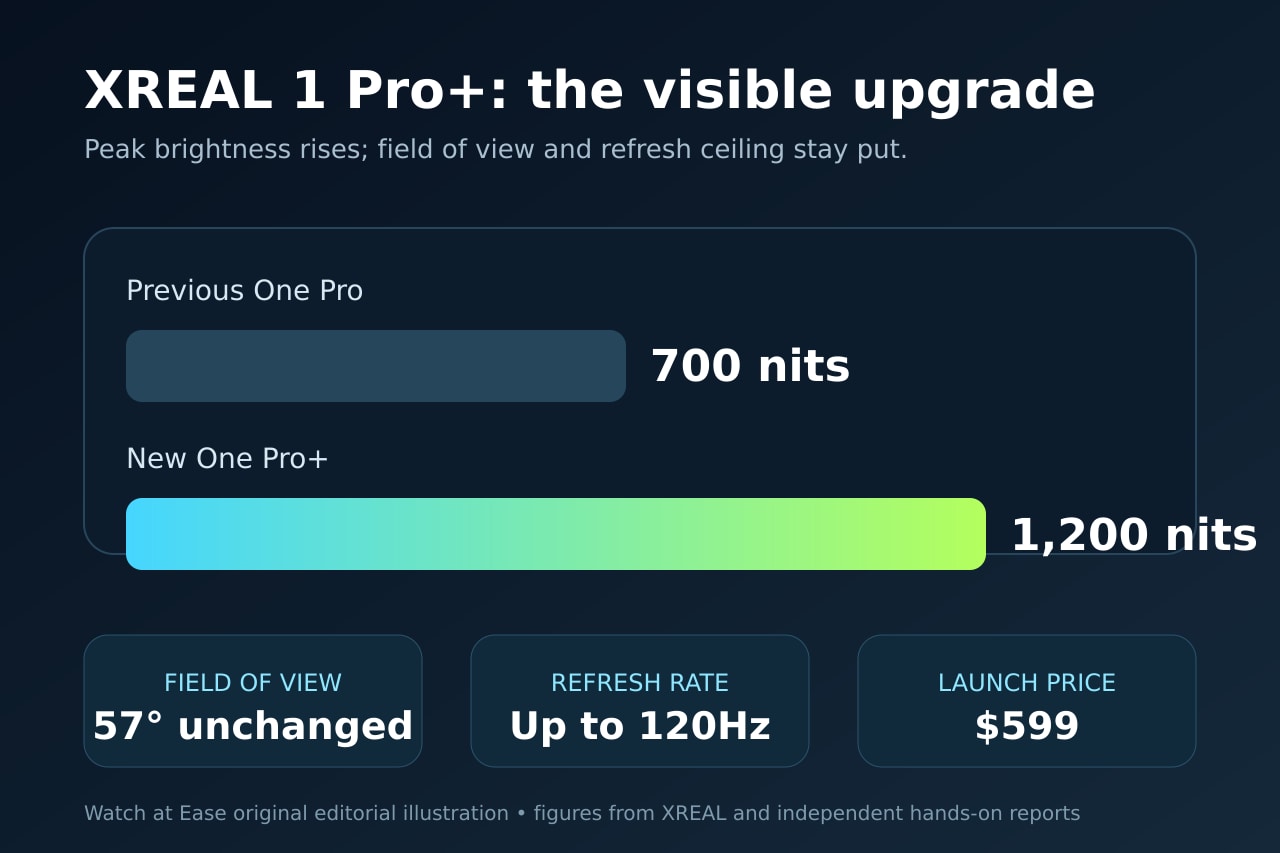
XREAL’s new 1 Pro+ is an incremental display-glasses refresh rather than a new standalone spatial computer. The practical upgrade is a brighter 1,200-nit image at the same $599 launch price, plus smoother 2D-to-3D conversion and a redesigned nose pad.
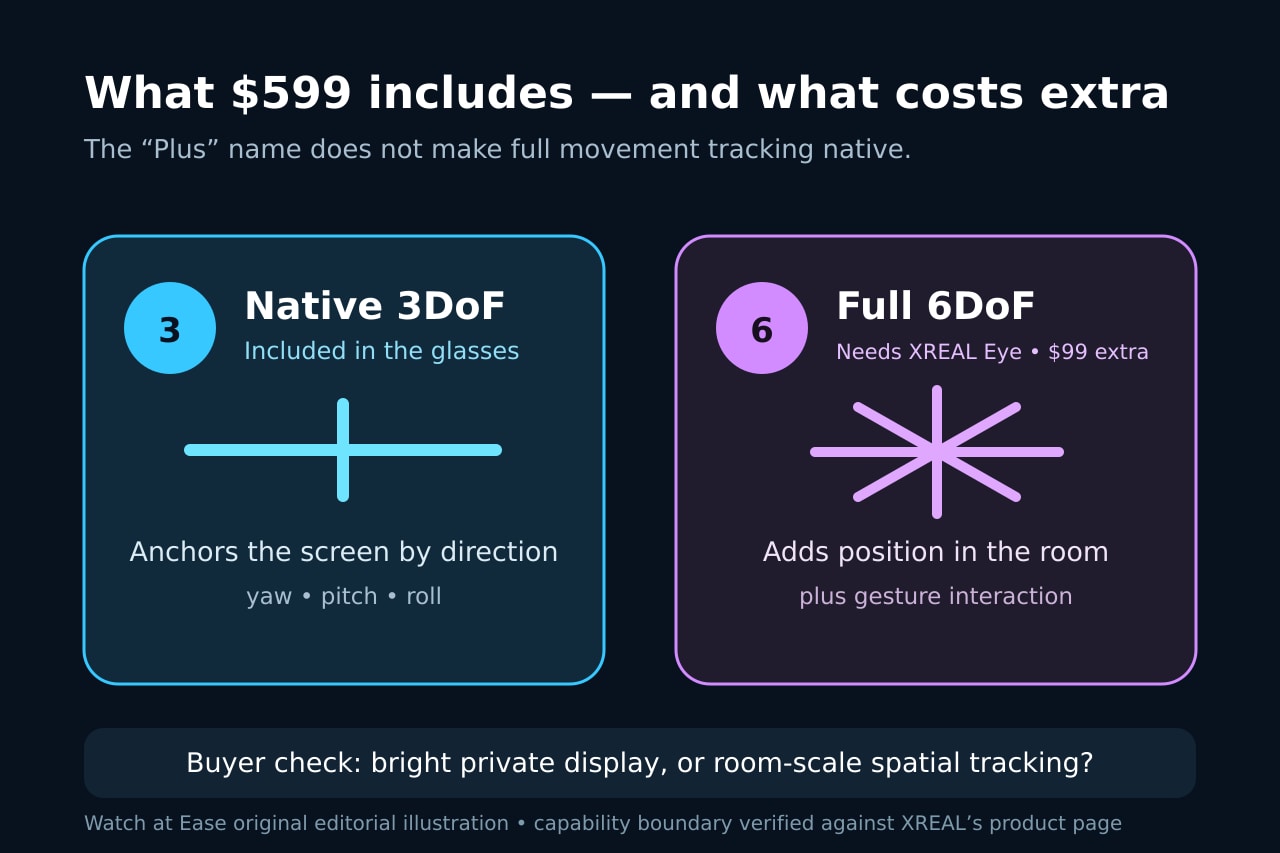
Buyers should separate what is built into the glasses from what still needs extra hardware. Native 3DoF screen anchoring remains standard, while 6DoF spatial anchoring and gesture interaction require the separately sold XREAL Eye camera.
The upgrade is brightness, conversion speed and comfort
XREAL lists 1,200 nits peak brightness, AI HDR, a 120Hz refresh rate and a 57-degree field of view. Independent hands-on reports from Tom’s Guide and 9to5Google both identify the jump from the older model’s 700 nits as the most visible change.
The 2D-to-3D conversion pipeline now runs at 60 fps instead of 30 fps. XREAL also adds Standard, Movie and Reading modes and broadens the nose-pad contact area. Those are usability refinements; they do not change the glasses into a battery-powered standalone headset.
What stays the same
The One Pro+ keeps the X1 spatial-computing chip, a 57-degree field of view and native 3DoF. It connects to compatible phones, PCs, handhelds and consoles for video input; the product page does not describe an onboard general-purpose operating system that replaces the source device.
Tom’s Guide reports a 0.55-inch Sony Micro-OLED display, a 171-inch advertised virtual-screen size and 1080p output, while GSMArena lists a 1,920×1,200 panel and USB-C DisplayPort Alt Mode. Those specifications describe the optical display path, not guaranteed readability or comfort for every face and prescription.
The $599 price does not include full 6DoF
XREAL’s own page marks 6DoF spatial anchoring and gesture interaction as features that require XREAL Eye, sold separately. Tom’s Guide lists the camera at $99. Without it, buyers still get native 3DoF, which can anchor a screen by direction but does not track full movement through a room.
That distinction matters more than the Plus branding. A buyer who mainly wants a brighter private display can compare the $599 glasses with the outgoing One Pro. A buyer who expects room-scale spatial placement must budget for the Eye and verify device and feature compatibility.
Who should actually upgrade
Tom’s Guide says existing One Pro owners do not need to upgrade, while 9to5Google found the brighter display and broader nose pad directly address the older model’s weak points. Both are hands-on judgments, not universal fit guarantees.
The clearest reason to buy is the combination of higher brightness and the same launch price. Owners satisfied with a 700-nit One Pro gain fewer benefits, and anyone seeking a self-contained Android XR computer should compare this tethered display product with a different class of device.