Technology · NEWS EXPLAINER
Waymo targets Toronto robotaxi service in 2028—but public rides are not starting yet
The company will begin mapping and regulatory work for its first planned Canadian market. Element will run fleet operations, while approvals and a post-2027 Ontario framework remain part of the road to launch.
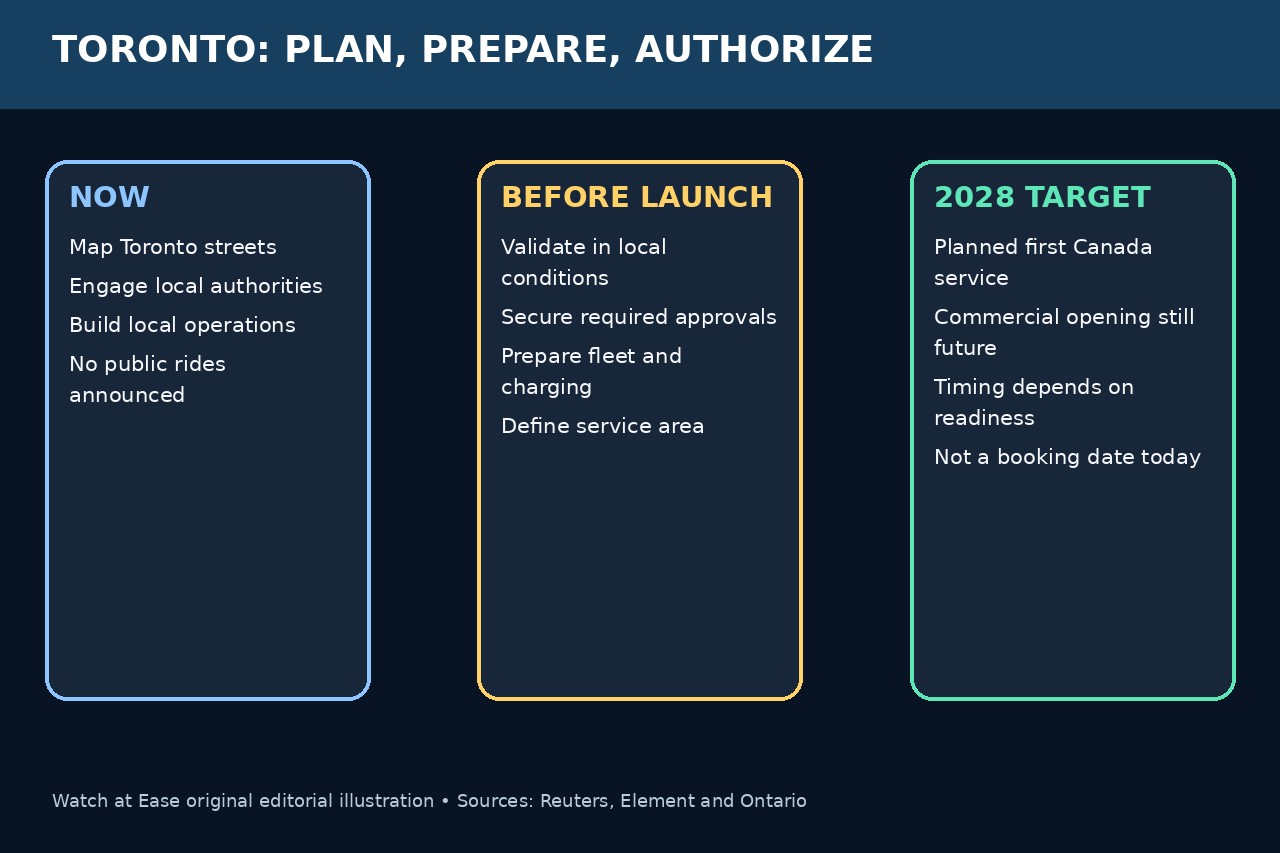
Waymo plans to bring autonomous ride-hailing to Toronto in 2028, its first planned Canadian market. The work starting now is preparatory: mapping streets, engaging local authorities and building an operating base with Element Fleet Management.
Toronto residents cannot book the service from this announcement. The commercial opening remains a future target that depends on local validation, required approvals, fleet readiness and whatever provincial framework applies after Ontario’s current pilot program reaches its stated end date in October 2027.
What starts now—and what does not
Reuters says Waymo will begin groundwork in Toronto, including mapping and engagement with local authorities. That is a city-specific preparation phase, not the start of passenger service.
Waymo has named 2028 as the target for autonomous ride-hailing in Toronto. No public opening day, initial service area, fleet size or fare schedule was announced in the material reviewed.
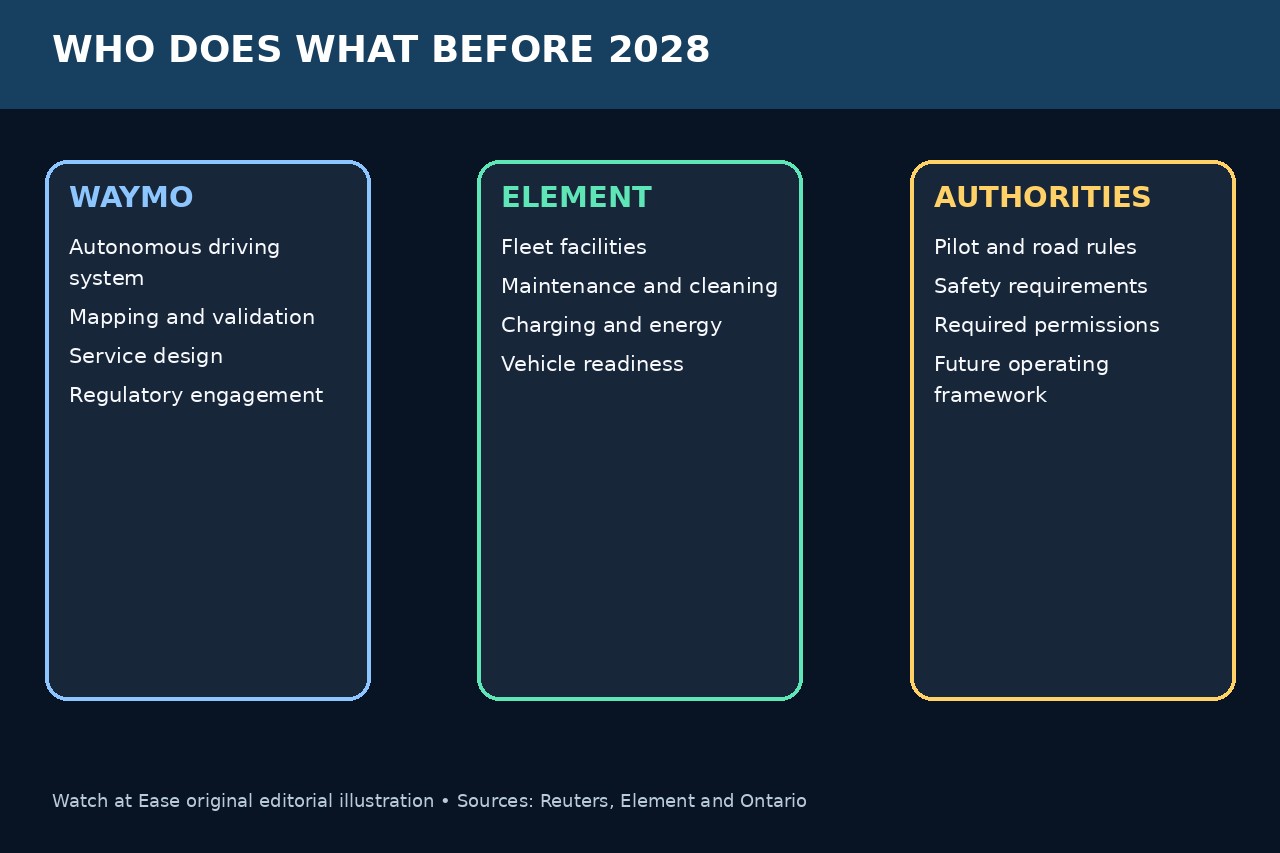
Element will operate the fleet, not the driving system
Element says its Toronto role will cover the people, facilities and infrastructure that keep vehicles charged, maintained, cleaned, serviced and available. It also lists energy management and connected fleet intelligence.
Waymo remains responsible for the autonomous driving technology, mapping, validation and service design. Separating those roles matters: a fleet partner can prepare reliable operations, but it does not replace the safety case or regulatory permission for driverless service.
Ontario’s current rules end before the target year
Ontario’s current pilot program allows Level 3, 4 and 5 automated vehicles to be tested under defined conditions. Participants must obtain ministry approval, and vehicles that do not meet all federal standards may also need a Transport Canada exemption.
The province’s page says the current pilot runs until October 13, 2027. That does not mean a 2028 launch is blocked, but it means readers should watch for a renewed, replaced or otherwise applicable framework and the specific permissions Waymo receives.
The milestones that will turn a plan into a service
The next verifiable steps are local mapping and testing, regulatory filings or approvals, a defined service area, fleet deployment and an announced date when riders can actually request trips. Winter-weather validation will also be part of proving local readiness, even though the reviewed announcements do not publish a test schedule.
For riders, the practical signal is not another expansion headline. It is a public launch notice that explains where the service works, how to access it, what vehicles are operating and which authorities have approved the deployment.