Business/Consumer · PRACTICAL GUIDE
Buying Farm Equipment Online: Verify the Seller Before a Wire Transfer
For U.S. buyers, check the business identity, the physical machine, and the payment destination separately. If one cannot be verified independently, pause; if money was sent, contact the payment provider immediately.
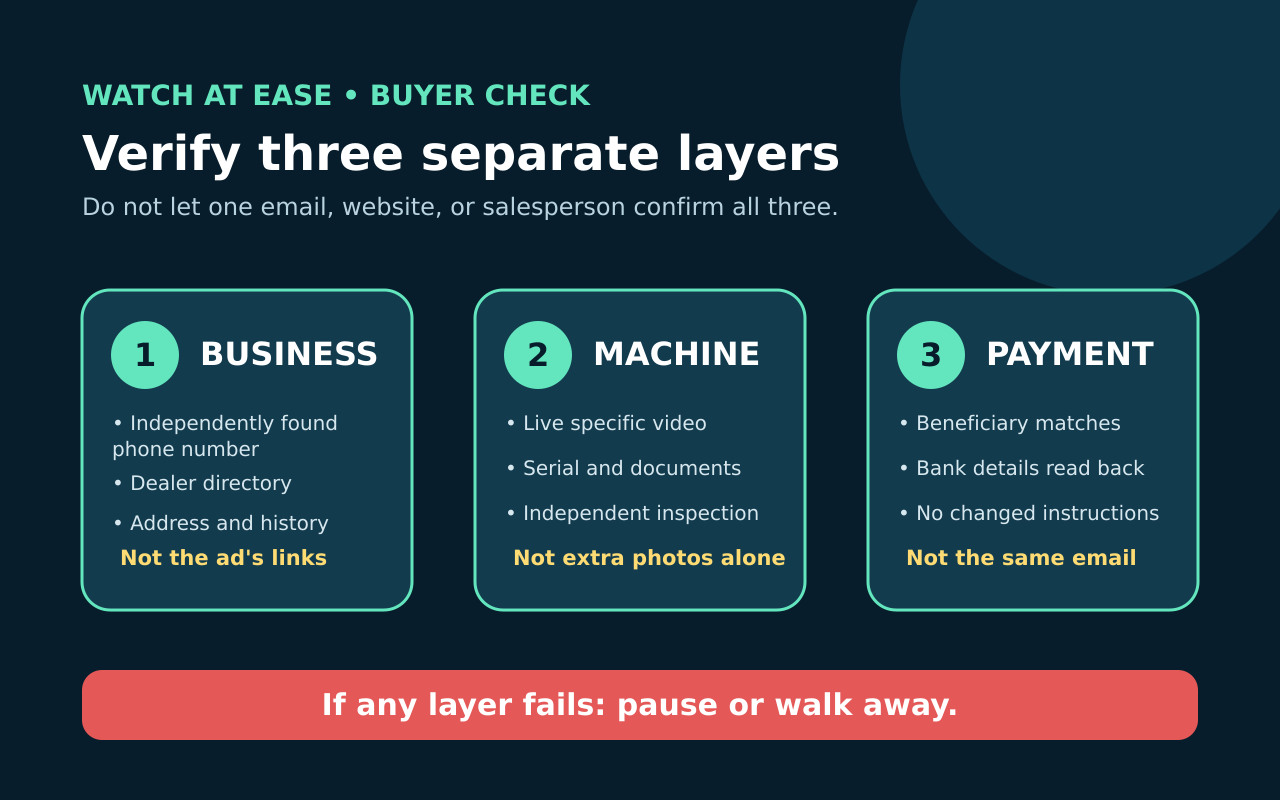
Do not wire money for a remote tractor, skid steer, combine, or excavator until you have independently verified three things: the business you reached, the seller's control of the specific machine, and the bank beneficiary named in the payment instructions.
A polished website, familiar dealer name, invoice, or promised delivery date is not enough. The FTC says impersonators are copying farm-equipment businesses, taking deposits or full payments by wire, and never delivering the machine. Use the stop rules below before authorizing payment—and act immediately if a transfer has already been sent.
1. Reach the business independently
Find a contact route separate from the advertisement, invoice, or message. Search the business name with scam or complaint; if it claims to be an authorized dealer, check the manufacturer's directory. The FTC warns that even paid search results using a real business name can contain an impersonator's contact details.
Call the independently found number. Ask whether the named salesperson represents the business and whether it issued this invoice for this stock item. Finding a real business at the address does not establish that the person messaging you works there. Save where you found the number and who confirmed the transaction.
2. Match the machine to the proposed sale
Arrange an inspection by yourself or a reputable local inspector you choose. Have the inspector compare the serial plate and machine with the listing and invoice. A live demonstration can help establish possession, but photographs or a video do not settle ownership or the right to sell.
Ask for applicable ownership documents and investigate liens when relevant. Requirements differ by equipment and location. Tractor Tuesday's equipment checklist recommends these checks; FBI guidance also cautions against sellers who refuse physical inspection. If you cannot resolve possession or authority to sell, do not send a deposit to reserve the machine.
3. Reconfirm the destination of the wire
Use the independently established contact, not a number in new payment instructions, to confirm the beneficiary, bank, and account. Verify any later change again. The FBI warns that criminals can enter genuine invoice email conversations: a familiar thread does not authenticate replacement wiring details.
Pause for an unexplained recipient mismatch or pressure to pay immediately. Ask your bank about available fraud checks before authorizing the wire. The FTC warns against sellers who insist on hard-to-reverse payment methods. A wire can also be used in a legitimate equipment sale; neither that fact nor a matching business name makes this particular transfer safe.
Make a verification record you can actually compare
Use these three entries as a working record, not a certificate that a deal is safe. For each, record who checked it, when, the independent contact or evidence location, and either resolved or unresolved. Keep payment details private.
Business entry — invoice number: ___; business and salesperson: ___; independently found telephone and where it came from: ___; person who confirmed the invoice and stock item: ___. A business directory listing alone leaves the invoice unconfirmed.
Machine entry — advertised serial: ___; serial seen by your inspector: ___; invoice serial: ___; ownership or authority documents and any unresolved restriction: ___. Ask the inspector to report discrepancies directly to you. A matching model name cannot substitute for a matching machine identifier.
Payment entry — invoice seller: ___; named beneficiary: ___; bank and account checked privately: ___; independently reached person confirming those instructions: ___; date checked: ___. Record a later change as a new unresolved entry. Do not carry the old confirmation forward to a new account.
Resolve a mismatch before deciding
If the real business denies the salesperson or invoice, stop. If the machine serial differs across the inspection and paperwork, pause until the discrepancy is explained and the correct transaction documents are independently checked. Do not treat either mismatch as a harmless typo on the salesperson's assurance alone.
If a different entity is to receive payment, ask the independently reached seller to explain and document its authority to collect this payment, and ask your bank what it can verify. An explanation inside the same email chain is insufficient. An unresolved recipient or account mismatch means no wire; unwillingness to allow reasonable verification is a reason to leave the deal.
For example, an inspection may confirm the dealer's tractor while an email received afterward substitutes a new bank account. The machine check still stands; the payment check must restart. This is an illustrative decision, not a report of a particular seller. Even when all entries agree, inspection, contractual terms, and bank checks still matter—this record cannot guarantee delivery or a fraud-free transaction.
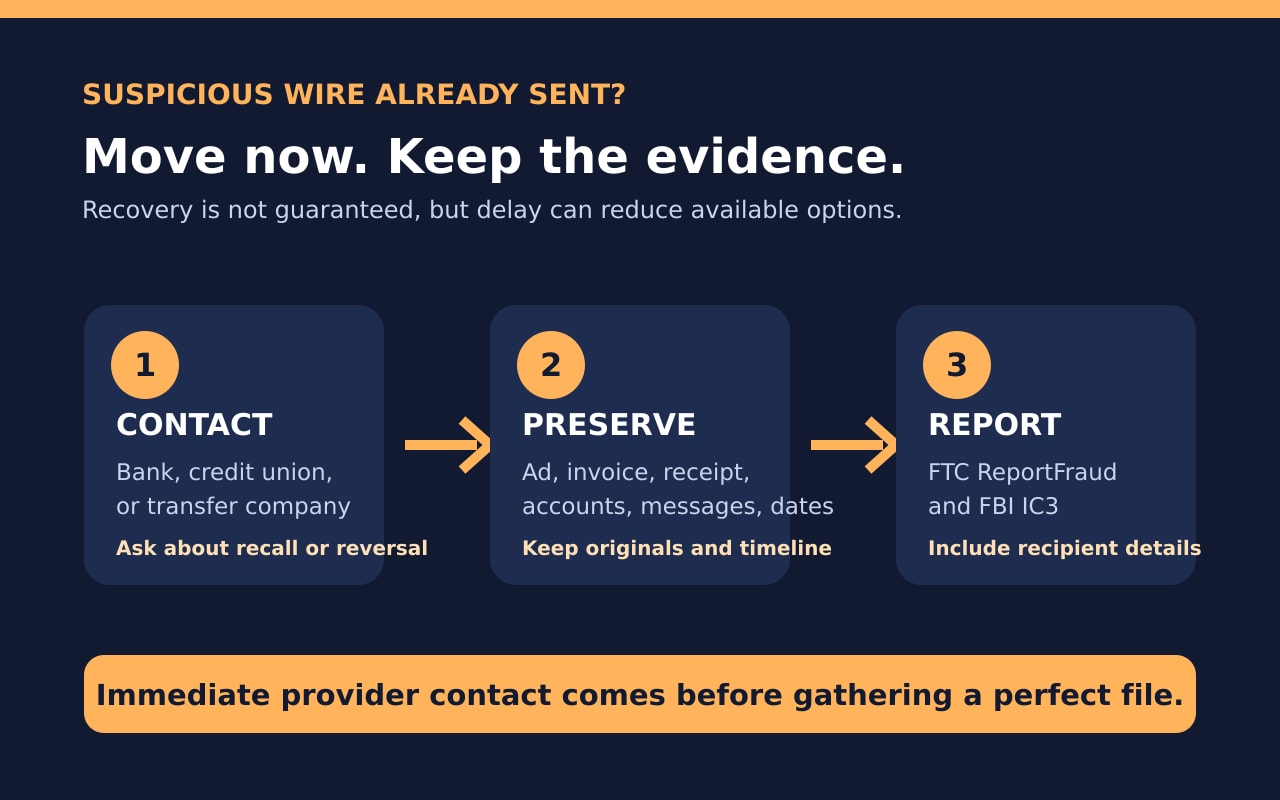
Already paid? Contact the payment provider now
Call your bank or credit union immediately, say the transfer may be fraudulent, and ask what recall or recovery action is possible. The FBI says to request that it contact the receiving financial institution. For a wire-transfer service, contact that provider and request a refund. Recovery is not guaranteed.
Do not wait for a complete evidence file before making that call. Then retain the invoice, advertisement, transfer receipt, recipient account, dates, contacts, inspection records, and original messages. Ask for a case reference and how to follow up. File detailed reports with ReportFraud.ftc.gov and the FBI's IC3; those reports do not replace the urgent request to the payment provider.
Do not pay someone who contacts you unexpectedly and demands an upfront fee to retrieve the money or the missing equipment. The FTC warns that earlier scam victims are targeted again with these recovery promises. Verify a claimed agency through contact details you find independently, not the caller's number.