Technology · NEWS EXPLAINER
Type One Energy raises $200 million: what its 2034 fusion target does—and does not—prove
The Series B financing is complete, but the proposed 400 MW Infinity Two plant remains a conditional 2034 target. The key checks are prototype results, remaining funding, licensing and supplier execution.
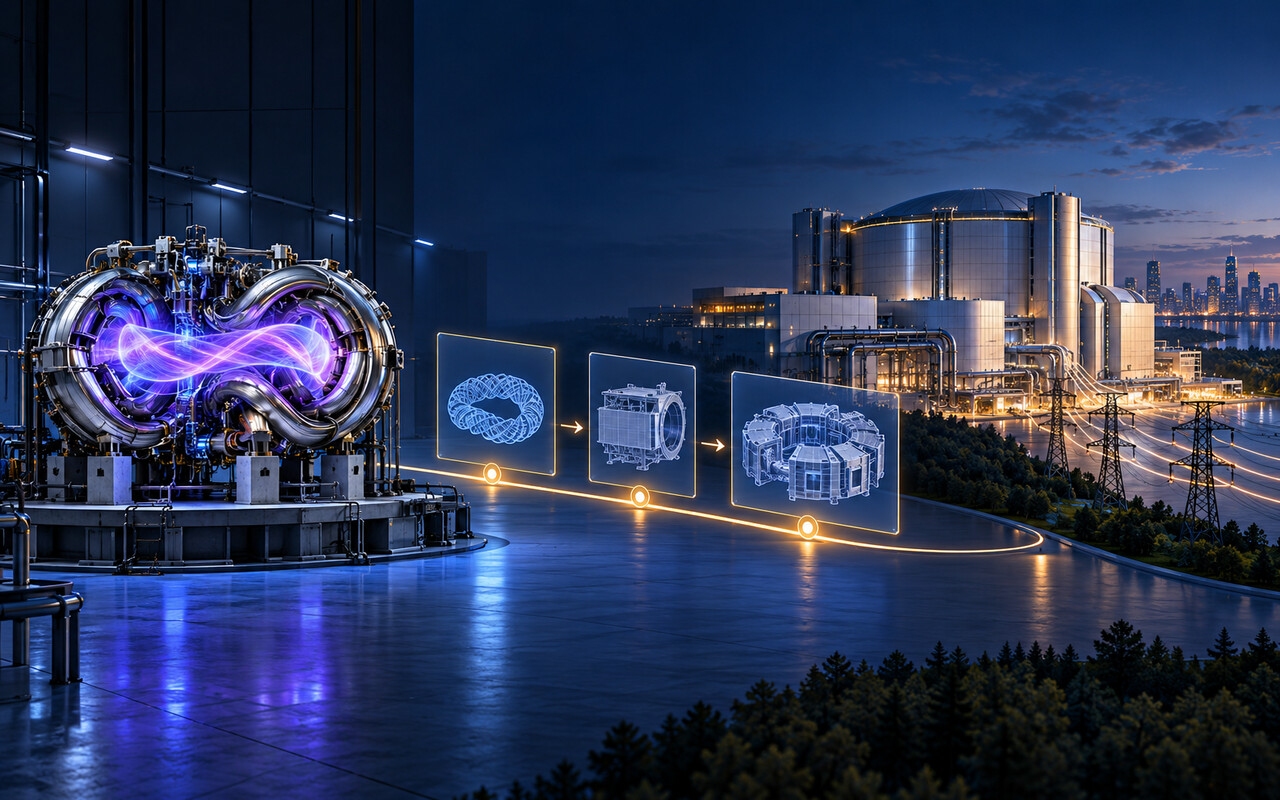
Type One Energy has completed a $200 million Series B, but it has not completed a commercial fusion power plant. The funding advances a prototype and the proposed 400 MW Infinity Two project; the 2034 start date remains conditional on engineering, licensing, suppliers and more capital.
What the $200 million round actually completes
Type One Energy said on October 6 that it completed a $200 million Series B financing. Reuters reported that the round brought the fusion developer’s total funding above $400 million, while the company did not disclose its valuation. The financing is finished; the commercial power plant is not.
Breakthrough Energy Ventures and Clutterbuck Capital co-led the round. Lowercarbon Capital, Siemens Energy Ventures and SiteGround Capital also participated, according to the company and TechCrunch. Their involvement supplies capital and industrial relationships, but an investment does not certify that Type One’s reactor has reached commercial performance.
TechCrunch reported that Type One previously raised $82.5 million in an extended Series A. Chief executive Christofer Mowry said the new round should cover roughly half the capital needed to reach the company’s first 400-megawatt commercial plant. That is a management estimate about future financing needs, not a fixed construction price or proof that the remaining money is committed.
Infinity One is a prototype; Infinity Two is the commercial goal
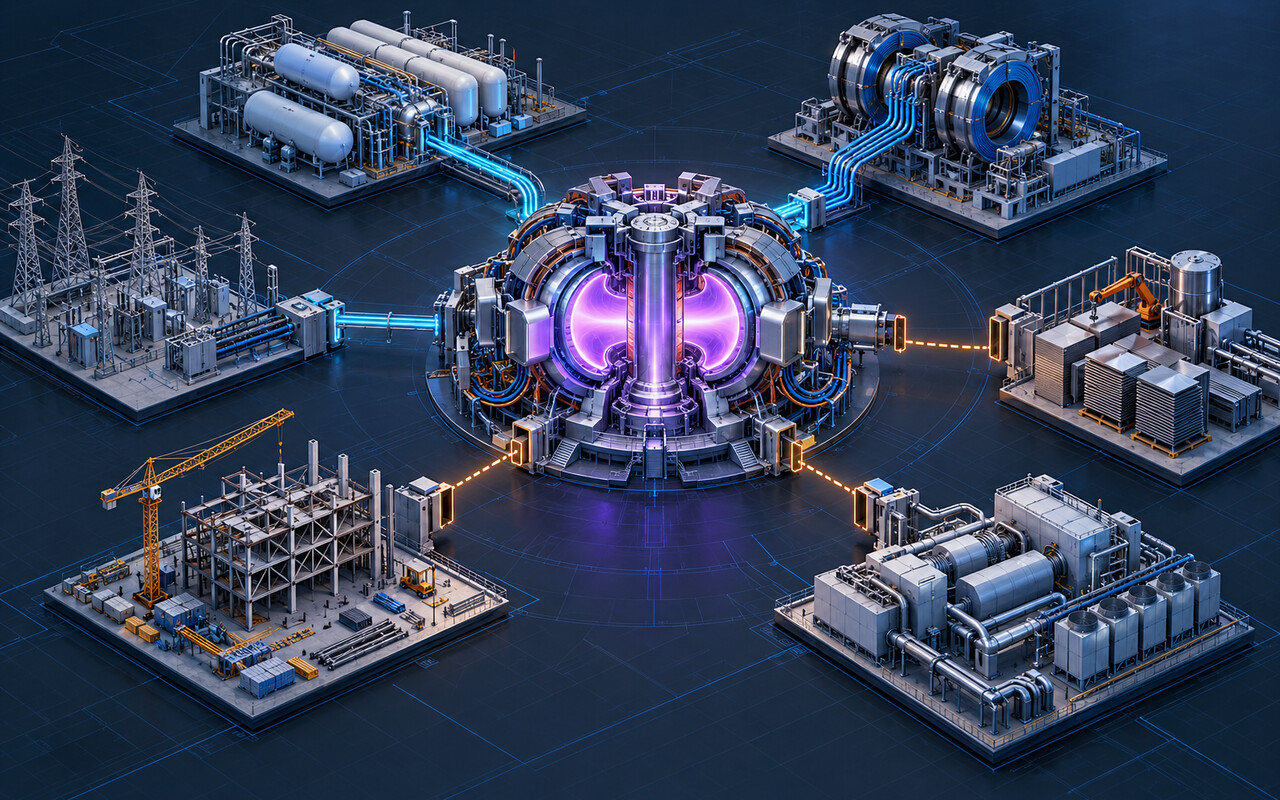
Project Infinity at the Tennessee Valley Authority’s former Bull Run site in Tennessee includes two different devices. Infinity One is an engineering prototype meant to test design and integration work. Infinity Two is the proposed 400 MWe commercial plant. Treating those names as one already-operating project would erase a crucial development step.
The company says the Series B will support its FusionDirect technology program and design work for both projects. Type One also points to an initial Tennessee operating license for Project Infinity. A license is a real regulatory milestone, but it does not show that a fusion machine has produced net electricity, connected to the grid or sold power to customers.
Type One was founded in 2019 to commercialize stellarator fusion. A stellarator uses complex magnetic fields to confine hot plasma, an approach with decades of research behind it. Commercialization still requires a complete plant that can sustain the necessary plasma conditions, handle heat and materials, integrate fuel and power systems, and operate reliably enough for a utility.
Why the 2034 date remains conditional
TechCrunch reported that Type One aims to bring Infinity Two online by 2034. Mowry framed that date conditionally: if the company can deliver the plant by then, it believes it could do so with less capital than more vertically integrated rivals. The date is therefore a target tied to future engineering, financing, licensing and construction milestones.
The Series B does not close every financing gap. TechCrunch said the round should get Type One about halfway to funding the commercial plant, implying at least one more capital raise under the chief executive’s current plan. Costs can also change as detailed engineering, supplier contracts and site work replace early estimates.
There is a second timing question: prototype learning must arrive early enough to influence the commercial design. If Infinity One exposes changes in magnets, materials, maintenance or controls, Infinity Two may need redesign. That would be normal for a first-of-a-kind energy system, but it could move cost and schedule assumptions.
The supplier strategy lowers one risk and creates another
Type One plans to design the plant and key components while relying on a specialized supplier network for manufacturing and construction. AECOM is working on Infinity Two engineering, and Commonwealth Fusion Systems has licensed high-temperature superconducting magnet technology to Type One. The model can avoid the cost of building every factory and capability in house.
The tradeoff is control. An integrator depends on suppliers meeting specifications, schedules and quality requirements across components that must work together. A delay or design mismatch at one partner can affect the whole plant even when Type One’s own plasma design is progressing.
The partner model also means investors should not read the $200 million headline as a complete plant budget. Capital must cover Type One’s internal technology work, engineering and project coordination, while suppliers, site infrastructure and later construction still need contracts and funding. The company may gain efficiency from established partners, but it must prove it can manage the interfaces.
What evidence would make the target more credible
The first checkpoint is measurable progress at Infinity One: completed systems, published test results and a clear account of what the prototype validates. Readers should separate milestones such as site work or equipment delivery from the harder question of whether the device meets its engineering objectives.
The second checkpoint is a more detailed Infinity Two plan. Useful disclosures would include updated capital requirements, additional financing, supplier commitments, licensing stages, construction timing and any power-purchase or utility arrangements. Each item reduces a different uncertainty; none alone proves the plant will meet the 2034 date.
The practical conclusion is narrow. Type One Energy has completed a large financing round and assembled notable industrial partners. It has not yet demonstrated a commercial fusion plant or guaranteed a 2034 start. Future evidence must move from fundraising and project descriptions to prototype performance, funded construction and dependable electricity production.