Travel/Public Service · NEWS EXPLAINER
TSA removes chairs from airport ID checkpoints, requiring officers to stand
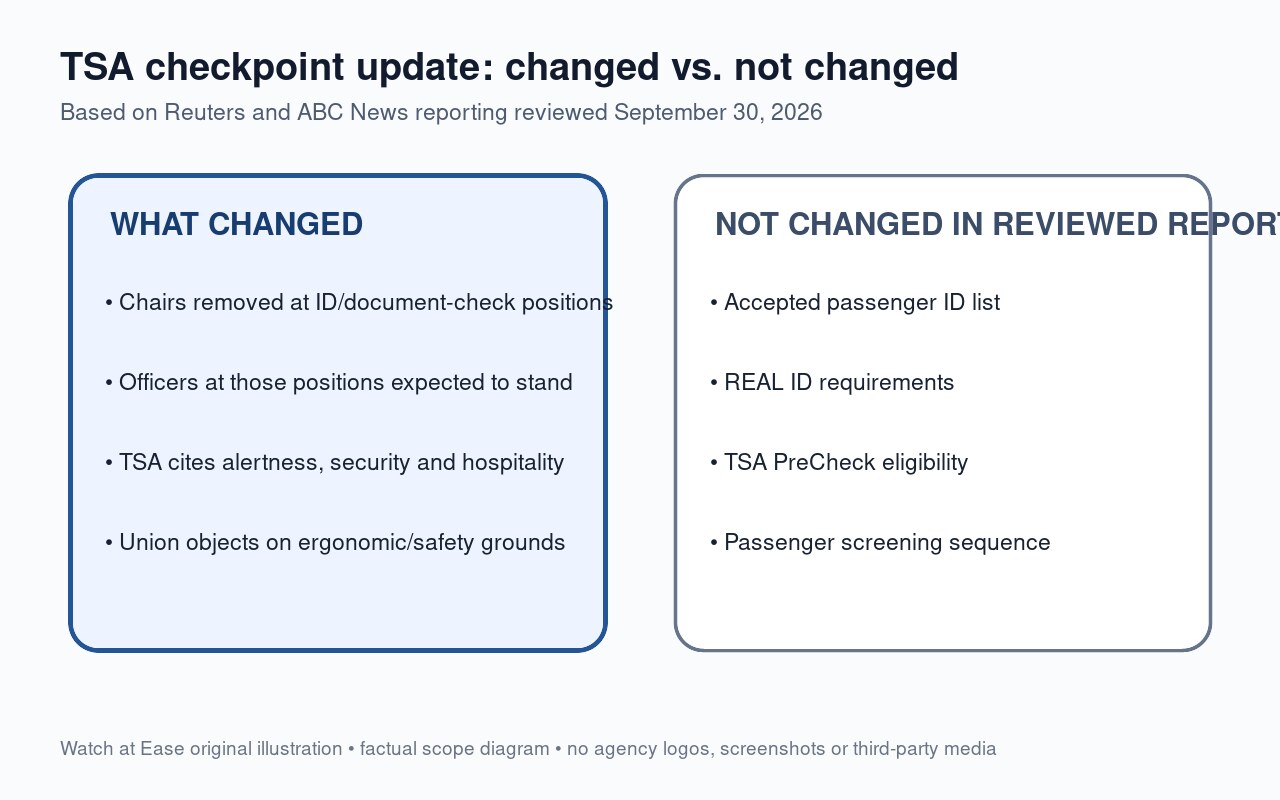
TSA says officers who check passenger IDs at U.S. airport checkpoints must now remain standing as chairs are removed from document-check positions. The agency says the change supports alertness and hospitality; the union representing screeners objects on ergonomic and worker-safety grounds.
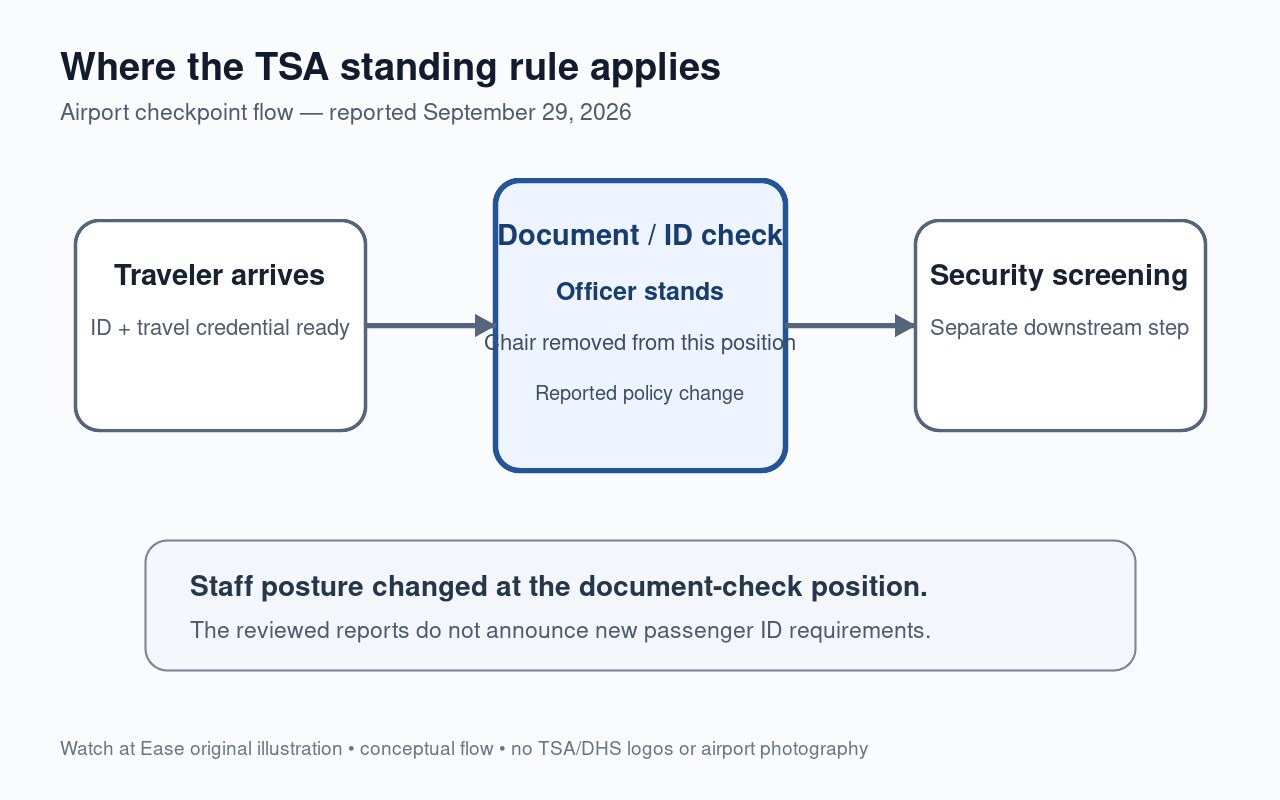
The Transportation Security Administration has confirmed a nationwide change at airport checkpoint document-check positions: officers who verify passenger IDs will no longer be allowed to sit while doing that work. Reuters reported late September 29 that TSA is removing chairs from those checkpoint positions, and ABC News separately reported that the agency says ID-check officers must stand.
For travelers, the important distinction is what did not change in the reviewed announcements. The reports describe an officer work-position policy, not a new passenger identification rule. They do not announce changes to which IDs are accepted, REAL ID requirements, TSA PreCheck eligibility or the normal sequence of presenting identification and entering screening.
What changed at the checkpoint
Reuters says the change applies to TSA officers who check IDs at airport security checkpoints. ABC News likewise reports that chairs are being removed nationwide and that officers assigned to passenger-ID checks must stand.
The reviewed reports do not establish that every TSA duty station is becoming a standing-only position. The clearest sourced scope is the travel-document-check function at the entrance to checkpoints, where officers verify passenger identification and travel credentials before travelers move deeper into screening.
What this means for passengers
Nothing in the reviewed Reuters or ABC reports says travelers need a different form of identification because officers are standing. The change concerns how TSA staff perform the document-check assignment, not the list of accepted documents or passenger eligibility rules.
That distinction matters because a workplace-policy headline can easily be mistaken for a checkpoint-procedure change. Unless TSA separately announces a passenger-facing rule, travelers should not infer from the chair removal alone that REAL ID, PreCheck or boarding-pass requirements have changed.
TSA and the union give different reasons for why the policy matters
TSA told both Reuters and ABC that having document-check officers on their feet is meant to reinforce alertness, security posture and a professional, welcoming environment. Those are the agency's stated reasons; the reports do not independently measure whether standing improves checkpoint security or service.
AFGE TSA Council 100 objects to the decision. The union says the chairs provide basic ergonomic and safety support for officers who otherwise spend much of the day standing and walking on hard surfaces, and it says workers were not consulted before the change. The disagreement is therefore about workplace conditions and the claimed operational benefit, not about a newly announced passenger ID requirement.
What remains unclear
The current reports do not spell out how TSA will handle individual medical accommodations, whether local implementation timing will vary, or whether the agency will issue additional written guidance for document-check positions. Those questions should be treated as unresolved rather than guessed at.
For travelers, the next practical checkpoint is whether TSA publishes any separate passenger-facing change. For officers, the next development is whether the agency or the union releases more detailed implementation or accommodation guidance.