World · NEWS EXPLAINER
Trump pauses Graham Act Russia tariffs while preserving a prior sanctions framework
The October 16 order lists large duty increases, then waives their application. Its duration and explicit protection of specified earlier sanctions are essential to reading the decision.
President Donald Trump’s October 16 executive order waives new duties and specified sanctions under the Lindsey O. Graham Sanctioning Russia and Iran Act. Reuters reported the action early October 17, ahead of the new law’s implementation deadline.
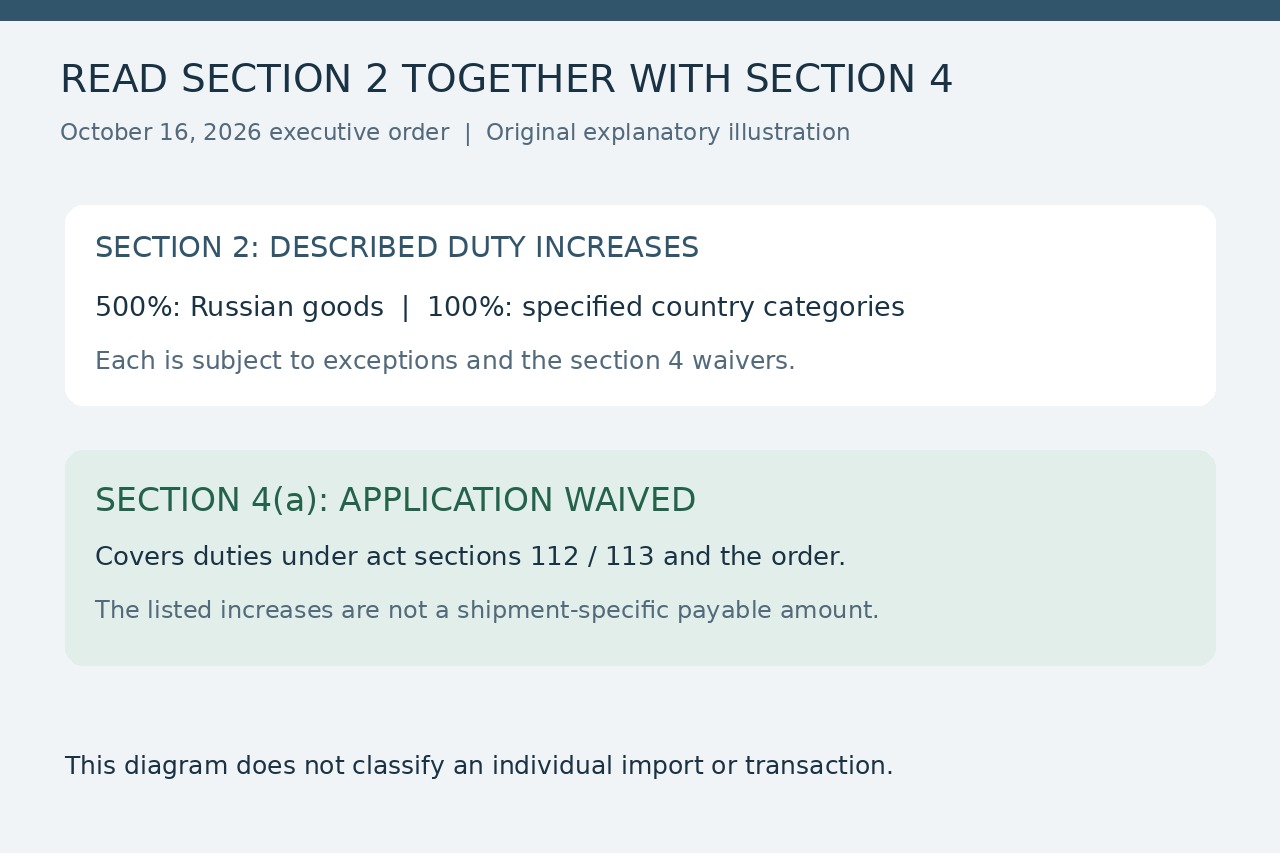
Read the tariff provisions together with the waiver. Section 2 describes duty increases, but section 4 waives the duties covered by sections 112 and 113 of the act and the order. Reporting the listed rates as already payable would miss the operative qualification.
The duty paragraphs have to be read with the waiver
Section 2 describes a 500% ad-valorem increase on Russian goods and 100% increases involving specified categories of countries buying Russian energy or facilitating sanctions evasion. Each provision is subject to exceptions and the section 4 waivers.
Section 4(a) then waives the covered duties. The document therefore does not establish those written increases as the current amount payable on a particular shipment. It also does not provide a transaction-by-transaction customs determination or a public named list resolving every country category.
An earlier sanctions framework is expressly preserved
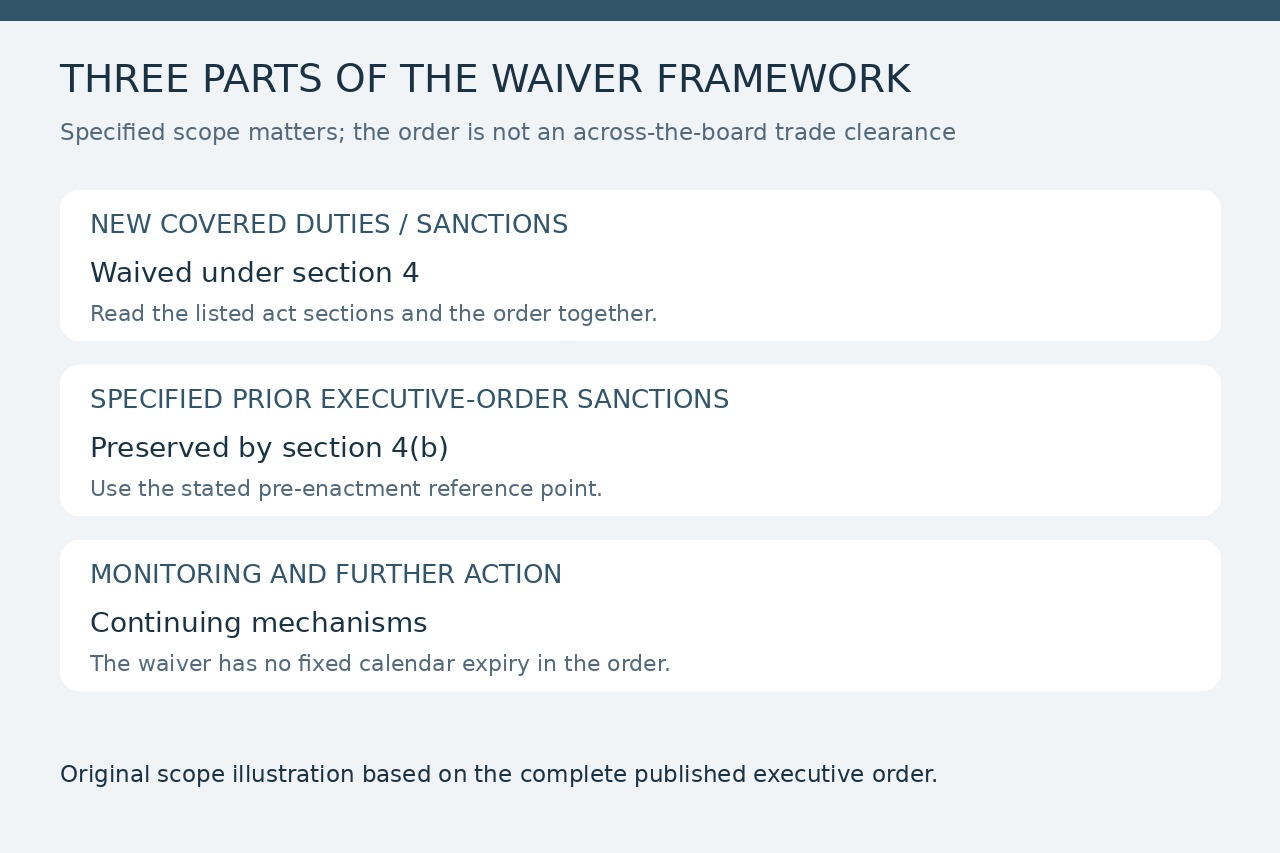
Section 4(b) says the order does not affect sanctions under the specified executive orders addressing the Russian-government harmful-activities emergency continued on March 24, 2026, as in effect on the day before the Graham Act’s enactment.
That preservation clause is why the new waiver cannot be treated as an across-the-board permission to trade with every Russian counterparty. The applicable sanctions basis, parties, goods and any other duties still need to be identified for an actual transaction.
The end point is a decision, not an automatic date
Section 4(d) keeps the waivers in effect until the president or the secretary of state, in consultation with the Treasury secretary and U.S. trade representative as appropriate, determines further action is appropriate. The text gives no fixed expiry date.
The order also directs officials to monitor Russian-energy purchases and sanctions evasion and report to the president. Those provisions retain a mechanism for further action; the waiver should not be read as a prediction that policy can no longer change.
What the public explanation establishes
The order invokes section 115 and says a national-interest certification and explanatory report were submitted to Congress. That is the president’s stated procedural basis; we have not read the separately submitted congressional report.
AP reports that the White House did not immediately publicly explain how the pause served the national interest, and records congressional criticism. Follow implementing agency notices and any further waiver decision. Neither the order nor the reviewed reporting establishes an individual company’s compliance status or guarantees lower fuel prices.