Technology · NEWS EXPLAINER
Tesla’s Roadster can jump and rotate with thrusters—but production is still targeted for 2028
Tesla demonstrated a redesigned Roadster using suction and cold-gas thrusters, reopened reservations and described three versions. The spectacle is real, but final prices were not announced and the Rocket feature is not approved for public-road use.
Tesla has finally shown a redesigned second-generation Roadster in motion. At an October 15 event in Texas, the car drove on an inverted ramp with a suction system, rotated in the air and used cold-gas thrusters for a jump over other vehicles.
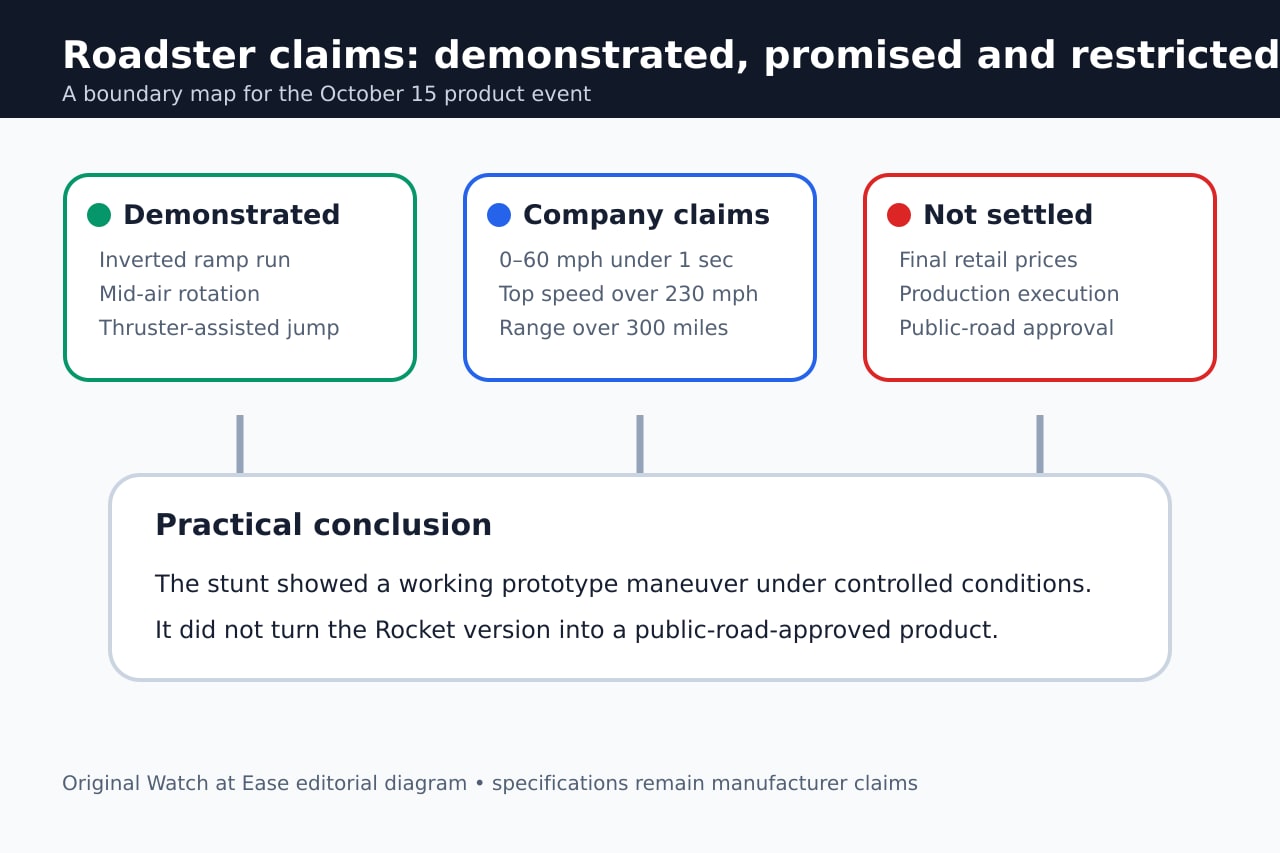
The demonstration answered whether Tesla had built a working show car with the promised hardware. It did not settle when customers will receive one, what final retail prices will be or whether the most extreme features can be used on public roads.
What Tesla actually demonstrated
Reuters and AP independently reported that the two-seat prototype used a multi-mode suction system on an inverted ramp, then rotated and landed with thruster assistance. A later run used the thrusters to jump over a line of vehicles.
That is stronger evidence than a concept rendering: a vehicle performed controlled maneuvers at the event. It is still a prototype demonstration under controlled conditions, not proof that every customer vehicle will perform those maneuvers anywhere.
Three versions and unusually large deposits
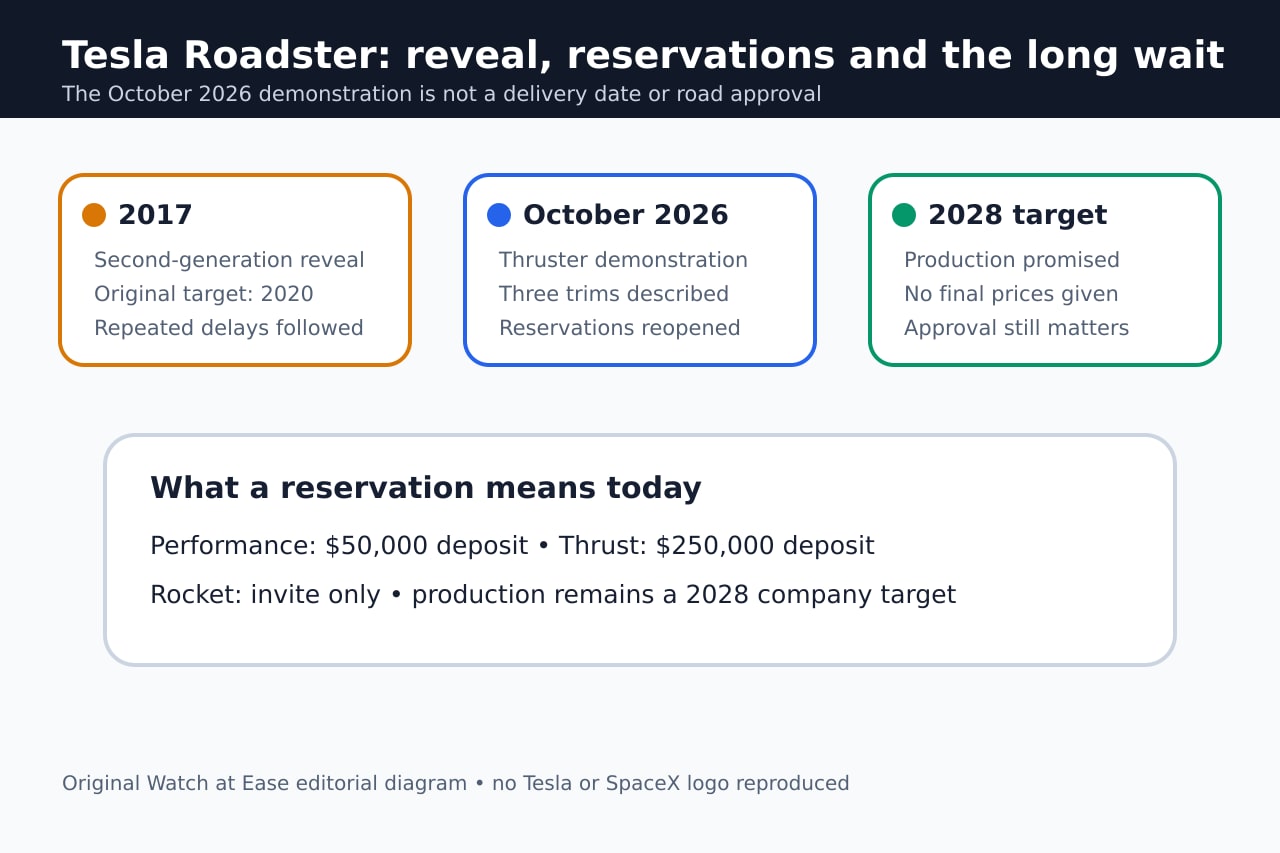
Tesla’s reservation page listed Performance as a road-ready two-seater with a $50,000 deposit. Thrust adds rear acceleration thrusters and requires $250,000. Rocket is invite-only, seats one and is described as having a full flight system.
Those amounts are reservation deposits, not final retail prices. Tesla executives did not announce final prices at the event, so buyers cannot yet calculate the complete purchase cost or delivery timing from the reservation page alone.
The headline specifications remain company claims
Tesla says the Roadster will accelerate from zero to 60 mph in under one second, exceed 230 mph and travel more than 300 miles on a charge. The thruster system uses compressed gas, while the suction system supplies downforce for the inverted-ramp demonstration.
The October event showed some of the hardware operating, but independent production-car testing has not happened. Range, repeatability, recharge intervals, maintenance and performance on ordinary roads remain open questions until final vehicles and specifications exist.
Why 2028 and road approval matter
Musk said production will begin in 2028. The project was first presented in 2017 with a 2020 delivery target and has been delayed repeatedly, so 2028 should be treated as a current company target rather than a guaranteed customer date.
AP noted that Tesla’s fine print says the Rocket feature is not approved for public-road use. A dramatic controlled stunt therefore does not establish road legality. The useful buyer checklist is simple: wait for final pricing, production validation, safety documentation and jurisdiction-specific approval before treating the most extreme capabilities as usable features.