Technology · NEWS EXPLAINER
Tesla FSD class-action ruling: what changed—and what did not
The Ninth Circuit vacated certification of three California classes because common proof did not show every buyer saw the challenged hardware statement. The case was remanded; the merits were not decided.
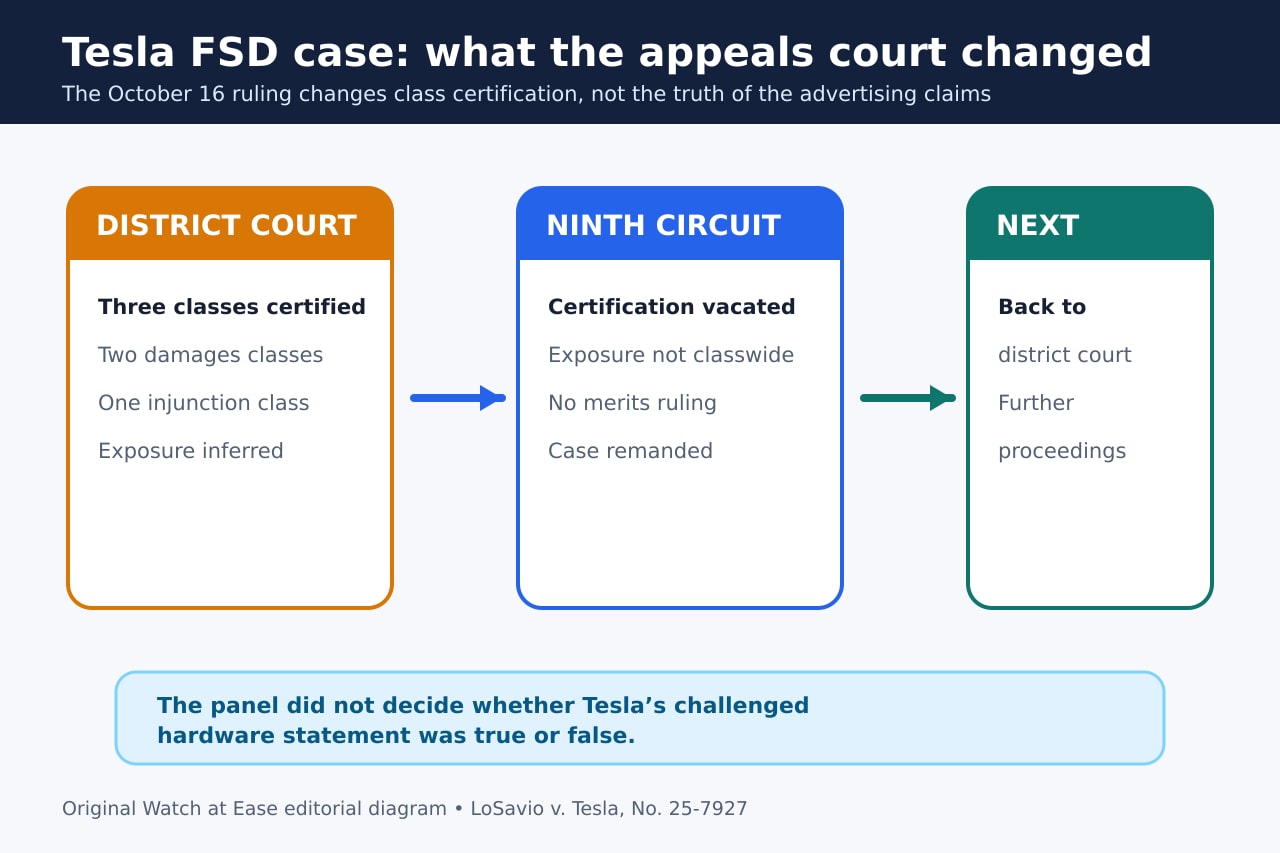
A three-judge Ninth Circuit panel on October 16 vacated an order that had certified three California classes in litigation over Tesla’s statements about the hardware needed for Full Self-Driving. The panel said the plaintiffs had not shown that exposure to the challenged website statement could be inferred for every class member.
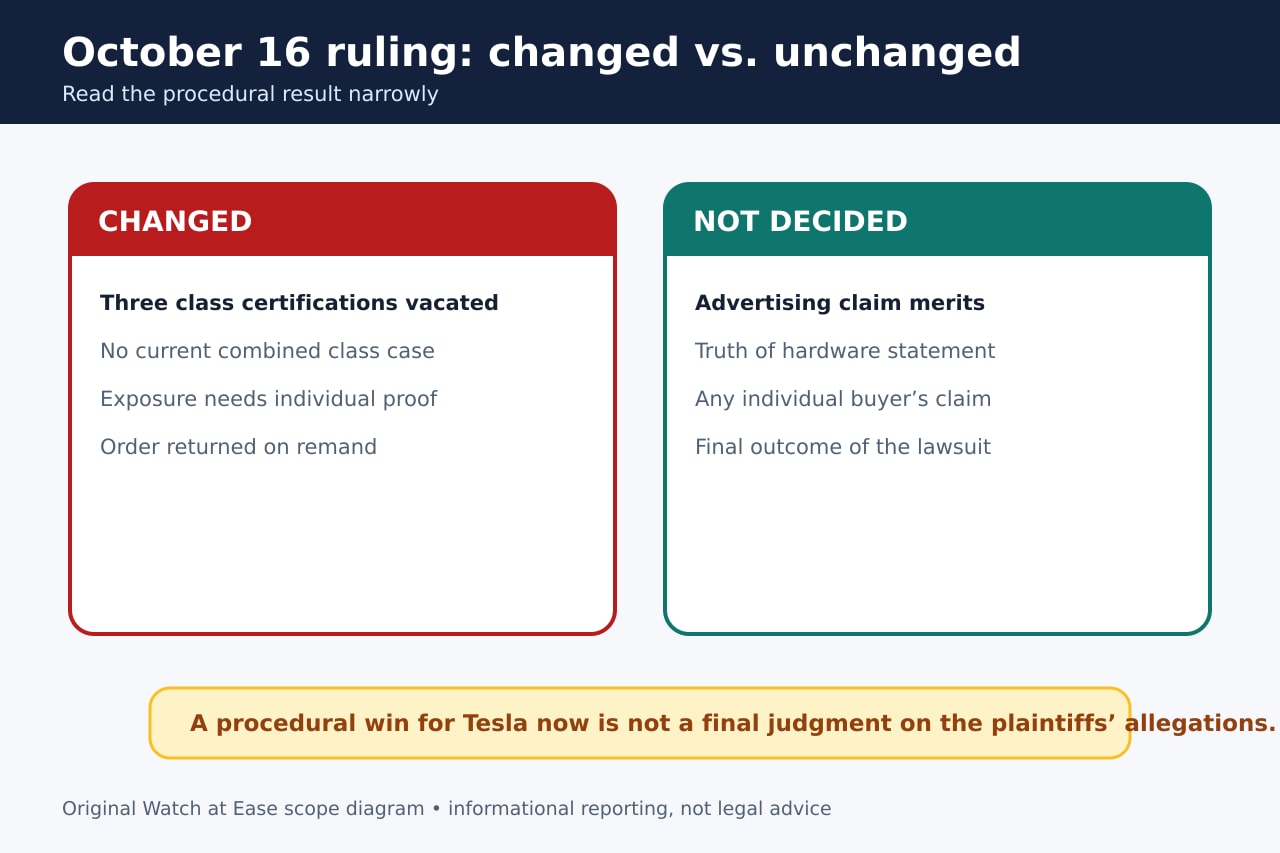
The decision is procedural and narrow. It sends the case back to the district court, does not decide whether Tesla’s hardware statement was true or false, and does not end the underlying lawsuit.
The ruling changes the class posture
The district court had certified two damages classes under Rule 23(b)(3) and one injunctive-relief class under Rule 23(b)(2). The appellate panel vacated all three certifications and remanded for further proceedings. That means the previously grouped buyers cannot, for now, proceed together under those certification orders.
Why exposure became the decisive issue
The challenged hardware statement appeared on Tesla’s Autopilot webpage. The panel said buyers were not required to pass through that page to complete a purchase, so a court could not assume every class member saw the statement. Website-traffic evidence and related marketing statements did not establish universal exposure.
The damages theory was not reviewed
Because the exposure question was dispositive, the panel expressly declined to address the proposed damages model. It also said individualized exposure questions affected the statute-of-limitations analysis and the boundaries of the injunctive-relief class. Those are certification issues, not findings that the plaintiffs’ allegations are true or false.
What affected buyers should not infer
The memorandum is not a merits judgment, and Reuters reports that the underlying false-advertising case remains pending. The ruling does not establish that Tesla’s hardware statement was accurate, erase every possible individual claim, or award damages. It changes whether the claims may proceed collectively under the vacated orders.
What to watch next
The concrete next step is further district-court proceedings after remand. Watch for any renewed certification proposal, case-management order, settlement, merits ruling or further appeal. People considering action on their own circumstances should consult qualified counsel; this report explains the public ruling and is not legal advice.