Technology · NEWS EXPLAINER
Temu's Texas settlement adds U.S. data-hosting and product-testing rules—but no admission of wrongdoing
The $3 million agreement imposes Texas-focused privacy, app-security and product-safety obligations. It also contains narrow access exceptions and conditional future penalties that should not be mistaken for money already owed.
A signed Texas judgment turns a privacy and product-safety dispute with Temu into enforceable, phased duties rather than a general verdict on the retailer. The immediate price is $3 million; the longer-term impact comes from U.S. data hosting, independent audits and defined buyer remedies.
For shoppers, the practical takeaway is narrower than either side’s rhetoric: protections attach to consumers identified as Texans under the judgment, business-purpose exceptions remain, and refunds follow only after an independent process confirms a harmful product.
What the settlement changes
Texas and Temu resolved a state enforcement case with a $3 million payment and a permanent injunction covering app security, privacy notices, product safety and data handling. Texas officials described it as their first resolution of these claims against Temu.
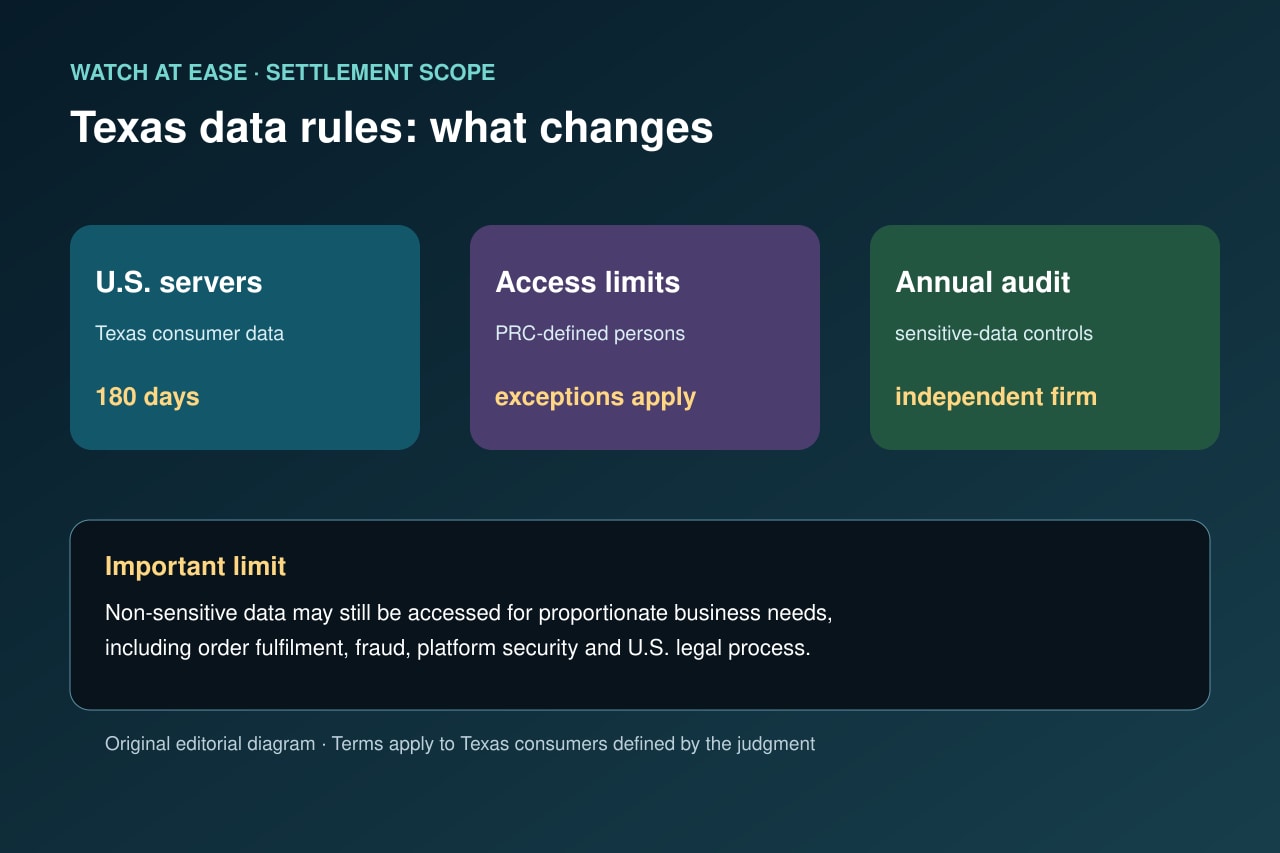
The signed judgment phases in some requirements. U.S. data hosting and several access and retention controls have a 180-day deadline, while privacy-policy and settlement-notice duties arrive sooner.
How the data rules are limited
For consumers identified as Texans through ordinary records, personal data must be stored on U.S. commercial servers owned and controlled by an American company. The judgment also limits access by a defined class of people and entities tied to the People’s Republic of China.
The rule is not an absolute ban on every cross-border access. A consumer may specifically consent for a single instance, and non-sensitive data may be accessed when reasonably necessary and proportionate for orders, fraud prevention, platform security or U.S. legal obligations.
What happens when testing finds a harmful product
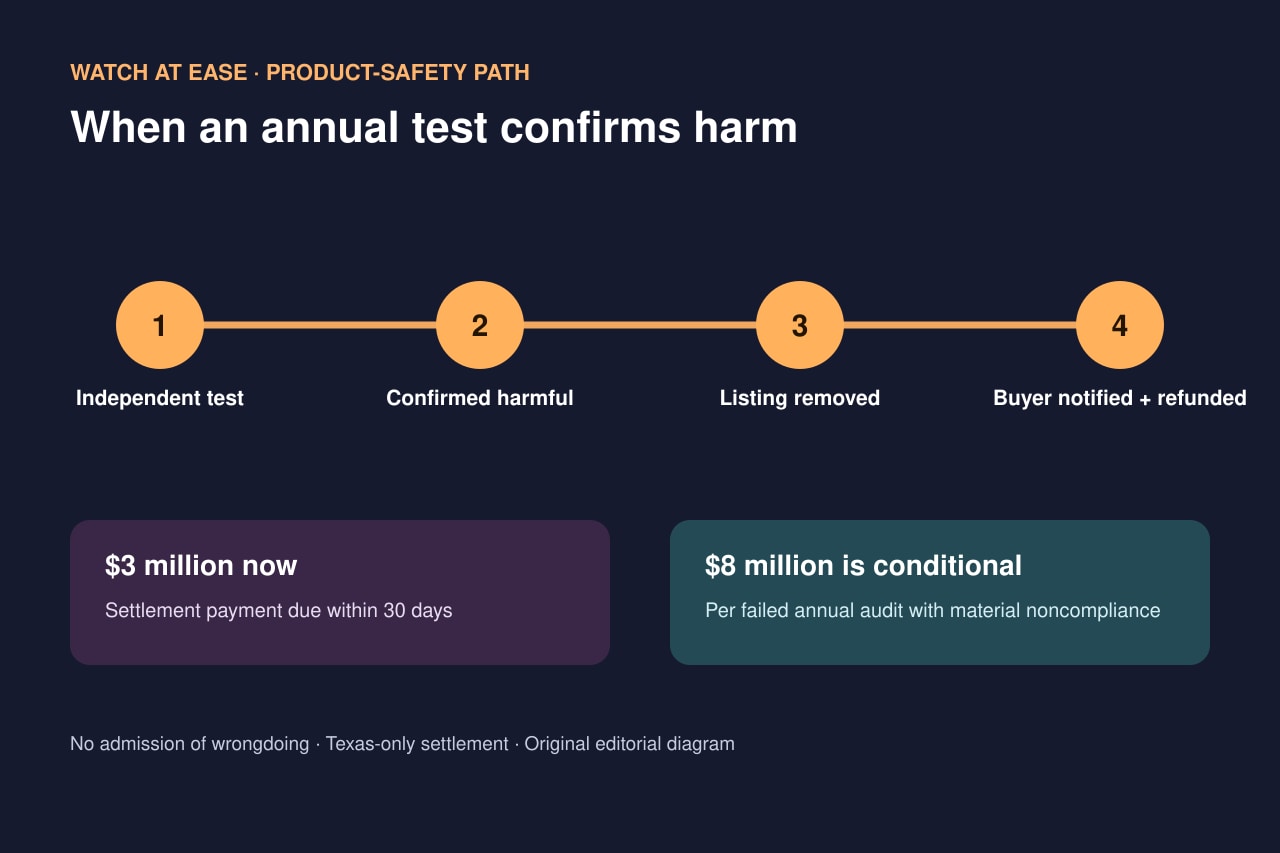
A qualified independent firm must annually test a cross-section of products commonly bought by Texas consumers for harmful substances. A product becomes “confirmed harmful” only after a final report finds a level above an applicable federal safety standard.
That finding starts concrete duties: remove the listing within two business days, terminate the identified store and affiliated stores owned by the same merchant within five business days, directly notify affected Texas buyers and provide full refunds.
What the agreement does not prove
Temu denied Texas’s allegations and denied wrongdoing. The judgment says the parties settled without trial or adjudication, so the agreement should not be presented as a court finding that every allegation was proved.
The $8 million figures are possible future penalties per failed annual audit when a final report identifies material noncompliance; they are not part of the $3 million payment due now. The judgment also does not resolve claims by private parties or other government agencies.