Tech · NEWS EXPLAINER
Sony ELF-MN1 launches in Japan December 11: what its USB-C setup requires
Sony estimates a tax-inclusive price near ¥54,000 for the ELF-MN1. Its single USB-C link to a phone or PC still requires a compatible host, supported software and a separate power connection.
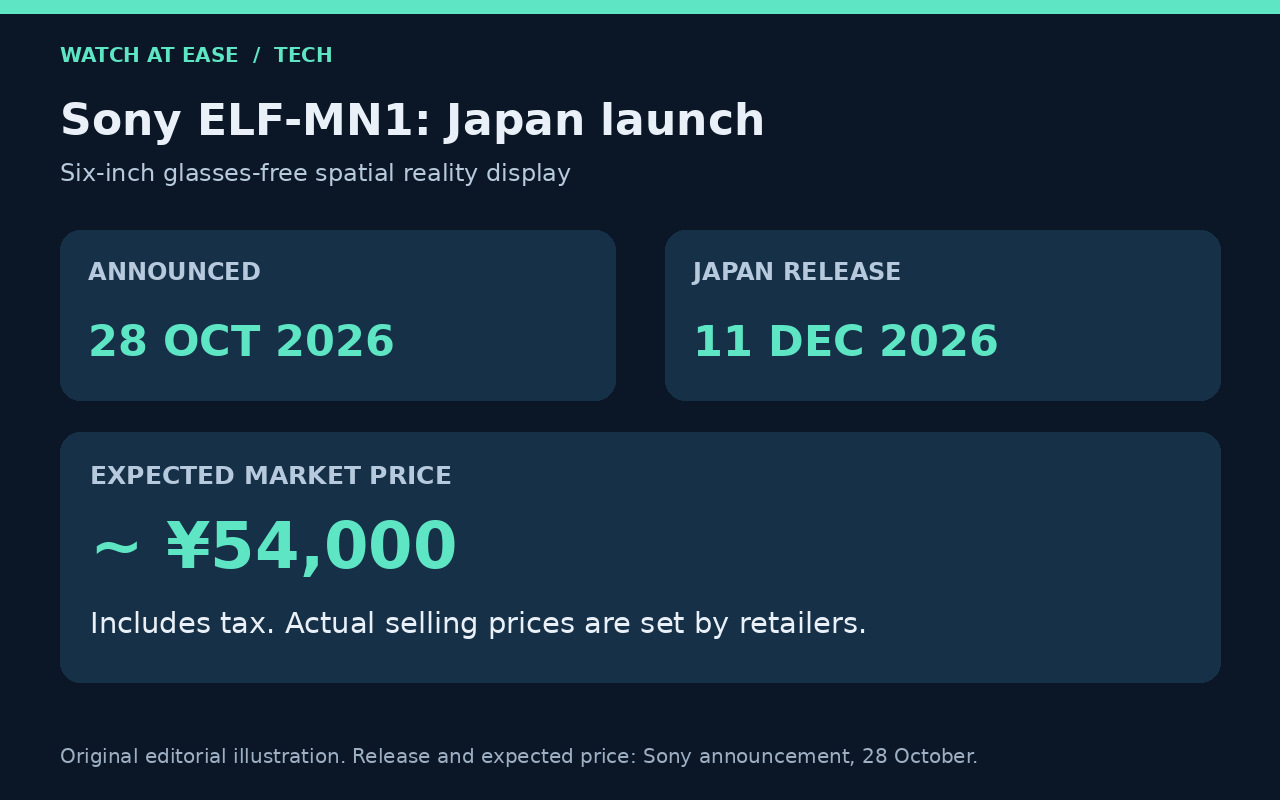
Sony announced the ELF-MN1 on October 28, a six-inch spatial reality display scheduled for release in Japan on December 11. It shows compatible 3D characters and objects without special glasses or a headset. Sony estimates a market price around ¥54,000 including tax, while leaving actual selling prices to retailers.
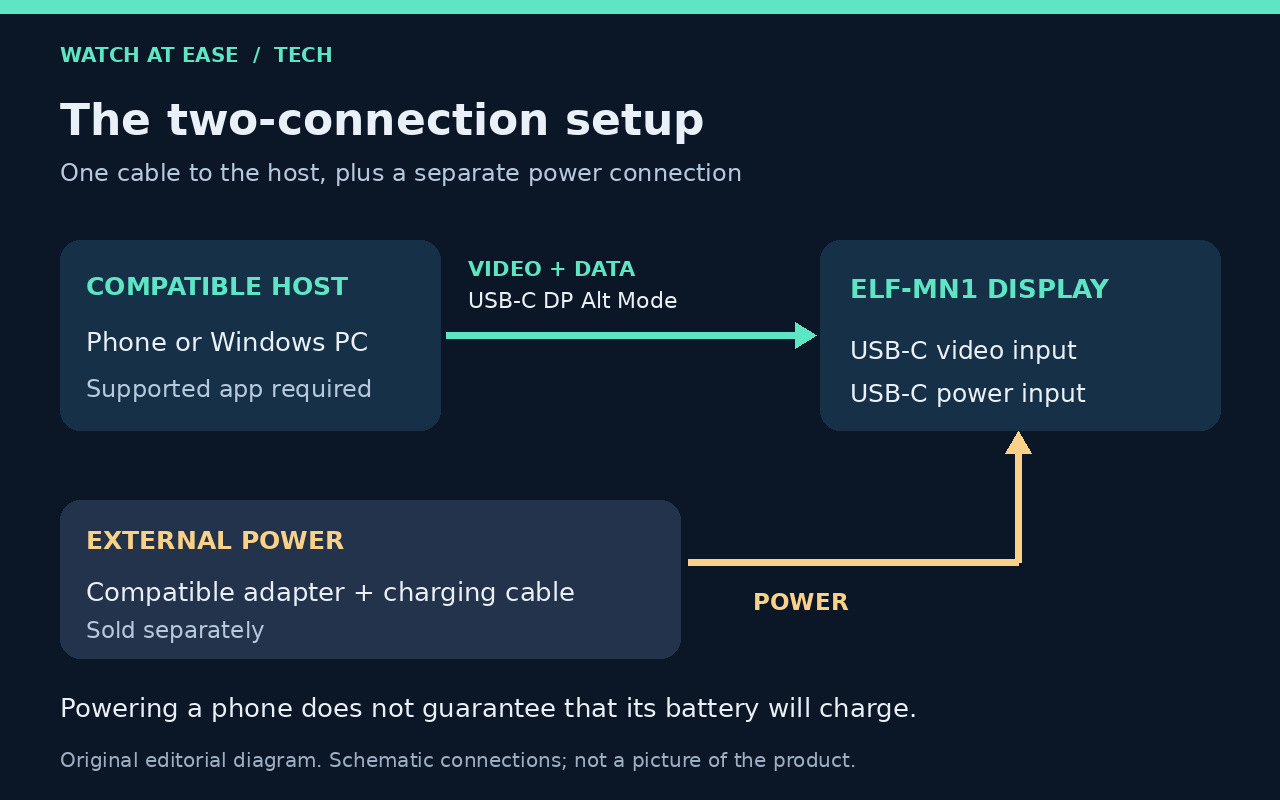
The small display connects to a compatible phone or Windows PC through one USB-C video cable. That description needs one practical qualification: the display also has a separate power input. The AC adapter and charging USB cable are sold separately, so the host connection is only part of the setup.
What the screen is designed to show
The ELF-MN1 joins Sony's XYN spatial-content range. It tracks the viewer's eye position and adjusts the image to create a glasses-free sense of depth. Sony says an added infrared sensor improves eye tracking in dim surroundings and describes the 403ppi panel as the highest pixel density in its spatial-display family at announcement.
Those are manufacturer specifications and claims, not results from our own testing. The intended content includes compatible characters, avatars and other 3D objects. A supported application matters: an ordinary USB-C connection alone does not establish that any video or game will appear in this format.
One host cable does not remove the power connection
Sony requires a video cable that supports DisplayPort Alternate Mode. Its setup guide shows separate USB-C video and power connections and distinguishes adapter profiles that can power the phone from those that cannot. PC Watch also reports the two separate inputs. Check the supported profile when choosing the separately purchased adapter.
Powering the connected phone also does not promise that its battery will charge. Sony explicitly says the battery level may still fall depending on the phone and the application in use. That distinction matters for a display meant to keep characters visible on a desk for extended periods.
Check the host and the application together
Sony's October 28 compatibility guide lists Windows 11 requirements and selected tested iOS and Android phones. For a PC, it calls for an appropriate USB-C video output or a compatible adapter combining DisplayPort video with USB data. It warns that an adapter may fail to work in some connection environments.
The guide also cautions that demanding content can reduce frame rates even on a recommended computer. Before buying, check the current host list, the chosen application's support and any content requirements. Inclusion of a platform family does not mean every phone or every app in that family is supported.
HoloModels support and Japan availability
Gugenka separately confirmed support for its HoloModels digital-figure service, while Sony says a developer SDK enables original content. Gugenka is a commercial content partner; its announcement establishes that integration, rather than providing an independent assessment of image quality.
Sony plans demonstrations at its Ginza and Nagoya stores, with starting dates to be announced through the product page. The sources checked establish the December 11 Japan release and the approximate yen price. They do not establish a US or worldwide launch date, and the estimate is not a fixed retail price.