Technology · NEWS EXPLAINER
Smartphone shipments plunged in Q3 2026 — why budget phones took the hardest hit
IDC estimates a 22% annual fall and Omdia and Counterpoint each estimate 20%. The precise totals differ, but all three trackers point to a memory-cost shock that is squeezing lower-priced phones first.
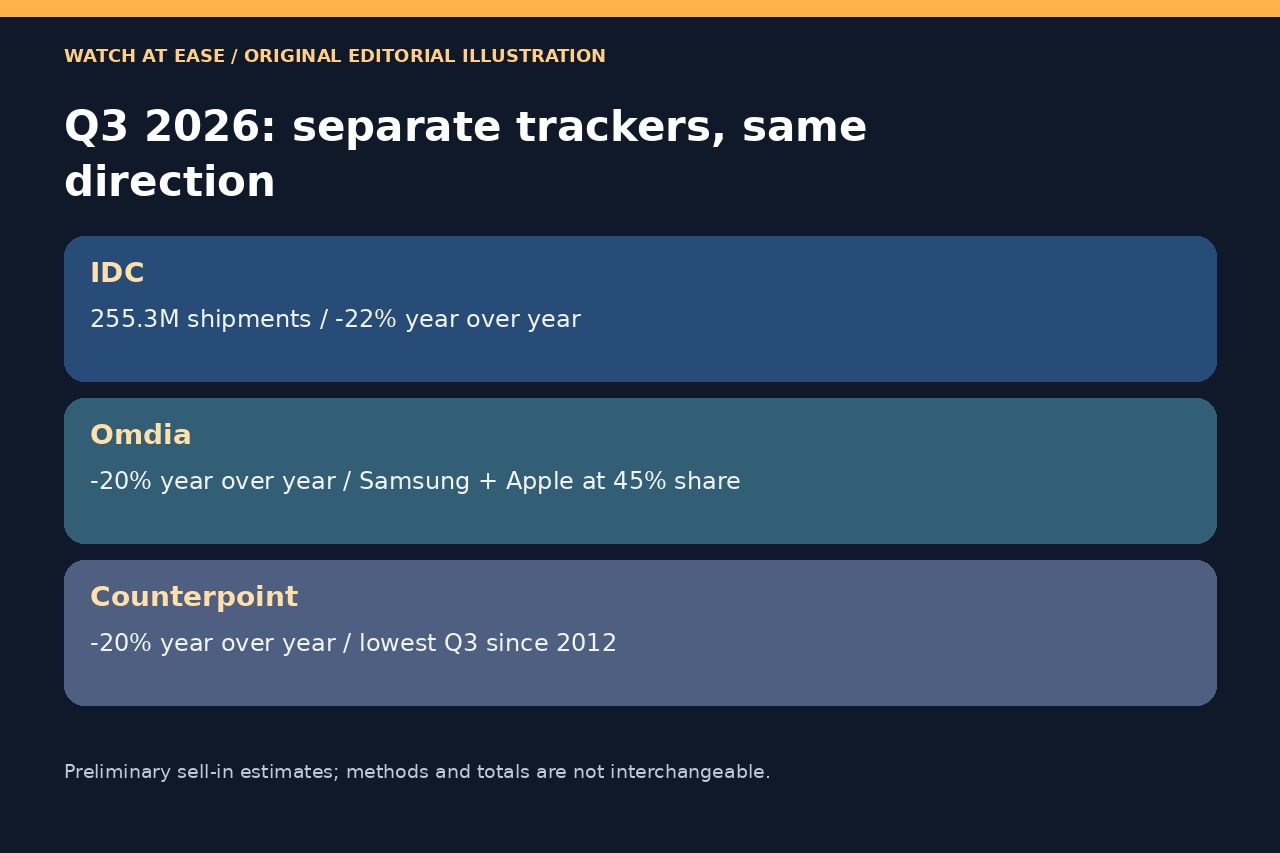
Global smartphone shipments fell sharply in the third quarter of 2026. IDC's preliminary tracker puts the market at 255.3 million units, down 22% from a year earlier. Omdia and Counterpoint each estimate a 20% decline. Those estimates should not be averaged: each firm uses its own coverage and methodology, but the direction is unusually consistent.
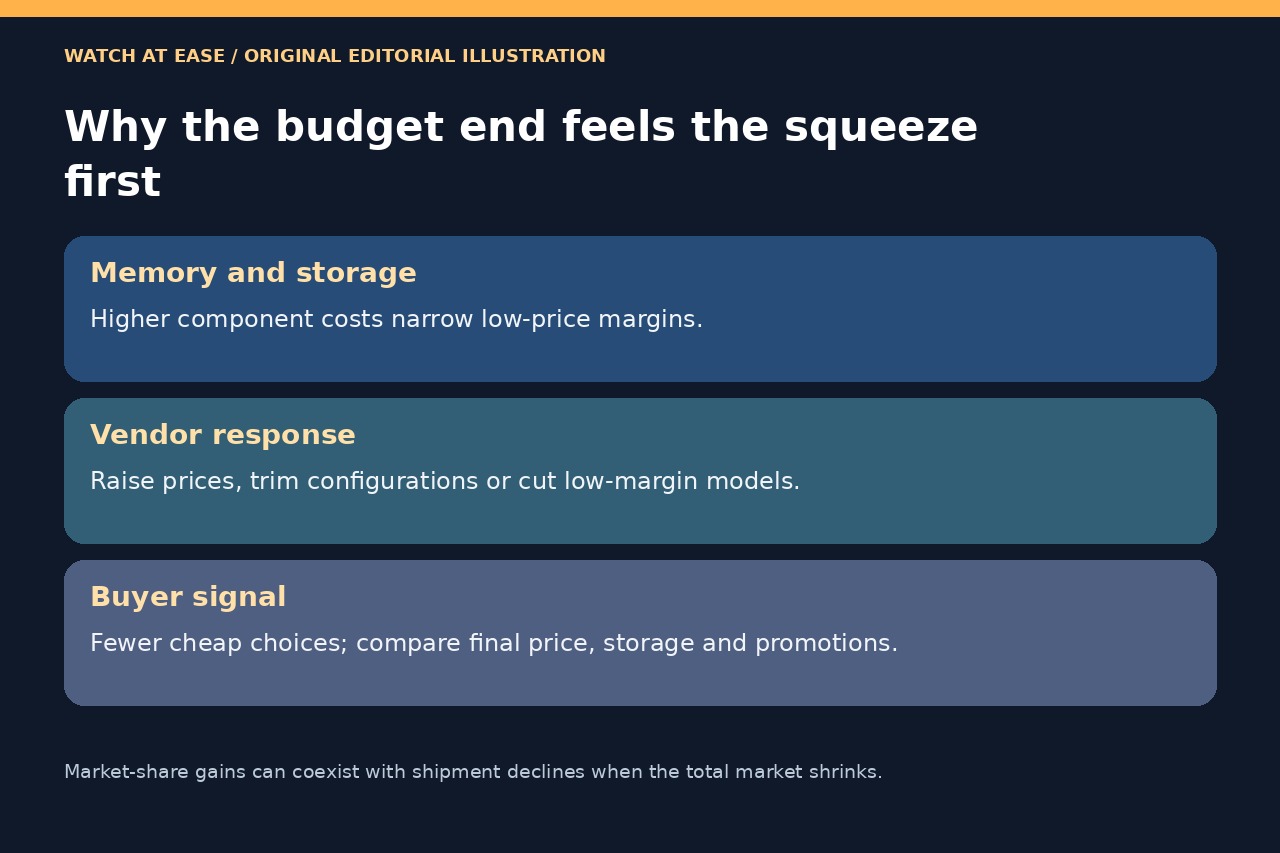
The immediate pressure is not a sudden disappearance of demand for premium phones. Memory and storage costs rose rapidly, making the cheapest configurations harder to sell profitably. Vendors can respond by raising prices, reducing storage, narrowing their model ranges or limiting low-margin shipments. That is why the budget and mass-market tiers feel the squeeze before premium flagships.
For buyers, shipment data is a warning about selection and pricing, not a forecast for one handset. Compare the final price and storage offered, watch holiday promotions, and remember that IDC counts new sell-in shipments rather than retail activations and excludes refurbished devices. All Q3 figures remain preliminary.
Three trackers agree on the shock, not one exact total
IDC estimates a 22% annual drop to 255.3 million units. Omdia and Counterpoint each report a 20% decline. Counterpoint calls it the weakest third quarter since 2012, while Omdia says the decline accelerated from 6% in the previous quarter.
These are independent preliminary estimates, not a shared census. Different coverage and definitions can move the total, so the responsible conclusion is a roughly one-fifth contraction rather than a blended number.
Memory costs hit low-price economics first
IDC says memory costs are about 350% higher than a year earlier, and Counterpoint also links the downturn to DRAM and NAND price shocks. Storage and memory account for a larger share of the bill of materials on a low-priced phone, where margins are already thin.
Omdia says vendors are protecting profitability by constraining low-margin shipments and adjusting prices. That can mean fewer entry configurations, smaller discounts or a narrower geographic range; it does not prove that any named model will disappear.
Why the leaders gained share while shipping fewer units
IDC estimates Samsung shipped 57.8 million phones, down 5.8%, and Apple 57.3 million, down 4%. Yet their shares rose to 22.6% and 22.4% because the overall market fell 22%.
Omdia similarly puts the two brands at a combined 45% share. A rising share therefore describes relative resilience, not absolute growth, and it should not be read as a sales or investment forecast.
What buyers should watch
Compare the price after promotions, included storage and support period instead of assuming a launch price or headline discount is equivalent across models. Premium phones may remain well supplied while the cheapest tier loses choices.
Shipment trackers measure devices sent into channels, not necessarily phones activated by customers in the quarter. IDC also excludes refurbished phones, a market Counterpoint says more consumers may consider as replacement cycles lengthen. The figures are preliminary and can be revised.