Travel/Public Service · NEWS EXPLAINER
San Clemente Beach Erosion Puts a Key Southern California Rail Line at Risk
A shrinking shoreline is squeezing the coastal rail corridor through San Clemente. Officials are weighing more sand, stronger defenses and, eventually, moving the tracks inland.
The beach and the railroad are running out of room in San Clemente. A September 27, 2026 Associated Press report shows how shoreline retreat and unstable bluffs are squeezing the seven-mile coastal segment used by Amtrak Pacific Surfliner, Metrolink, freight and military trains.
The immediate debate is practical: how much sand and hard protection can keep trains running, and for how long? Longer-term choices include moving the tracks inland. None is quick or cheap, and repeated closures have already shown what is at stake for riders and the wider Southern California corridor.
A seven-mile bottleneck carries much more than local trains
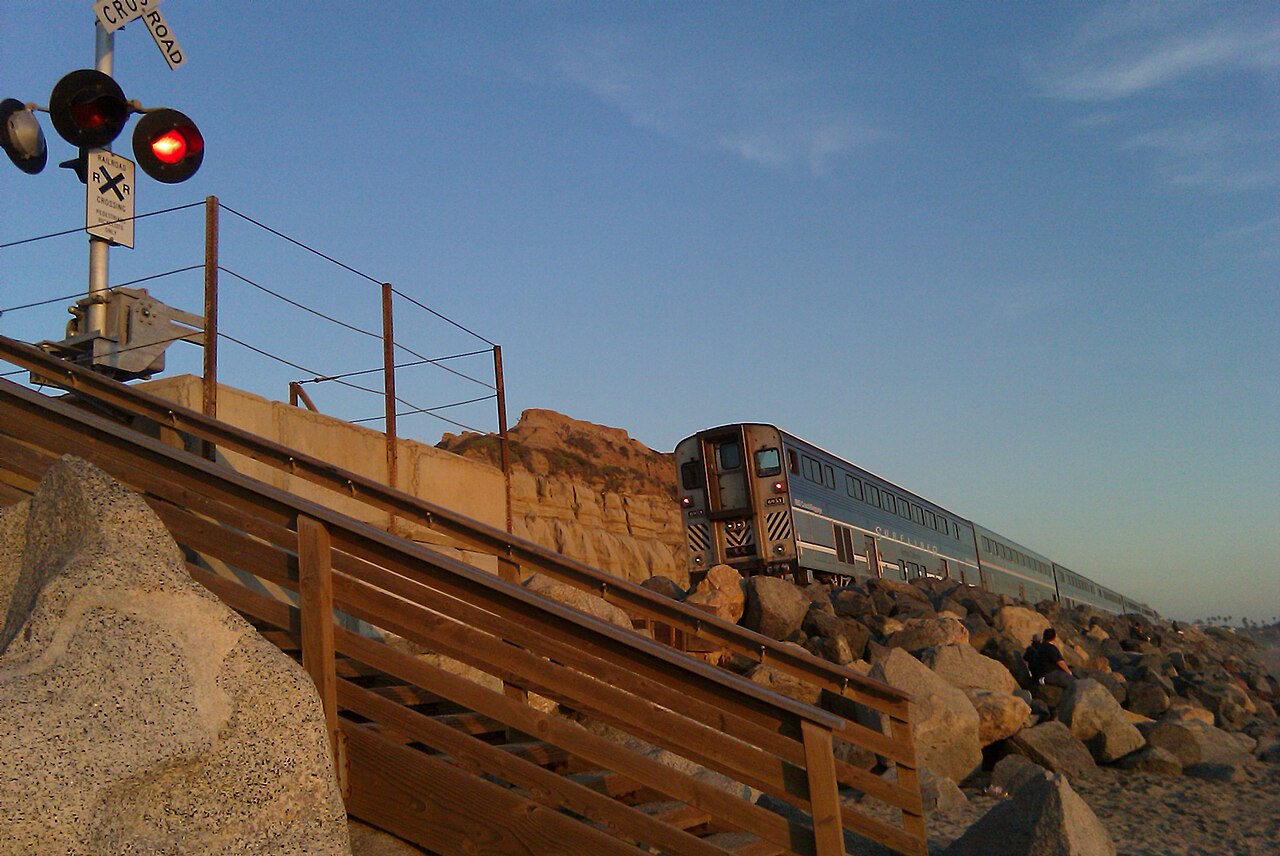
The track hugs the shoreline through San Clemente, leaving little space between ocean waves and steep bluffs. AP describes it as part of the nation’s second-busiest intercity passenger rail corridor, and the same route also carries freight and military traffic between San Diego and the rest of Southern California.
That makes a local erosion problem a regional transportation risk. Closures can interrupt Pacific Surfliner and Metrolink service, while repair projects also affect beach access and the coastal trail.
Replacing the missing sand would require an enormous supply chain
San Clemente estimates that its beaches are short about 3 million cubic yards of sand. AP reports that hauling that volume by road would require about 300,000 truck trips, illustrating why replenishment is difficult even before permitting, cost and environmental questions are resolved.
OCTA has already used smaller sand placements as part of emergency rail protection, alongside walls and other stabilization work. Those measures can buy time, but they do not restore the historical supply of sediment that once replenished the coast.
The long-term choice is protect the line, move it or lose it
OCTA says its current study is comparing strategies that could protect the tracks in place for up to 30 years while limiting disruptions. SFGate reported that the study includes multiple combinations of sand, shoreline structures and bluff protection, with a final feasibility report expected in 2026.
Beyond that horizon, moving the railroad inland remains under discussion. AP notes that the alternatives carry different costs and community impacts, but continued delay leaves the corridor exposed to the same erosion and slope failures that have repeatedly forced emergency work.
What riders should check before traveling
The long-term erosion study does not tell you whether a particular train will run. Use Pacific Surfliner’s Travel Advisories and the Amtrak app or train-status tool for the date, train number and stations on your reservation. Metrolink riders should use their own operator’s service notices.
If a service is disrupted, check the notice for the affected segment and the transport actually offered before traveling to a station. Do not assume a replacement bus exists: arrangements vary by closure. For a booked Amtrak journey, follow the calls, texts or emails tied to that reservation.