Technology · NEWS EXPLAINER
Ramp’s $60 billion valuation: distinguish new funding, revenue and purchase volume
The fintech confirmed a $1.85 billion primary round on October 15. Its metric footnotes matter as much as the headline valuation.
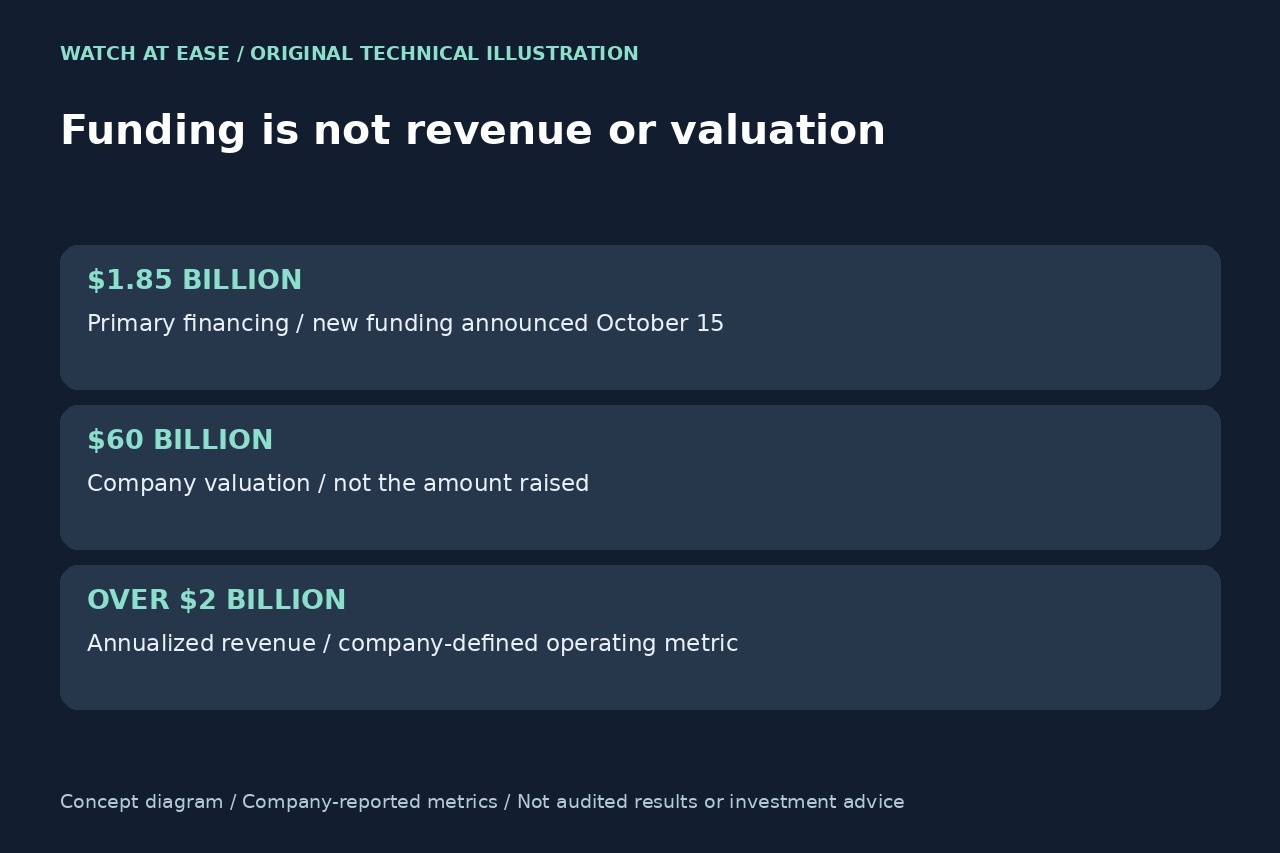
Ramp says it raised $1.85 billion at a $60 billion valuation. Those figures describe financing and company value; neither is the revenue its finance software earns. The announcement also contains operating measures with different definitions.
First separate the financing from the valuation
The company says Dragoneer led the round, with Thrive, Founders Fund, Sands and Avenir as co-leads. Primary funding is the announced new financing; valuation describes the company’s value in that transaction.
Do not add the two figures, treat the valuation as cash received or divide them to infer ownership without the actual financing terms. This release is not a capitalization table.
Annualized revenue has a specific scope
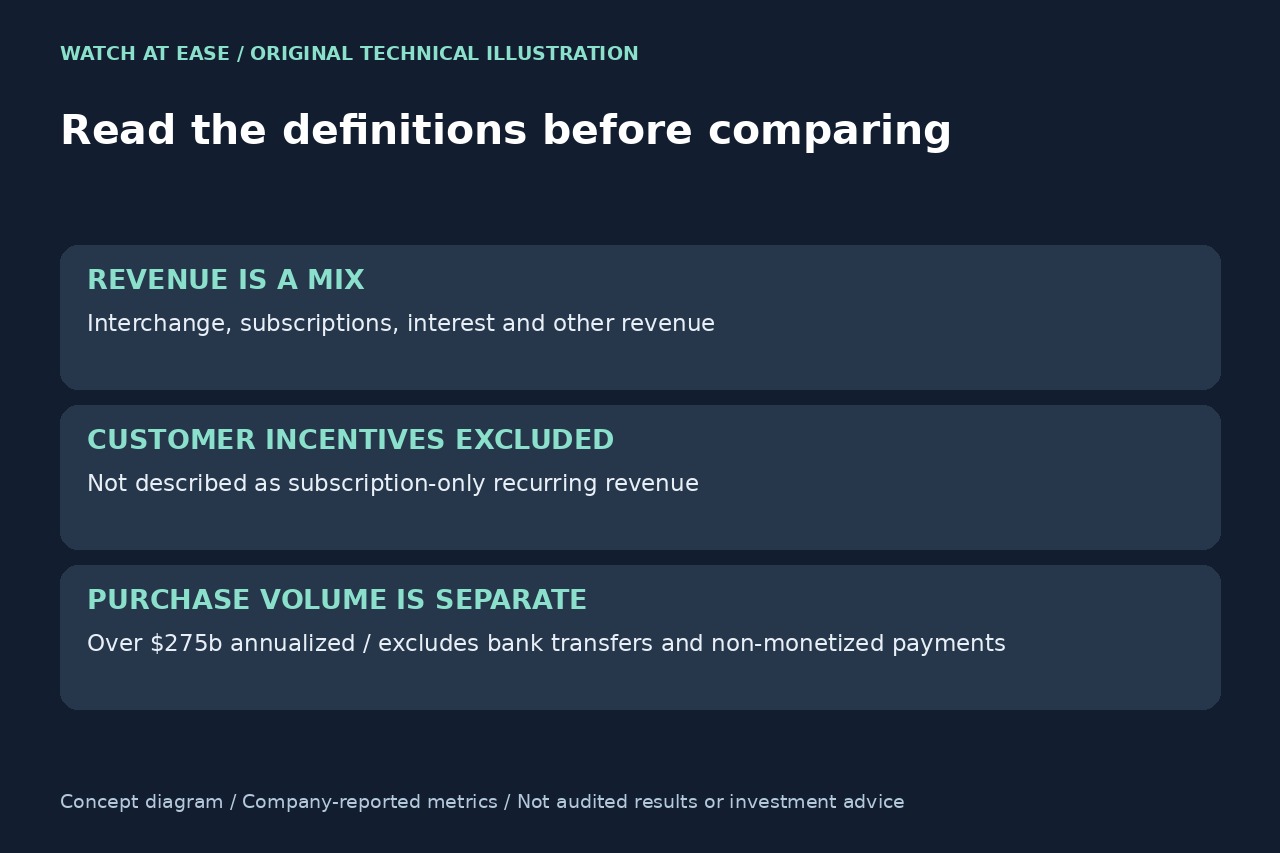
Ramp’s October 1 statistics list annualized revenue above $2 billion and positive cash flow. Its footnote includes interchange, subscription, interest and other revenue, while excluding customer incentives.
Calling the whole amount subscription ARR would change the metric. Nor does annualized revenue establish a completed financial year’s sales, and positive cash flow alone does not establish net profit.
Purchase volume is another denominator
The company reports over $275 billion in annualized purchases, explicitly excluding bank transfers and non-monetized payments. That measures activity handled through the platform, rather than Ramp’s income.
A comparison with another provider should first align the included payment types, measurement date and annualization method. The headline totals alone do not supply those comparability checks.
AI ambitions are a separate claim
Investor Keith Rabois previously told TechCrunch he wanted Ramp to challenge Anthropic through managing and optimizing AI spending.
That is an investor’s ambition, not proof of better models or guaranteed customer savings. A finance team evaluating software still needs its own fee, coverage and workflow comparison; the funding announcement cannot answer those questions for it.