テクノロジー · 実用ガイド
Python の「Can’t pickle local object」?serializer を変える前に process 境界を証明
例外は worker が再構成できない object を示します。start method、callable、argument graph、import path を記録してから修正します。
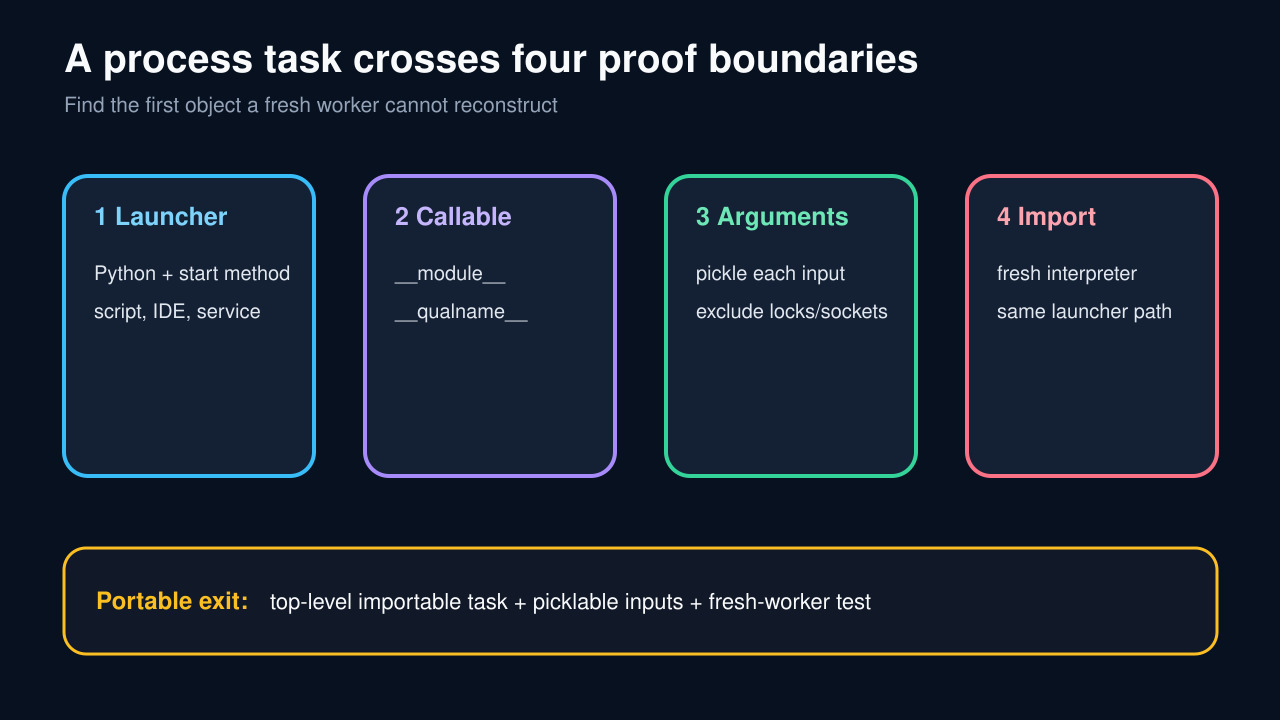
process 境界で送る object が serialize または名前解決できません。nested function、lambda、closure、bound method、lock、socket、またはそれらを保持するinstanceが候補です。
本番launcherからPython/library version、start method、module、qualified name、argument type、fresh child importを一つのledgerにします。
1. 実際のlauncherとstart methodを固定
同じscript、runner、notebook、IDE、service、frameworkで再現し、python -VV、sys.executable、context、get_start_method()を記録します。
tracebackを保存し、start、map、submit、queue、result、worker startupのどこで失敗したか特定します。
2. callableとobject graphを特定
type(fn)、__module__、__qualname__を記録します。<locals>や<lambda>はmodule attributeとして解決不能の証拠です。
callableと各argumentを個別にpickle testし、secretではなく最初のfailure typeと安全なpathだけ残します。
3. fresh interpreterでimportを証明
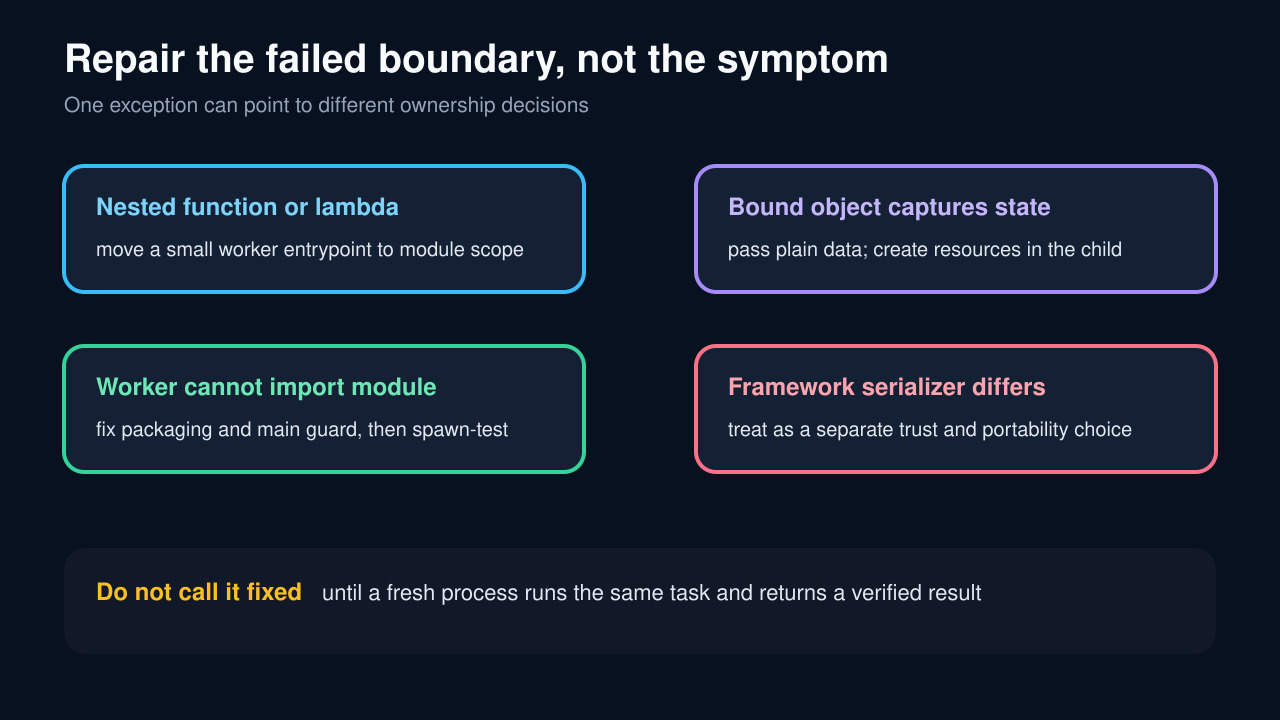
最小worker entrypointをmodule top levelへ移し、process作成をmain guard内に置き、本番package pathからimport可能にします。
同じinterpreterとworking directoryの新しいprocessでmoduleとqualified nameを解決します。
4. parent resourceとplain task dataを分離
bound methodはinstance全体を取り込みます。lock、file、socket、client、connectionはchildで作るかsmall configに置換します。
argumentが失敗するならplain recordへ縮小し、initializerかworker内でresourceを再構成します。
5. start methodとserializer変更を限定判断
forkで一つのLinux testが通ってもportable contractではなく、threaded libraryでは危険な場合があります。
cloudpickleやdillはdependency、compatibility、deserialization trustを変えるため明示契約でのみ採用します。
6. fresh-worker exit test
同じproduction launcherとstart methodで小さなdeterministic taskを実行し、import、input、result、clean exitを確認します。
interpreter、start method、qualified name、input schema、worker PID、result checksum、exit statusを記録します。