Business/Technology · NEWS EXPLAINER
Netlist asks U.S. trade agency to block Micron HBM imports used in AI systems
Netlist filed a new ITC complaint alleging that Micron HBM3E, HBM4 and HBM4E infringe two Netlist patents and seeking exclusion and cease-and-desist orders against Micron plus downstream products from Nvidia, Broadcom and Google. The filing is a request, not an ITC infringement finding or an import ban.
Netlist has filed a new complaint at the U.S. International Trade Commission seeking to block imports of certain Micron high-bandwidth memory products and downstream AI-computing products that Netlist alleges use its patented technology. Reuters reported September 29 that the filing names Micron along with Nvidia, Broadcom and Google.
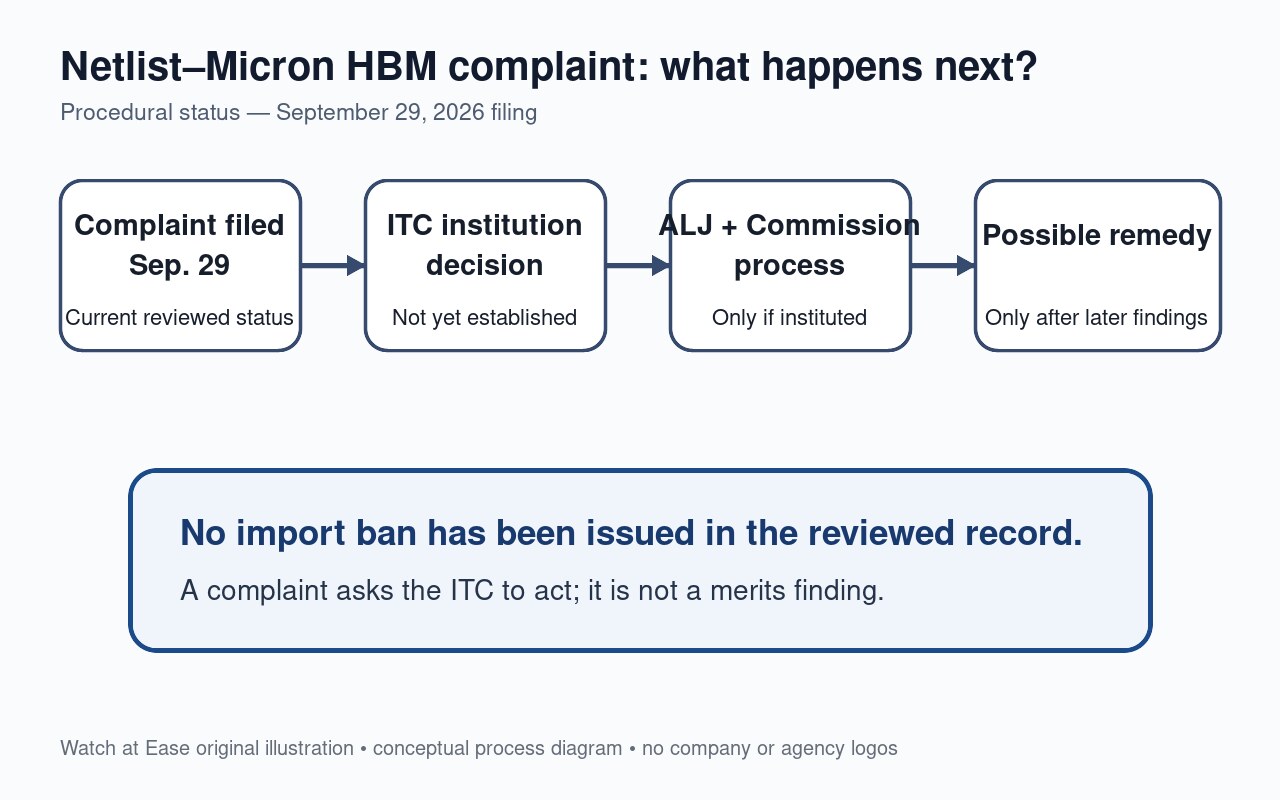
The procedural status matters. Netlist is asking the trade agency for exclusion and cease-and-desist orders, but the reviewed sources do not establish that the ITC has already instituted this new HBM matter, found infringement or issued an import ban. Those are later procedural and merits steps, not facts established by the complaint itself.
What Netlist is asking the ITC to do
Reuters says Netlist filed a new complaint seeking to block imports of certain Micron memory devices and downstream products that incorporate the challenged technology. Netlist's own announcement says it is requesting exclusion and cease-and-desist orders.
Those remedies have not been granted in the current record reviewed for this story. Filing a complaint starts a request for agency action; it does not itself establish patent infringement or create an immediate import prohibition.
The new case focuses on HBM used in AI computing
Netlist says the new complaint asserts two patents and alleges they cover at least Micron HBM3E, HBM4 and HBM4E. Reuters describes the challenged memory as being used in Google, Nvidia and Broadcom products for AI computing.
High-bandwidth memory is important to accelerators and other AI systems because it is designed to move large amounts of data at high speed. But the legal question is narrower: whether the specific products and patent claims identified by Netlist violate Section 337. That remains to be determined.
Google, Nvidia and Broadcom are named as downstream respondents
The complaint names downstream customers because Netlist is also targeting products alleged to incorporate Micron memory technology. Reuters says the requested relief extends to certain GPUs, servers and other products.
That does not mean the ITC has concluded those companies infringed Netlist's patents. Reuters says Micron declined to comment, while Google, Nvidia and Broadcom did not immediately respond to requests for comment.
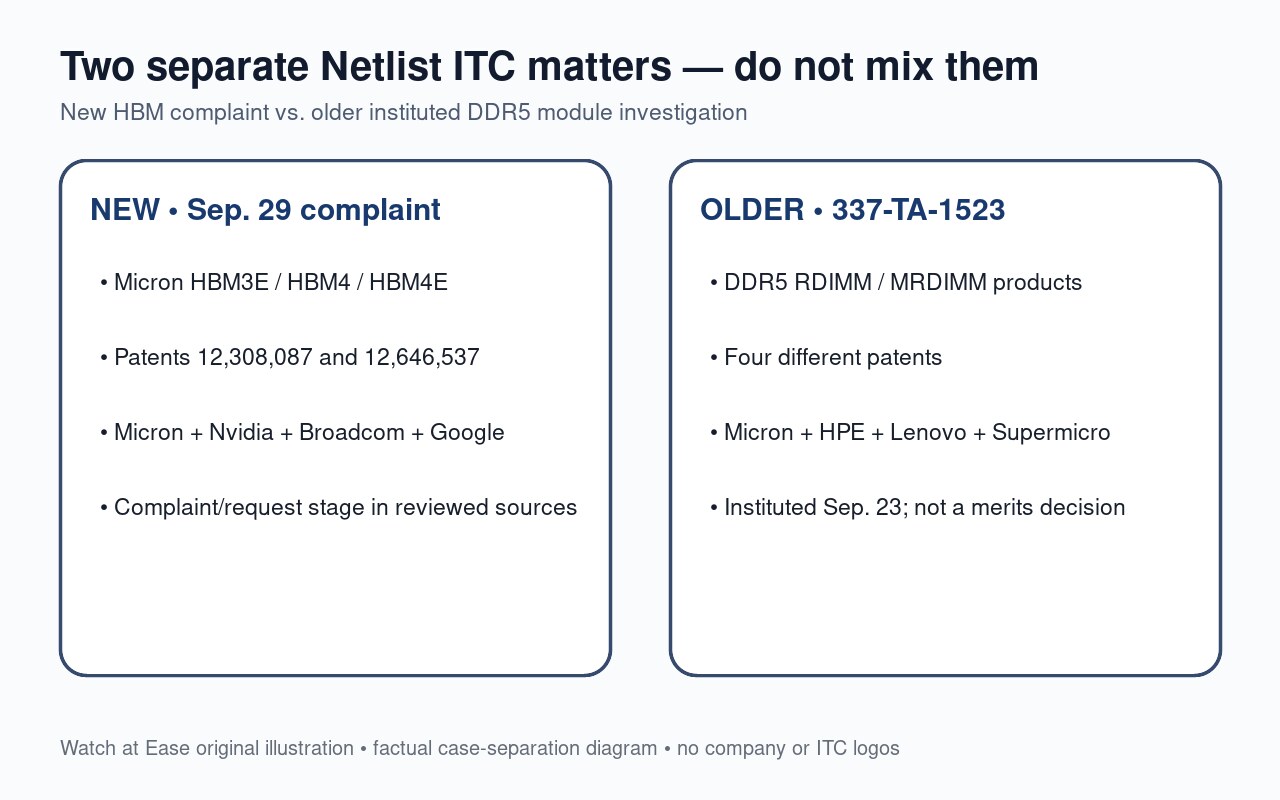
Do not confuse the new HBM complaint with 337-TA-1523
The ITC separately instituted Investigation 337-TA-1523 on September 23. That matter stems from an August complaint and concerns DDR5 RDIMMs/MRDIMMs, four other Netlist patents and respondents including Micron, HPE, Lenovo and Supermicro.
The Commission says institution of an investigation is not a decision on the merits. The September 29 HBM filing is newer and distinct; the next procedural checkpoint is whether the ITC formally institutes that complaint and, if so, which claims and respondents it accepts for investigation.