Technology · NEWS EXPLAINER
Nebius buys Inferize to tackle AI inference cold starts and idle GPU costs
Inferize’s team and technology will join Nebius Token Factory. The engineering goal is faster model availability with less idle accelerator capacity, but no rollout date, benchmark or customer price change has been announced.
Nebius has acquired Inferize, an Israeli startup focused on making production AI inference more responsive while reducing unused accelerator capacity. Nebius said on October 1 that Inferize’s team and technology will join Token Factory, its managed platform for serving AI models. The companies did not disclose the transaction terms.
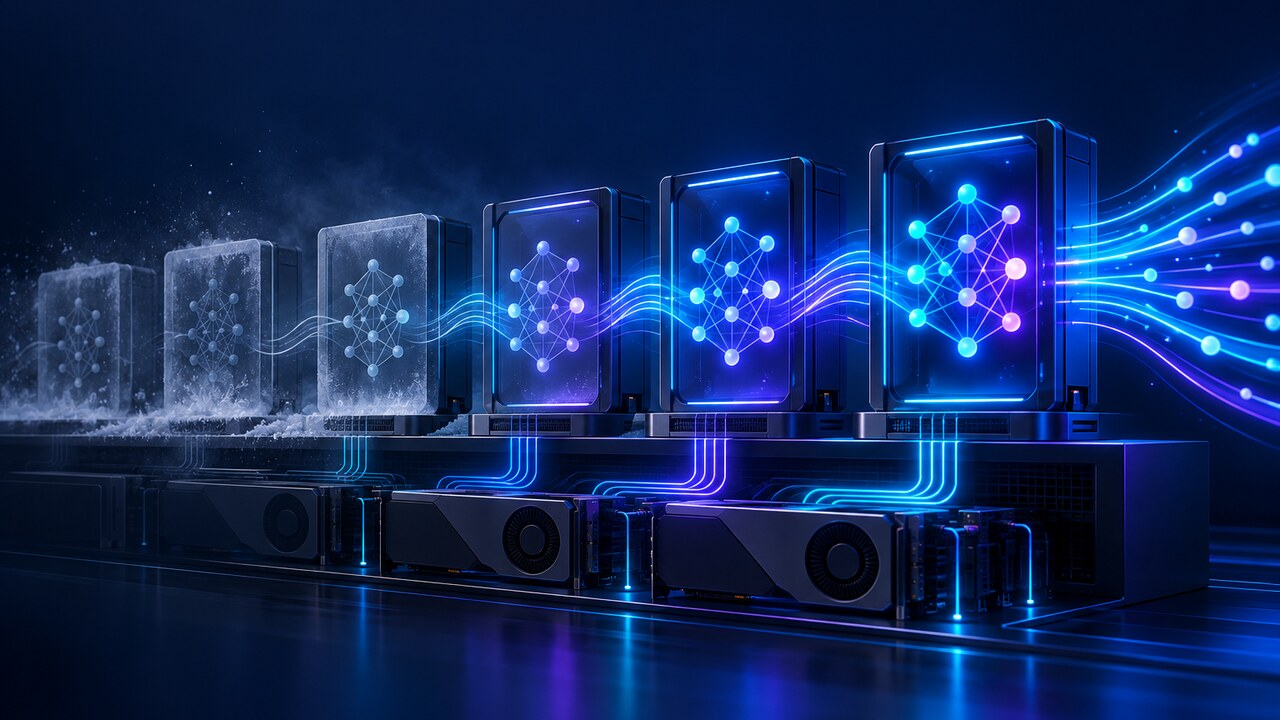
The target is the trade-off between cold starts and idle GPUs. A model that is not already loaded on suitable hardware may need capacity allocated, weights loaded and a serving environment initialized before it can answer. Keeping every model warm can reduce that wait, but it can also leave expensive accelerators unused between requests.
Nebius describes the acquisition as an infrastructure integration covering dynamic workload provisioning, GPU orchestration and low-latency model availability. That is a direction of travel, not proof of an immediate feature or saving: no public rollout date, reproducible performance comparison or Token Factory price change accompanied the announcement.
What Nebius is adding to Token Factory
Token Factory is designed to handle the operational work of deploying and scaling models. Nebius says Inferize will add software and engineering expertise around dynamic provisioning, accelerator orchestration and making models available with low latency.
The deal is therefore about the serving layer rather than a new foundation model. Inferize is not being presented as a consumer chatbot or a separately announced retail application. Its value depends on how the technology is integrated into the managed inference platform.
Nebius says Inferize was founded in January 2026 and produced a working prototype within three months. CTech reports a 17-person team whose founders previously built Granulate, an infrastructure-optimization company later acquired by Intel.
Why cold starts and idle GPUs pull in opposite directions
When traffic reaches a model that is not resident on the right accelerator, the platform may need to find capacity, transfer model weights and initialize the serving process. That setup can add latency before the first token is returned.
A provider can avoid some of that delay by reserving more warm capacity, but the reservation has a cost when requests are uneven. Hardware kept ready for a possible burst may sit idle while still consuming capital, power and operational budget.
Inferize’s stated aim is to narrow that trade-off: bring capacity online quickly when demand appears and release it when demand fades. The concept is credible, but the announcement does not quantify the improvement for a particular model, region or workload.
What customers can conclude now — and what they cannot
The acquisition supports Nebius’s plan to deepen its production inference stack. It does not establish that cold starts have been eliminated, that every Token Factory customer already uses Inferize technology or that a specific service-level objective has changed.
Nebius has not published a list of supported models, regional availability, integration milestones or a migration action for existing customers. Current users should look for product documentation and release notes before treating the acquisition as a feature available in their deployment.
There is also no announced customer price change. Better utilization could affect platform economics, but a lower internal cost does not automatically become a lower bill, and no public pricing evidence currently supports that conclusion.
The valuation estimate and the evidence still missing
CTech estimates the transaction at $100 million to $150 million. That range is useful context from an independent publisher, but Nebius says the terms are undisclosed and has not confirmed the figure. It should not be reported as the purchase price.
The most important missing evidence is a reproducible before-and-after comparison: first-token latency, time to load models, accelerator utilization and cost under the same workload. None of those measurements was included in the public announcement.
The strategic logic is clear: Nebius wants faster, less wasteful model serving. The measurable customer impact remains open until the company publishes integration details, benchmarks, availability and pricing information.