World · NEWS EXPLAINER
Navi Pillay wins 2026 Nobel Peace Prize: an award is not a court verdict
The committee recognises her international justice career. Distinguish the prize, criminal courts and UN investigations when reading the news.
The Norwegian Nobel Committee awarded the 2026 Peace Prize to South African jurist Navanethem ‘Navi’ Pillay on October 9. Its stated reason is her contribution to peace and international law, particularly the development of accountability for grave international crimes.
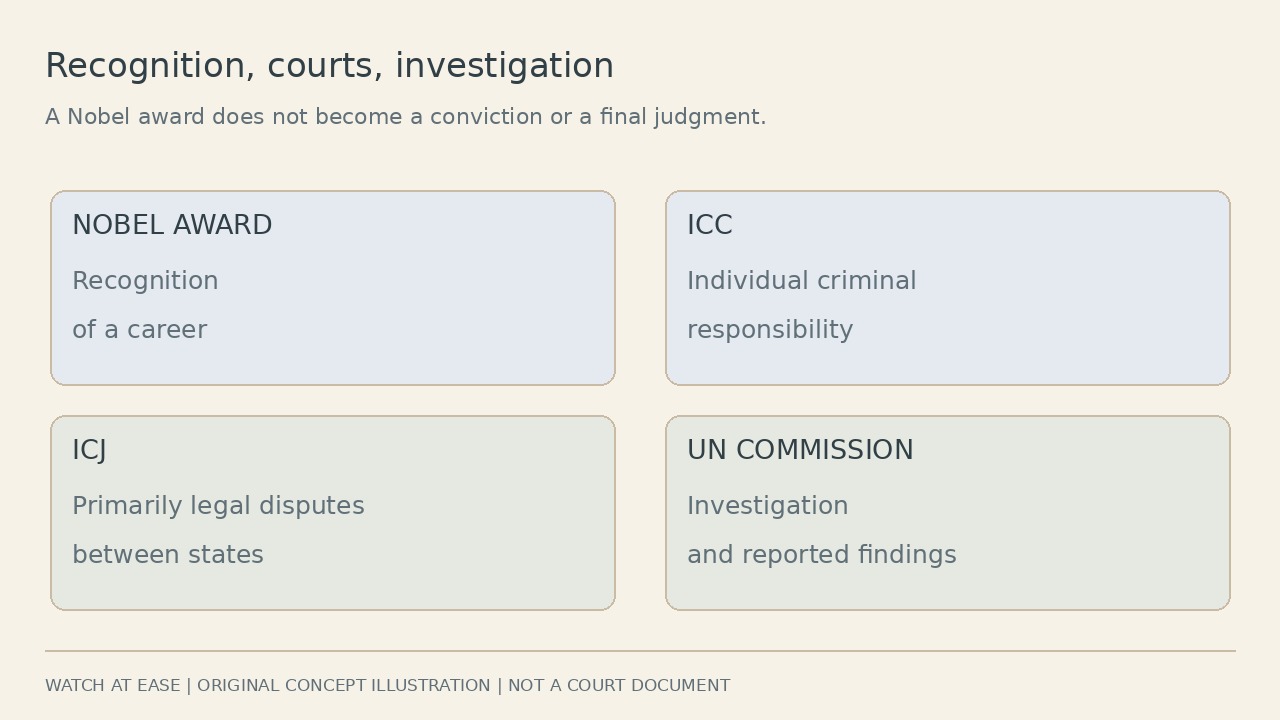
This is recognition of a legal career, not a new judgment in any case she has worked on. Reading the announcement requires separating three things often compressed into one headline: the Nobel decision, the work of different courts and findings by a UN commission.
Why the committee chose an international jurist
The committee describes Pillay’s work as strengthening a legal order in which serious abuses can be investigated and prosecuted. Its announcement links her early opposition to apartheid with later international judicial work, and highlights the Rwanda tribunal’s treatment of sexual violence. That is the committee’s explanation of the award, rather than an independent finding by the prize itself.
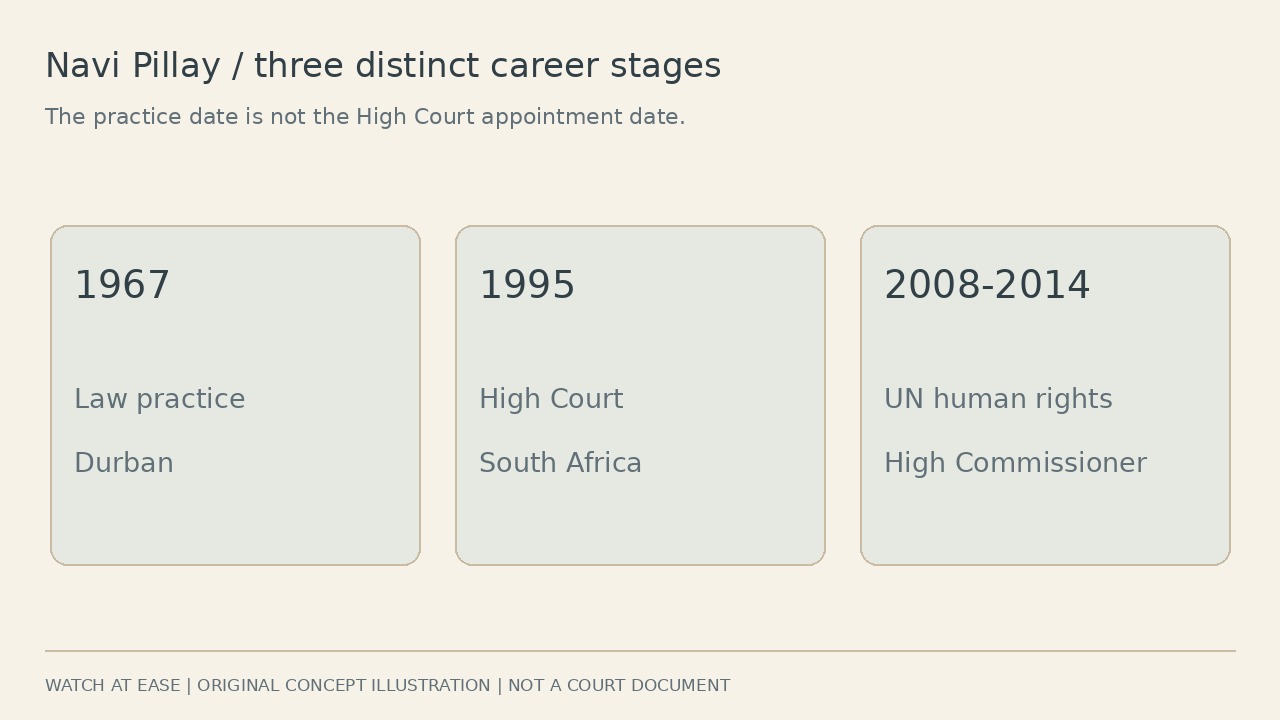
Pillay founded a Durban law practice in 1967 and was appointed to South Africa’s High Court in 1995. She served as UN High Commissioner for Human Rights from 2008 to 2014. These are different stages and institutions; the 1967 date refers to her practice, not her High Court appointment.
ICC, ICJ and a commission have different jobs
The International Criminal Court concerns criminal responsibility of individuals. The International Court of Justice, the UN’s principal judicial body, primarily settles legal disputes between states. Similar initials and a shared location in The Hague do not make them interchangeable. The older UN explanatory material establishes this institutional distinction; it should not be read as a current account of every jurisdictional rule.
The Nobel biography identifies Pillay as an ad hoc ICJ judge in the case concerning allegations of genocide against Myanmar. It also records her chairing the UN inquiry on the Occupied Palestinian Territory from 2021 to 2025. Ad hoc judicial service is not the same post as a permanent elected seat, and a UN investigation is not a criminal court. Her service across institutions does not merge their procedures.
Read the Gaza finding with its attribution intact
Reuters reports that the UN commission she chaired concluded that Israel committed genocide in Gaza, and that Israel rejected the report. Attribute that conclusion to the commission and retain the rejection. The Nobel announcement recognises Pillay’s wider work; receiving the prize does not convert a commission report into an ICC conviction or an ICJ final judgment.
For subsequent coverage, check the institution, document and procedural stage behind each claim: award citation, investigation report, allegation, order or judgment. Those distinctions help readers understand what has actually changed on October 9. The confirmed new event here is the award; the outcome of separate legal proceedings must be established from those proceedings, not inferred from the laureate’s recognition.