Business · NEWS EXPLAINER
MSCI revenue rose 12.4%, but cash flow and climate cancellations complicate the beat
MSCI’s third-quarter revenue reached $892 million and asset-based fees jumped 24.9%, yet free cash flow fell 8.9%, interest expense rose 45.2% and sustainability cancellations remained a weak spot.
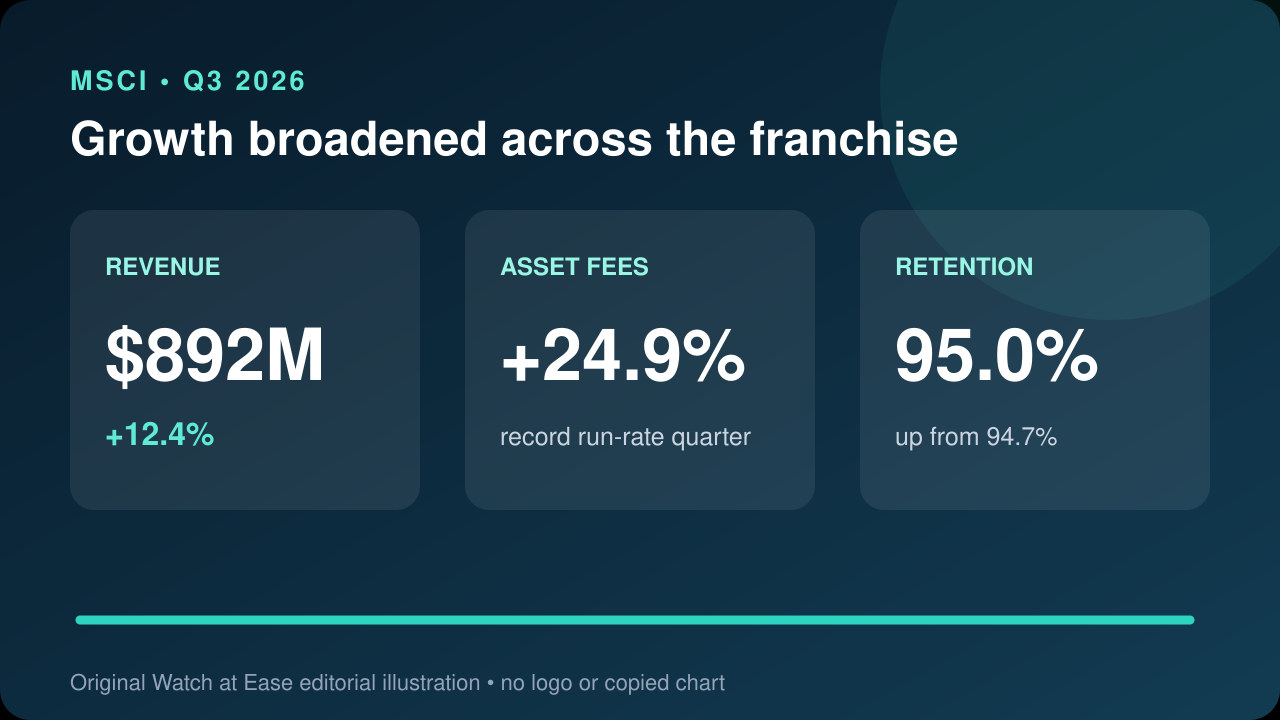
MSCI delivered double-digit third-quarter revenue growth and record asset-based fee momentum, but the headline beat does not tell the whole story. Cash conversion weakened, financing costs rose and management faced elevated cancellations in its sustainability and climate business.
The growth engine was broad, not just one line
MSCI said operating revenue increased 12.4% to $892.0 million, with $49.1 million of the increase coming from asset-based fees, $44.5 million from recurring subscriptions and $5.0 million from non-recurring revenue. Asset-based fees rose 24.9%, supported by record assets linked to MSCI indexes.
Margins were stable rather than expanding
Operating income rose 12.2% to $502.1 million, almost matching revenue growth. The operating margin was 56.3%, compared with 56.4% a year earlier, while the adjusted EBITDA margin slipped to 62.2% from 62.3%. The quarter therefore showed scale without meaningful margin expansion.
Cash conversion moved the other way
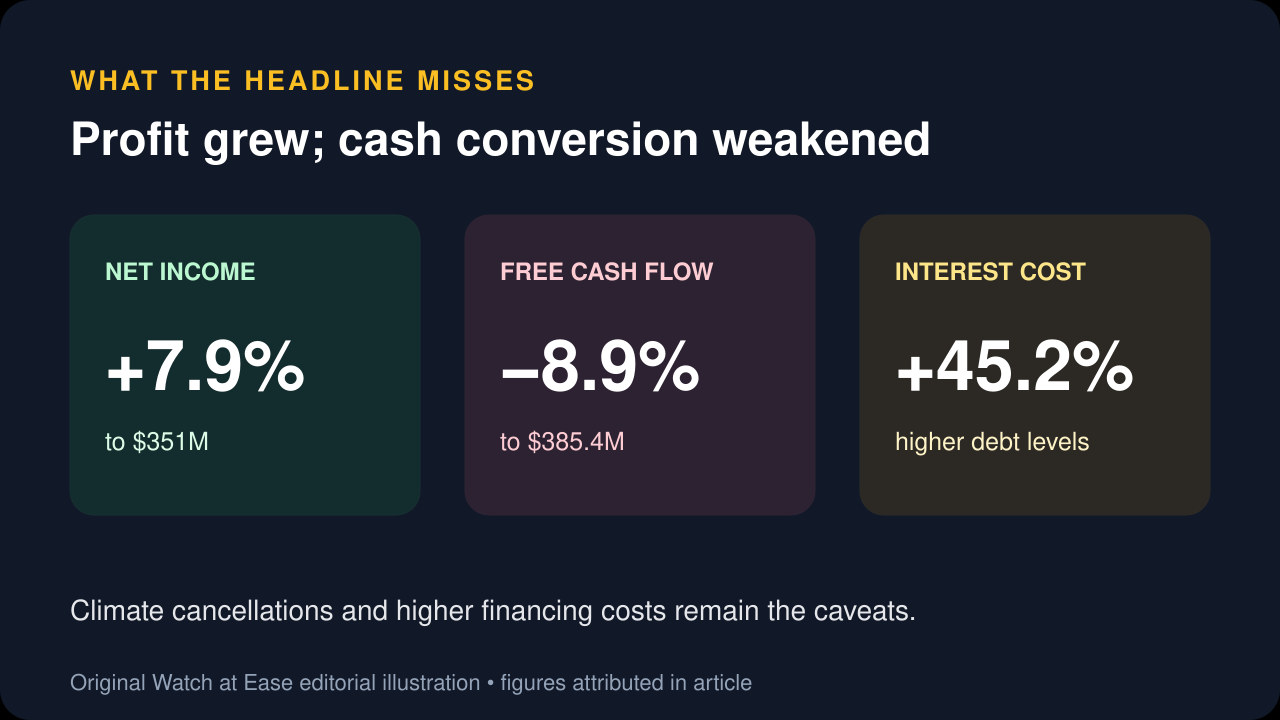
Net income increased 7.9% to $351.0 million, but operating cash flow fell 3.0% to $436.1 million and free cash flow declined 8.9% to $385.4 million. MSCI attributed the operating-cash-flow decline mainly to higher cash interest, partly offset by stronger collections.
Higher debt raised the financing bill
Other expense rose 45.2% to $74.2 million, primarily because higher debt levels increased interest expense. MSCI also lifted its full-year interest-expense guidance to $288–$291 million from $282–$286 million, while keeping its operating-cash-flow and free-cash-flow ranges unchanged.
Sustainability and climate remained the soft spot
An independent post-results analysis reported an elevated-cancellation quarter in sustainability and climate, including one large client reducing spending. It said management expects fourth-quarter recurring net-new sales in that segment to be roughly flat to slightly positive, making retention and First Street integration important follow-up indicators.
What readers should watch next
The key test is whether record asset-based fee momentum and 95% retention can coexist with better cash conversion, stable margins and fewer climate-product cancellations. These are operating questions, not a recommendation to buy or sell MSCI shares.