Culture/Entertainment · NEWS EXPLAINER
Microdramas crossed 6.5 billion YouTube views—what the format’s TV push actually changes
YouTube says microdramas passed 6.5 billion views in the first half of 2026, while Omdia forecasts a $14 billion global market this year. The numbers signal reach, not the end of long-form streaming.
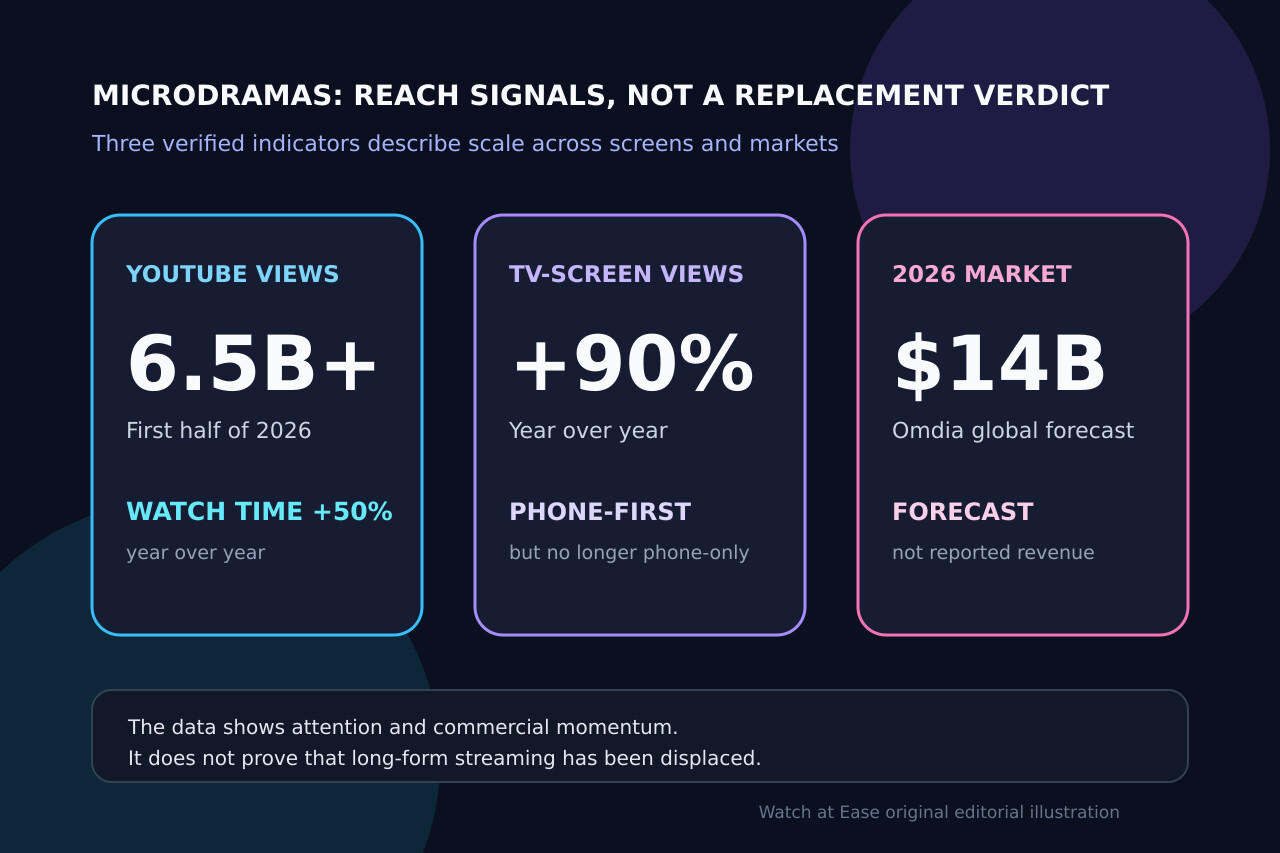
Microdramas—short, episodic stories designed around vertical video—have moved from a niche app format into a measurable part of mainstream viewing. YouTube says microdramas surpassed 6.5 billion views in the first half of 2026, with watch time up more than 50% year over year and TV-screen views up more than 90%.
Those figures show reach across phones and living-room screens, but they do not prove that microdramas have replaced movies or long-form series. Omdia forecasts about $14 billion in global microdrama revenue for 2026, while Reuters describes a fast-growing format that still uses different episode lengths, discovery paths and payment models from subscription streaming.
What the 6.5 billion figure measures
YouTube’s figure is a platform view count for microdrama content during the first half of 2026. The same company post says watch time rose by more than 50% year over year, providing a second scale signal but not a count of unique people or paid subscribers.
A view is not the same as completing a series, paying for an episode or cancelling another service. The safest interpretation is that microdramas have substantial reach on YouTube; the sources do not provide a like-for-like replacement rate for Netflix, Disney+ or cinema.
Why TV-screen growth matters
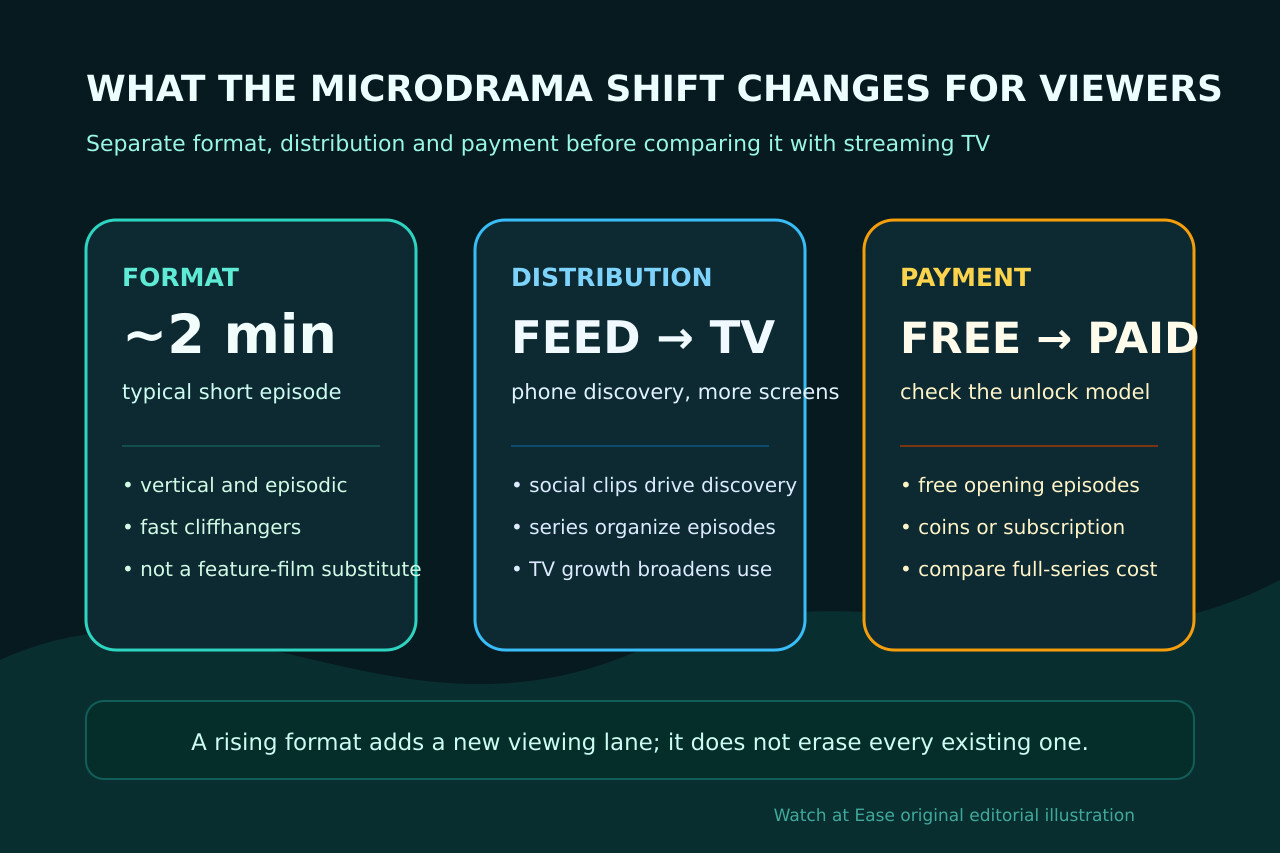
YouTube calls microdramas mobile-first, yet says views of that content on TV screens increased by more than 90% year over year. It is also rolling out Shorts series across web, mobile and TV so creators can organize short videos into seasons and episodes.
That changes distribution: a format discovered in a vertical feed can continue on a larger screen. It does not make a two-minute episode identical to a half-hour drama, and the cited release does not say how much of the TV increase came from paid viewing.
The market forecast needs its label
Omdia forecasts approximately $14 billion in global microdrama revenue in 2026 and nearly $25 billion by 2031. These are forecasts, not audited totals already earned, and they cover a global market whose performance varies by region.
Omdia’s April 2026 consumer research also challenges a narrow audience stereotype: men represented 50% of U.S. users in its survey and 47% across the surveyed markets. That supports broader genre opportunity, not a guarantee that every title or platform will succeed.
What viewers should compare before paying
Reuters describes a common funnel in which early episodes are free and later chapters require coins, per-episode payment or a subscription. Because episodes are short and cliffhanger-driven, the meaningful price comparison is the cost to finish the full story, not the advertised price of one unlock.
Check whether a series is complete, how many episodes remain, whether coins expire, whether a subscription renews automatically and which screens the service supports. Microdramas add another viewing lane; their rise does not erase the practical differences among social feeds, dedicated apps and long-form streaming catalogs.