Travel · NEWS EXPLAINER
US eases Mexican-airline route curbs: verify the airport before booking
New services from Mexico City’s two airports can move forward, but an authorization change is not a flight timetable. Check the exact airport, operating carrier and dates.
The United States has lifted restrictions on new Mexican-airline services from Mexico City’s Benito Juárez and Felipe Ángeles airports, according to October 16 reports from Reuters, El Financiero and La Jornada. The change opens a route-planning door; it does not by itself confirm a particular flight for sale.
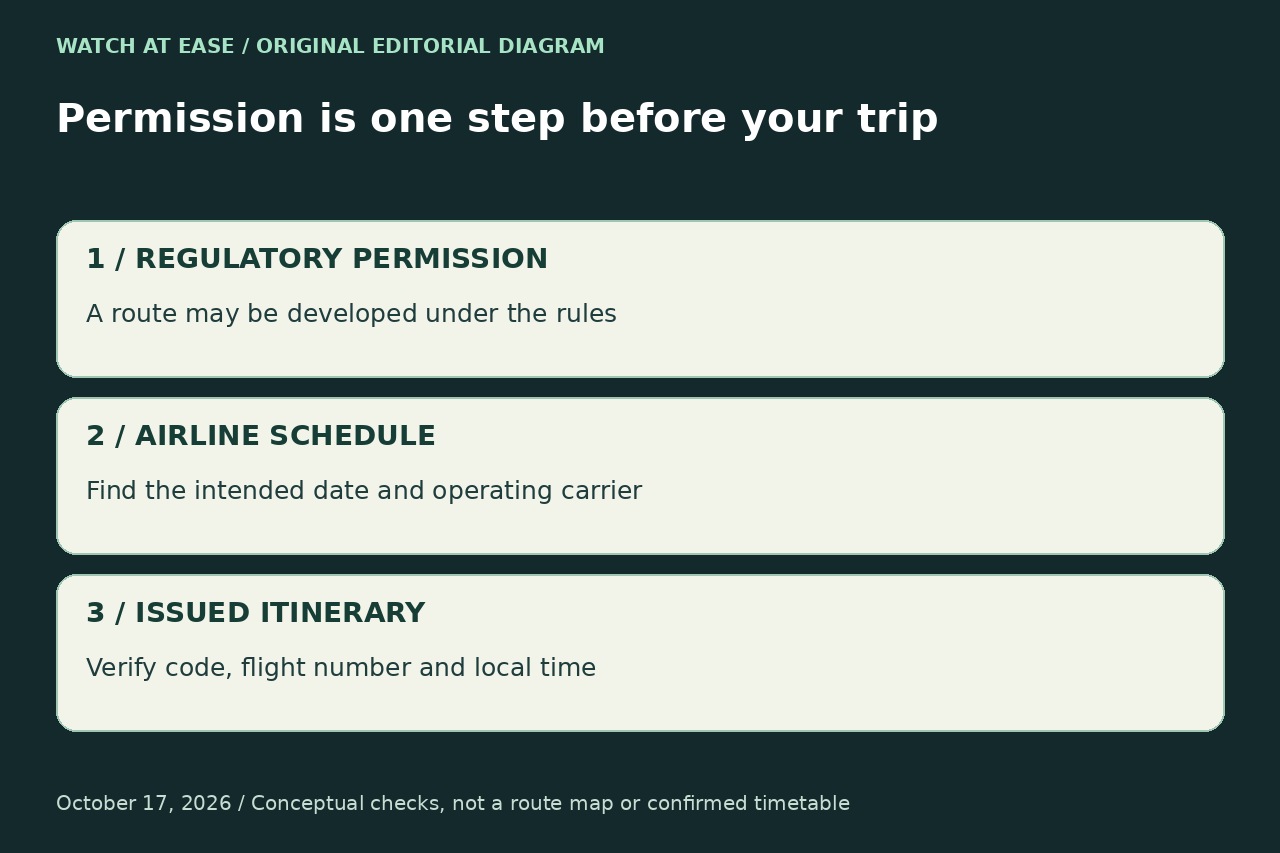
For a traveler comparing options, keep three decisions separate: regulatory permission, the airline’s published schedule and the itinerary actually issued to you. Treat the booking record as the place to verify your trip, rather than inferring it from a broad announcement.
What changed, and what still needs checking
El Financiero independently reported from a DOT document; La Jornada covered the Mexican ministries’ statement. Both describe the lifting of expansion restrictions. Reuters also obtained the US response and reports that schedule-filing and approval requirements for large-aircraft services continue. This is an easing of a specific restriction, not a statement that every condition has disappeared.
Do not use a route map alone as proof of the flight you need. Look for the intended travel date in the airline’s own booking flow, then verify the operating carrier, flight number and airport before payment. A proposed route and a dated, ticketed itinerary answer different questions.
Keep MEX and NLU distinct
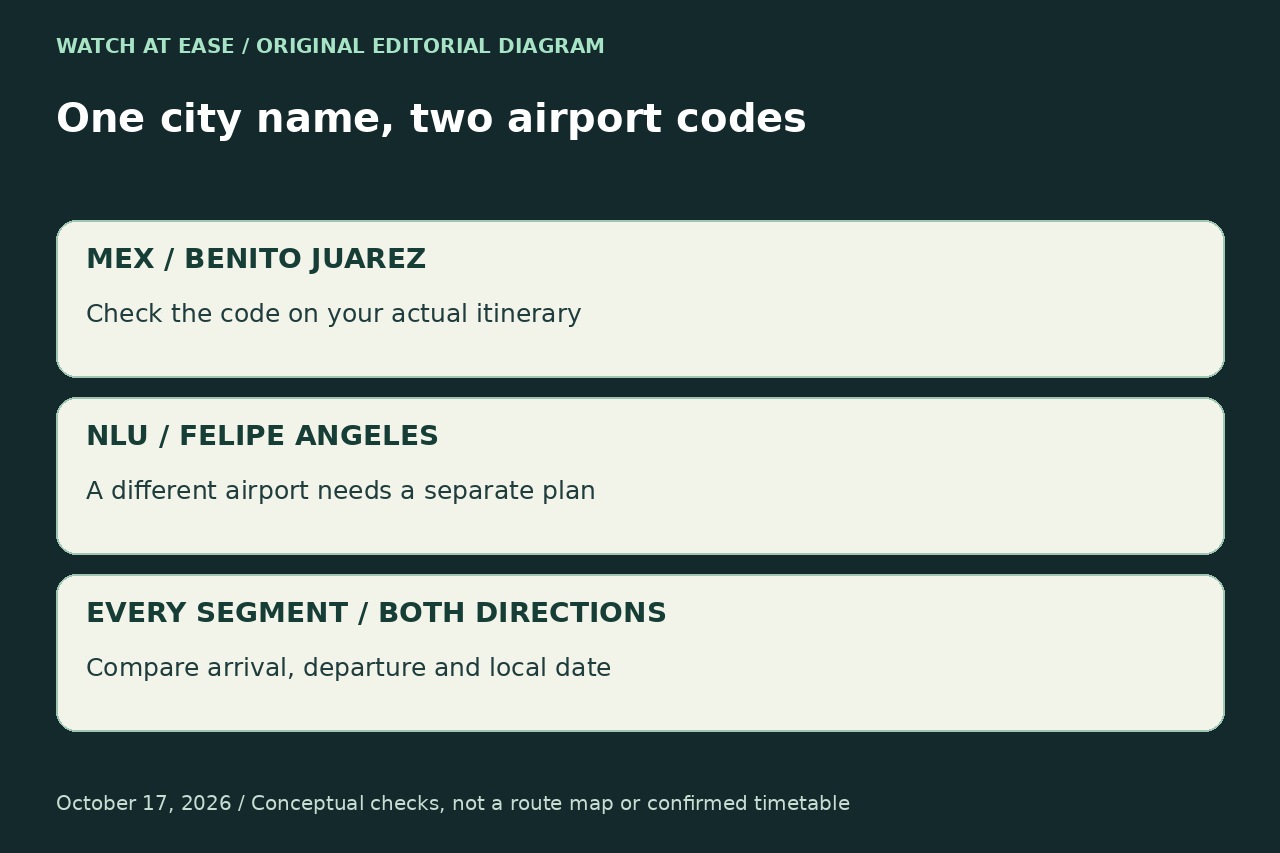
Benito Juárez is MEX; Felipe Ángeles is NLU. DOT’s dated 2025 announcement identifies both codes and the earlier restriction. That older document is background for the airport distinction, not evidence that the former ban is still the current rule.
Write down the arrival and departure codes for every segment, including the return. If your search combines different airports, assess that ground journey separately before accepting the combination. Do not assume two listings bearing the same city name imply the same terminal or a convenient connection.
Already booked? Verify your existing record
Open the reservation directly with the airline or seller using your booking reference. Compare airport, local date, departure time, flight number and operating airline with your saved confirmation. The policy headline alone is insufficient reason to travel to a different airport.
If any item differs or the reservation cannot be retrieved, ask the seller or operating airline to explain the specific flight status and available options. Keep its written response. Avoid buying a replacement merely because an older cancellation story and a newer reopening story appear side by side in search results.
Use a dated itinerary, not an assumed timetable
Before paying for a new option, check the same details in the final checkout summary. Save that summary and the issued itinerary, and revisit the reservation before departure. For separate-ticket connections, decide whether the actual airport pair and timing suit your plan before committing to either purchase.
We did not test a live booking or verify individual airlines’ new timetables for this report. No specific route start, seat availability, lower fare or automatic change to an existing ticket is promised. The useful next step is a precise itinerary check while airlines turn the changed permission into their own service plans.