Technology · NEWS EXPLAINER
Mercedes Q3 sales: why the electric growth figures differ
The October 7 reports count different vehicles. Separate passenger cars from vans, and growth from the electric share of sales.
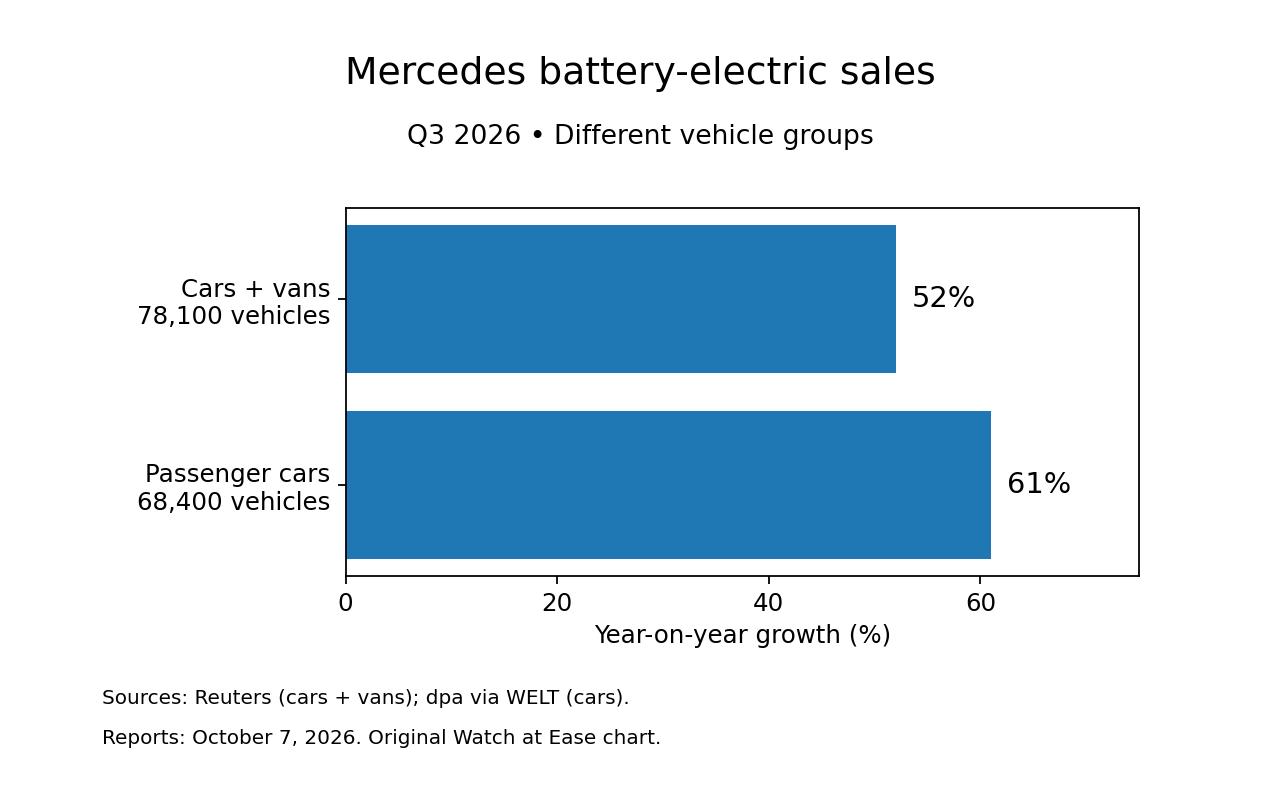
Mercedes-Benz sold fewer passenger cars in the third quarter even as its battery-electric business expanded. Reports published on October 7 give two electric growth rates—52% and 61%—but they cover different vehicle groups. The distinction matters before either number is used to describe the whole business.
First check which vehicles are counted
Reuters reports 78,100 battery-electric vehicles across cars and vans, up 52% from a year earlier. The dpa report carried by WELT puts electric passenger cars alone at 68,400, up 61%. These are different reporting populations, not interchangeable estimates for one population.
The broader figure includes a category that the narrower one leaves out. Both growth rates can therefore be true at the same time. Comparing them as though the higher rate corrects the lower one would lose that distinction. Keep the vehicle category attached whenever quoting a total or percentage.
Growth is not the electric share of sales
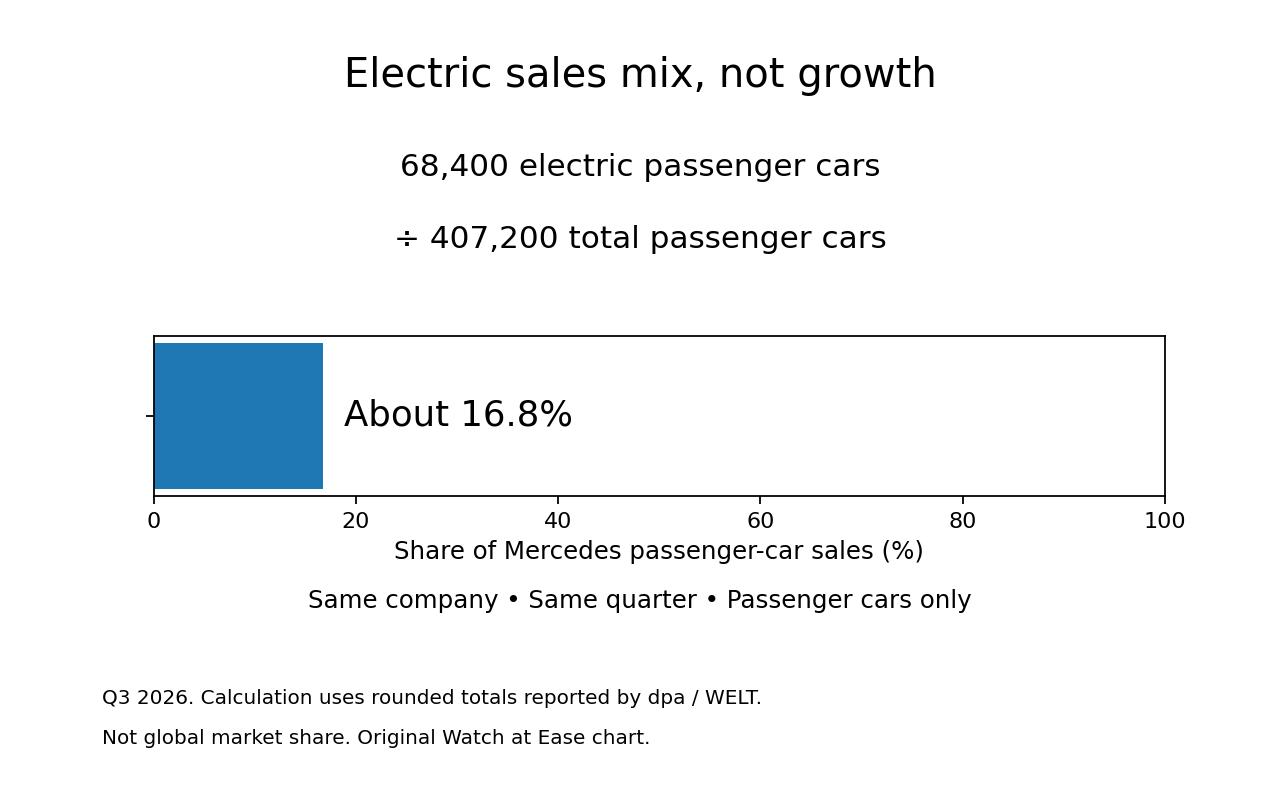
There is a second denominator to watch. The reported passenger-car total is 407,200. Dividing electric passenger cars by all passenger cars gives about 16.8%, calculated from the rounded reported totals. That is a within-company sales mix for this quarter—not the year-on-year growth rate and not Mercedes' share of the entire car market.
To calculate growth, compare the same category with that category a year earlier. To calculate mix, compare a subset with the matching total in the same period. Using the cars-and-vans electric count over a passenger-car-only total would combine incompatible scopes. The larger numerator would not make that calculation more informative.
The regional setback still matters
Passenger-car sales fell 8% overall. Reuters reports a 31% fall in China, while U.S. and European car sales rose 6% and 5%, respectively. The regional increases did not offset the overall decline in the reported quarter.
A fast-growing electric category and a falling total are not contradictory. A smaller part of a business can expand while losses elsewhere pull the total down. These figures describe that combination; they do not show that every model, powertrain or country followed the same path. Nor does one quarter establish that the wider decline has ended.
What the sales report does not tell a buyer
Unit volume is not revenue or profit. A count of vehicles does not, by itself, show selling prices, discounts, production costs or earnings. This report should therefore not be treated as an earnings release or as proof that higher electric sales automatically improved profitability.
It is also not a delivery promise. Anyone considering a specific car still needs a local quote and confirmation of the model, specification and delivery terms. A global quarterly total cannot establish whether that particular vehicle is in stock. The useful takeaway here is how to read the sales claims accurately, not a recommendation to buy a car or a stock.