Business/Consumer · PRACTICAL GUIDE
U.S. Hotel Resort Fees: What to Check When the Total Price Excludes Them
For U.S. short-term lodging, a mandatory resort, amenity, destination, or similar charge generally belongs in the upfront total price if the business knows and can calculate it. Taxes and genuinely optional add-ons can be handled differently. Use a four-screen evidence check before you book—or after a surprise fee appears.
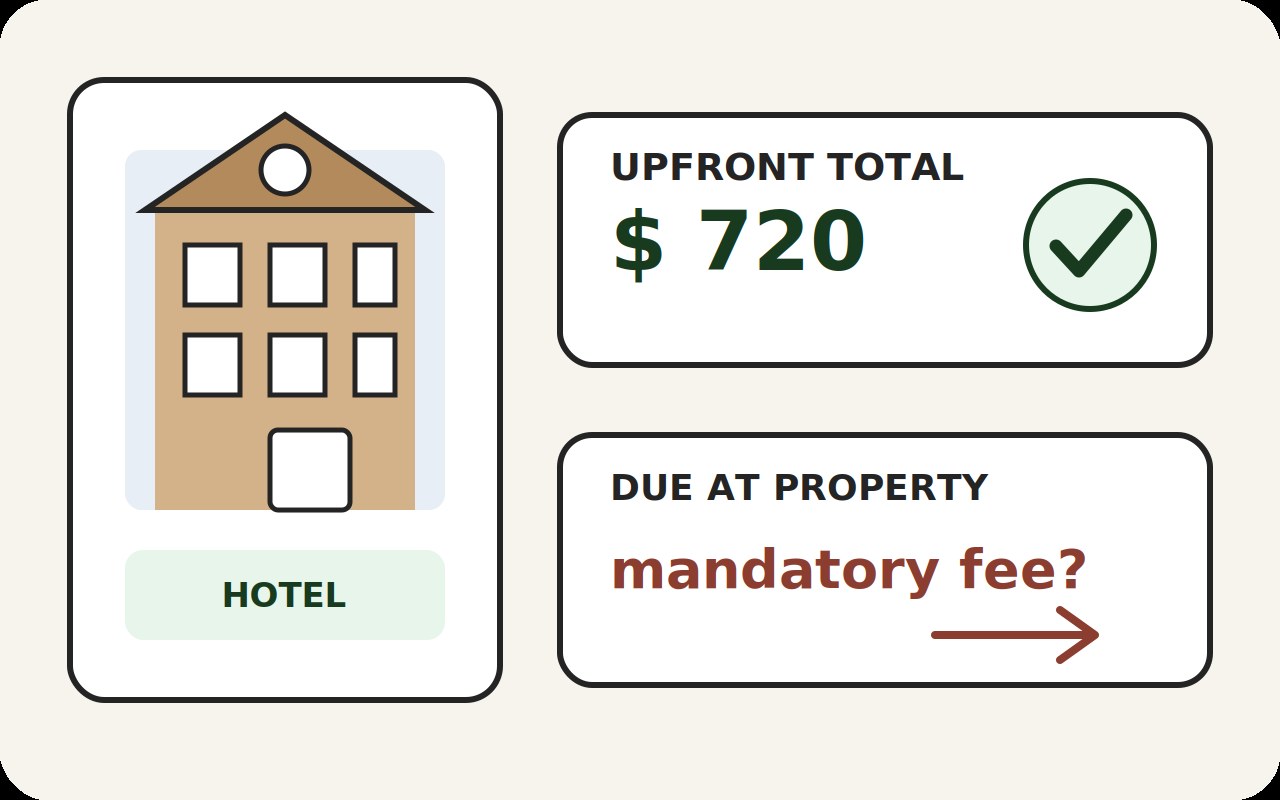
A label such as “due at property” tells you when or where money may be collected; by itself, it does not turn a mandatory hotel charge into an optional fee. Under the FTC’s current Rule on Unfair or Deceptive Fees, covered short-term-lodging businesses that display prices generally must show an upfront total price that includes mandatory charges they know and can calculate. A required resort fee is one of the FTC’s examples.
The useful question is therefore not simply whether the hotel itemized a resort fee somewhere. Check what price was most prominently shown before checkout, whether the extra charge was mandatory, and whether the final amount was reconciled before you were asked to pay. Save those screens, because a booking platform, hotel, or regulator may need the same evidence later.
1. First decide whether the extra charge is mandatory or actually optional
Ask one simple question: can you book and use the room without paying this charge? If every guest must pay a resort, amenity, destination, facility, cleaning, or similar fee, the FTC treats that kind of unavoidable charge as part of the total price for covered short-term lodging. The FTC also says a fee can be mandatory when consumers cannot reasonably avoid it or when an automatic or preselected charge is removed only if the customer notices and objects.
Taxes and other government charges are different. So are genuinely optional extras that you affirmatively choose, such as an optional trip-protection plan. If the charge depends on a later consumer choice that the business cannot calculate in advance, it may be handled later—but once you make that choice, the displayed total should update.
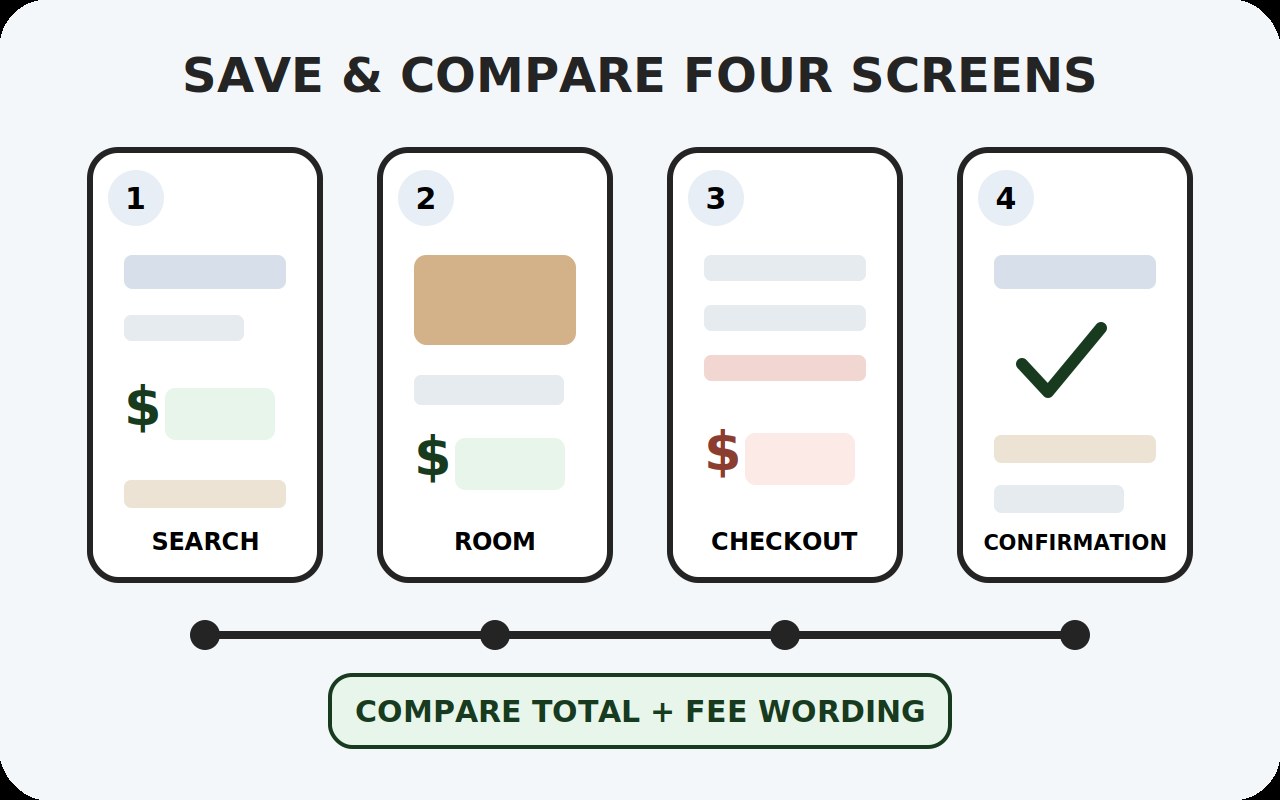
2. Run the four-screen check: search result, room page, checkout, confirmation
Save the price at four moments: the first search or listing result, the selected room or rate page, the final checkout page before payment, and the booking confirmation. At each step, note the most prominent total, the length of stay, and any line that says resort fee, destination fee, amenity fee, service fee, cleaning fee, taxes, or due at property.
The rule is about the displayed total, not whether the seller is allowed to itemize the parts. A hotel or booking site can break out a mandatory fee, but the total that includes it must remain clear and prominent. NerdWallet’s August 2026 resort-fee guide independently notes that U.S. hotel shoppers should see resort fees included in the total displayed in search results. Before payment, any allowed exclusions must be disclosed and the final amount must be displayed prominently.
3. Treat “due at property” as a collection detail, not an automatic exception
A booking site may tell you that a charge will be collected by the hotel rather than prepaid through the platform. That can explain who collects the money, but the FTC’s total-price rule focuses on whether the charge is mandatory, known, and calculable—not merely on the collection point. If the fee is required for the stay, ask the site or hotel to show where that amount was included in the upfront total.
If a screen says “all fees included” but a later screen adds a required fee that was not part of the earlier prominent total, capture both screens. Also capture any wording that claims the charge is a tax, government fee, or optional service. The FTC separately prohibits misleading descriptions of fees, so the name of a charge should not be used to disguise what it actually is.
4. If the numbers do not reconcile, ask both the booking platform and the hotel in writing
Send a short message with the reservation number, first displayed total, later fee amount, fee name, and screenshots. Ask whether the charge is mandatory, whether it is government-imposed or optional, and exactly where it was included in the displayed total. If a third-party platform showed the price, the FTC says intermediaries that display seller prices are responsible for displaying the total price, while sellers must provide the information needed to calculate it.
Keep the response with the original confirmation. A written answer can clarify whether the apparent discrepancy is just a tax or optional add-on, a display problem between the hotel and platform, or a mandatory fee that was not reflected where you expected. Do not assume that a confusing display automatically guarantees a refund; preserve the facts first.
5. If a mandatory calculable fee was omitted or misrepresented, preserve proof and report it
The FTC’s consumer guidance invites people to report suspected violations of the fee rule. If a required resort or similar charge was omitted from the upfront total or described in a way that appears misleading, keep the four screenshots, confirmation, invoice or folio, and written responses from the platform and hotel before you report the issue.
This guide is a disclosure test, not a promise of a refund or a legal judgment. State or local rules may give additional protections, and the FTC says businesses must comply with those rules as well when they do not conflict with federal requirements. If money is already in dispute, keep any separate card, platform, or hotel deadlines in mind while you pursue the pricing complaint.