Technology · NEWS EXPLAINER
Governors plan a bipartisan AI framework—but no new rules exist yet
Maryland Gov. Wes Moore says he and Indiana Gov. Mike Braun will lead a bipartisan group of governors on AI. The practical limit is just as important: the October 1 announcement did not itself create a law, compliance deadline or finished national framework.
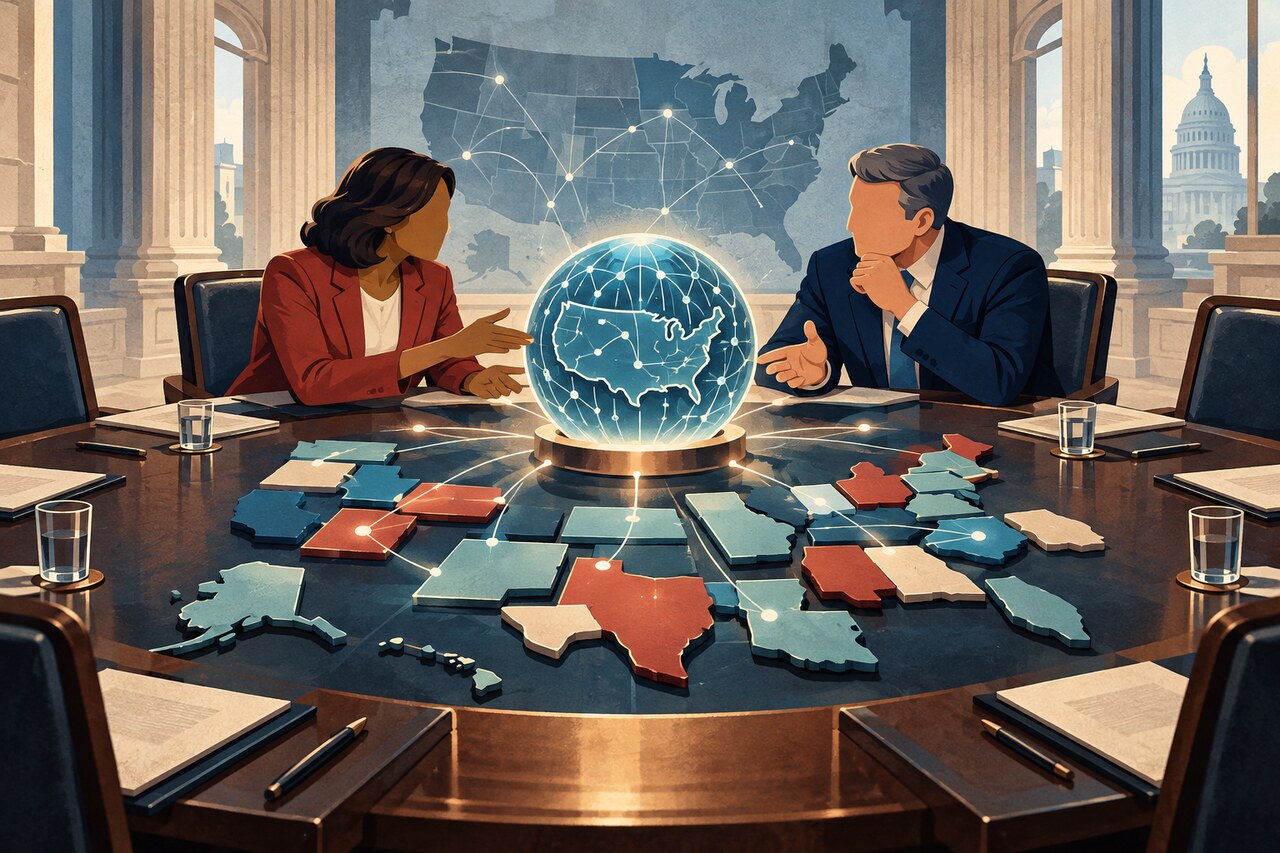
Maryland Gov. Wes Moore says he is forming a bipartisan group of governors to develop an artificial-intelligence framework, with Indiana Gov. Mike Braun as a partner and additional governors from both parties expected to participate. Moore, the current chair of the National Governors Association, described the effort in an Associated Press interview published October 1.
The announcement is a coordination step, not a completed policy. It did not publish model legislation, name every participating state, establish an enforcement body or set a compliance date. Companies, schools and consumers do not face a new nationwide obligation solely because the group was announced.
Maryland’s official AI principles show the issues Moore wants to bring into the interstate discussion: frontier-model safety and testing, worker protections, independent audits, whistleblower protections, public reporting and 72-hour incident reporting. Those are proposed Maryland agenda items and material for a new NGA Council on AI; they are not rules already adopted by every participating governor.
What was actually announced
Moore told AP that a bipartisan group of governors would develop an AI framework and that Braun would partner with him. Other governors from both parties plan to participate, but the report did not provide a complete roster, deadline, draft text or formal vote. The useful fact today is the creation of a state-level coordination effort.
What does not change yet
The announcement itself does not create a federal law, a uniform state statute or a new regulator. It does not change a business’s current reporting duties, a school’s existing procurement rules or a consumer’s legal rights. Any enforceable change would still require an executive order, agency action or legislation in the relevant jurisdiction.
Maryland’s agenda previews the likely topics
Maryland’s official principles call for recommendations covering frontier-model safety frameworks and testing, worker protections, independent third-party audits, whistleblower protection, public reporting and 72-hour incident reporting. The same document says recommendations will be shared with a new NGA Council on AI and used to explore interstate cooperation.
Why states are trying to coordinate
AI systems cross state borders, while governors and legislatures are moving at different speeds. Shared templates could reduce conflicting definitions and let states compare enforcement and procurement experience. But cooperation does not guarantee identical laws: governors have different statutory powers, legislatures may reject proposals and agencies must still write implementable rules.
What to watch next
The next evidence should be a named membership list, written charter, draft framework, public meeting, model bill or implementation schedule. Until one appears, readers should treat the group as an announced policy-development process. The AP report and Maryland document do not establish when a framework will be finished or whether every participating state will adopt it.