Technology · NEWS EXPLAINER
Google's News AI pilot now spans 400+ publications—but deal terms and traffic gains remain undisclosed
Google says it pays participating publishers for enhanced content used in experimental News features. CNN, the Financial Times, Axios and Forbes are among the newer partners, but neither pricing nor referral-traffic results were disclosed.
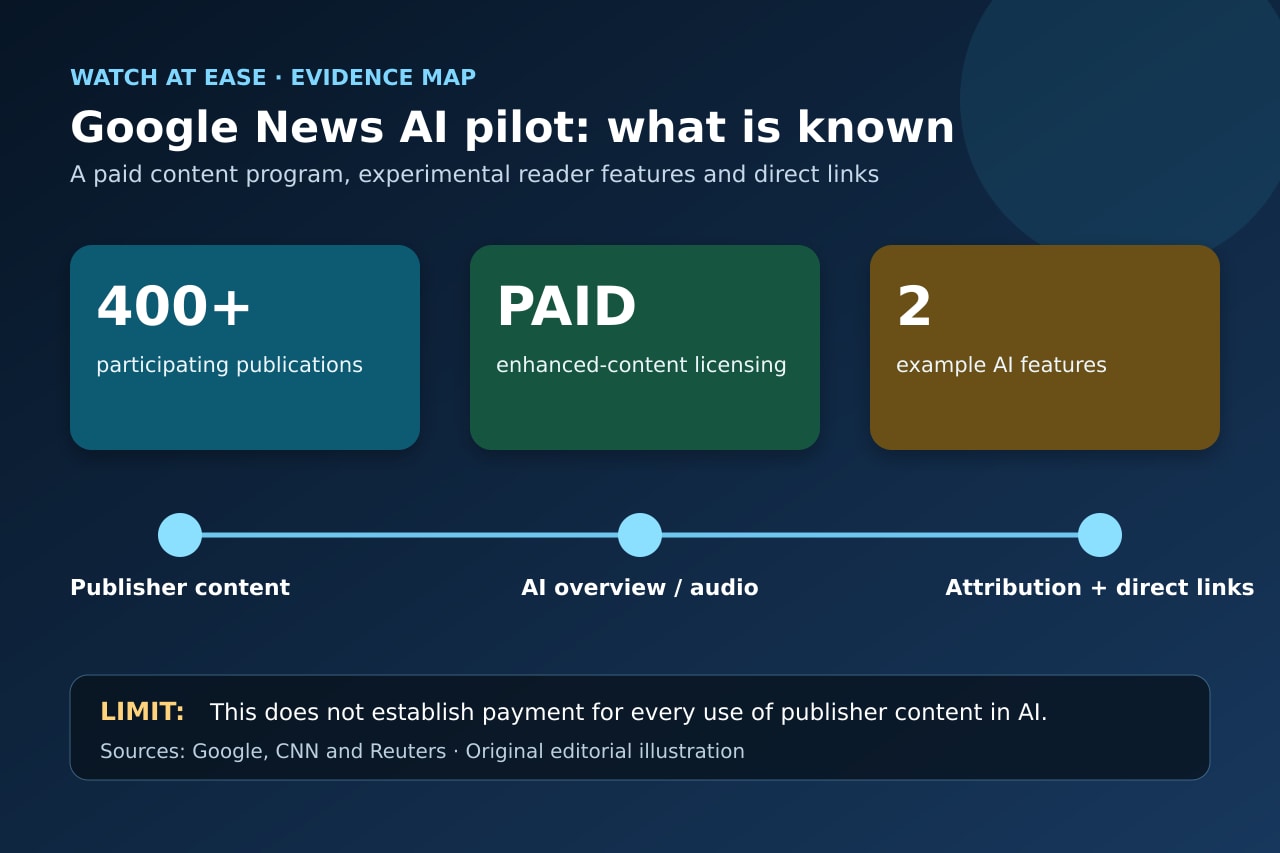
Google says its News AI pilot now includes more than 400 publications worldwide and pays participating publishers for enhanced content used to develop experimental features. Newly named partners include CNN, the Financial Times, Axios, Forbes and a group of U.S. local publishers.
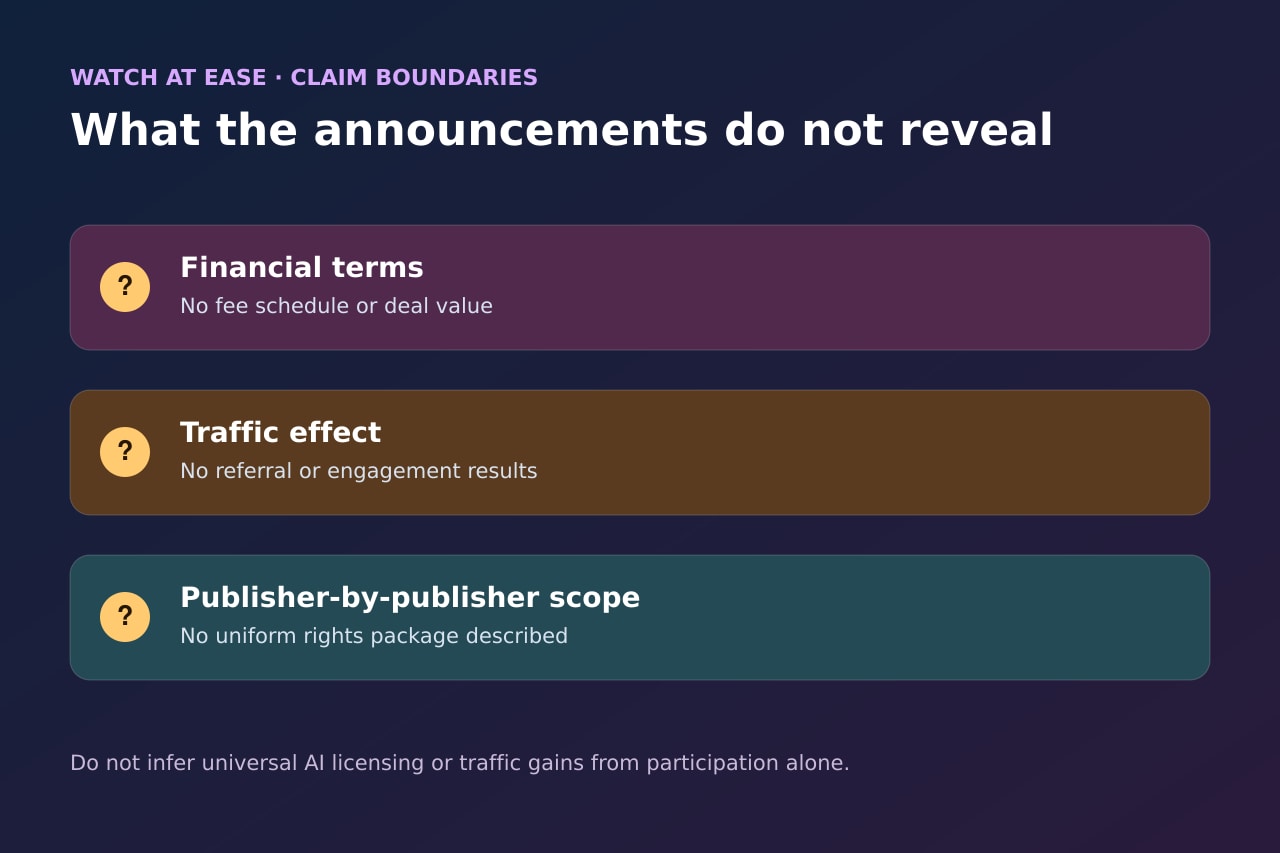
The expansion is a real licensing development, but not a blanket settlement of publisher disputes with AI platforms. Google and CNN did not disclose financial terms, and Google did not publish referral-traffic or engagement results for the pilot.
What expanded
Google announced on October 15 that its News AI pilot had expanded beyond its initial launch group to more than 400 publications. It named major publishers and U.S. local-news organizations, while saying it continues to add partners in other markets.
CNN separately described its arrangement as a multi-year agreement that licenses content for Google products and includes protections and compensation for CNN's intellectual property. The statements establish a paid relationship, but not a common contract for every participating outlet.
What readers may see
Google highlighted two experimental formats: more detailed article overviews on publisher pages in Google News and customizable audio briefings that can draw on reporting from multiple outlets. Google says both are designed with clear attribution and direct links.
Those examples describe product tests, not a promise that every participating publisher, article or reader will receive the same feature. The announcements do not give a rollout timetable or explain how prominently direct links appear in every experiment.
What the payment claim means
The precise claim is that Google pays participating publishers to supply enhanced content for this pilot. That wording should not be stretched into a claim that Google pays every publisher for all uses of news in AI systems, or that the agreements cover every model-training or search scenario.
Reuters reported that financial terms were not disclosed. CNN said the agreement protects and compensates its intellectual property, but did not publish a price, revenue formula or outlet-by-outlet rights schedule.
What remains unknown
The largest practical unknown is performance. Google did not publish data showing that the AI overviews or audio briefings increase referrals, subscriptions or engagement for participating outlets. Participation alone is therefore not evidence of a traffic gain.
The expansion does show that direct licensing is moving beyond one-off experiments. Readers and publishers should watch for disclosed terms, feature-by-feature attribution, measurable referral outcomes and clear limits on which content can be used.