Technology · NEWS EXPLAINER
Gemini 4 Argon is rolling out: who can use it, where it appears and what it costs
Google’s October 13 rollout expands Argon from a limited cyber preview to paid developers and Pro or Ultra subscribers, but access differs across the API, Gemini app, Search and Antigravity.
Google began a broader Gemini 4 Argon rollout on October 13, 2026. The practical change is availability: paid developers can use the model through the Gemini API, while Google AI Pro and Ultra subscribers can reach it through consumer products. This is a wider release than September’s limited preview for selected cybersecurity defenders.
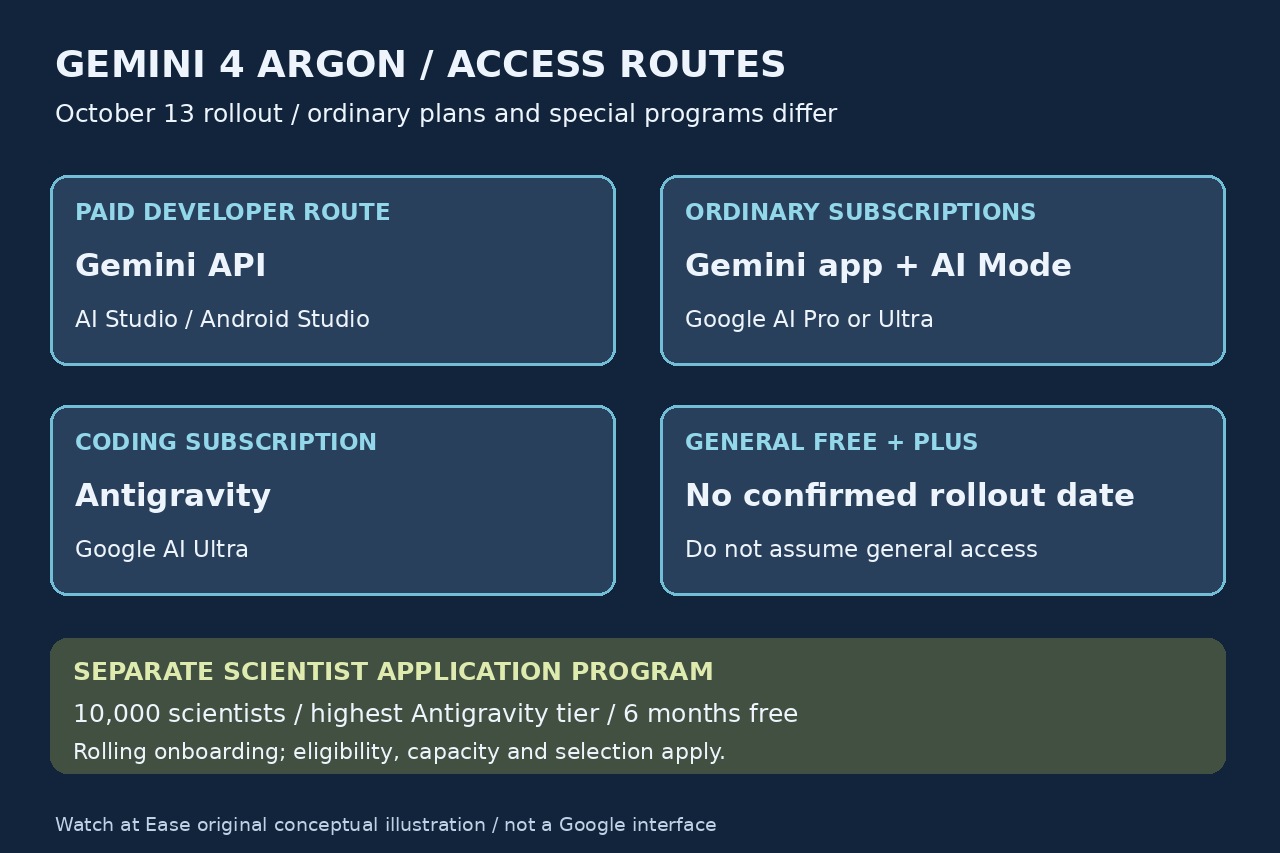
Access is not uniform. The paid API appears in Google AI Studio and Android Studio, Pro and Ultra subscribers get Argon in the Gemini app and AI Mode in Search, and the ordinary Antigravity subscription route requires Ultra. Google did not announce a date for general free or Plus consumer access in the material reviewed.
What changed on October 13
Google had already shown Argon to a limited group of trusted cybersecurity defenders in September. The October 13 update is the material development: Google says developers can now build with the model through paid tools, while Reuters and The Verge report a broader launch to paying customers and subscribers. This article therefore covers the rollout, not the earlier model preview.
The access route depends on the product
Developers can start with the paid Gemini API in Google AI Studio and Android Studio. Google’s consumer announcement says Pro and Ultra subscribers can use Argon in the Gemini app, and Reuters says those tiers also receive it in AI Mode in Search. Antigravity, Google’s agentic development platform, requires Ultra through its ordinary subscription route. The Verge notes that Google has not said when, or whether, Argon will reach Plus subscribers or general free users.
The API launch price has an expiration point
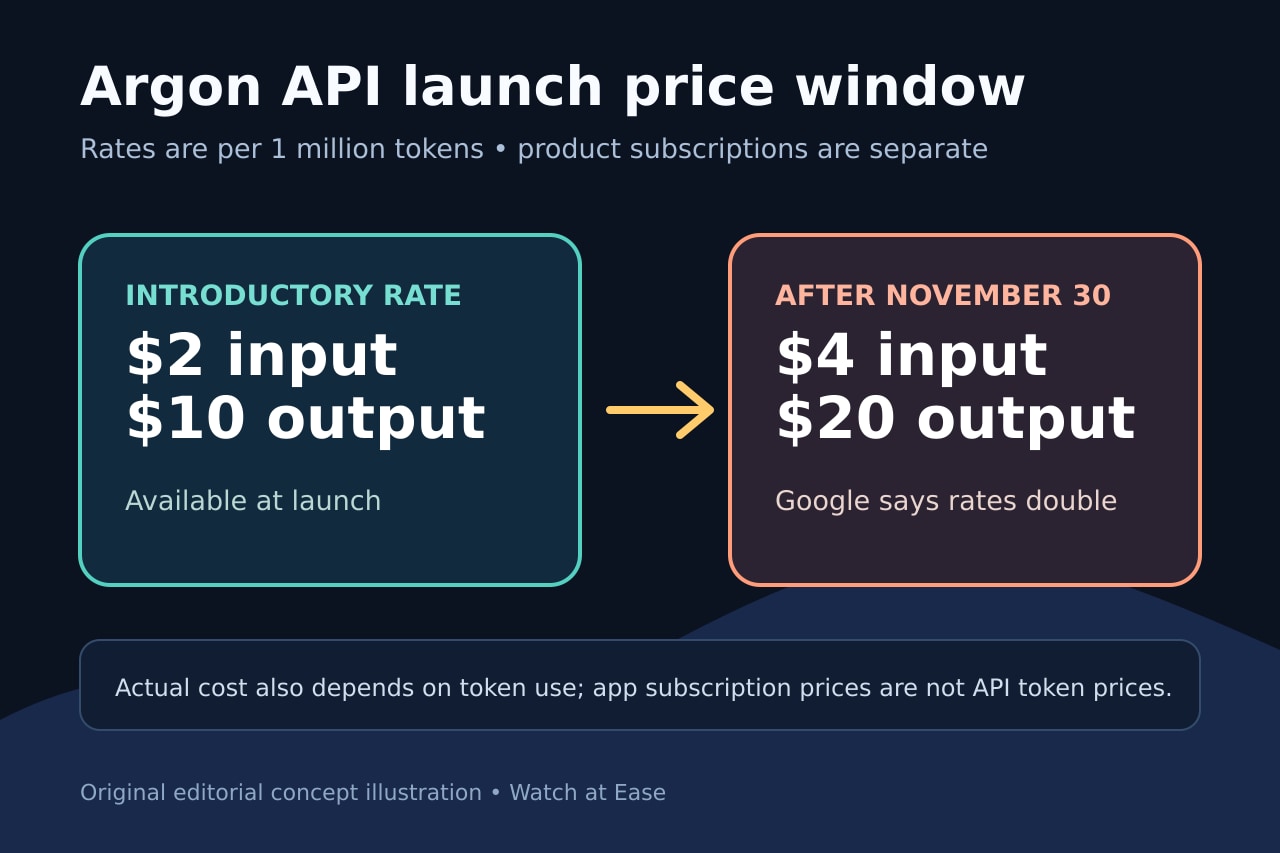
Google’s official announcement lists introductory public API prices of $2 per million input tokens and $10 per million output tokens. Its footnote says that after the introductory period expires on November 30, 2026, the rates become $4 input and $20 output. These are API token rates, not Pro or Ultra subscription prices. Workload cost still depends on token use.
Capability numbers remain company claims
Google positions Argon for long, multi-step work in software engineering, enterprise knowledge tasks, cybersecurity, science, finance and law. The company says its teams using Argon in Antigravity increased agentic code submissions by more than 35 percent and reduced rollbacks by nearly one-third. Those are Google’s internal claims, also reported by Reuters; they do not establish that every user will see the same accuracy, speed or cost.
What to check before switching
First identify where you plan to use Argon: API, Gemini app, AI Mode or Antigravity. Then confirm the required plan and whether the introductory API window matters to your budget. Teams should test representative tasks and track token use instead of comparing headline rates alone. Free and Plus users should wait for a specific eligibility announcement rather than assuming the October 13 rollout includes them.
A separate application program offers 10,000 scientists six months of free access to Antigravity’s highest usage tier. Google says onboarding is rolling and depends on eligibility, capacity and selection. This limited research program is not a general free or Plus consumer rollout.