Technology · NEWS EXPLAINER
FreeCast announces a 16-part CEO series: distinguish platform reach from actual viewers
The company’s weekday video programme explains its enterprise media strategy. Its potential distribution reach is a different measure from activated users or a new consumer streaming entitlement.
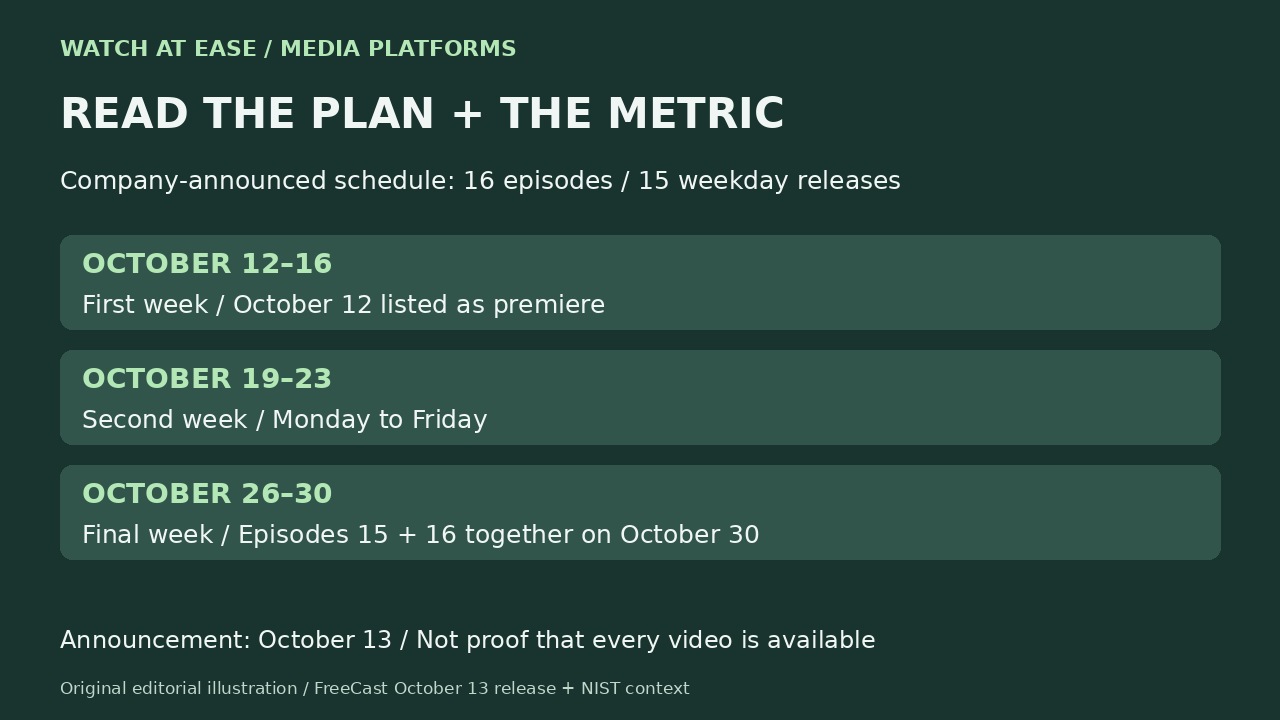
FreeCast announced a 16-episode executive video series on October 13 to explain its enterprise media-platform strategy. Beyond the Connection: The FreeCast PaaS Story features founder and chief executive William (Bill) Mobley, with weekday releases planned from October 12 through October 30.
This is a company-produced explanation of a business model, rather than an announcement that every viewer gains a new television package. The release’s useful distinction is between the people an enterprise relationship could potentially reach and the users who actually activate a service. Those should not become interchangeable headlines.
Sixteen episodes, fifteen release days
FreeCast’s schedule runs Monday through Friday for three consecutive weeks, with episodes 15 and 16 released together on Friday, October 30. The release identifies October 12 as the premiere and October 13 as the announcement date. Keeping those dates separate avoids describing an already scheduled first day as a new premiere today.
The company lists its official LinkedIn page, Mobley’s personal LinkedIn account and FreeCast.com as places to find the programme. We read the complete announcement, not every published episode, and do not claim that all future installments are already available. The specified schedule is the company’s plan, so confirm the actual post when following a particular episode.
The customer is an enterprise, not necessarily the end viewer
The release describes white-label software through which businesses with existing customer relationships can offer branded media environments. It names broadband and wireless providers, utilities, residential communities, hospitality groups and membership organisations among the intended enterprise customers. That explains the distribution model; it does not identify a newly deployed service at every organisation in those sectors.
Its proposed media environment combines discovery, subscription management, advertising, transactions and customer communications. These are the company’s descriptions of its strategy and platform. A consumer should still verify the actual service offered by their own provider, the content included and any separate access requirements rather than assume a corporate video announcement changes their account.
PaaS is a label that needs an operating description
Independent technical context comes from NIST’s September 2011 definition of cloud computing. Its Platform as a Service model concerns deploying customer-created or acquired applications using provider-supported tools, with the provider managing the underlying infrastructure and the customer controlling the deployed applications. The definition is a framework for discussing responsibilities, not an approval stamp for a named company.
FreeCast’s release uses PaaS to describe its enterprise media software model. This article does not establish that every component of that offering meets all of NIST’s cloud characteristics. When evaluating a branded media proposal, ask what the enterprise can configure, what FreeCast operates and who handles accounts, content permissions and support. These are editorial clarification questions, not an audit of the service.
Potential reach is not a count of actual viewing
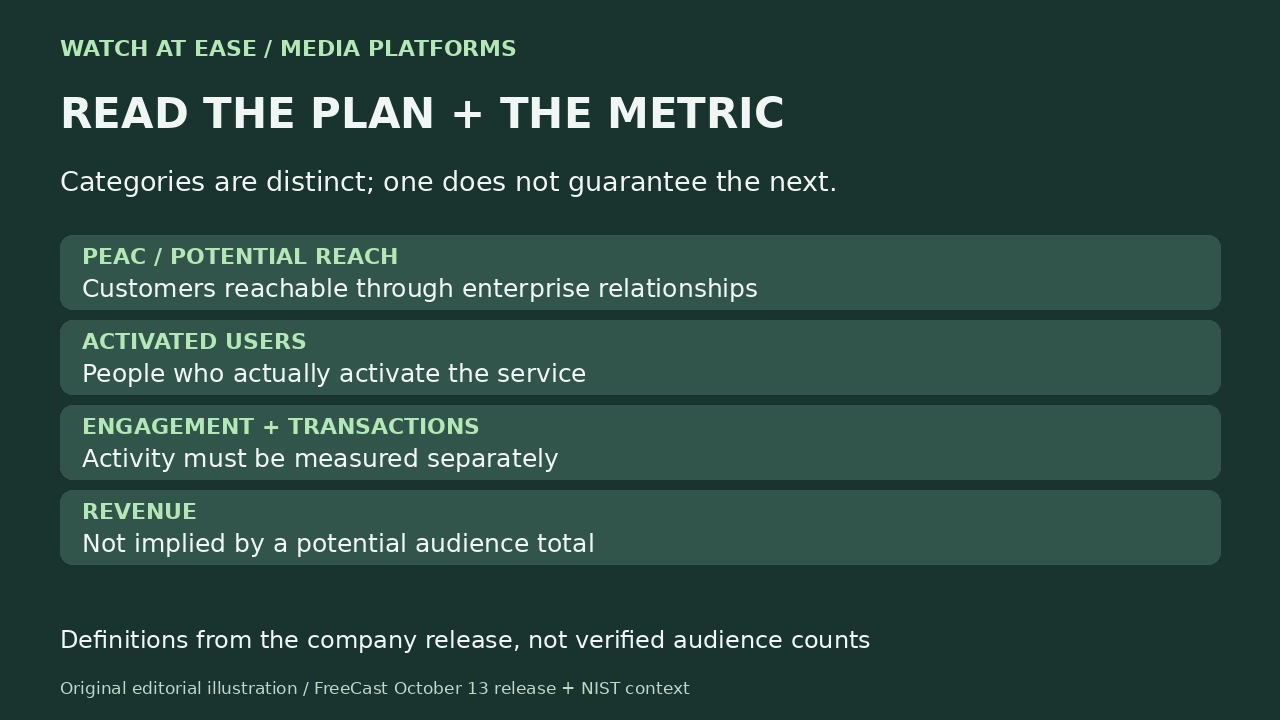
FreeCast calls its distribution framework Partner-Enabled Addressable Customers, or PEAC. The announcement explicitly defines it as potential customers reachable through participating enterprise relationships, separately from activated users, paying subscribers and recognised revenue. It describes later steps including engagement and transactions, not an automatic conversion of one category into the next.
For a reader following the series, keep each reported measure attached to its definition and period. A large potential audience does not establish how many people watched an episode, joined a service or received a particular channel. The company’s forecasts and proposed benefits remain company claims. Our schedule and category diagrams show those distinctions; they are original illustrations, not verified audience measurements or screenshots of completed deployments.