Technology · NEWS EXPLAINER
A court struck down the FCC’s use of USAC—why phone and internet aid is not shutting off today
The Fifth Circuit vacated the fourth-quarter 2025 contribution factor and rejected the FCC’s authority to create USAC. The agency says the order cannot take effect for at least two months, leaving appeals, remand and legislation as the next checkpoints.
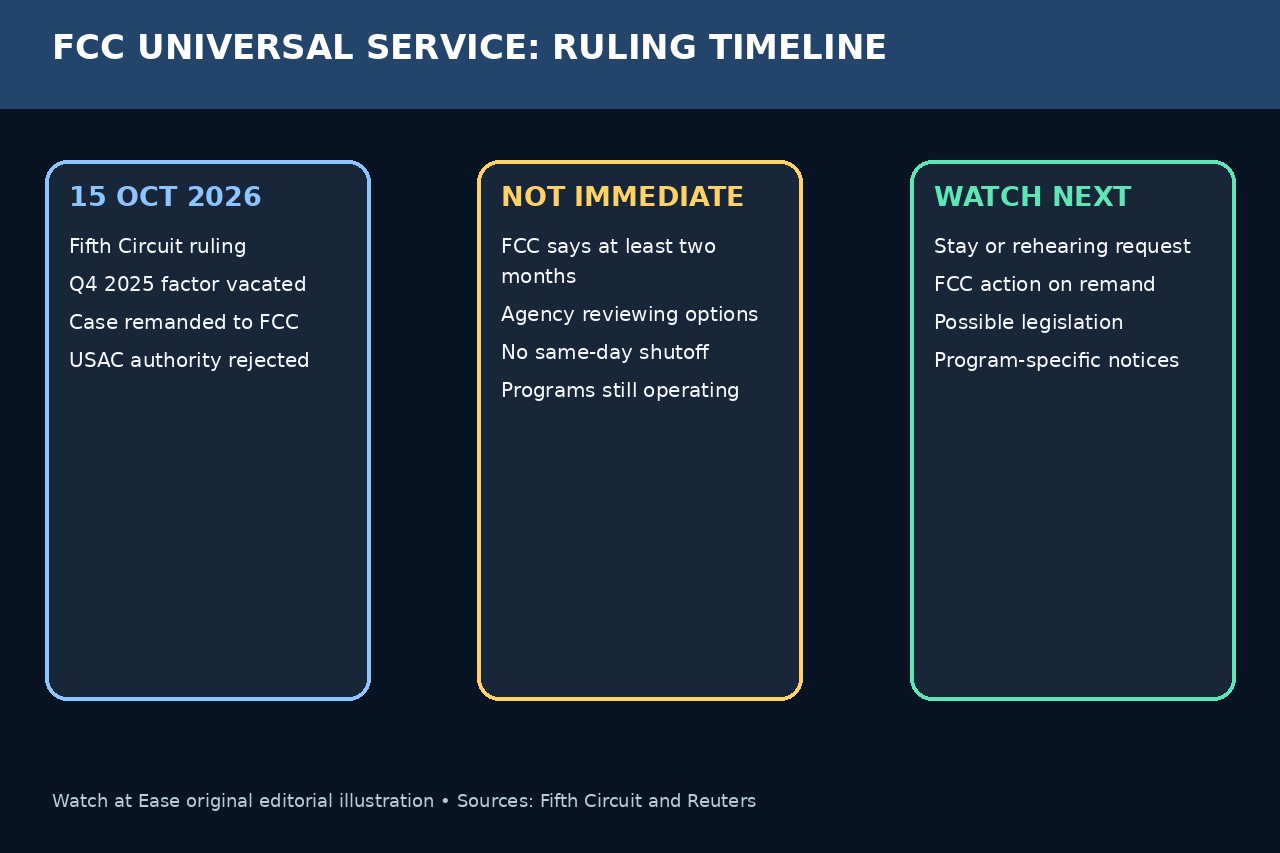
The Fifth Circuit held that the Federal Communications Commission lacked specific congressional authority to establish the private Universal Service Administrative Company as the instrumentality administering federal universal-service programs. The panel vacated the contribution factor for the fourth quarter of 2025 and sent the matter back to the FCC.
That is a serious challenge to the system, but it is not a same-day cutoff notice. The FCC told Reuters the order would not take effect for at least two months while the agency considers its options. Consumers and participating institutions should watch official program notices rather than cancel service or change plans from the headline alone.
What the court actually vacated
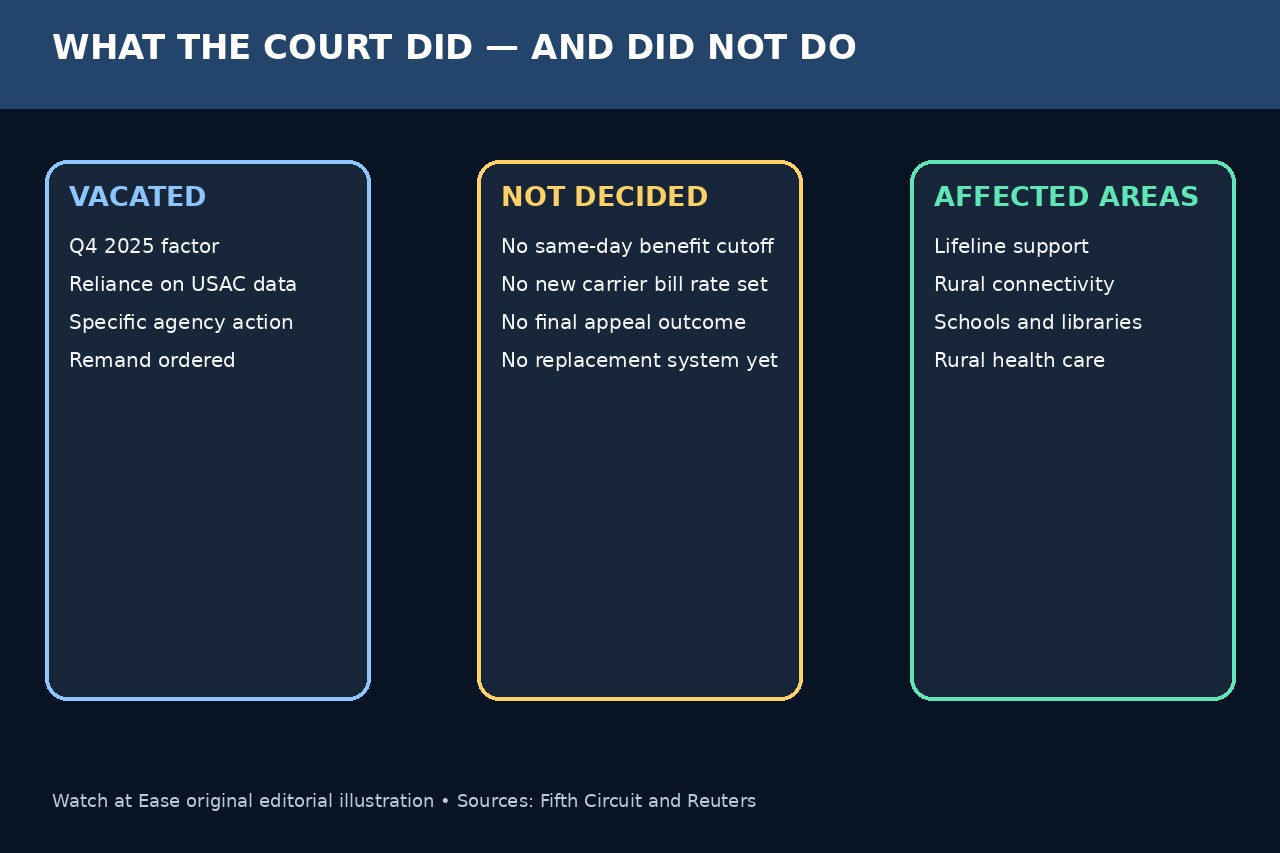
The challenge concerned the FCC’s fourth-quarter 2025 contribution factor, which was calculated using projections supplied by USAC. The panel concluded that USAC acts as an FCC instrumentality and that the general authority cited by the agency did not satisfy the statute’s requirement for specific congressional authorization.
The remedy was to grant review, vacate that quarterly factor and remand. The opinion did not write a replacement factor, redesign the administrator or announce that every payment and subsidy stopped on October 15.
Why the decision reaches beyond one old quarter
Although the order names a 2025 factor, its reasoning questions the legal basis for USAC’s continuing role. USAC estimates program expenses and carrier revenue, and those projections underpin quarterly contribution calculations. That makes the holding structurally important even though the immediate remedy is tied to a specific agency action.
Reuters reports that the fund draws about $9 billion a year. Carriers often pass contribution costs to customers, while program support reaches low-income and rural households, tribal lands, schools, libraries and rural health facilities.
No same-day shutoff or bill change was announced
The FCC said it was considering all available options and that the order would not take effect for at least two months. That window matters: a request for rehearing, Supreme Court review, agency action on remand or congressional legislation could affect what happens next.
The ruling is not a personalized notice that a Lifeline discount, school connection or rural support payment has ended. It also does not tell carriers what contribution line to place on the next bill. Any operational change should come through the relevant agency or program channel.
What households and institutions should monitor
Keep current enrollment and service records, and check notices from the FCC, Lifeline, E-Rate or the relevant rural or health-care program. Schools and libraries should preserve funding-commitment and invoicing records rather than changing procurement because of a news headline.
For phone and internet customers, compare a future bill only after a carrier identifies an actual contribution change. The useful milestones are a stay or rehearing order, a new FCC action on remand, a Supreme Court filing, or legislation specifically authorizing an administrator.