Technology · NEWS EXPLAINER
China proposes solar-manufacturing export controls: what the 12 technologies cover
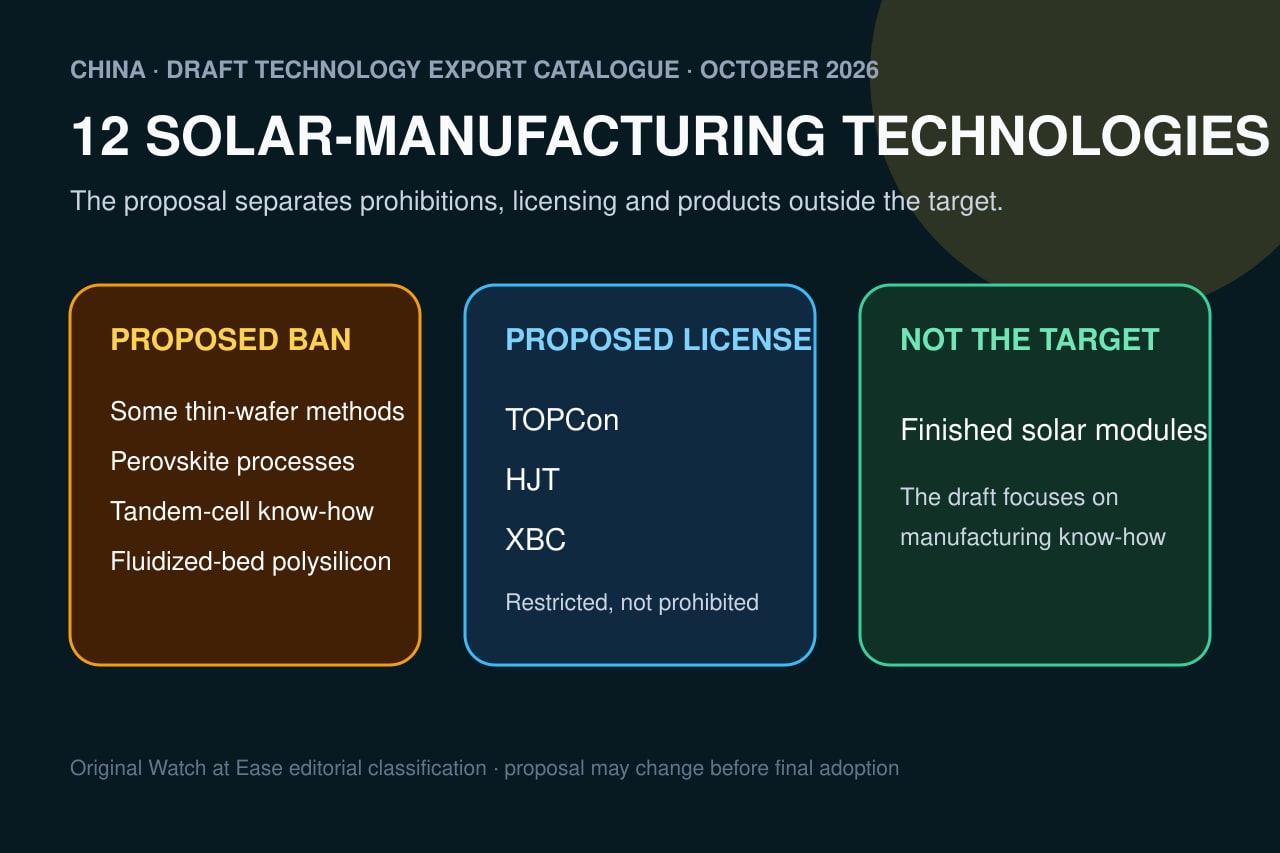
The draft targets manufacturing know-how, not finished solar modules. Some thin-wafer, perovskite, tandem-cell and fluidized-bed polysilicon methods would be prohibited; TOPCon, HJT and XBC technologies would require permission.
China has proposed export controls on 12 solar-manufacturing technologies as part of a wider draft covering 40 technologies in artificial intelligence, photovoltaics and biomedicine. Public consultation runs until November 15. The proposed prohibitions and licensing rules are not final, although a registration duty for certain overseas technology transfers has already begun.
The draft separates bans from licensing
Reuters reports that the proposal would prohibit exports of some technologies used to make thin wafers, perovskite and tandem solar cells, along with large-scale fluidized-bed polysilicon production. Perovskite and tandem cells are aimed at capturing more of the sunlight spectrum, while fluidized-bed production can use less energy than the dominant Siemens process.
Advanced cell-manufacturing technologies including TOPCon, HJT and XBC fall into a different bucket: the draft would restrict their export, not prohibit it. Treating every listed technology as banned would overstate the proposal.
Finished solar modules are not the target
The controls concern technology and manufacturing know-how. Dpa reports that finished solar modules are outside the proposed controls, while the solar entries cover particular production methods and equipment knowledge.
That distinction matters for readers following panel shipments. The draft does not announce a general ban on exporting Chinese-made solar panels. It addresses whether specified production technologies may be transferred, licensed or otherwise supplied abroad.
One obligation has started before the catalogue is final
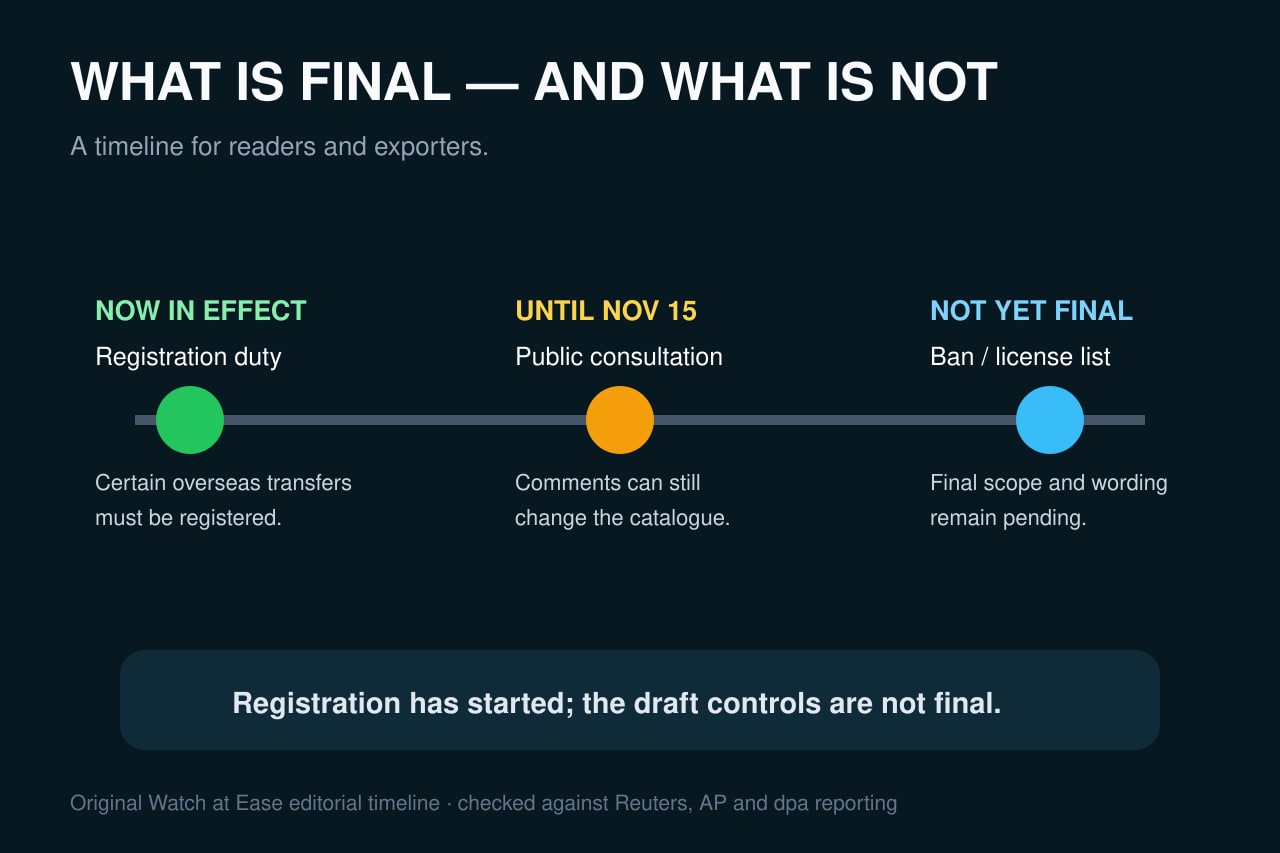
Reuters and dpa report that exporters must already register certain overseas technology transfers while the catalogue is being revised. Dpa says the registration scope includes transactions such as selling intellectual-property rights or licensing affected know-how abroad.
Registration is not the same as approval, prohibition or final adoption. It creates a record during the interim period; the eventual catalogue will determine which technologies are prohibited and which require authorization.
The solar list sits inside a broader 40-technology proposal
The Associated Press reports that the joint draft from China’s commerce and science ministries covers 40 technologies. Twenty-three involve AI, 12 involve solar power and five involve biomedicine. Dpa reports that 14 of the 40 would be prohibited and 26 would require permission.
The ministries cite national-security and misuse risks. Reuters says officials pointed to solar technology’s use in aerospace and defense; AP reports similar concerns around sensitive AI systems. Those stated reasons explain the catalogue structure, but they do not establish how the final rules will be enforced in every transaction.
What remains unresolved before November 15
The consultation closes November 15, so wording, classification and implementation details can still change. The reliable current description is a proposal plus an interim registration requirement—not a completed blanket export ban.
Companies considering technology transfers need the final catalogue and transaction-specific compliance advice before deciding whether a deal is prohibited, licensed or outside scope. For general readers, the next concrete checkpoint is the final rule, not speculation about individual manufacturers.