Technology · NEWS EXPLAINER
China’s AI export proposal has two clocks: registration now, catalogue changes under review
Notice 48 opens consultation through November 15 while requiring pre-export registration for listed technology. The ministry distinguishes transferring restricted models from offering API access.
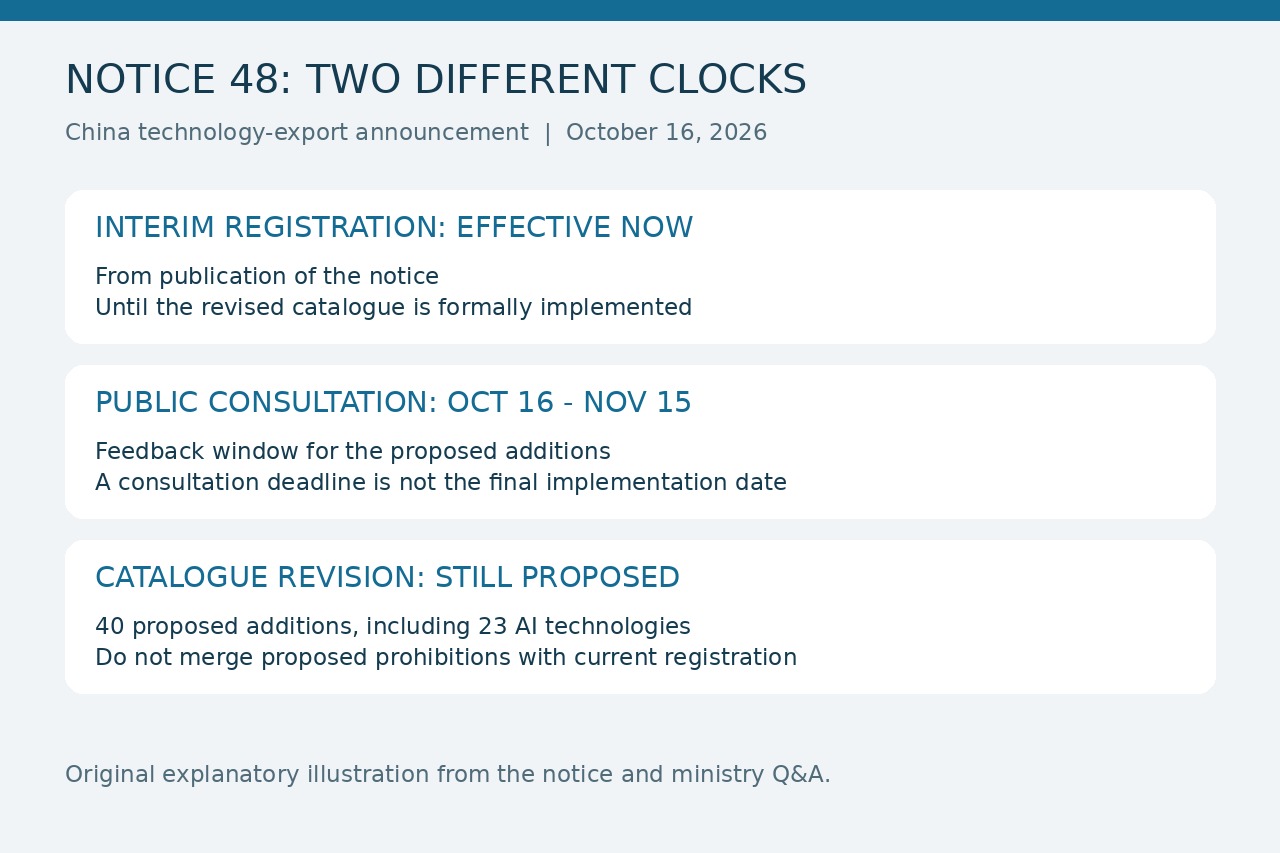
China opened consultation on proposed technology-export controls on October 16 and simultaneously introduced temporary registration before exports of listed technologies. The two steps have different legal timing.
The Commerce and Science and Technology ministries’ Notice 48 covers 40 proposed additions:23 AI, five biomedicine and 12 solar technologies. For overseas developers and customers, the useful question is which technology is transferred, by what arrangement, rather than whether a product carries an AI label.
Separate today’s registration from the proposed catalogue
The notice says operators must register covered exports before exporting, using the ministry’s technology-trade application. The temporary system runs from the notice’s publication until the revised catalogue is formally implemented; exports already started but unfinished are within its stated scope.
The proposed list remains open for comment. Calling every proposed prohibition a final ban effective October 16 would merge two different measures. A completed registration also should not be described as blanket authorization under all applicable export rules.
A cross-border transfer differs from a model call
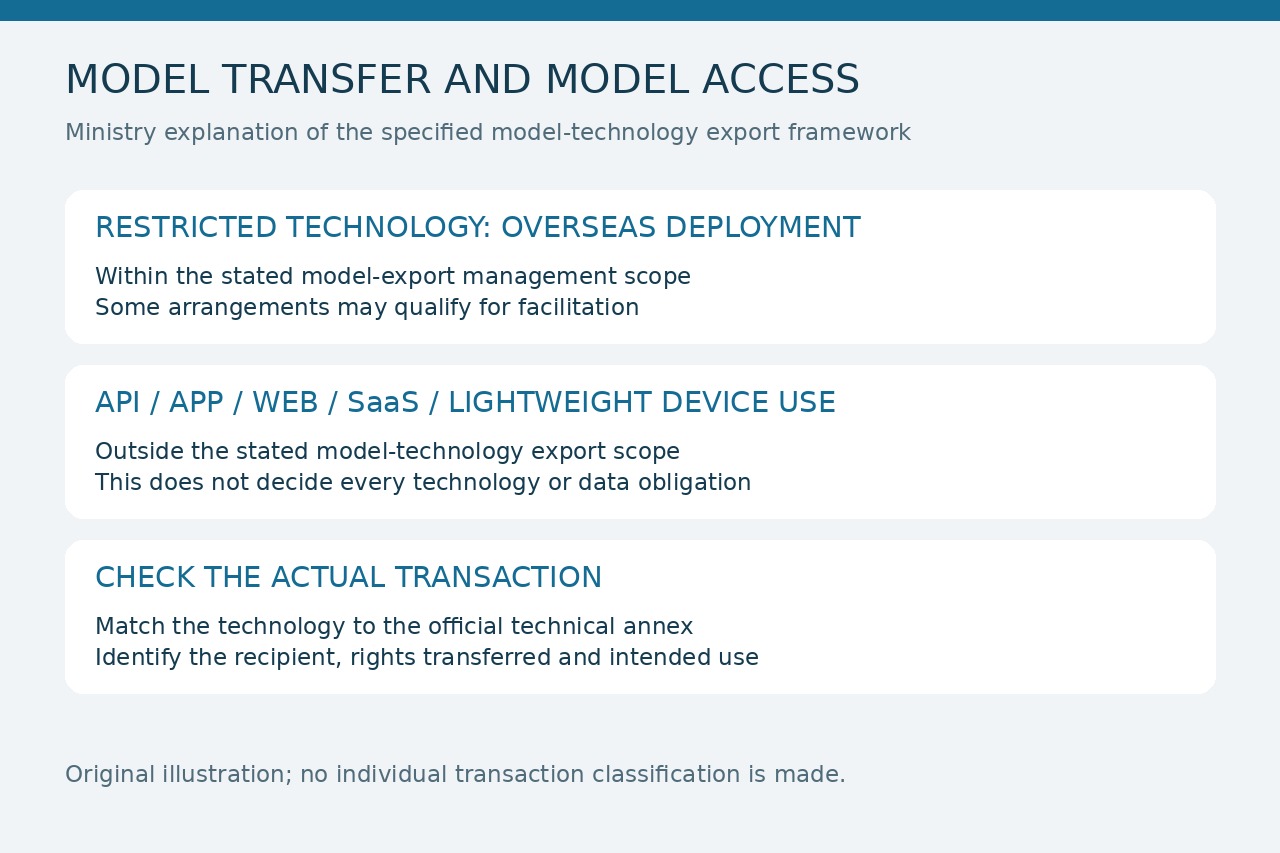
The ministry’s accompanying explanation says overseas local deployment involving restricted AI technology falls within model-export management, with facilitation envisaged in some cases such as a company’s own overseas cloud. It says API calls, app or web interaction, SaaS and lightweight local-device deployment are outside that model-technology-export scope.
Those statements describe the specified model-export framework, not a universal exemption from every technology or data rule. For a particular deal, the technical annex and actual transfer arrangement matter more than a marketing description such as cloud service.
The technical list limits the headline
The proposed AI additions span models, agents, computing clusters and information processing. The ministry says technologies already in the public domain through open-source release or academic publication are outside the proposed management scope.
Reuters explains the potential to maintain international service access while tightening oversight of sensitive transfers. AP’s separately reported analyst interviews place the move in a broader fragmentation of technology access. Neither interpretation establishes that every Chinese AI service is being withdrawn.
What a concrete assessment needs
The notice identifies ownership transfers, licensing technology for overseas use, and changes to a domestic owner or actual controller into an overseas entity among registration situations. It asks for operator and recipient details, destination, technology, intended use and estimated export value, subject to the application’s requirements.
Match the actual technology to the official annex, distinguish present registration from proposed licensing or prohibitions, and track the final revision after consultation. This report does not classify an individual transaction or claim that filing alone resolves its obligations.