Business/Technology · NEWS EXPLAINER
Cerebras and Gimlet plan 100MW AI inference cloud buildout with CS-4 systems
Cerebras plans to supply Gimlet Labs with CS-4 AI systems at roughly 100 megawatts of capacity over one to two years. Gimlet says the first Cerebras-powered datacenter is expected later in 2026, with broader cloud availability planned for 2027.
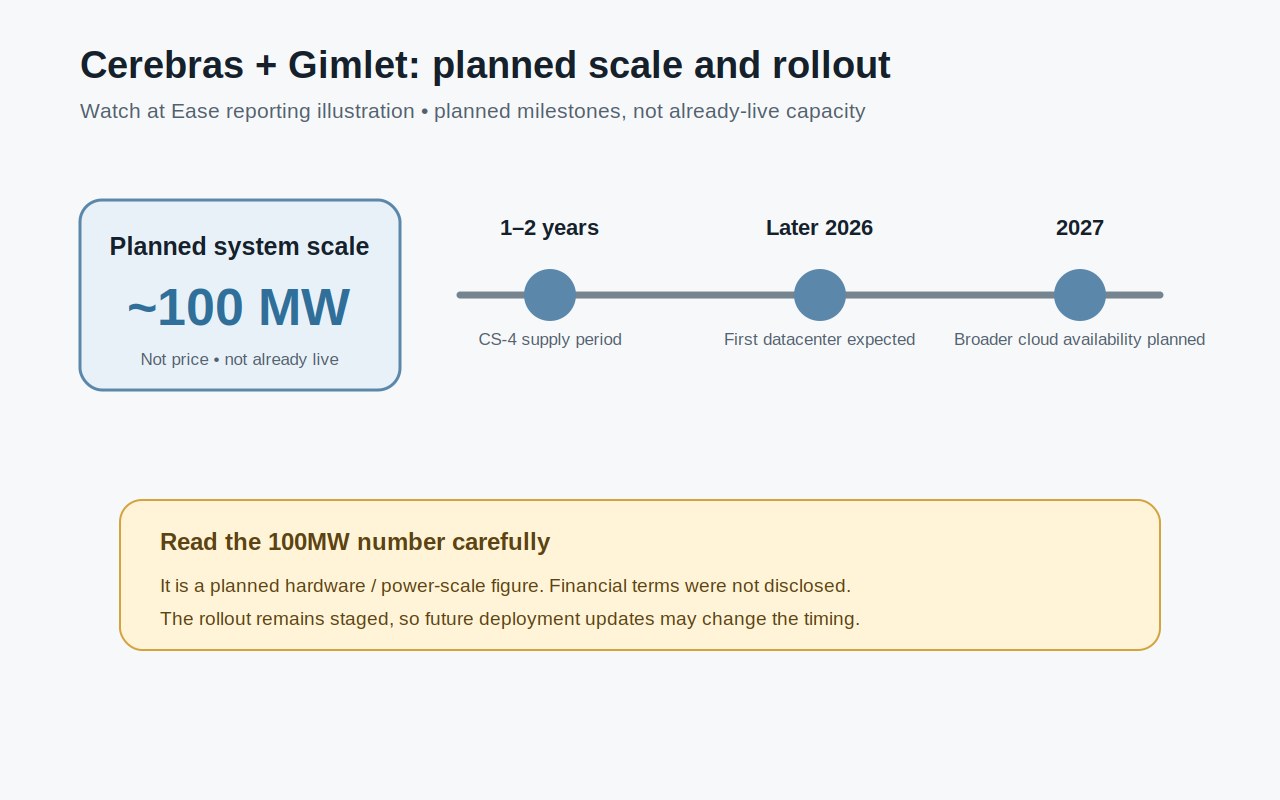
Cerebras Systems and cloud startup Gimlet Labs have announced a large AI-inference infrastructure partnership built around Cerebras' CS-4 systems. Reuters reports that the planned hardware can consume roughly 100 megawatts of power, with supply spread over one to two years and Gimlet expected to make the systems available through its cloud in 2027.
The number needs context. The 100MW figure describes the planned scale of the computing systems, not a disclosed purchase price or capacity already running today. Financial terms were not disclosed, and the companies are still describing future deployment milestones.
What the 100MW figure actually describes
Reuters says the deal covers AI chips and systems with the capacity to consume roughly 100 megawatts. That is an infrastructure-scale measure tied to the planned hardware deployment.
It should not be read as a deal price, revenue figure or evidence that 100MW is already installed and operating. Cerebras and Gimlet declined to disclose financial terms, and the rollout is described as taking place over one to two years.
The rollout is staged
Cerebras CEO Andrew Feldman told Reuters the company plans to supply CS-4 systems over one to two years. Gimlet plans to make the CS-4 hardware available through its cloud in 2027.
The joint announcement adds an earlier milestone: the first Cerebras-powered Gimlet Cloud datacenter is expected to come online later in 2026. Those dates describe the current plan, so later deployment updates could change the schedule.
Why Gimlet is mixing Cerebras systems with GPUs
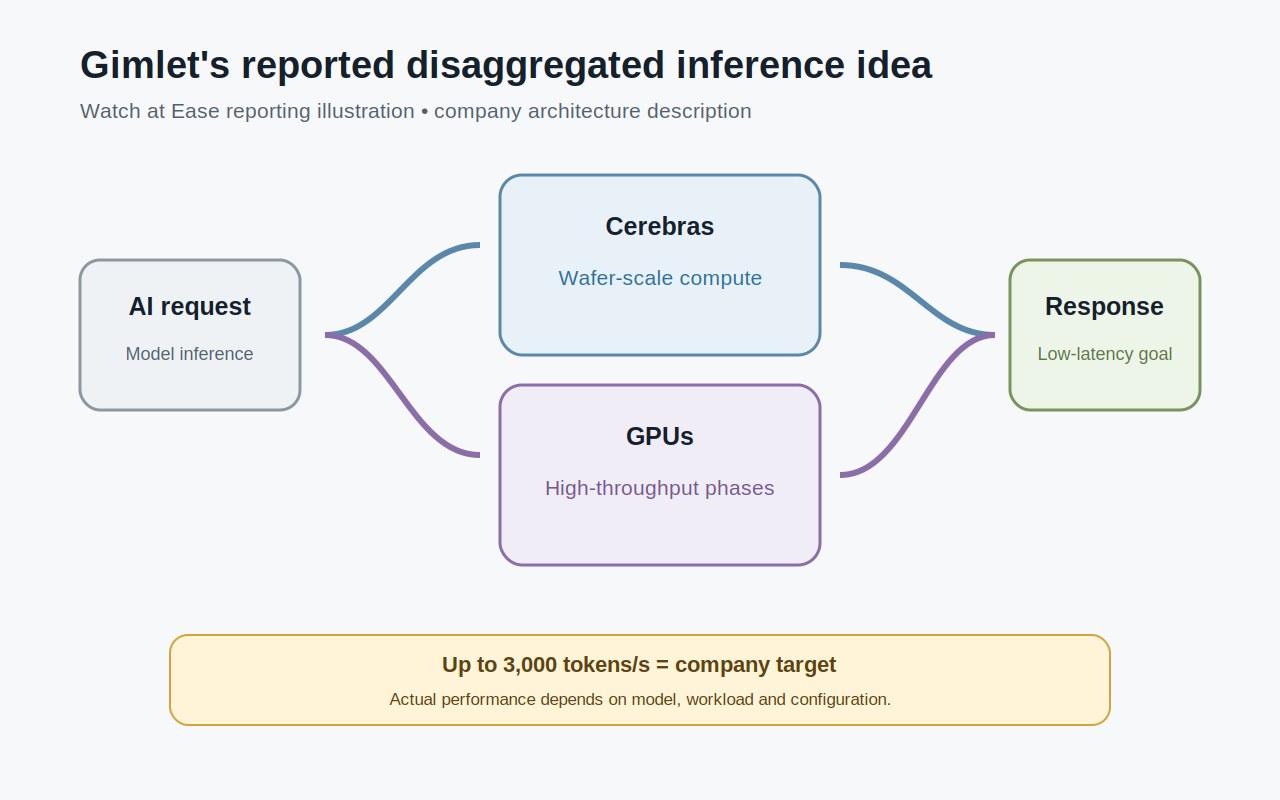
Gimlet's cloud uses what the companies describe as a disaggregated inference design. Rather than forcing every stage of model inference onto one type of processor, the system can route different phases to hardware suited to that work.
The joint announcement says Gimlet combines Cerebras wafer-scale compute with GPUs, while Reuters reports Gimlet wants to serve companies building AI-focused products and use the hardware for frontier-model inference. The practical pitch is lower latency and faster response generation for workloads such as voice, agents, cybersecurity and financial analysis.
The 3,000-token target is forward-looking
Cerebras and Gimlet say they plan to deliver speeds of up to 3,000 tokens per second for some agentic and real-time workloads. That figure comes from the companies' announcement and depends on workload, configuration and model.
For readers, the more concrete near-term checkpoints are deployment progress, the first datacenter going live, 2027 cloud availability and whether real production workloads reproduce the advertised performance. Until then, the speed figure should be treated as a stated target rather than a universal measured result.