Technology · NEWS EXPLAINER
CATL pairs a 77-kWh reserve pack with five-minute QIJI truck battery swaps
The supplier’s new dual-electric layout combines standardized swappable batteries with a smaller behind-cab pack. Its rollout numbers are targets and company claims, not completed fleet results.
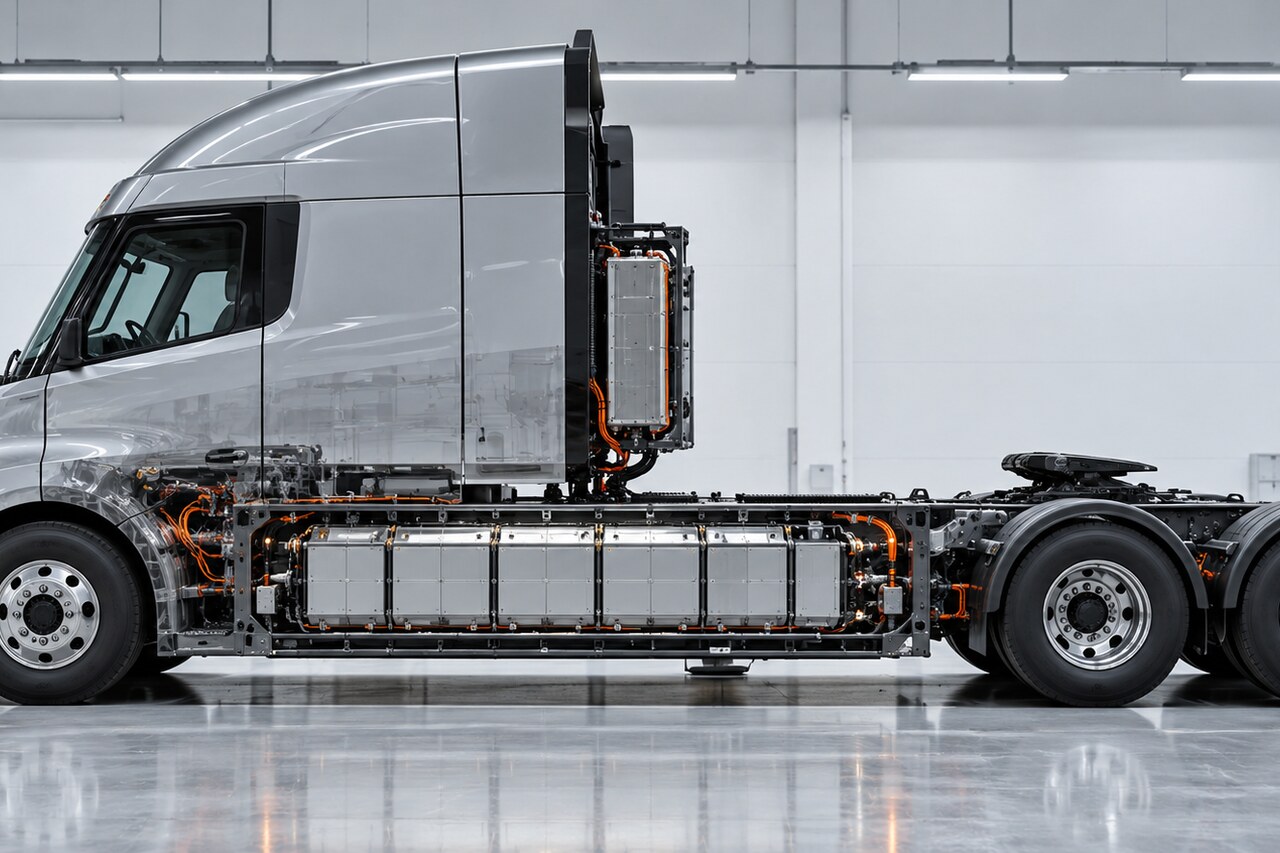
CATL unveiled a heavy-truck battery system that combines a standardized chassis-mounted swappable pack with a 77-kWh range-extension battery behind the cab. The smaller pack is designed to keep the truck moving while exposing more of the main battery’s usable capacity.
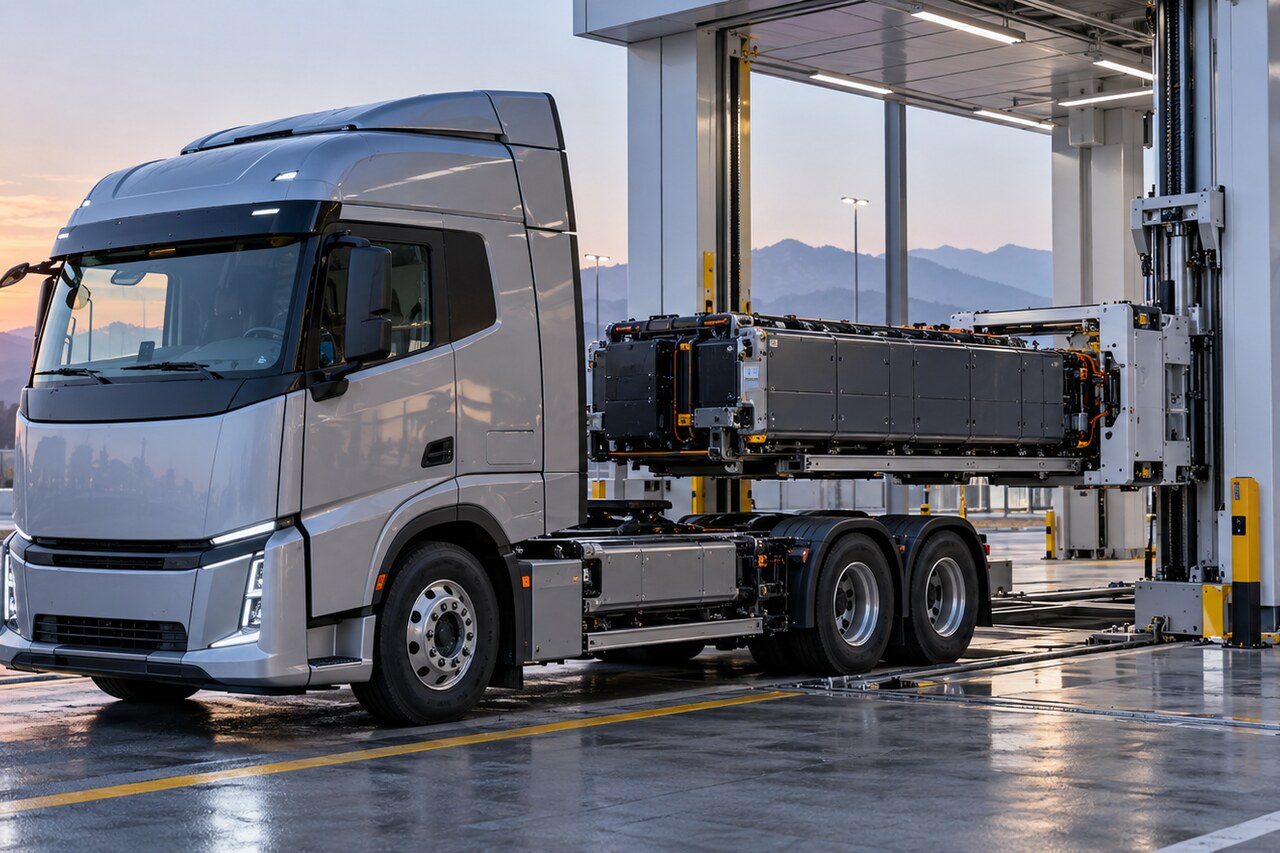
The launch also expands CATL’s QIJI battery-swap lineup and station plan. CATL says an automated exchange takes about five minutes; Reuters reported the same process and detailed the practical barriers that still limit electric heavy-truck adoption.
One standardized pack, plus a 77-kWh reserve
CATL’s new “dual-electric” design combines a standardized chassis-mounted swappable battery with a 77-kWh, 3C-capable pack behind the cab. CATL says the smaller pack can take over within milliseconds when the main battery falls below 5% state of charge. That is a company specification, not an independently measured fleet result.
The reserve is meant to use more of the main pack
CATL says operators commonly preserve roughly 30% of a truck battery to avoid disruption, limiting practical depth of discharge to about 70%. It claims the reserve-pack architecture can raise usable depth of discharge above 95%, reducing the amount of primary battery carried for a route. Real-world savings will depend on duty cycle, payload, temperature and station availability.
QIJI adds 432- and 513-kWh standardized blocks
The refreshed QIJI lineup adds 260# and 300# standardized packs rated at 432 kWh and 513 kWh. CATL and Reuters describe an automated swap taking about five minutes. CATL also claims a 99.99% first-attempt success rate; that figure comes from the supplier and was not independently verified in the launch reports.
The network target steps from 900 to 2,000 stations
CATL targets 900 swap stations by the end of 2026 and 2,000 by the end of 2027, with a longer-term ambition of 10,000. The company said agreements covering 13,000 vehicles were signed at the launch. These are rollout targets and agreements, not proof that every station or truck is operating today.
Long-range packs do not erase adoption constraints
Reuters separately reported a 760-kWh Tianxing II configuration with a claimed range above 600 kilometres, plus CATL claims of 52% fewer components and 15% lower cost for new standardized blocks. Heavy-truck electrification remains below 10% globally, Reuters reported, with vehicle cost, battery weight and limited megawatt charging among the obstacles.