Sports · NEWS EXPLAINER
Broncos turn a fourth-down stop and two takeaways into a 23–17 comeback
Denver scored the final 13 points after trailing 17–10. Courtland Sutton's tying touchdown and two Wil Lutz field goals followed distinct defensive stops, leaving the Chargers 0–5.
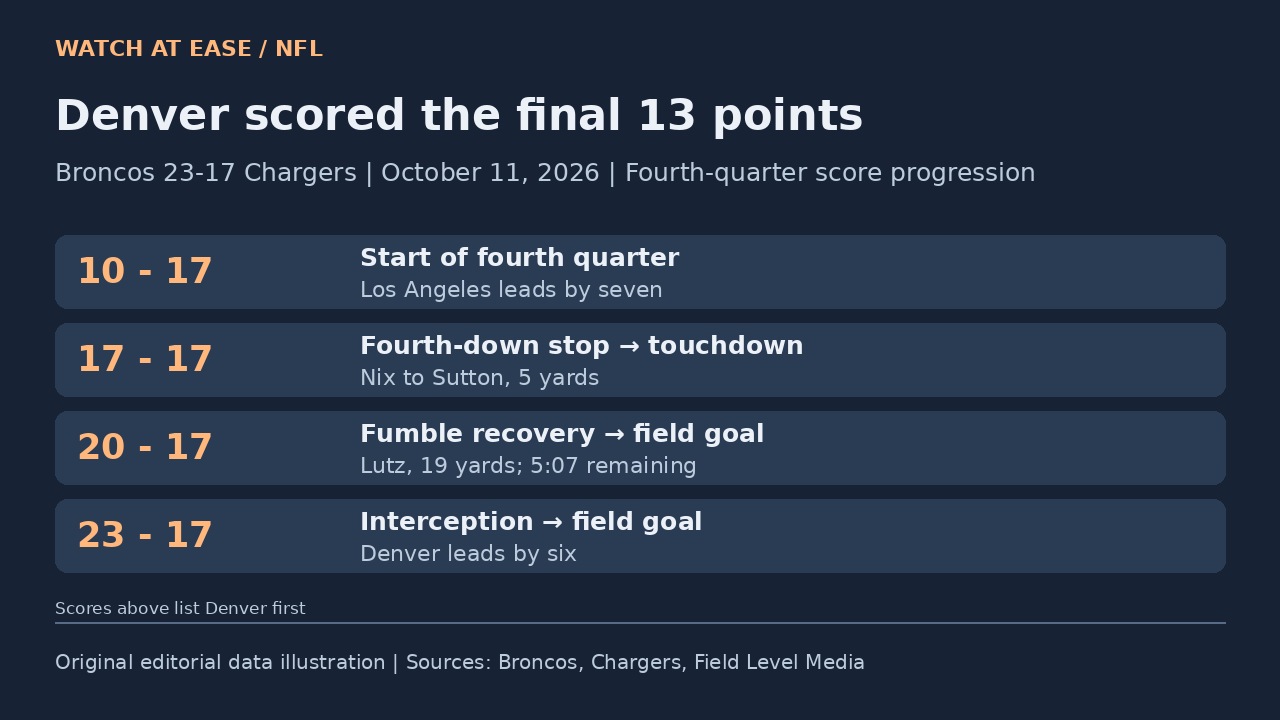
The Denver Broncos erased a seven-point fourth-quarter deficit to beat the Los Angeles Chargers 23–17 at SoFi Stadium on October 11. The result moved Denver to 3–2 and left Los Angeles without a win through five games.
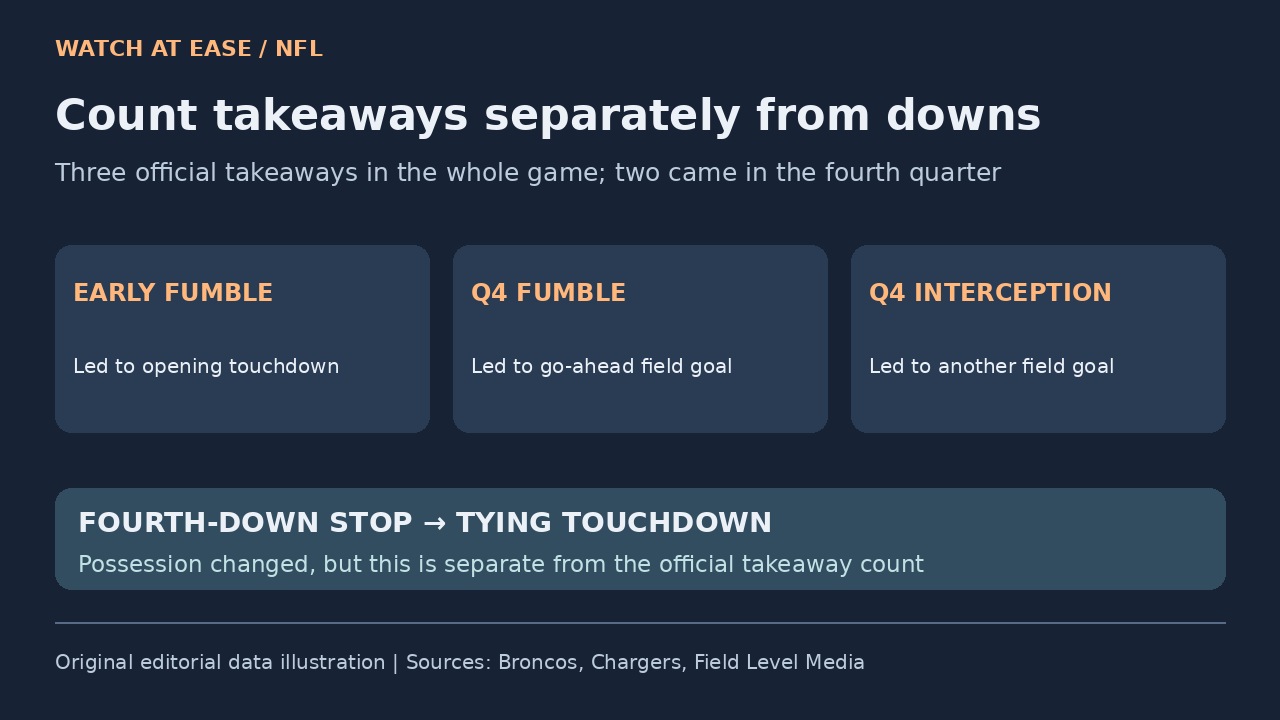
The comeback had three separate steps: a failed Chargers fourth-down attempt opened the tying touchdown drive, then a recovered fumble and an interception supplied the possessions that ended in field goals. Calling all three official takeaways would obscure the difference between a turnover on downs and a turnover recorded in the takeaway statistics.
The fourth-down stop created the tying opportunity
With Los Angeles ahead 17–10, Denver stopped Justin Herbert's fourth-and-one attempt at the Chargers' own 41-yard line. Five plays later, Nix found Sutton for the 5-yard touchdown that brought the score level at 17.
That defensive stop transferred possession, but it is separate from a recovered fumble or interception in the official takeaway count. Denver's club recap explicitly makes that distinction. It matters here because the tying seven points came from the fourth-down stop, while the following two field goals came after turnovers.
A forced fumble put the lead within reach
Zach Allen stripped Herbert, and Que Robinson recovered at the Los Angeles 23-yard line. Denver advanced to the 1 before choosing a field goal on fourth-and-goal. Lutz's 19-yard kick made it 20–17 with 5:07 remaining.
Brandon Jones then intercepted Herbert on the next Chargers possession. A further Lutz field goal extended the lead to six. The Chargers still had a final possession, but Ja'Quan McMillian sacked Herbert before the last pass could be thrown.
Los Angeles had used a takeaway to build its own lead
Los Angeles had created its 17–10 advantage with a defensive play of its own. Tuli Tuipulotu forced and recovered a Nix fumble late in the third quarter, and Kimani Vidal ran 42 yards for a touchdown on the next play.
That sequence shows why the fourth-quarter response changed the result. Los Angeles had converted its earlier defensive opportunity into a lead; Denver then converted the late stops into a touchdown and two field goals. The Chargers' recap confirms that their offense scored no points in the final quarter.
The win does not settle Denver's offensive questions
Sean Payton took over play-calling duties from Davis Webb for this game. Field Level Media reports 224 total yards for Denver, with Nix throwing for 123 and J.K. Dobbins rushing for 68. The result is a win under the changed arrangement, rather than proof that the play-caller alone caused the turnaround.
Mile High Report's immediate analysis also separates the victory from the offense's uneven performance. The supported conclusion is narrower: Denver's defense repeatedly returned the ball in useful positions, and the offense and kicking unit converted enough of those chances to finish ahead.