Technology · NEWS EXPLAINER
Bluesky’s Attie can now build games and websites: what to check before sharing
The October 15 expansion goes beyond custom feeds. It also leaves practical questions about access, data, model choice and whether a generated project is durable enough to rely on.
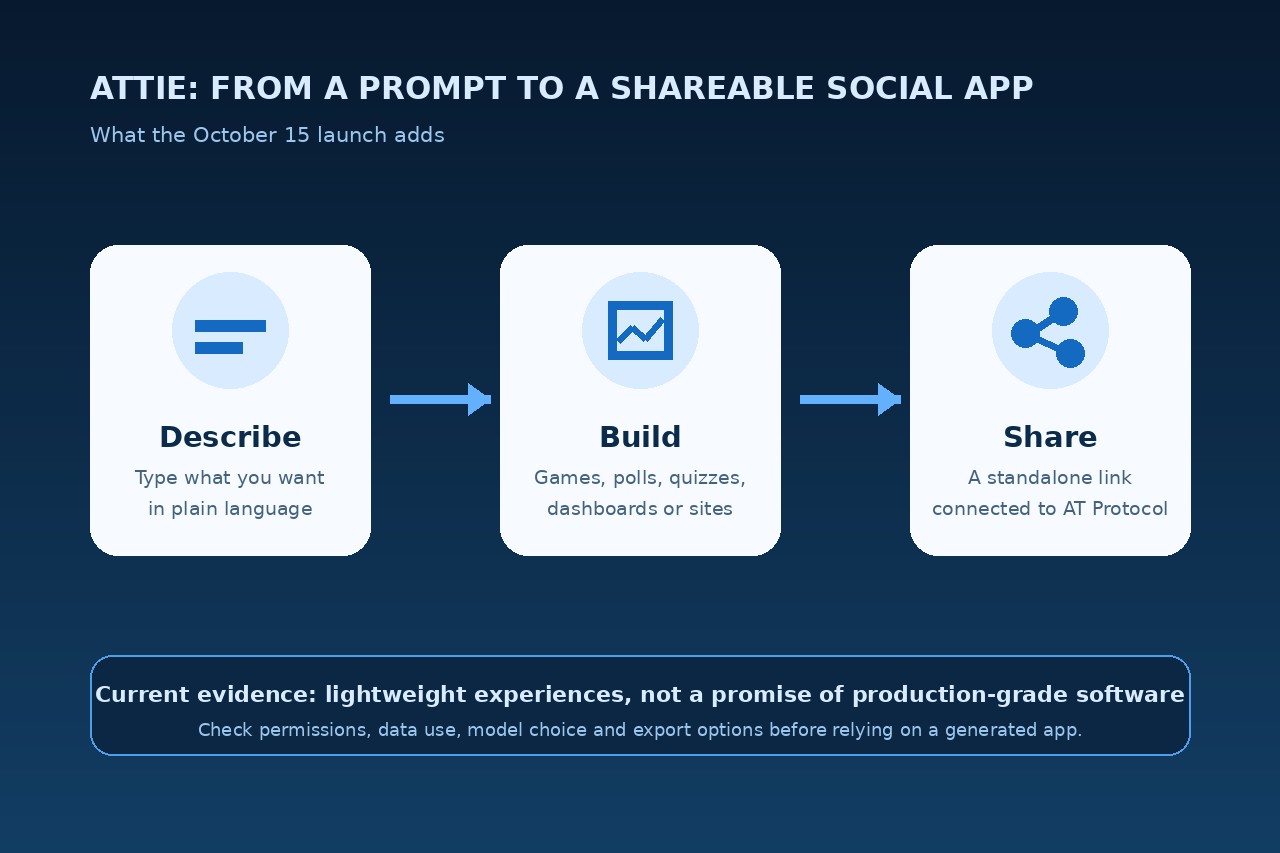
Bluesky expanded Attie on October 15 so people can describe and create small websites, quizzes, games, polls and dashboards, then share them as standalone web experiences. The change moves Attie beyond its earlier focus on custom feeds and social research.
The useful takeaway is capability, not maturity. Independent hands-on reporting found working examples, but described them as lightweight. Before publishing one, verify who can access it, what data it uses, which model runs it and whether you can edit or recover the project later.
What changed on October 15
Attie began as an experimental way to build custom Bluesky feeds with natural-language prompts. The new release broadens that idea into small interactive experiences. TechCrunch reported that the creations live on AT Protocol and connect to the creator’s identity.
The Verge tested the new flow by making a simple poll and found live examples including a game, drum machine, quiz and clicker. That is useful confirmation that the launch is more than a slide deck. It is not a general audit of generated code or every available template.
Distribution is the main product idea
Bluesky’s pitch is that a generated app does not have to start with an empty audience. The company says Attie creations can connect to the wider social network, while AT Protocol supplies identity and social context. That differentiates the tool from a stand-alone page generator.
Distribution does not answer access control. Before sharing, check whether the link is public, whether viewers need an account and which profile details or public posts shape suggestions. Do not put confidential material into a prompt merely because the final page looks informal.
Model choice does not remove responsibility
TechCrunch reported that users can bring a model or choose an open-weight option. That flexibility can change cost, behavior and data handling, so record the actual model and settings used for a project instead of describing all Attie apps as if they run the same way.
Generated logic can still be wrong. Test links, scoring, forms and any stored input with non-sensitive sample data. A quiz or novelty game can tolerate a rough edge; a health, finance, authentication or payment workflow needs a different level of review and should not be treated as safe because it was easy to create.
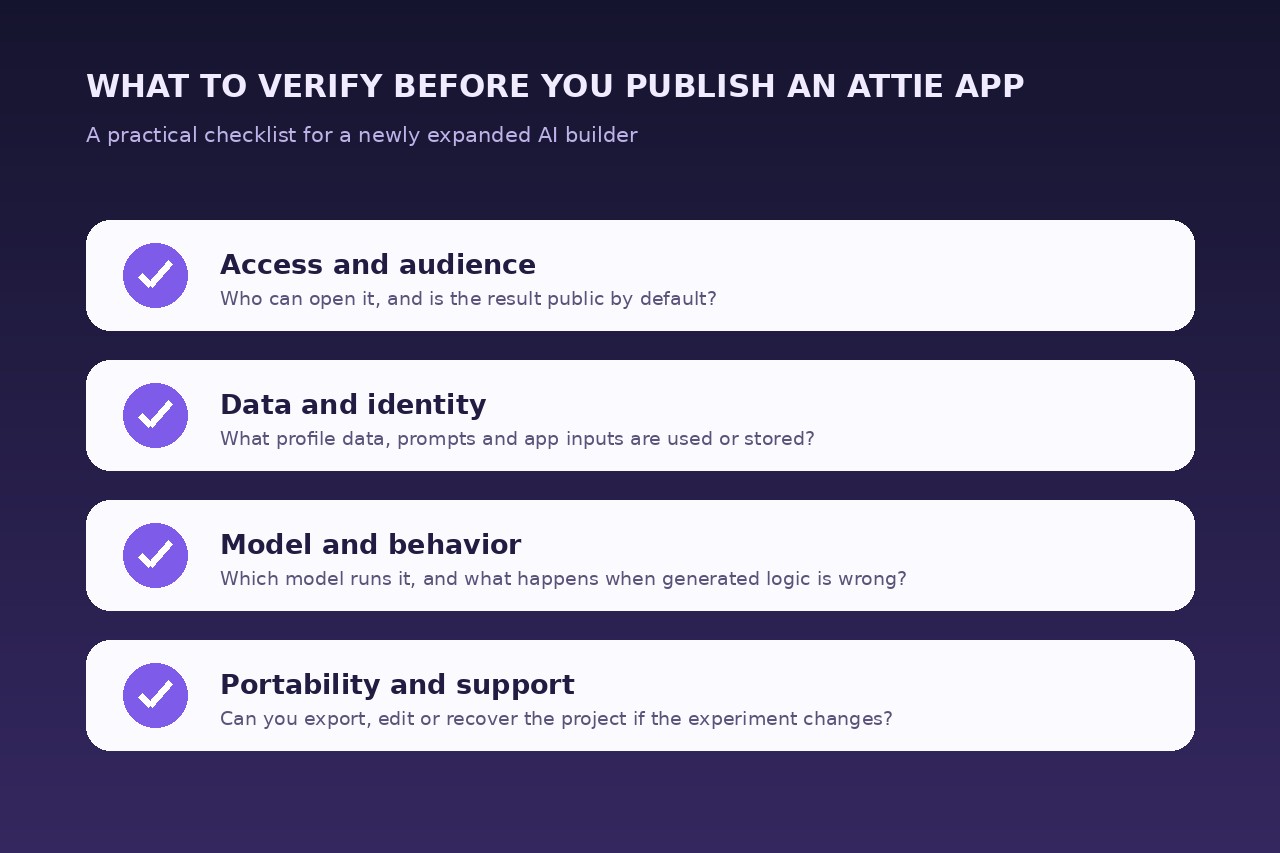
The four questions to answer before relying on it
First, confirm the audience and visibility. Second, identify what profile, prompt and visitor data is processed or retained. Third, test the generated behavior and know which model produced it. Fourth, check whether the project can be exported, edited or recovered if Attie changes.
The launch reports did not provide complete answers to all four questions. That is the boundary to preserve: Attie now demonstrates an unusually fast path from a prompt to a social web experience, while long-term support, portability and production reliability remain matters to verify for each project.