Technology · NEWS EXPLAINER
Blue Origin is building for multiple New Glenn flights a week—but that pace is not yet an approved schedule
The Florida expansion adds launch pads, landing ships, payload bays and a $330 million upper-stage factory. The company’s decade-end cadence is a capacity target; FAA permission, return to flight and repeat operations remain separate gates.
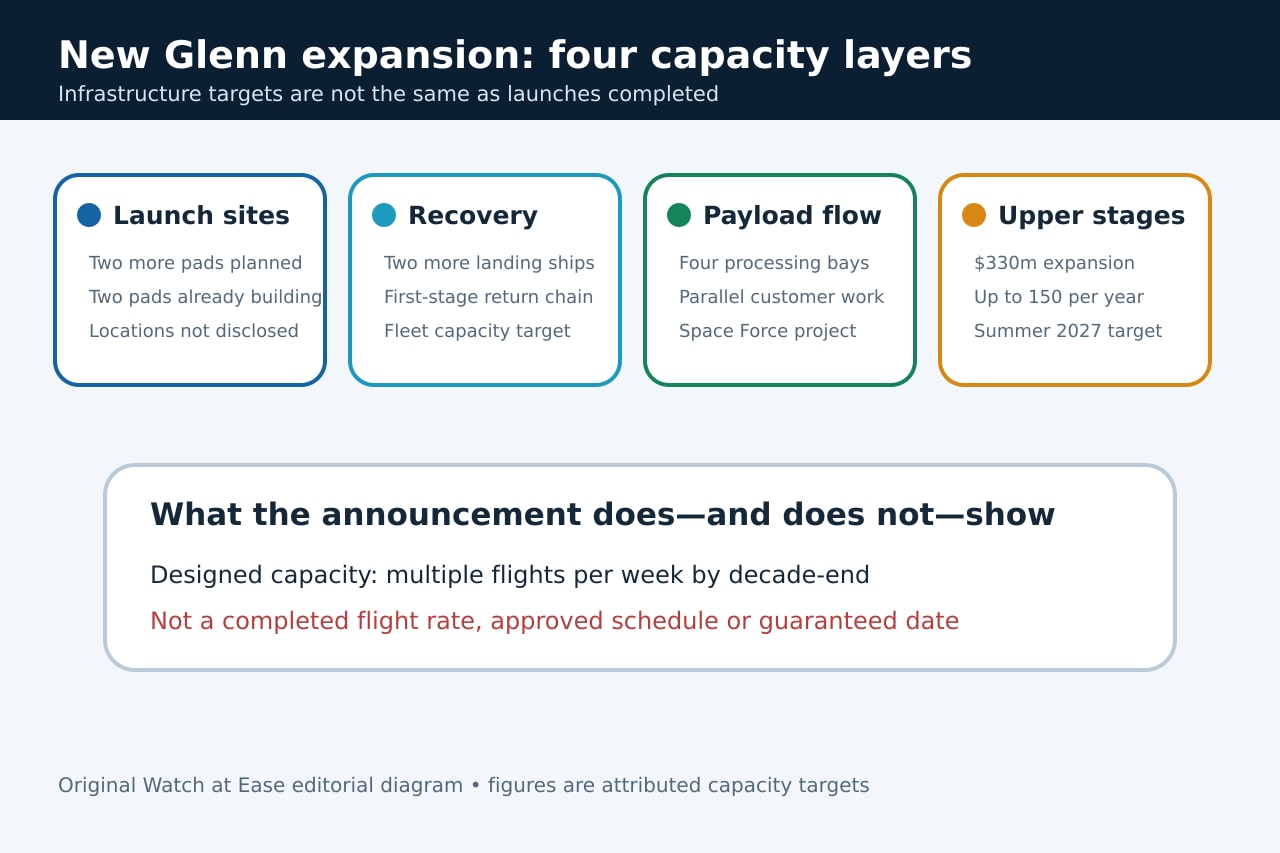
Blue Origin says its Florida infrastructure is being designed to support multiple New Glenn flights per week by the end of the decade. The announcement is a major capacity plan, not evidence that the rocket is already flying at that rate.
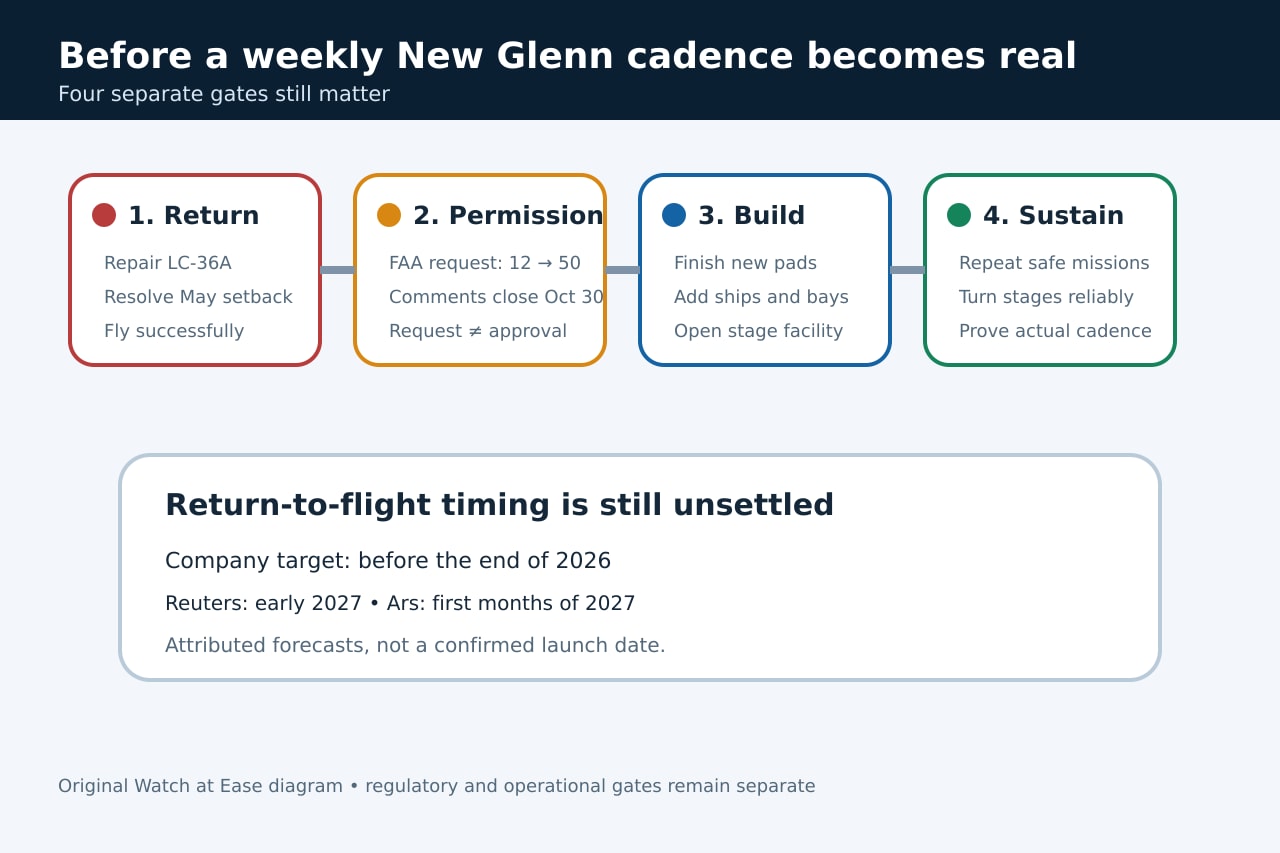
The useful distinction is between what is being built, what regulators may permit and what operations have demonstrated. New Glenn remains grounded after a May explosion, and forecasts for its return differ across the sources.
What Blue Origin announced
Blue Origin described a Florida build-out centered on two additional New Glenn launch pads, two more landing vessels and a customer-integration facility with four payload bays. Reuters reported more than $3 billion invested across roughly 31 acres and about 5,000 employees; Ars Technica also reported about 500 suppliers in the state.
Senior vice president Ian Richardson said the infrastructure is designed to support multiple flights per week by the end of the decade. “Designed to support” matters: it describes intended system capacity, not launches completed, a binding customer schedule or a regulator-approved cadence.
The factory number is a production ceiling, not a launch count
The $330 million expansion covers about 1.37 million square feet and is targeted for completion in summer 2027. Blue Origin says it could support production of up to 150 upper stages each year for the larger New Glenn 9×4 variant.
An upper-stage production ceiling does not mean 150 launches will occur. Actual flight rate also depends on completed pads, boosters, landing vessels, payload processing, customer readiness, range availability, regulatory approvals and reliable turnarounds. The two illustrations keep those layers separate.
The current FAA request would raise one pad from 12 to 50 flights a year
Spaceflight Now reported that the FAA opened a 30-day comment period on a Blue Origin request to increase LC-36A’s permitted cadence from 12 to 50 flights per year. A virtual hearing is scheduled for October 22 and comments close October 30.
That request is not an approval. It also addresses LC-36A rather than converting every planned pad into an operating schedule. Even 50 annual flights at that pad would be below a literal multiple-flights-per-week rate on its own, which shows why the additional pads and the regulatory process both matter.
Return to flight comes before cadence
New Glenn has been grounded since a May static-fire explosion damaged its only operating launch site. Its April mission had already suffered an upper-stage problem that placed an AST SpaceMobile satellite into the wrong orbit. Those setbacks make the next successful flight a more immediate milestone than the decade-end rate.
Timing is not settled. Spaceflight Now cited the company’s effort to return before the end of 2026; Reuters said New Glenn was expected to fly again in early 2027; Ars assessed that the first few months of 2027 were more likely. Readers should treat all three as attributed outlooks and watch for a confirmed launch date, FAA decisions and repeated successful missions.