Business · NEWS EXPLAINER
Ather Energy posts first quarterly profit as revenue jumps 63%
The electric-scooter maker reported ₹1.26 crore of quarterly profit, a 4.9% EBITDA margin and plans to add 225,000 units of annual production capacity.
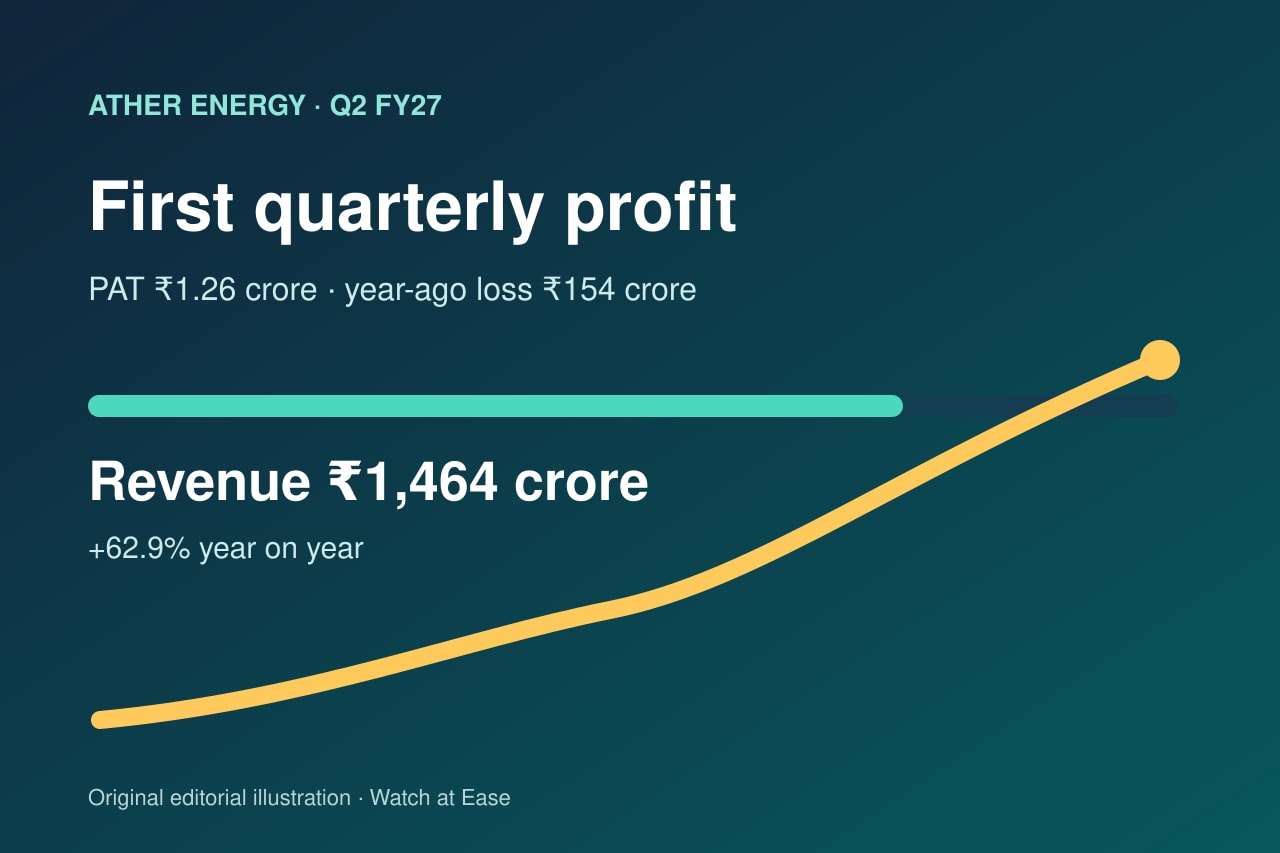
Ather Energy reported its first quarterly profit in the three months ended September 30. Official results put consolidated profit after tax at ₹1.26 crore, reversing a ₹154 crore loss a year earlier, while revenue from operations rose 62.9% to ₹1,464.24 crore.
The profit was small relative to revenue, but the operating shift was broader: EBITDA reached ₹74.2 crore and the margin improved to 4.9% from negative 9.6%. Ather said volume, pricing and product mix helped, even as aluminium, copper, lithium and crude-linked plastics remained expensive.
A first profit, with a rounding difference
The company filing reports ₹1.26 crore, or ₹12.6 million, of consolidated profit after tax. Reuters rounded the result to ₹15 million. Both describe the same first profitable quarter, but this article uses the filing’s exact figure.
Revenue and volume moved together
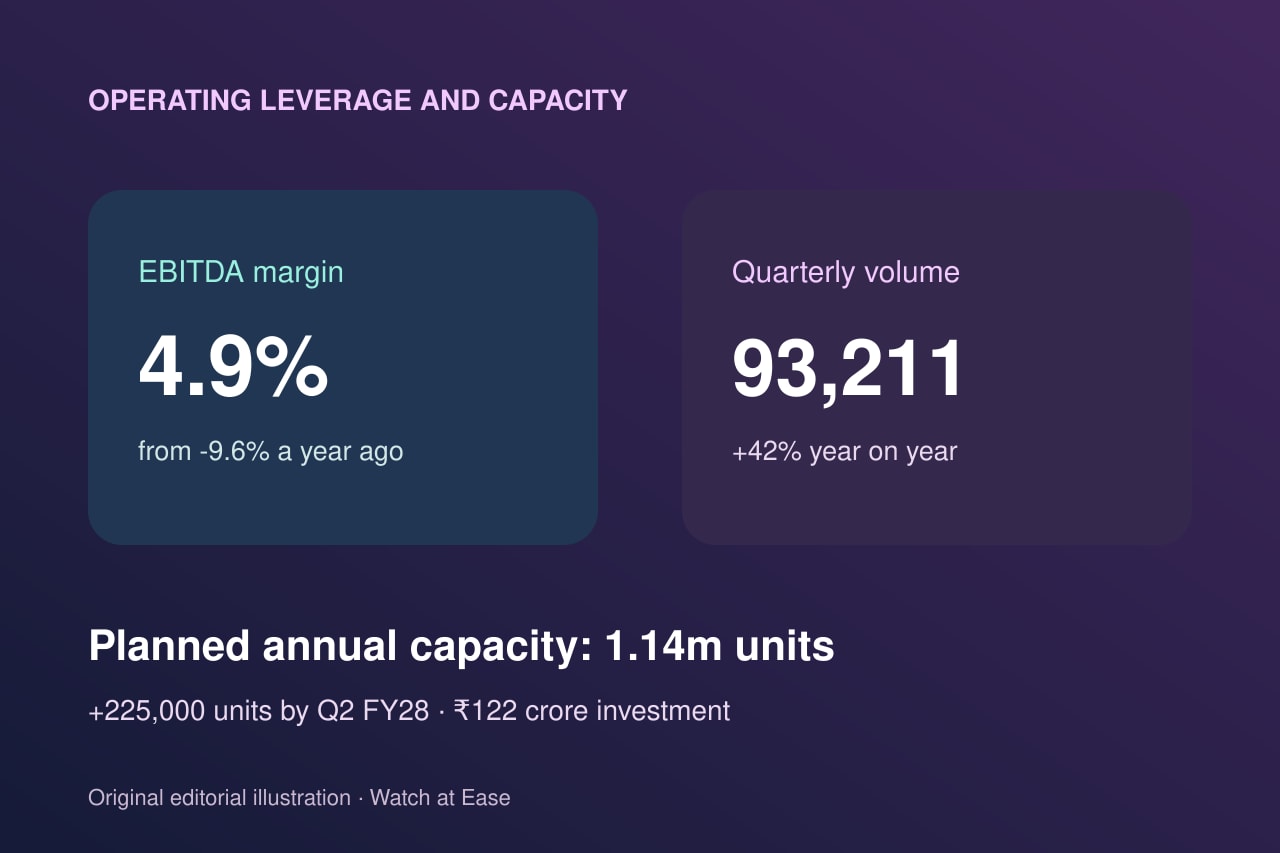
Revenue from operations climbed 62.9% to ₹1,464.24 crore as quarterly volume reached 93,211 units, up 42%. Total income was ₹1,527 crore; it is broader than revenue from operations and should not be substituted for it.
The margin crossed into positive territory
EBITDA was ₹74.2 crore and the margin reached 4.9%, versus -9.6% a year earlier and 0.8% in the preceding quarter. Ather attributed the improvement to product mix, pricing, fixed-cost discipline and operating leverage.
Demand pressed against available capacity
Enquiries more than doubled to about one million and pre-orders reached 180,000. The company said its Hosur plant operated at 98% utilisation during peak production, so the capacity plan addresses a current constraint rather than only a distant forecast.
The expansion has two steps
Ather plans to add 75,000 annual units at Hosur by December 2026 and another 150,000 at AURIC by Q2 FY28. The combined ₹122 crore investment would take installed annual capacity to about 1.14 million units; timing remains a company plan, not completed capacity.