Technology · NEWS EXPLAINER
Anthropic pledges 5% of its shares to a public-benefit fund—stockholder approval still comes first
The equity commitment could grow with Anthropic’s valuation, but the company has not yet published the fund’s operating rules and the plan still needs stockholder approval.
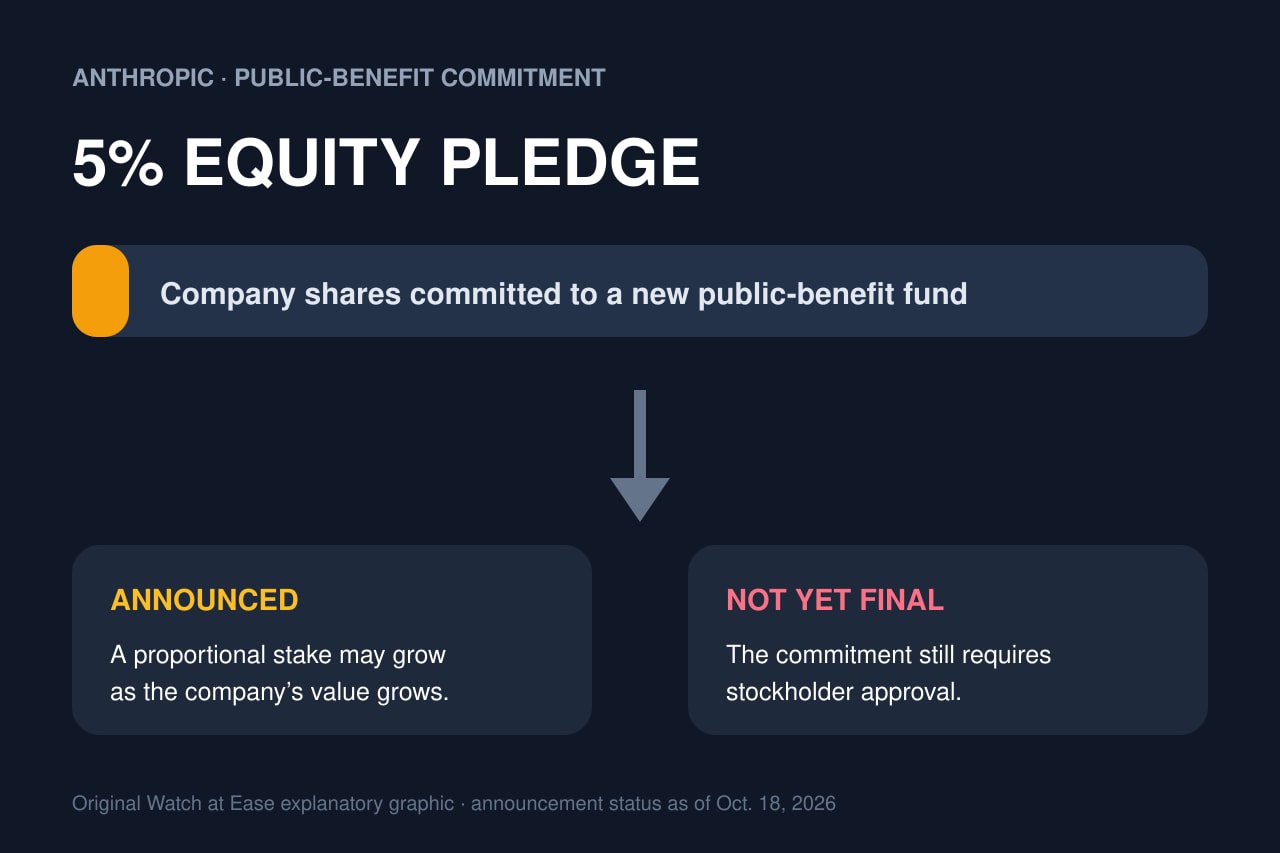
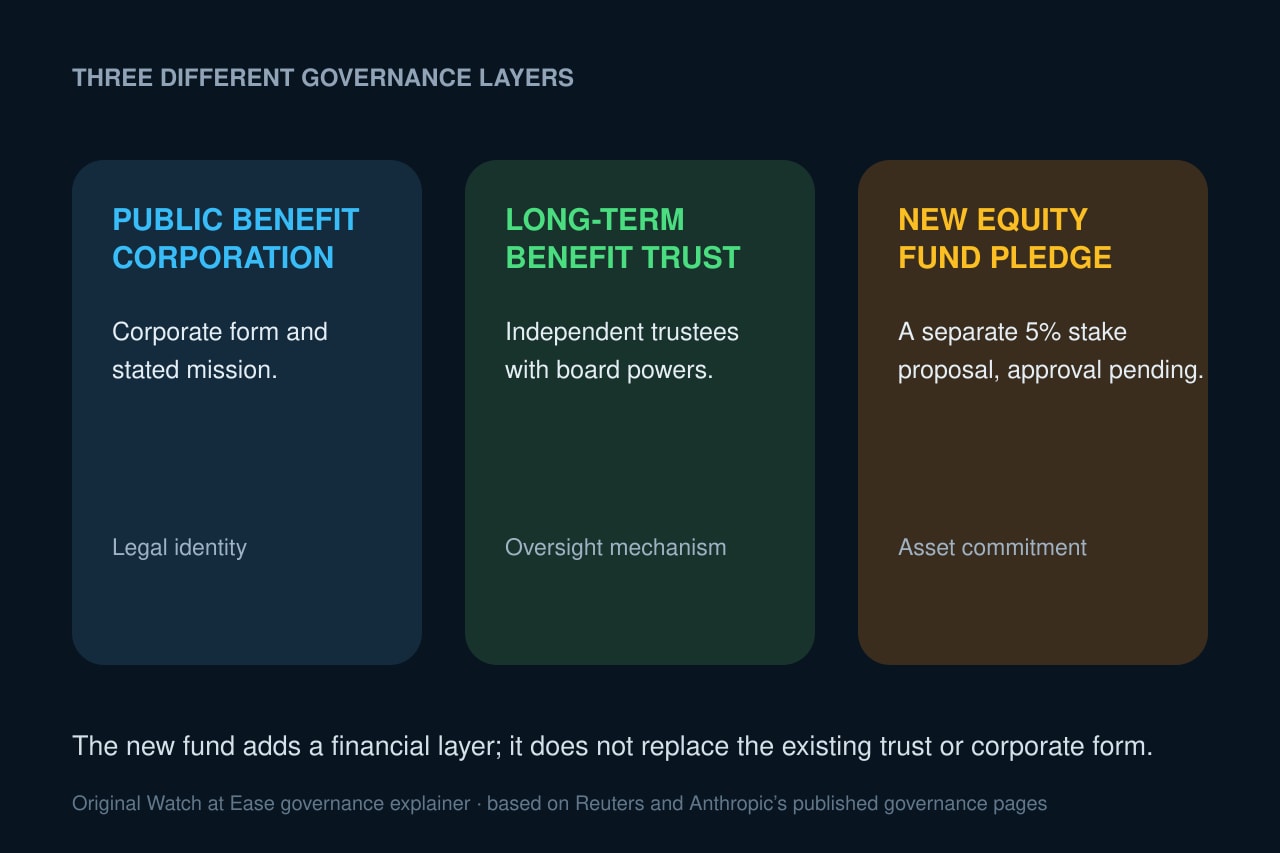
Anthropic has announced that it will commit 5% of its shares to a new public-benefit fund, creating a potentially large financial layer alongside its existing public-benefit corporation and Long-Term Benefit Trust. The commitment is not final: Reuters reported that it remains subject to stockholder approval.
What Anthropic announced
Anthropic said it will commit 5% of its shares to a newly created public-benefit fund. Reuters reported the commitment on October 18, 2026, and said the size of the stake may rise proportionally as the company’s valuation grows.
The word “commit” matters. The shares have not been described as already transferred, and the arrangement still needs approval from Anthropic stockholders. The announcement therefore establishes an intended allocation, not a completed distribution.
What remains unresolved
The available announcement does not yet identify the fund’s governing body, beneficiary-selection process, liquidation rules or a timetable for deploying value. It also does not say how voting rights attached to the pledged shares would be handled.
Those missing mechanics will determine whether the fund becomes a durable source of public-benefit financing or remains primarily a balance-sheet promise. Until formal documents appear, the 5% figure is the clearest fact and the operating design is still open.
How this differs from Anthropic’s existing trust
Anthropic already describes itself as a public benefit corporation. It also has a Long-Term Benefit Trust, an independent body whose special Class T stock gives it authority to select and remove a growing share of the company’s board.
The newly announced fund is a different mechanism. The trust is an oversight structure; the 5% pledge is an asset commitment. The announcement does not say the new fund replaces the trust or changes the company’s legal form.
Why a percentage matters more than a fixed cheque
A fixed grant has a known cash value at the moment it is made. An equity percentage moves with the company: it can become more valuable if the business grows, and less valuable if the company’s value falls. Reuters said Anthropic’s commitment may expand proportionally with valuation growth.
That design potentially links public-benefit resources to Anthropic’s commercial success. It also makes valuation, dilution, liquidity and sale restrictions important practical questions even though the headline number is simple.
The next proof points to watch
The first proof point is stockholder approval. After that, readers should look for a charter, independent governance details, conflict-of-interest rules, reporting obligations and a clear explanation of when or how the equity can finance public-benefit work.
For now, the accurate reading is narrow: Anthropic has announced a 5% equity commitment to a new public-benefit fund, but the transfer and operating machinery have not yet been completed or publicly specified.